



In March 2025, Dehradun’s Parade Ground transformed into a funereal space. Scores of people dressed in white, their mouths bound in black cloth, paid silent ‘homage’ to the hundreds of trees felled for development projects in Uttarakhand — past, present, and those marked to go in the future. As you read this, 4,400 trees are reportedly slated to be axed to widen the Dehradun-Rishikesh road.
The protest was reminiscent of the Chipko Movement that began half a century ago in the Chamoli district of erstwhile Uttar Pradesh, now part of Uttarakhand. Residents opposed commercial logging by physically embracing trees. This time in Uttarakhand, protestors carried on their shoulders branches of dead trees that had been unsuccessfully ‘translocated’ to a ‘graveyard of trees’ near the Rajiv Gandhi Cricket Stadium.
“An unrelenting push towards volume-driven, unsustainable tourism has focused primarily on expanding transport connectivity,” Uttarakhand-based Anoop Nautiyal, founder of the Social Development for Communities Foundation, told The Hindu about the predicament . The loss of green cover is starkest in Dehradun and Mussoorie, he said.
According to an RTI response, in the last five years alone, close to 83,000 trees have been cut in the State: sal, haldu, khair, shisham, jamun, and banyans, some of which were over 200 years old. But these numbers “are just the tip of the iceberg,” said Ruchi Singh of the movement ‘Citizens For Green Doon’. “These estimates are based on the count of trees above a certain girth (usually 15 cm), so young trees or shrubs, creepers and grasses are not accounted for,” she told The Hindu. And as for the translocation of trees, they generally fail, said Ms. Singh.
Malls versus trees
Avenue trees play a substantial role in mitigating suspended particulate matter and noxious gases such as nitrous and sulphur oxides, and significantly ameliorate the urban heat island effect, said ecologist Harini Nagendra, the author of Cities and Canopies: Trees in Indian Cities.
“In many parts of India, some of the oldest and most majestic trees are found on the sides of major roads. They act as carbon sinks, and provide shelter to street vendors and their customers.” She added that avenue trees such as peepal, banyan and neem also have immense cultural significance as sacred trees. “And tamarind, jackfruit and mango, also found widely on roadsides, support livelihoods.”
Meanwhile, in the plains, citizens have come together for the ‘Dol Ka Badh’ movement, currently protesting the felling of around 600 trees for a mall in a dense forest near Jaipur airport.
Conservationists in the movement have documented in the 100-acre Taron ki Koont forest, in the middle of Jaipur, 2,400 native trees 60 species of medicinal herbs and, wildlife including 90 species of birds. “There are massive concrete blocks lying near the forest to this day, visible on Google Maps, evidence of their lack of planning and the failure of that project,” said Shaurya Goyal, a campaigner.
But there’s a broader plan for the space besides a mall and a fintech park: there are to be hotels and a ‘Rajasthan Mandapam’ that together could swallow up the entire forest, Mr. Goyal feared. “In a city that regularly hits 45 degrees C in summers, the forest brings the mercury down by several degrees,” he said.
At its peak, the protest saw over a thousand people forming human chains around the forest in the summer heat. Right now, the movement has over 70,000 signatures on an online petition and 21,000 followers on Instagram.
While transplanting trees rarely succeed, the government’s compensatory afforestation has come under fire as well.
“The saplings will take 30, 40 years or more to get even close to providing benefits that a natural forest does,” Prof. Nagendra said. “If trees are cut in one area, and compensatory afforestation is conducted in another location, then it doesn’t compensate for the loss of ecological services in that area, or address the losses caused to the people who live there.”
The bad news for trees does not end there. Maharashtra could, according to activists, lose 5,000 trees for development projects and for the upcoming Kumbh Mela religious festival. The Pune bench of the National Green Tribunal (NGT) stayed the felling after a petition by a Nashik-based environmentalist that claimed some 1,500 trees had already been felled in violation of court orders. The NGT first stayed the project until April 28 for the Simhastha Kumbh Mela in Nashik-Trimbakeshwar, and has since extended it until June 19.
The wins
There is likely going to be an astonishing loss of a million trees on Nicobar island for the Rs-92,000-crore transshipment terminal. However, there have been small victories, too.
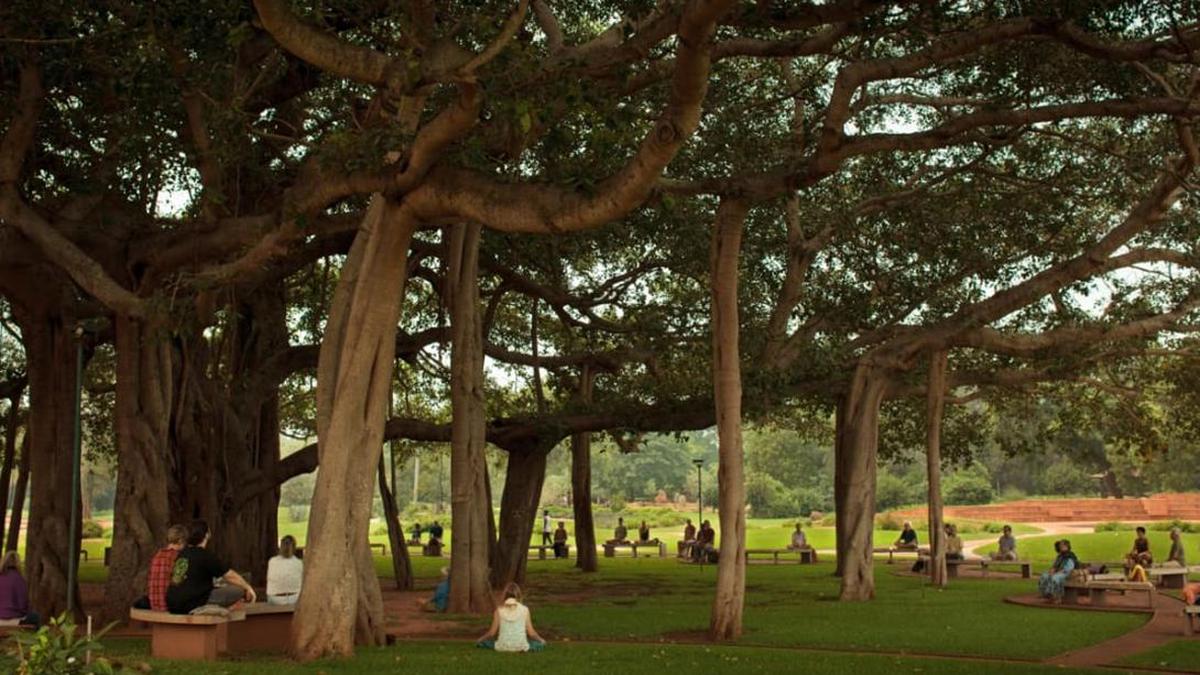
One successful campaign saved thousands of ancient banyans near Hyderabad that had been marked to be felled to widen a road. The plight of the ‘Chevella banyans’ had spurred citizens to group themselves into what they called ‘Nature Lovers of Hyderabad’ and start an online campaign, ‘Save the Banyans of Chevella’, in 2019. The matter ended four years later, in 2023, after the NGT ruled in the group’s favour.
More recently, on May 10 this year, after a three-decade-long campaign, a large part of Delhi’s vibrant Ridge was saved: no less than 673.32 ha of the jungle, in the middle of the capital, has been recognised as a ‘reserved forest’. Pradip Krishen, the author of Trees of Delhi: A Field Guide and who has campaigned for to preserve the Ridge for years, however pointed, to a report that claimed the government will plant “native trees” on the Ridge such as mango, neem, imli, peepal and shisham.
“True, these are all Indian trees but not a single one of them — with the possible exception of the peepal — grows naturally on the Ridge.”
He also said the notification ought to have been given long ago. “But it’s good it’s finally happened,” Mr. Krishen said.