Skip to content
  • Facebook
  • X
  • Linkedin
  • WhatsApp
  • YouTube
  • Associate Journalism
  • About Us
  • Privacy Policy
  • 033-46046046
  • editor@artifex.news
Artifex.News

Artifex.News

Stay Connected. Stay Informed.

  • Breaking News
  • World
  • Nation
  • Sports
  • Business
  • Science
  • Entertainment
  • Lifestyle
  • Toggle search form
  • Trump plans to meet with Mamdani, says ‘he will work something out’ with New York City’s Mayor-elect
    Trump plans to meet with Mamdani, says ‘he will work something out’ with New York City’s Mayor-elect World
  • Toyota to recall over 100,000 U.S. vehicles over potential engine stall
    Toyota to recall over 100,000 U.S. vehicles over potential engine stall Business
  • Access Denied
    Access Denied Nation
  • T.N. government announces awards – The Hindu
    T.N. government announces awards – The Hindu Nation
  • Cuban President outlines ‘three scenarios’ U.S. may take
    Cuban President outlines ‘three scenarios’ U.S. may take World
  • Will protest inside, outside Parliament for J&K’s Statehood: Rahul Gandhi
    Will protest inside, outside Parliament for J&K’s Statehood: Rahul Gandhi Nation
  • Assam Rifles Says Power Outage At Posts After Row With Mizoram Minister
    Assam Rifles Says Power Outage At Posts After Row With Mizoram Minister Nation
  • ‘Flying Kiss Ho Jaye Ek?’: KKR Star Pokes Fun At Harshit Rana. His Reply Is…
    ‘Flying Kiss Ho Jaye Ek?’: KKR Star Pokes Fun At Harshit Rana. His Reply Is… Sports
What makes Skyroot’s Vikram-1 launch unique? | Explained

What makes Skyroot’s Vikram-1 launch unique? | Explained

Posted on July 19, 2026 By admin


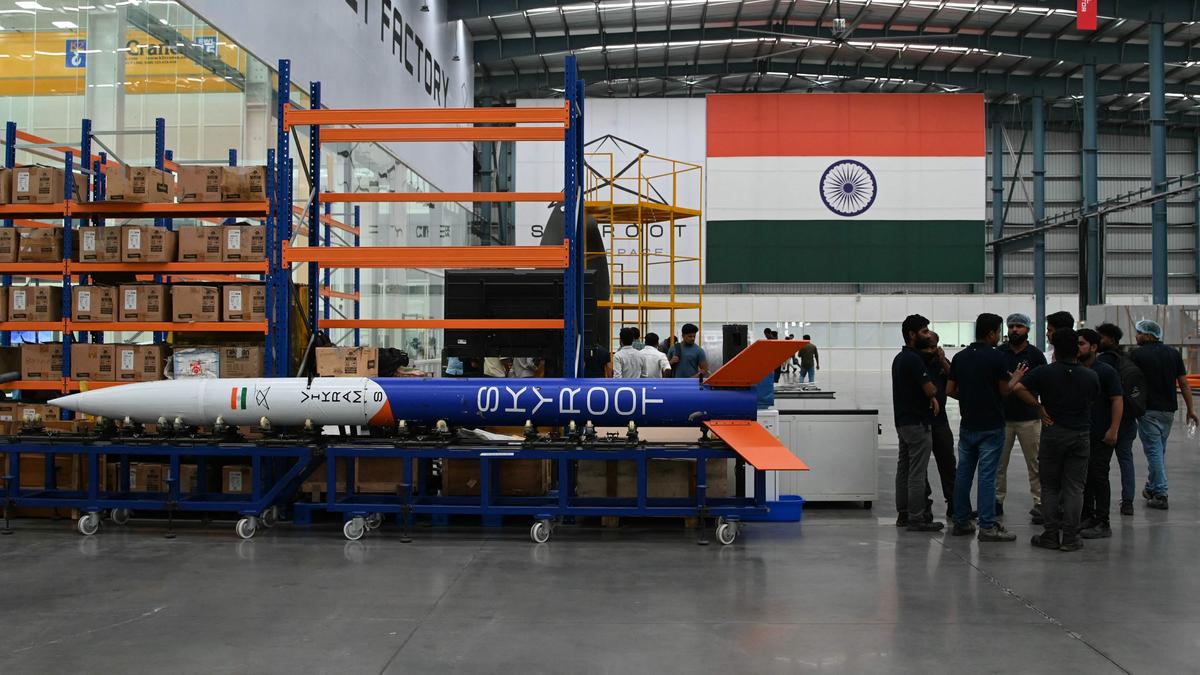
The story so far: The Vikram-1 rocket, built by the Hyderabad firm Skyroot, shot through the sky a little past noon on July 18, 2026. The seven-storey rocket lifted off ISRO’s First Launch Pad at Sriharikota and, a little over fifteen minutes later, placed its payloads in an orbit roughly 450 km above the earth. The rocket was Aerospace, and the mission — named Aagaman, Sanskrit for “arrival” — made India only the third country, after the United States and China, whose private industry can reach orbit on its own launch vehicle.

Skyroot’s 3D-printed engine: What it is and why it matters

Rocket engines have traditionally been forged, machined, welded from dozens of parts. 3D printing, which engineers call additive manufacturing, inverts this. A laser fuses metal powder layer upon layer, building the part up from nothing. There are some real advantages to this approach. An engine printed as one piece sheds the bolts, seals and joints where conventional engines leak and fail; when Skyroot test-fired its Raman engine in 2020, it said the fully printed injector halved the mass and cut components and lead time by 80% against conventional manufacture.

Complex internal plumbing — the fine cooling channels that let Vikram-1’s regeneratively cooled engine chill itself with its own propellant — can be printed in shapes no drill can reach. Prototypes emerge in days, not months, so a startup can test, fail and redesign at a pace that would have been anathema to ISRO’s supplier chains. The downsides are subtler: peer-reviewed surveys of the field flag porosity, rough internal surfaces and batch-to-batch variability, and NASA has documented a printed copper combustion chamber failing on the test stand from degraded material quality. A printed engine, in short, is faster and lighter but demands obsessive quality control — the flaw hides inside the layers.

What is the significance of Vikram’s “all-carbon-composite” body?

If the engine is printed, the airframe is woven. Carbon-fibre composite — filaments of near-pure carbon set in resin — offers specific strength (strength per unit weight) many times that of aerospace aluminium or maraging steel; Skyroot claims a five-fold saving over the best rocket steel. Every kilogram of structure trimmed is a kilogram of satellite gained.

The American company, Rocket Lab’s Electron rocket, pioneered the approach and Vikram-1 follows it. The material also resists fatigue and corrosion and can be laid up by automated machines into seamless tubes — Vikram-1’s Stage-1 is India’s longest single-piece composite rocket stage. The disadvantages: the material and its curing infrastructure are expensive; its strength runs along the fibres, so a poorly designed laminate is strong one way and brittle another; and damage — a delamination from a knock in transport — can lurk invisibly beneath a perfect surface, demanding ultrasonic inspection where a dent in aluminium announces itself.

Is this comparable to ISRO’s PSLV?

In architecture, yes; in scale and philosophy, no. Both are four-stage expendable rockets that end in a restartable liquid stage for precise orbital insertion — Vikram-1’s Orbital Adjustment Module is a miniature cousin of the PSLV’s PS4. Both lean on India’s long mastery of solid propulsion. But the PSLV is a 44-metre, 320-tonne workhorse alternating solid and liquid stages to lift 1,750 kg to polar orbit; Vikram-1 is a 22-metre featherweight stacking three solid stages under its liquid module to carry 350 kg. The PSLV wears maraging steel; Vikram-1 wears carbon.

The nearer ISRO analogue is the SSLV, and there the comparison sharpens. The two are architectural twins: three solid stages capped by a small restartable liquid module, both conceived for small satellites on short notice. On raw capacity ISRO wins: SSLV lifts 500 kg to low earth orbit against Vikram-1’s 350. However Vikram’s all-carbon airframe is leaner than SSLV’s conventional casings, a printed engine line built for faster iteration, and — the deepest difference — institutions. SSLV was designed by the state and its production licensed to Hindustan Aeronautics Limited for ₹511 crore; Vikram-1 is owned outright by its maker, financed by venture capital, priced by the market.

Did Vikram-1’s maiden flight go as planned?

Almost to the second. Reports confirm every milestone was met, including the process called ‘long coast,’ a tricky phase for a debutant, which must hold attitude with nothing pushing it and, the final burn of the printed engine. For a maiden flight whose stated ambition was merely to clear the tower and gather data, reaching orbit is over-achievement: Electron, Firefly’s Alpha and ISRO’s own SSLV all stumbled for the first time.

Five working payloads and two talismans: EMBRACE, a robotic-arm demonstration by Cosmoserve Space aimed at grabbing space debris; the SOLARAS satellite from Grahaa Space; Skyroot’s own SCOPE experimental satellite; and two deployable-technology demonstrators, uD3PP and mD3RN, from the German firm Dcubed. Alongside flew a lab-grown diamond lotus and an 18-karat gold micro-rocket bearing rice-grain sculptures of Sarabhai, Raman and Kalam — the three names Skyroot gives its rockets and engines. The company has said that all the payloads have been deployed.

Who else is building private rockets in India?

No — and the rivalry may be the healthiest sign of all. Skyroot holds both of Indian private spaceflight’s firsts — the suborbital Vikram-S in November 2022, and now orbit with customer payloads. But Chennai’s AgniKul Cosmos, incubated at IIT Madras, runs a parallel course: its Agnibaan SOrTeD flew sub-orbitally in May 2024 from India’s first private launchpad, on the world’s first single-piece 3D-printed engine — a semi-cryogenic design burning liquid oxygen and kerosene, a propellant technology ISRO itself is still maturing. Having test-fired four Agnilet engines in cluster this May, and with former ISRO chairman S. Somanath joining its board, AgniKul is preparing Mission 02: a two-stage Agnibaan attempting India’s first sea recovery of an orbital-class booster, its upper stage staying alive in orbit as a working platform. Mission 02, in other words, aims at reusability — the technology that rewrote launch economics, and the next barrier Indian rockets must clear.

Since the 2020 reforms and IN-SPACe’s creation in 2022, India’s space startups have multiplied from a handful to more than 400, but until Saturday (July 18, 2026) they all needed ISRO’s rockets to fly. A private launcher turns ISRO from gatekeeper into landlord — and turns access to orbit from a national programme into a market. The small-satellite launch business is supply-starved worldwide; Skyroot pitches itself as a cab service to space. Saturday was only the the first ride.

Published – July 18, 2026 03:56 pm IST



Source link

Science Tags:Explainer on Vikram-1 rocket launch, Skyroot Vikram-1 rocket launch, Skyroot Vikram-1 rocket launch Explained, The Hindu explains Skyroot Vikram-1 rocket launch, Vikram-1 rocket launch

Post navigation

Previous Post: U.S. military launches new airstrikes to ‘swiftly punish’ Iran for deaths of U.S. troops
Next Post: As Vikram-1 reaches orbit, Skyroot faces a steep climb to business success

Related Posts

  • The environment, another casualty of war in West Asia
    The environment, another casualty of war in West Asia Science
  • Cartesian coordinates: a way to find your way
    Cartesian coordinates: a way to find your way Science
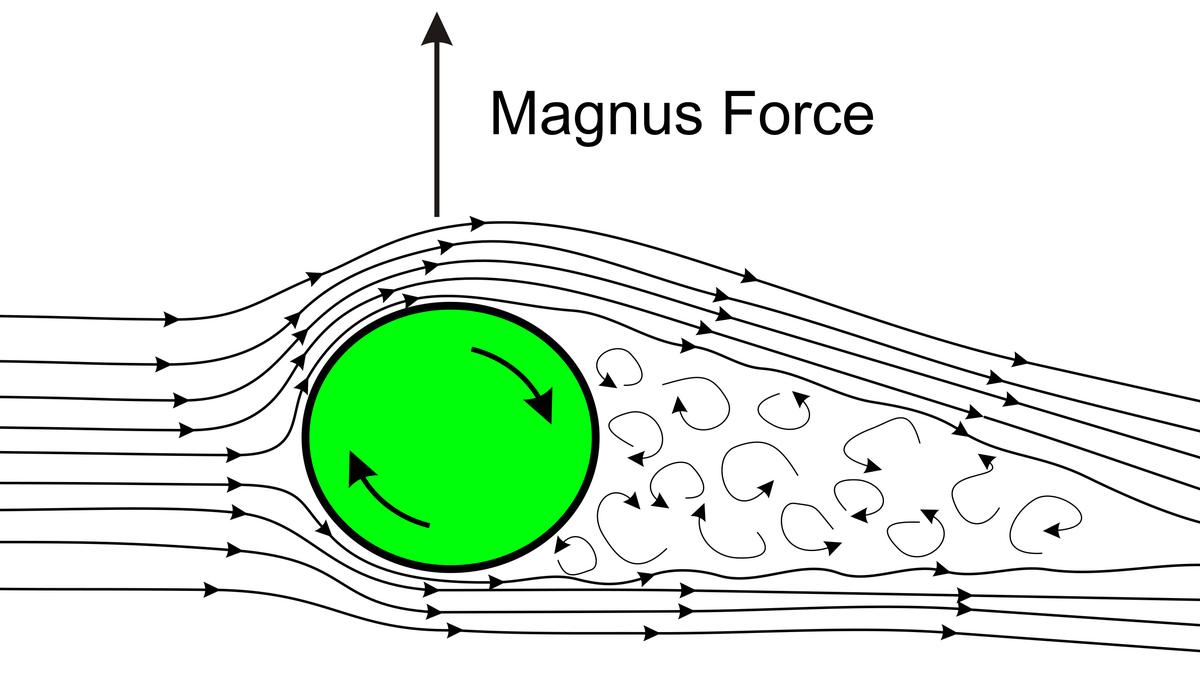
  • Spin Science: Explaining the Magnus effect
    Spin Science: Explaining the Magnus effect Science
  • Peripheral neuropathy: why only some mutations cause disease
    Peripheral neuropathy: why only some mutations cause disease Science
  • ‘Station’ in Ladakh begins research to simulate life on Moon, Mars
    ‘Station’ in Ladakh begins research to simulate life on Moon, Mars Science
  • New Ebola outbreak shows how market failure delays vaccine research
    New Ebola outbreak shows how market failure delays vaccine research Science

More Related Articles

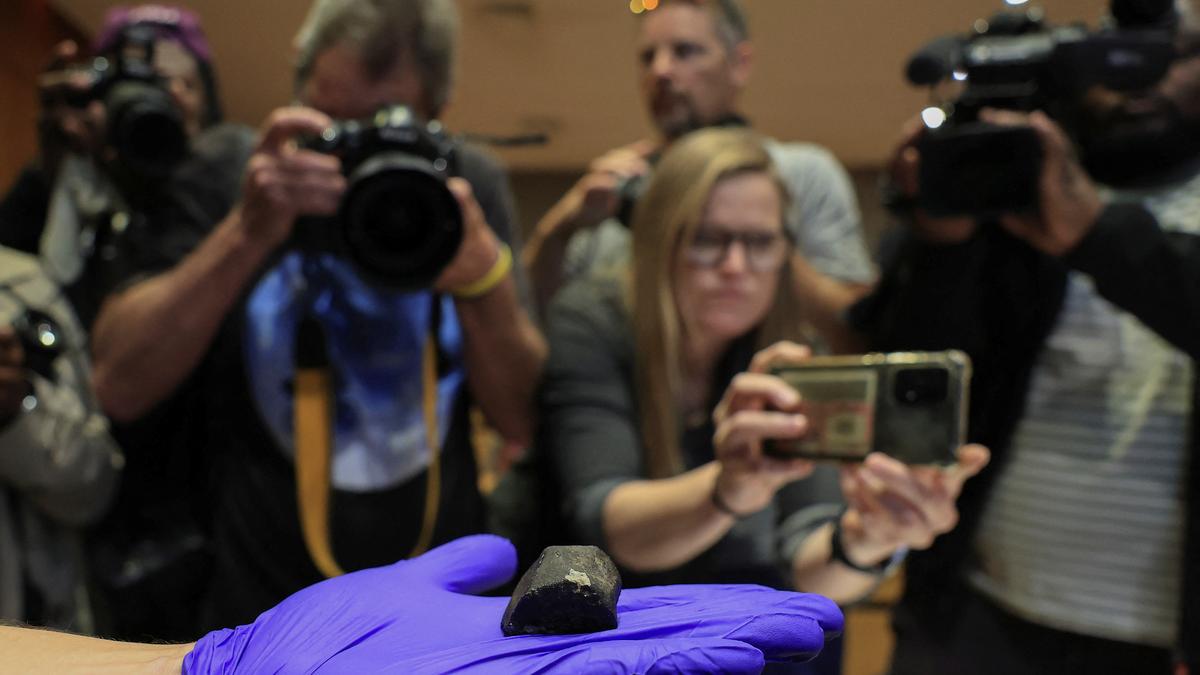
South African scientists unveil fragment of motorcycle-sized meteorite South African scientists unveil fragment of motorcycle-sized meteorite Science
Why do we not hear sounds while sleeping? Why do we not hear sounds while sleeping? Science
Women with no sexual autonomy twice likely to get STIs: study Women with no sexual autonomy twice likely to get STIs: study Science
The state is draining ISRO’s hard-won excellence The state is draining ISRO’s hard-won excellence Science
Earth-wide telescope confirms black hole shadow is ‘real’ Earth-wide telescope confirms black hole shadow is ‘real’ Science
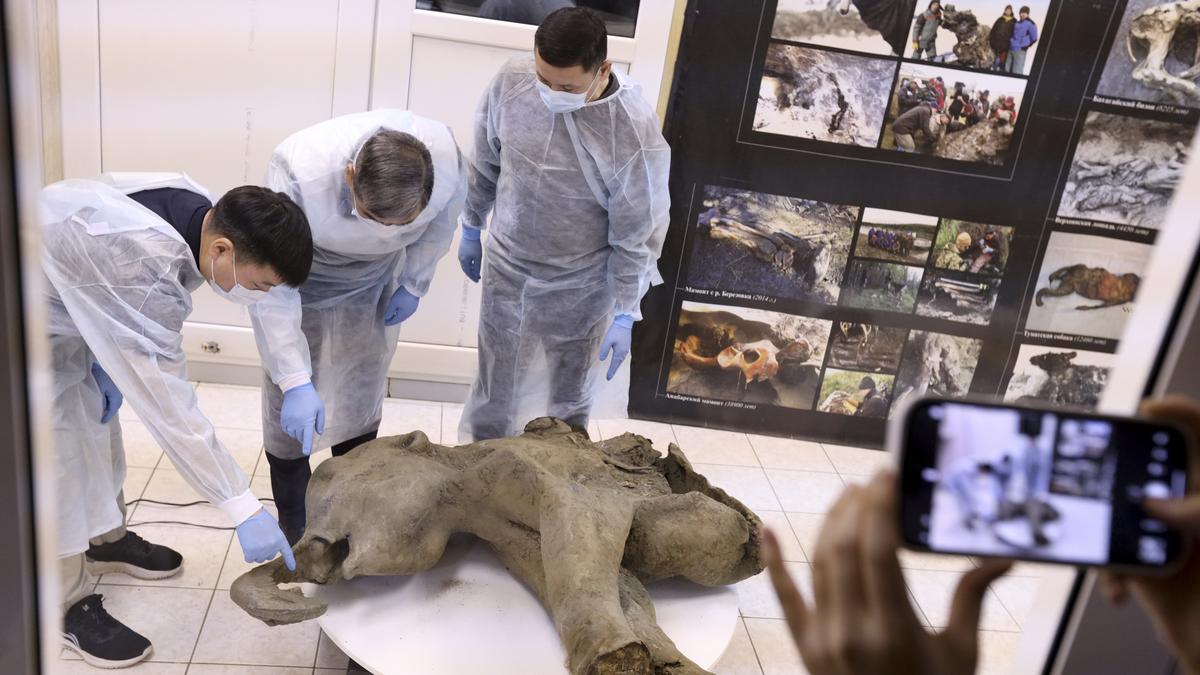
Young mammoth remains found nearly intact in Siberian permafrost Young mammoth remains found nearly intact in Siberian permafrost Science
SiteLock

Archives

  • October 2026
  • September 2026
  • August 2026
  • July 2026
  • June 2026
  • May 2026
  • April 2026
  • March 2026
  • February 2026
  • January 2026
  • December 2025
  • November 2025
  • October 2025
  • September 2025
  • August 2025
  • July 2025
  • June 2025
  • May 2025
  • April 2025
  • March 2025
  • February 2025
  • January 2025
  • December 2024
  • November 2024
  • October 2024
  • September 2024
  • August 2024
  • July 2024
  • June 2024
  • May 2024
  • April 2024
  • March 2024
  • February 2024
  • January 2024
  • December 2023
  • November 2023
  • October 2023
  • September 2023
  • August 2023
  • July 2023
  • June 2023
  • May 2023
  • April 2023
  • March 2023
  • February 2023
  • January 2023
  • December 2022
  • November 2022
  • October 2022
  • September 2022
  • August 2022
  • July 2022
  • June 2022
  • May 2022

Categories

  • Business
  • Nation
  • Science
  • Sports
  • World

Recent Posts

  • France demands Israel act after ‘criminal violence’ against visiting mayor
  • Andhra University delegation in U.S. for centenary outreach; MoU with University of Houston on the table
  • Rani Abbakka Chowta: the Warrior Queen of the Seas
  • 125-year-old aided school in Thanjavur awaits government consent for relocation
  • Union Minister meets start-up leaders over NCR pollution

Recent Comments

  1. RobertGat on UP Teacher Who Asked Students To Slap Muslim Classmate
  2. RobertGat on UP Teacher Who Asked Students To Slap Muslim Classmate
  3. RobertGat on UP Teacher Who Asked Students To Slap Muslim Classmate
  4. RobertGat on UP Teacher Who Asked Students To Slap Muslim Classmate
  5. Davidbrurf on UP Teacher Who Asked Students To Slap Muslim Classmate
  • Fijian Premier Praises PM Modi
    Fijian Premier Praises PM Modi World
  • Access Denied Sports
  • New Zealand parliament passes India trade deal, cutting tariffs on most exports
    New Zealand parliament passes India trade deal, cutting tariffs on most exports World
  • L’affaire Hardik — IPL’s first pure football moment
    L’affaire Hardik — IPL’s first pure football moment Sports
  • National Science Day 2024: Why sustainable funding matters for India’s ‘science power’ ambition | Explained
    National Science Day 2024: Why sustainable funding matters for India’s ‘science power’ ambition | Explained Science
  • More questions than answers for Chennai Super Kings
    More questions than answers for Chennai Super Kings Sports
  • Fishermen seek infrastructure, training to revive tuna fishing harbour in Tiruvottiyur
    Fishermen seek infrastructure, training to revive tuna fishing harbour in Tiruvottiyur Nation
  • IPL 2024 Live: MI Strike Early, RR Suffer Setback In 126-Run Chase
    IPL 2024 Live: MI Strike Early, RR Suffer Setback In 126-Run Chase Sports

Editor-in-Chief:
Mohammad Ariff,
MSW, MAJMC, BSW, DTL, CTS, CNM, CCR, CAL, RSL, ASOC.
editor@artifex.news

Associate Editors:
1. Zenellis R. Tuba,
zenelis@artifex.news
2. Haris Daniyel
daniyel@artifex.news

Photograher:
Rohan Das
rohan@artifex.news

Associate Journalists
1. Subrata Paul - AN/2020/01
2. Quamruz Zaman - AN/2021/22
3. Ahmed Sha - AN/2021/035
4. Ajay Kumar Shaw - AN/2021/39
5. Tahqiqul Hoda - AN/2021/21

Artifex.News offers Online Paid Internships to college students from India and Abroad. Interns will get a PRESS CARD and other online offers.
Send your CV (Subjectline: Paid Internship) to internship@artifex.news

Links:
Associate Journalism
About Us
Privacy Policy

News Links:
Breaking News
World
Nation
Sports
Business
Entertainment
Lifestyle

Registered Office:
72/A, Elliot Road, Kolkata - 700016
Tel: 033-22277777, 033-22172217
Email: office@artifex.news

Editorial Office / News Desk:
No. 13, Mezzanine Floor, Esplanade Metro Rail Station,
12 J. L. Nehru Road, Kolkata - 700069.
(Entry from Gate No. 5)
Tel: 033-46011099, 033-46046046
Email: editor@artifex.news

Copyright © 2023 Artifex.News Newsportal designed by Artifex Infotech.