




The World Health Organization declared the Bundibugyo ebolavirus (BDBV) outbreak in the Democratic Republic of the Congo and Uganda to be a public health emergency of international concern on May 17.
The outbreak exposes a critical gap in international vaccine preparedness. There is no licensed vaccine yet for the Bundibugyo species of the ebolavirus because the resources required to develop one have not been mustered and because of the specific economic realities of neglected tropical diseases (NTDs).
BSL-4 facilities
To study, develop, and test a vaccine, medical researchers need the virus itself or its genetic sequence to ensure the vaccine’s antigens match the circulating strain. In mid-May, the National Institute of Biomedical Research in the Congo and the Central Public Health Laboratories in Uganda delivered this sequence.
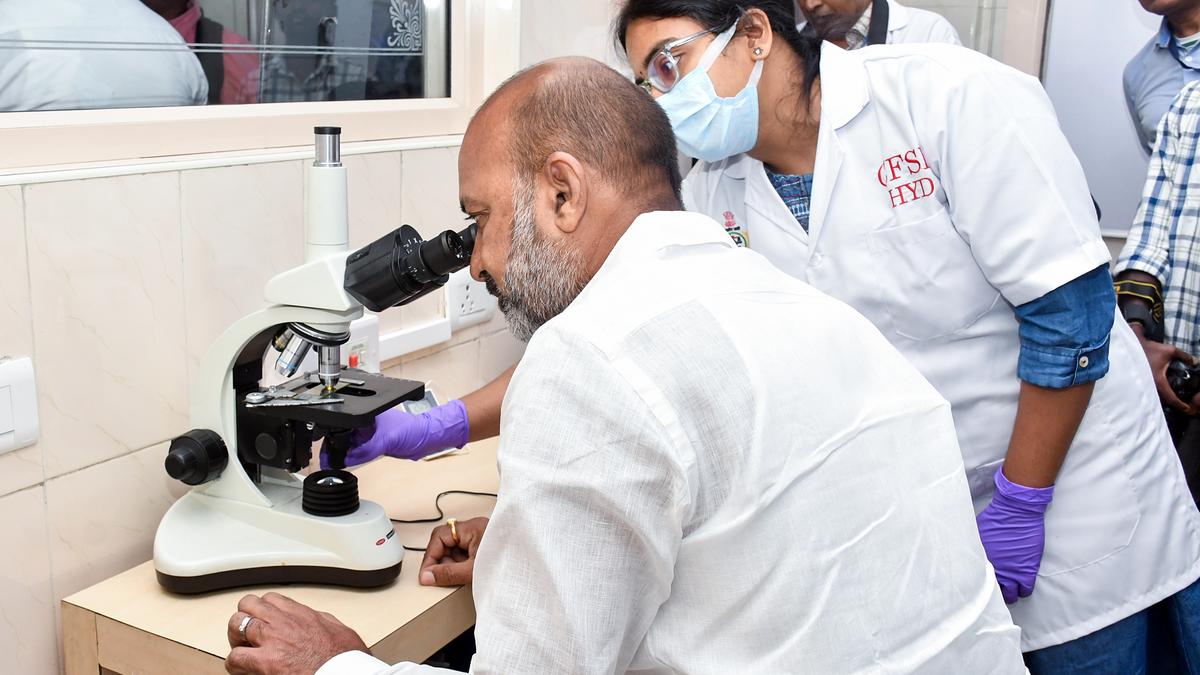
Second, to work with a live ebolavirus, scientists need Biosafety Level (BSL) 4 facilities. These are research facilities with the highest level of biological containment, required when dealing with deadly viruses — like ebolavirus and Nipah virus — or viruses that are very easily transmitted or which have no known treatment.
BSL-4 facilities are strongly isolated, with monolithic walls, floors, and ceilings, tightly sealed pipes and wires, multiple sterile rooms with specialised airlocks, negative air pressure (so that a leak causes air to flow into the facility), dedicated ventilation systems, and redundant HEPA filters. All waste from the facility is first sterilised before being disposed of.
Personnel in a BSL-4 facility have to don positive-pressure suits (leak causes air to flow out) and pass through decontamination showers. They also have to undergo rigorous medical tests. There are just over a hundred BSL-4 facilities worldwide, including two in India.

Primate trials
To design the vaccine, researchers need to identify which proteins of the virus provoke the antibody responses in the human body. Then, they need to select a platform — the technology that will carry the antigen into the body and present it to the immune system. The options for ebolavirus include viral vectors such as rVSV or ChAdOx1, mRNA-based approaches, and protein subunits.
Finally, the vaccines may be tested in animal models, in particular non-human primates, as they are the gold standard to assess the safety and efficacy of a vaccine against a disease with a mortality rate of 25% to 90%. Human clinical trials would be better but such an enterprise would be extraordinarily complicated during an ongoing outbreak.
Once a vaccine is ready, manufacturing it will require hundreds of millions of dollars in addition to development costs, including specialised facilities, cold storage and transport chains (at -80° to -60° C), quality control, regulatory approvals, and advance purchase commitments.
Then, at the very last stage of this long pipeline, healthcare workers and public health officials must detect an outbreak early and administer the vaccine, to avail its benefits.

What ‘neglect’ means
The ebolavirus is not a single virus species but a genus with multiple, including ‘Zaire’, ‘Sudan’, ‘Bundibugyo’, and ‘Taï Forest’. If a person has become immune to one species, they are not expected to be sufficiently cross-protected against infection by another species. This is because the different species have different surface proteins, so each outbreak may require species-specific research.
Ebolavirus outbreaks are also sporadic and hard to predict as to their location — which is unlike influenza or COVID-19, which circulate continuously in populations. So by the time an ebolavirus vaccine reaches the third phase of a clinical trial, the outbreak may have already subsided, leaving fewer cases to track for the trial.
The commercial market for ebolavirus vaccines is small and concentrated in lower-income countries, which means the financial incentive for pharmaceutical companies to invest without substantial backing from governments and/or coalitions like Gavi and the Coalition for Epidemic Preparedness Innovations (CEPI) is minimal.
All of the same factors attend to most NTDs, and illustrate what the ‘neglect’ in their name entails. NTDs are almost always diseases of poor, rural, and politically marginalised populations in the world’s tropical and subtropical areas. In fact, these people are neglected — and that’s why their diseases are neglected as well.

Two declarations
Historically, funding for infectious diseases was dominated by just three: HIV/AIDS, tuberculosis, and malaria. The situation changed somewhat following the London Declaration in 2012 and the Kigali Declaration in 2022.
With the participation of the WHO, the World Bank, 13 pharmaceutical companies, and representatives from seven countries, the London Declaration committed to eliminate or control 10 NTDs by 2020 with more than $785 million for research and development. The Kigali Declaration, sponsored by Rwanda, aimed to reinvigorate commitments to eliminate the NTDs; at a June 23, 2022, event, the country reported a pledge of $1.5 billion by various governments, pharmaceutical companies, and NGOs.
However, R&D has often been patchy, compounded by weak healthcare delivery and poor (disease) surveillance. Governments have also often prioritised diseases afflicting patients in richer countries. But the worst is perhaps market failure, as affected populations have little purchasing power while developing a single vaccine these days costs more than a billion dollars. The vaccines also cannot be sold for much in countries most of whose populations live on two dollars a day.
Many NTDs are caused by eukaryotic parasites, i.e. worms and protozoa, which develop in multiple stages across multiple hosts, complicating researchers’ efforts to identify a stable antigen for vaccines to target. The immune system also struggles to confer lasting protection against infections by these organisms, making them categorically harder to vaccinate against than, say, measles.
Local response
At this time, there are two licensed Ebolavirus vaccines — Ervebo and a combination of Zabdeno and Mvabea — but they are both for the ‘Zaire’ species. The Bundibugyo species is also much rarer, having caused only two outbreaks before the current one. As a result, research on it hasn’t drawn significant investments.
Promising Bundibugyo vaccine candidates are currently in preclinical or early development, with the WHO and the Oxford Vaccine Group estimating at least six months more to manufacture enough doses for a small clinical trial.
Taken together, the local healthcare systems — already strained by conflict and climate change — are left with reliably detecting cases, isolating patients, contact-tracing, safe burial practices, and community engagement to manage the Bundibugyo ebolavirus outbreak.

Causes for hope
That said, in the meantime, the Road Map 2021-2030 of the WHO has specified eliminate-by targets for particular NTDs and has been pushing domestically led programmes that combine mass drug administration, vector control, sanitation, and surveillance.
In February this year, the African Union launched ‘ACHIEVE Africa’, a programme to build indigenous R&D for vaccine development for NTDs that western manufacturers have overlooked. Using the help of such programmes, the African Union plans to manufacture 60% of the continent’s vaccine needs by 2040. Likewise, CEPI has increasingly funded work on pathogens that currently present weak commercial incentives.
Also earlier this year, India initiated phase I human clinical trials for an indigenous vaccine against Kyasanur forest disease, a regional NTD. Hubs established in South Africa and Senegal to manufacture mRNA vaccines for COVID-19 are being repurposed to produce experimental vaccines for NTDs, including leishmaniasis.
Brazil and Cuba have built state manufacturing capacity to address diseases that multinational firms have skipped (although this may no longer be a priority in Cuba, which has faced prolonged fuel and medicine shortages thanks to crippling U.S. embargoes).
But for now, the Bundibugyo ebolavirus outbreak continues to unfold against infrastructure and financing gaps and a broader system that struggles to respond to diseases of the poor and the peripheral.