


Skip to content
  • Facebook
  • X
  • Linkedin
  • WhatsApp
  • YouTube
  • Associate Journalism
  • About Us
  • Privacy Policy
  • 033-46046046
  • editor@artifex.news
Artifex.News

Artifex.News

Stay Connected. Stay Informed.

  • Breaking News
  • World
  • Nation
  • Sports
  • Business
  • Science
  • Entertainment
  • Lifestyle
  • Toggle search form
  • Access Denied
    Access Denied Nation
  • US On Khalistani Terrorist Hardeep Singh Nijjar’s Murder
    US On Khalistani Terrorist Hardeep Singh Nijjar’s Murder World
  • Access Denied Sports
  • China’s Xi to host South Korea’s Lee in New Year amid Japan tensions
    China’s Xi to host South Korea’s Lee in New Year amid Japan tensions World
  • Tractor Driver Making ‘Reels’ On Road Hits Bike, Kills Class 10 Student In Noida
    Tractor Driver Making ‘Reels’ On Road Hits Bike, Kills Class 10 Student In Noida Nation
  • Suryakumar Yadav Names His “Most Important Catch”, It Isn’t From T20 World Cup Final
    Suryakumar Yadav Names His “Most Important Catch”, It Isn’t From T20 World Cup Final Sports
  • 25 Killed, 39 Injured In 24 Hours In Lightning Incidents In Bihar
    25 Killed, 39 Injured In 24 Hours In Lightning Incidents In Bihar Nation
  • Jaya Bachchan Irked After Being Addressed As ‘Jaya Amitabh Bachchan’
    Jaya Bachchan Irked After Being Addressed As ‘Jaya Amitabh Bachchan’ Nation
Women with no sexual autonomy twice likely to get STIs: study

Women with no sexual autonomy twice likely to get STIs: study

Posted on May 18, 2024 By admin


Women who had controlling husbands and had experienced intimate partner violence in their married life are more at risk of developing sexually transmitted infection (STI) or reproductive tract infection (RTI) than women who do not report facing control or intimate partner violence (IPV) in their marriage, a new study reveals.

The study analyses data obtained from a sample size of 73,895 women in National Family Health Survey-5 (2019-2021) and was conducted by researchers in School of Health Systems Studies in Mumbai-based Tata Institute of Social Sciences and Centre for Study of Regional Development in JNU. 

One in nearly every twelve married women in the age group of 15-49 years in India had experienced at least one sexually transmitted infection or reproductive tract infection over a period of one year, the study states.

To gauge if women had experienced STI/RTI, those who reported being sexually active, were asked whether they had a disease through sexual contact, a bad-smelling abnormal genital discharge, and a genital sore or ulcer in the last 12 months preceding the survey.

The study analyses in detail questions posed to women in NFHS-5 pertaining to sexual autonomy — if a wife knows her husband has a sexually transmitted disease, is she justified in asking use of a condom when they have sex; if a wife knows her husband has sex with other women, is she justified in refusing to have sex with him; and can a wife say no to her husband when she does not want to have sexual intercourse with him.

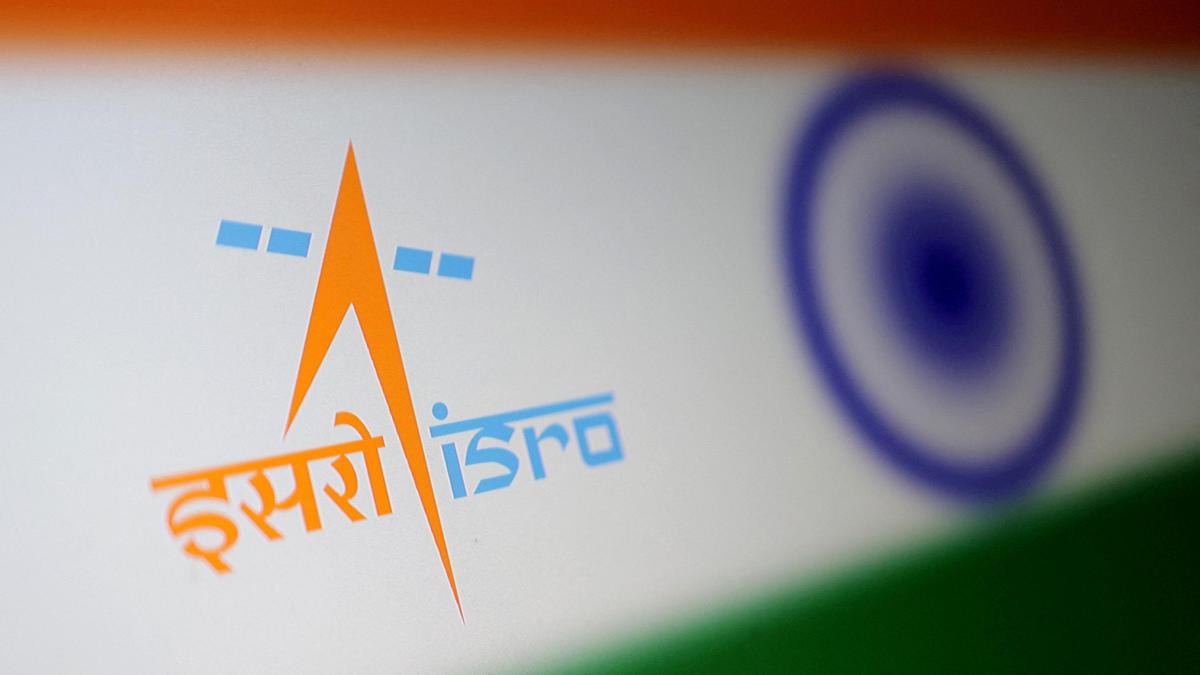
The study reveals that a majority — 73% women of the total sample size claimed that they had sexual autonomy. A third of the same sample size (31%) had faced intimate partner violence be it physical which included husband pushing the wife, kicking her, dragging or punching her and so on, sexual which includes husband forcing wife to have sex with him or emotional where husband has humiliated or threatened to hurt the wife or someone close to her or insulted her. Also, 46% of the same sample size said that they faced controlling attitudes of their husbands, which included husband being jealous if wife talked to other men, frequently accusing wife of being unfaithful, not permitting wife from meeting female friends, trying to limit wife’s contact with her core family, insisting on knowing where she is at all times, and not trusting her with money. 

“The study reveals that STI/RTI infection was substantially higher among women who experienced intimate partner violence (18.4%) as compared to those women who did not (9.7%). Also 15.9% women who face controlling attitudes of the husband also reported STI/RTI as compared to 9.4% women who reported STI/RTI but had not faced control from husband,” said Pintu Paul, co-author of the study. 

Women who had no sexual autonomy and were exposed to intimate partner violence were 2.3 times more likely to have STI/RTI than those who had sexual autonomy and were not exposed to intimate partner violence. Similarly, women without sexual autonomy and whose husbands endorsed controlling attitudes were over twice more likely to be exposed to RTI than those who had sexual autonomy and had not experienced their husband’s controlling attitudes.

Mr. Paul further said, women who had sexual autonomy and freedom of physical mobility were 24% less likely to experience RTI compared to those who did not. Women’s freedom of movement is measured by their ability to go to the market, the health centre and places outside the village or community.

However, the influence of household decision-making was found to be greater than physical mobility in reducing the risk of RTI among women. “Women who had sexual autonomy and decision-making autonomy had a 36% decreased likelihood of having RTI infection than those who had not,” Mr. Paul emphasised. A woman’s household decision-making ability is assessed in terms of whether she can take decisions about her own health care, make large purchases for the household and visit family or relatives. 

Mr. Paul also said, “After controlling for sociodemographic factors in the full model, women with sexual autonomy were associated with a 12% lower likelihood of having STI/RTI than those without sexual autonomy.”

“This may be because sexually autonomous women may have greater self-efficacy and bargaining power in their marital relationships, enabling them to make decisions about their sexual and reproductive health,” the study states. 

Also, the prevalence of STI/RTI was higher among younger women aged 15 to 24 years (13%) and 25 to 34 years (13.2%) as compared to older women aged 35 to 49years (11.6%).

“Our findings call for policy-level interventions to prevent child marriage and domestic violence against women and change regressive social norms that curb women’s decision-making ability and freedom of movement,” Mr. Paul added.


Source link

Science Tags:Intimate partner violence, Reproductive tract infection, Sexual autonomy, Sexually transmitted infection

Post navigation

Previous Post: Iran hangs two women as surge in executions intensifies: NGO
Next Post: NDTV Mega Exclusive – When Scope, Scale And Speed Meet Skill: PM Modi’s Recipe For Success

Related Posts

  • Clearest black hole merger signal yet allows probe of Hawking’s law
    Clearest black hole merger signal yet allows probe of Hawking’s law Science
  • Science This Week | Scientists discovers ‘bubble of galaxies’, bird-like dinosaur found in China and more
    Science This Week | Scientists discovers ‘bubble of galaxies’, bird-like dinosaur found in China and more Science
  • Which country is closest to space?
    Which country is closest to space? Science
  • Researchers identify key genetic factors causing oral cancer early among Indian tobacco chewers
    Researchers identify key genetic factors causing oral cancer early among Indian tobacco chewers Science
  • IISc announces distinguished alumni awards for 2023
    IISc announces distinguished alumni awards for 2023 Science
  • In Delhi study, ragas in the operation theatre cut anaesthesia use
    In Delhi study, ragas in the operation theatre cut anaesthesia use Science

More Related Articles

Race for Sun heats up: These are various solar missions Race for Sun heats up: These are various solar missions Science
What is a GPU? How does it work? | Explained What is a GPU? How does it work? | Explained Science
National Science Day | What do scientists do?  National Science Day | What do scientists do?  Science
ISRO’s Gaganyaan mission: PM Modi announces Indian astronaut designates ISRO’s Gaganyaan mission: PM Modi announces Indian astronaut designates Science
Indian researchers reveal novel mutation that causes rare condition among consanguineous children Indian researchers reveal novel mutation that causes rare condition among consanguineous children Science
‘Welcome, buddy!’: Chandrayaan-3’s Lander Module establishes contact with Chandrayaan-2’s orbiter ‘Welcome, buddy!’: Chandrayaan-3’s Lander Module establishes contact with Chandrayaan-2’s orbiter Science
SiteLock

Archives

  • May 2026
  • April 2026
  • March 2026
  • February 2026
  • January 2026
  • December 2025
  • November 2025
  • October 2025
  • September 2025
  • August 2025
  • July 2025
  • June 2025
  • May 2025
  • April 2025
  • March 2025
  • February 2025
  • January 2025
  • December 2024
  • November 2024
  • October 2024
  • September 2024
  • August 2024
  • July 2024
  • June 2024
  • May 2024
  • April 2024
  • March 2024
  • February 2024
  • January 2024
  • December 2023
  • November 2023
  • October 2023
  • September 2023
  • August 2023
  • July 2023
  • June 2023
  • May 2023
  • April 2023
  • March 2023
  • February 2023
  • January 2023
  • December 2022
  • November 2022
  • October 2022
  • September 2022
  • August 2022
  • July 2022
  • June 2022
  • May 2022

Categories

  • Business
  • Nation
  • Science
  • Sports
  • World

Recent Posts

  • Nicobarese oppose proposal for three wildlife sanctuaries
  • Visakhapatnam Collector calls for inter-departmental synergy to boost investments
  • Kohli’s masterful knock powers Royal Challengers to the top
  • Senior IPS officer Asra Garg posted IGP Intelligence
  • Vijay Narayan earns rare distinction of being Advocate General under two different governments

Recent Comments

  1. StevenLek on UP Teacher Who Asked Students To Slap Muslim Classmate
  2. Leonardren on UP Teacher Who Asked Students To Slap Muslim Classmate
  3. NathanQuins on UP Teacher Who Asked Students To Slap Muslim Classmate
  4. Davidgof on UP Teacher Who Asked Students To Slap Muslim Classmate
  5. NathanJobre on UP Teacher Who Asked Students To Slap Muslim Classmate
  • Access Denied
    Access Denied Nation
  • Access Denied
    Access Denied Nation
  • “Brain Fatt Jayega If You Play For MI…”: IPL Winner’s Blunt Take On ‘Culture’ At 5-Time Champions
    “Brain Fatt Jayega If You Play For MI…”: IPL Winner’s Blunt Take On ‘Culture’ At 5-Time Champions Sports
  • Twenty-four U.S. states announce lawsuit to stop Trump’s latest global tariffs
    Twenty-four U.S. states announce lawsuit to stop Trump’s latest global tariffs World
  • 1.5 Lakh Posts Under Safety Category Remain Vacant: Railways In RTI Reply
    1.5 Lakh Posts Under Safety Category Remain Vacant: Railways In RTI Reply Nation
  • Access Denied
    Access Denied Nation
  • Highways Authority Planning To Build Self-Healing Roads In India: Report
    Highways Authority Planning To Build Self-Healing Roads In India: Report Nation
  • “We Are Trying To Work With States…”: Sports Minister Raksha Khadse On India’s Bid To Host 2036 Olympics
    “We Are Trying To Work With States…”: Sports Minister Raksha Khadse On India’s Bid To Host 2036 Olympics Sports

Editor-in-Chief:
Mohammad Ariff,
MSW, MAJMC, BSW, DTL, CTS, CNM, CCR, CAL, RSL, ASOC.
editor@artifex.news

Associate Editors:
1. Zenellis R. Tuba,
zenelis@artifex.news
2. Haris Daniyel
daniyel@artifex.news

Photograher:
Rohan Das
rohan@artifex.news

Artifex.News offers Online Paid Internships to college students from India and Abroad. Interns will get a PRESS CARD and other online offers.
Send your CV (Subjectline: Paid Internship) to internship@artifex.news

Links:
Associate Journalism
About Us
Privacy Policy

News Links:
Breaking News
World
Nation
Sports
Business
Entertainment
Lifestyle

Registered Office:
72/A, Elliot Road, Kolkata - 700016
Tel: 033-22277777, 033-22172217
Email: office@artifex.news

Editorial Office / News Desk:
No. 13, Mezzanine Floor, Esplanade Metro Rail Station,
12 J. L. Nehru Road, Kolkata - 700069.
(Entry from Gate No. 5)
Tel: 033-46011099, 033-46046046
Email: editor@artifex.news

Copyright © 2023 Artifex.News Newsportal designed by Artifex Infotech.