




For more than a century, physicists have looked for a material that conducts electricity with zero resistance at room temperature — practical enough to transform how the world generates and uses energy. But for a long time, the highest temperature at which a material became superconducting at room pressure was -140 °C. Some other materials become superconducting close to room temperature, but only under extraordinary pressure.
In a study published in Proceedings of the National Academy of Sciences on March 9, scientists have reported raising the temperature by 18 °C, and under only room pressure. They used a new technique called pressure quenching to achieve this.
The result has broken a record that had stood since 1993, when the same material the team used — a copper oxide called Hg1223 — first demonstrated superconductivity at -140 °C, itself a landmark that launched decades of research.
‘Sounds reasonable’
Superconductors that work at room temperature and normal pressure could one day carry electricity through power grids without losing any energy to resistance — a problem that currently wastes billions of dollars’ worth of power every year. They could also enable faster MRI machines, more efficient electric motors, better transportation systems, and cheaper renewable energy infrastructure.
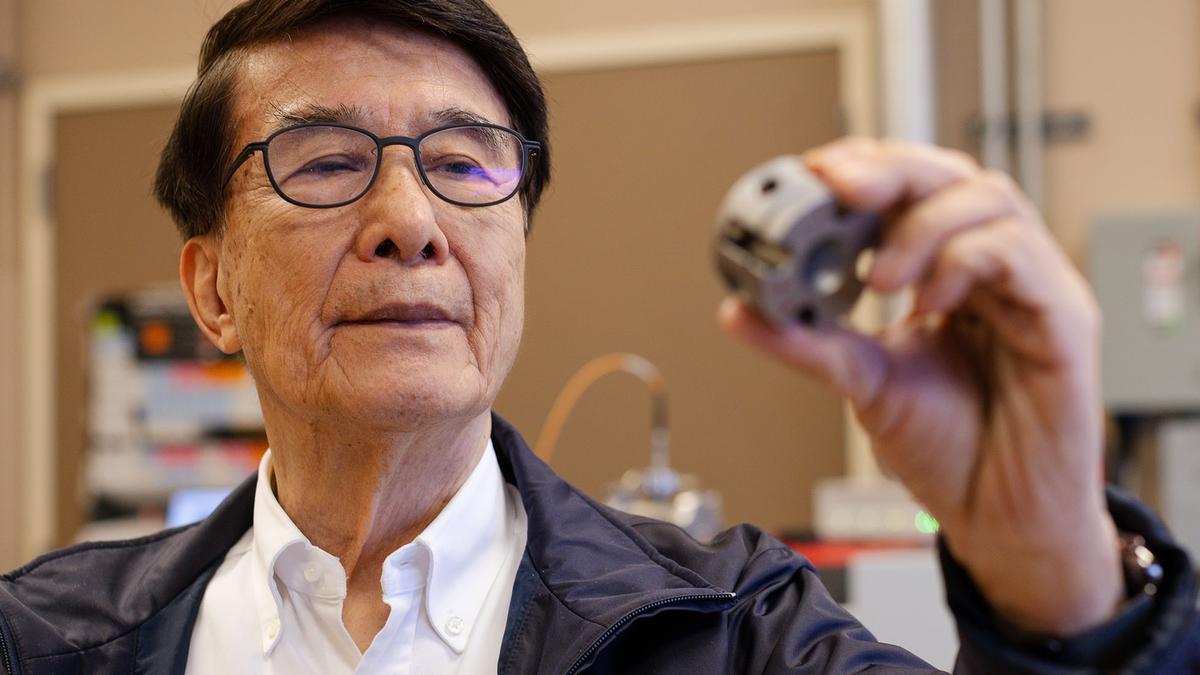
The team was led by physicists Liangzi Deng and Ching-Wu Chu at the University of Houston.
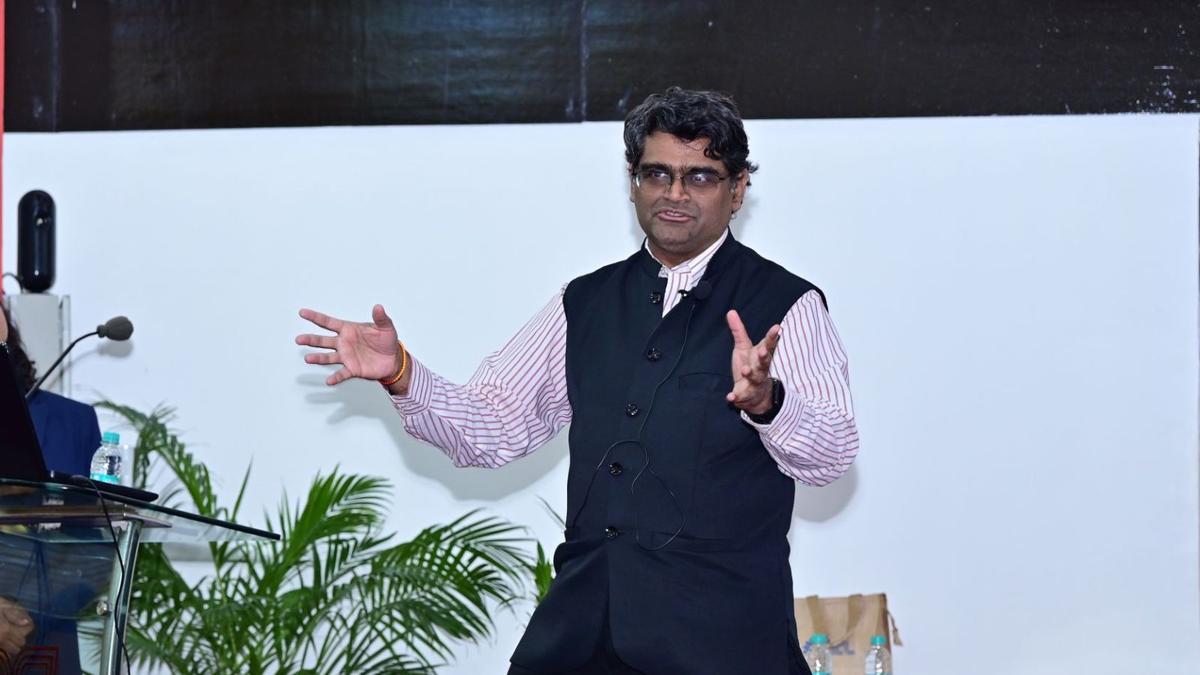
“The claim sounds reasonable to me,” Sumit Mazumdar, professor of physics, chemistry, and optical sciences at the University of Arizona, wrote to The Hindu in an email.
“The authors carefully study high-pressure structures, and when they find first order transitions (which involves latent heat), they do what they call pressure-quenching so that the changed high pressure structure persists even when the pressure is removed,” he added.
Intense pressure
Since 1993, the record for ambient pressure superconductivity has been stuck at -140 °C. While superconductivity is easy to achieve at extremely low temperature, bringing it to room temperature is a “holy grail” of physics. Researchers have achieved much higher temperatures in recent years, up to -13 °C, but only by applying pressure equivalent to that near the earth’s core.
These high-pressure states have also disappeared the moment the pressure was released, making them useless for practical technologies like lossless power grids or high-speed trains.
The problem was not that scientists lacked the materials. Under extreme pressure, Hg1223 itself superconducts at -109 °C. Some compounds rich in hydrogen have also shown hints of becoming superconductors at near room temperature. But they have all required intense pressure as well.

Reproducible data
The Houston team’s insight was to stop looking for new materials and to focus on preserving a known high-pressure state in Hg1223.
For this, the scientists developed the pressure-quench protocol (PQP) — a three-stage process designed to freeze a high-pressure superconducting state in place by removing pressure fast enough and at a low enough temperature.
They loaded a small crystal of Hg1223 into a diamond anvil cell and compressed it to up to 30 billion pascals (GPa), raising its superconducting temperature to over -123 °C, while keeping track of its superconducting properties. Then they cooled the sample to -269 ° C, just above absolute zero).
Finally, they rapidly released the pressure. Because the material was so cold, the atoms lacked the energy to relax back into their normal structure, effectively trapping the material’s desirable electronic properties at the normal atmospheric pressure.
Across five tests with different pressures and quenching conditions, the team consistently retained the transition temperature between -122 °C and -134 °C. They achieved the higher -122 °C by quenching from approximately 19 GPa at -269 °C. They could also reproduce it, a sign that it is likely real rather than an artifact in the data.
The 122 °C reading is 18 °C higher than the previous record held by the same material in its relaxed state.
The scientists also used synchrotron X-ray diffraction at the U.S. Argonne National Laboratory to find that while the material retained its original crystal structure after quenching, there were new defects in the structure and additional internal strain. These defects helped lock the crystal into a state where it mimicked the effects of pressure even after the pressure was removed.
The team confirmed that roughly 78% of the material’s volume became superconducting, so it wasn’t a surface or filamentary effect. If superconductivity is filamentary, it means electricity is only traveling through microscopic channels, called filaments, within the material. These filaments can only carry a very small amount of electrical current before they break and return to a normal state.
If the bulk is superconducting, as the researchers reported, the material can be expected to reliably carry large currents, which is required to transport power on run high-speed trains.
The quenched phase was stable for at least three days when stored in liquid nitrogen. Warming above -73 °C reduced the effect while room temperature (23 °C) partially reversed it. One experiment also produced a hint of superconductivity at -101 °C but the team wasn’t able to reproduce it.

‘Woodstock of physics’
The study’s lead investigator, Ching-Wu Chu, is a pioneer of high-temperature superconductivity. In 1987, Prof. Chu and his team made a landmark discovery when it synthesised a material called yttrium barium copper oxide (YBCO) that became a superconductor at -180 °C.
Until then, scientists only had materials that became superconducting below -269 °C, which meant they had to be cooled using expensive liquid helium. However, -180 °C was above the boiling point of liquid nitrogen (-196 °C), which meant scientists could cool YBCO using this much cheaper coolant, paving the way for more research and potential applications.
That same year, the American Physical Society held a special session on high-temperature superconductivity that ran past midnight and drew thousands of attendees — an event that has since been called the ‘Woodstock of physics’. Prof. Chu was one of the central figures there and presented his team’s results to a packed and electrified audience. The session captured the excitement of a field that, in that moment, seemed to be on the edge of transforming technology.
His work earned him numerous honours, including the National Medal of Science in 1994.
Now, beyond breaking a 33-year-old record, according to the new study’s authors, their work may also open the door for scientists to ‘stabilise’ exotic electronic properties in other materials that arise under pressure and make them available at ordinary conditions.
“The method, if it works out in other cases, has great promise for a room-pressure superconductor. Not yet for room-temperature,” according to Prof. Mazumdar. “The latter is not essential for technological applications. The entire issue therefore revolves around what the authors call pressure-quenching [and] whether structural changes that occur under pressure can really be retained post-quenching.”
He added that while this issue is beyond his expertise, it is not impossible.
“This result will be widely noted in the superconductivity community, and I expect that many experimentalist groups will apply the same methodology to other candidate materials,” Brookhaven National Laboratory, New York, physicist Ivan Božović, who wasn’t involved in the study but reviewed it for the journal, told Physics.
The paper’s authors themselves wrote: “We … believe that the record-breaking results at ambient pressure reported here represent only the beginning of an extremely fruitful scientific journey.”
Recent controversies
High-temperature superconductivity research has been shadowed by controversy for much of the past decade and understanding that backdrop has come to matter when evaluating new claims in the field. These episodes have made the research community acutely sensitive to the claims of new studies, particularly whether a given material’s resistance can really drop to zero — the hallmark of superconductivity — and if the data showing that is because the instruments are actually measuring the sample.
The most prominent case involved Ranga Dias at the University of Rochester in the U.S. Dias published papers claiming room-temperature superconductivity in carbonaceous sulphur hydrides in 2020 and nitrogen-doped lutetium hydrides in 2023. He and his team retracted both papers, published in Nature, after allegations that the magnetic susceptibility measurements had been manipulated to show signs of superconductivity. Multiple independent labs also failed to reproduce the findings. Dias contested the retractions and the dispute has already become one of the most acrimonious data-integrity controversies in physics.

In 2023, a group of researchers from South Korea said they had made a lead-based material called LK-99 that was a superconductor at room-pressure and room-temperature. The result generated intense public interest but soon, other scientists who recreated the experiment couldn’t find signs of superconductivity in LK-99. Later studies revealed that some of the measurements the South Korean team had made were ‘polluted’ by unexpected ferromagnetic behaviour in LK-99. The episode further exhausted the public appetite for superconductivity news.
‘Decades-old reputation’
Both Dias’s work and the new University of Houston study use diamond anvil cells. However, unlike the materials in Dias’s work, Hg1223 is well-understood and has a record going back to the 1980s. The team also focused on a unique state of the material — one that arises under intense pressure — rather than claim a new phase, experts said.
The study also directly addressed the primary criticism of the Dias episode: whether superconductivity is a bulk property or filamentary. As noted earlier, the team found that some 78% of the material was superconducting. Dias and others didn’t perform these tests.
“The dubious claims … came from people who were practically unknown prior to their claims of novelty,” Prof. Mazumdar said. “The principal author Chu in this case came close to winning the Nobel Prize [and] is the recipient of the US National Medal of Science. His current paper’s ref. 22 goes back to 1968.
“He is not going to risk his decades-old reputation writing fraudulent stuff.”
mukunth.v@thehindu.co.in