
Skip to content
  • Facebook
  • X
  • Linkedin
  • WhatsApp
  • YouTube
  • Associate Journalism
  • About Us
  • Privacy Policy
  • 033-46046046
  • editor@artifex.news
Artifex.News

Artifex.News

Stay Connected. Stay Informed.

  • Breaking News
  • World
  • Nation
  • Sports
  • Business
  • Science
  • Entertainment
  • Lifestyle
  • Toggle search form
  • Access Denied Sports
  • Sunil Chhetri says he’s filled with gratitude that he could play 150 matches for India
    Sunil Chhetri says he’s filled with gratitude that he could play 150 matches for India Sports
  • Bengaluru Man’s “Last Day, Last Moment” Checklist Before He Died By Suicide
    Bengaluru Man’s “Last Day, Last Moment” Checklist Before He Died By Suicide Nation
  • Sacked Ukraine Defence Minister urges path to elections
    Sacked Ukraine Defence Minister urges path to elections World
  • Mallikarjun Kharge On PM Modi’s Muslim League Jab
    Mallikarjun Kharge On PM Modi’s Muslim League Jab Nation
  • Watch: Pakistan Captain Shan Masood Furious With Third Umpire’s Controversial Call In 1st Test vs Bangladesh
    Watch: Pakistan Captain Shan Masood Furious With Third Umpire’s Controversial Call In 1st Test vs Bangladesh Sports
  • Consumers sue Amazon for not refunding Trump tariff costs
    Consumers sue Amazon for not refunding Trump tariff costs World
  • Access Denied World
Rapid, diagnostic test for UTIs may help stem super bug crisis

Rapid, diagnostic test for UTIs may help stem super bug crisis

Posted on June 13, 2024 By admin


This week a prize was announced that is likely to have far-reaching implications in the world of health care. Despite its importance most of the community is unaware of the event. The winner of the Longitude prize is poised to spearhead a revolution in the field of infection management and global efforts to tackle antimicrobial resistance. The £8million ( ₹85 crore) Longitude Prize on Antimicrobial resistance (AMR), first announced in 2014, revealed its winner at an event in London’s Science Museum. The PA-100 AST System from Sysmex Astrego is a high-tech, transformative, rapid, point-of-care test for UTIs (Urinary Tract Infection).

Rational use of antibiotics — choosing the appropriate antibiotic for the correct patient at the optimal time — is fundamental in saving lives and combating the superbug crisis. Rapid diagnostics are poised to be crucial in this effort. The winner of the Longitude Prize is set to spearhead the list of emerging rapid diagnostic technologies in a transformative manner. The applications for the Longitude Prize bring hope, suggesting that through collective action, we can look forward to a future protected from the threats of antimicrobial resistance.

The crisis is imminent: Antibiotic-resistant infections killed nearly 1.3 million people globally in 2019 and are on course to cause 10 million deaths a year by 2050, outstripping deaths caused by cancer. The global economy may lose up to 4 trillions by 2030 and up to 100 trillions by 2050 due to the AMR crisis.

What does the prize mean?

Most advanced tests in medical practice today are PCR-based, but the PA-100 AST System from Sysmex Astrego has developed a transformative technology based on a phenotypic test. This test identifies the bacteria causing the urinary tract infection and performs antibiotic susceptibility testing (AST) to determine the effective antibiotic for the specific patient in under 45 minutes.

The test uses a single-use cartridge, the size of a smart phone. Less than half a millilitre of the urine is added to this cartridge. Bacteria in the urine is trapped in over 10,000 microfluidic traps in parallel arrays and exposed to five different antibiotics at five different concentrations. The cartridge is inserted into a reader instrument, the size of a shoe box, where bacterial growth is monitored by phase-contrast imaging. The reader provides a report , “sensitive” or “resistant” for each antibiotic in 30-45 minutes. This supports doctors and health workers in their clinical decision making at the point of care, and opens up the significant possibility of previously “retired” first-line antibiotics coming back into use for the majority of patients.. Accurate, rapid diagnosis of bacterial infections that help doctors and health workers manage and target antibiotics, will slow the development and spread of antibiotic resistant infections, improve healthcare and save potentially millions of lives.

The test represents a huge advance over the current turnaround time of 2-3 days. The test will help doctors prescribe the right antibiotic at the right time, rather than waiting for 3 days and resorting to empirical antibiotic prescription. The test can be performed in a doctors clinic rather than sending the urine sample to a laboratory. When a patient with symptoms of urinary infection visits a doctor, if the new technology is used , the doctor will know within 45 minutes ,whether the patient has urinary infection or not and if there is an infection which antibiotic will work. The test is transformative, accurate, and affordable for patients worldwide.

Currently there are two types of tests available to diagnose urinary infection.

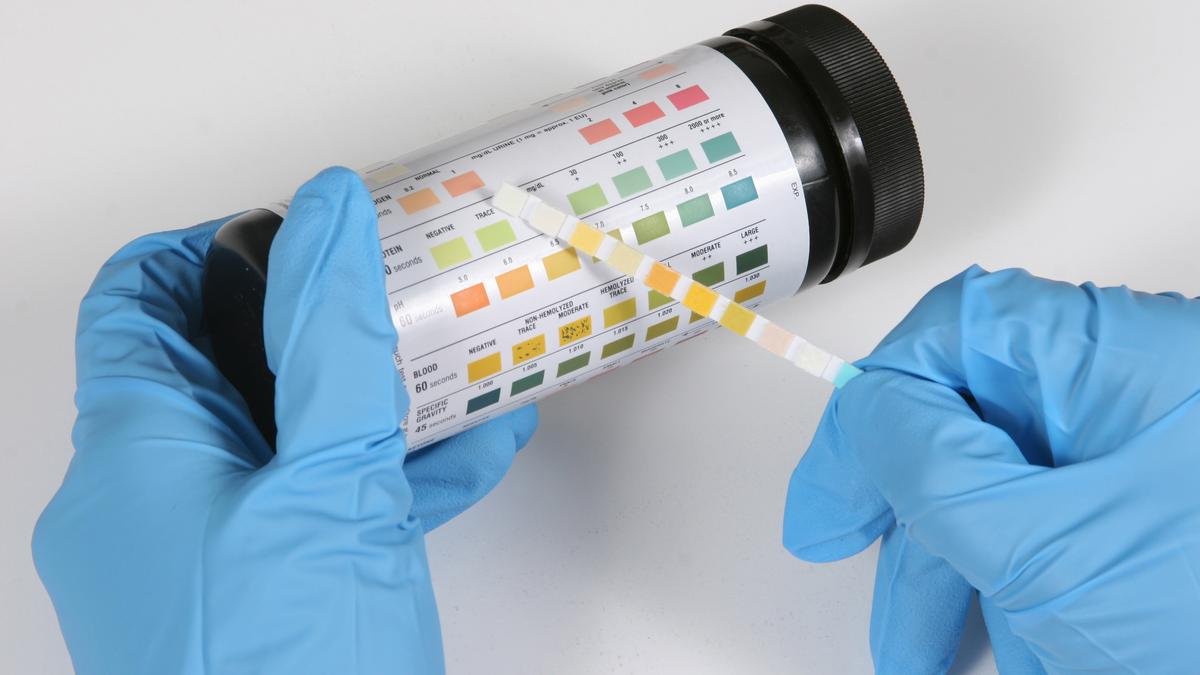
The first one is the urine dipstick test that can be done as a point-of-care test. Point-of-care diagnostic tests are tests that can be performed in the clinic, emergency departments, hospital wards, or pharmacy counters, without the need to send the sample to a laboratory. The advantage of the dipstick is that results are available in a couple of minutes, which helps doctors decide whether to start antibiotics or not. Unfortunately accuracy is not more than 50-60%. Even if the doctor carries out a dipstick despite its limitations, the test doesn’t help the doctor choose the right antibiotic.

For this, the urine sample must be sent to the laboratory for culture. The culture results take a minimum of 2-3 days. But the doctor cannot wait 2-3 days to start an antibiotic. So, even if the doctor sends a urine sample for culture, they still have to start an antibiotic empirically, based on educated guesswork, before the culture results are ready. By this time, the patient has already completed a full or half course of antibiotics. Such blind antibiotic prescriptions are a major cause of the antibiotic resistance crisis, especially in countries like India. A transformative, rapid point of care diagnostic test that is accurate and affordable has the potential to revolutionise urinary tract infection treatment in India and worldwide. Current urinary tract infection management in most cases is based on a 50:50 rationale. Only 50% of patients with symptoms of urinary infection have an actual infection, and the accuracy of a urine dipstick is 50-60%.

In India, every year, millions of patients with urinary tract infections visit doctors or pharmacies seeking treatment. These infections result in significant loss of lives, burden the healthcare system, and have a socio-economic impact. In 20-30% of sepsis patients, the infection originates from the urinary tract. Up to two in five people who develop severe sepsis will lose their lives. Hence, rapid and accurate point-of-care tests for urinary tract infection can save millions of lives worldwide, especially in India. The solution is a rapid, accurate, and affordable test that can help the doctor diagnose urinary infection accurately and provide information on the correct antibiotic that can cure the infection.

What is the Longitude Prize?

In 1714, the British government announced the Longitude Prize to solve the longitude problem, literally. In the 18th century, thousands of ships were lost at sea because sailors couldn’t determine the position of the ship at sea. If a ship doesn’t know where it is, it risks being shipwrecked.

To determine the position of a ship, both latitude and longitude are needed. Latitude was easy to measure by observing the sun, moon, and stars, but longitude was a mystery. The British government announced the Longitude Prize for an invention that helps calculate longitude. John Harrison, a watchmaker, invented an ingenious device that could calculate longitude perfectly and won the prize.

300 years after the first Longitude Prize, the Britain launched a second Longitude Prize. The public was asked to vote for a major challenge that needed an immediate solution, such as global warming, food shortage, and water shortage. The public voted for Anti Microbial Resistance. A ten million pound Longitude Prize was announced in 2014. Of this, £ 2 million was awarded to various innovators to refine their technology. The final winner receives £ 8 million.

The Longitude Prize on AMR intends to incentivise the creation of new diagnostic tests that, in a matter of minutes, can identify whether an infection is bacterial, and if so, the right antibiotic to prescribe to slow the spread of antibiotic resistant infections. The goal is to replace the 2–3-day lab test process that doctors and patients must currently endure, and end “just in case” prescribing that is prevalent as a result, which promotes the development of antibiotic resistance.


Source link

Science Tags:antimicrobial resistance, dipstick test, infection management, Longitude Prize, Rational use of antibiotics

Post navigation

Previous Post: Mumbai, Delhi luxury real estate among top 5 globally: Knight Frank
Next Post: Markets decline in early trade after record rally

Related Posts

  • India’s capacity to scale next-generation biologics draws focus at BioAsia 2026
    India’s capacity to scale next-generation biologics draws focus at BioAsia 2026 Science
  • European Space Agency to provide support to Aditya-L1 mission
    European Space Agency to provide support to Aditya-L1 mission Science
  • 2024 physics Nobel for work on artificial neural networks | Explained
    2024 physics Nobel for work on artificial neural networks | Explained Science
  • Harris or Trump? How US space policy will change under a new president
    Harris or Trump? How US space policy will change under a new president Science
  • Surprise: reading a quantum clock can cost more than keeping it ticking
    Surprise: reading a quantum clock can cost more than keeping it ticking Science
  • Why India’s ‘leaky pipeline’ in research is unlike the rest of the world
    Why India’s ‘leaky pipeline’ in research is unlike the rest of the world Science

More Related Articles

Kerala breaks the shackle of centralised testing, sequencing Kerala breaks the shackle of centralised testing, sequencing Science
Why is whale vomit worth millions? Why is whale vomit worth millions? Science
Morning Digest | Pulses prices may spiral as deficient rain mars sowing; Kuki tribal body to re-impose blockade on NH-2, and more Morning Digest | Pulses prices may spiral as deficient rain mars sowing; Kuki tribal body to re-impose blockade on NH-2, and more Science
Indian Immunologicals rolls out India’s first gE deleted DIVA marker vaccine against IBR Indian Immunologicals rolls out India’s first gE deleted DIVA marker vaccine against IBR Science
Will understanding cancer become a data problem?  Will understanding cancer become a data problem?  Science
On scientific collaborations in BRICS On scientific collaborations in BRICS Science
SiteLock

Archives

  • September 2026
  • August 2026
  • July 2026
  • June 2026
  • May 2026
  • April 2026
  • March 2026
  • February 2026
  • January 2026
  • December 2025
  • November 2025
  • October 2025
  • September 2025
  • August 2025
  • July 2025
  • June 2025
  • May 2025
  • April 2025
  • March 2025
  • February 2025
  • January 2025
  • December 2024
  • November 2024
  • October 2024
  • September 2024
  • August 2024
  • July 2024
  • June 2024
  • May 2024
  • April 2024
  • March 2024
  • February 2024
  • January 2024
  • December 2023
  • November 2023
  • October 2023
  • September 2023
  • August 2023
  • July 2023
  • June 2023
  • May 2023
  • April 2023
  • March 2023
  • February 2023
  • January 2023
  • December 2022
  • November 2022
  • October 2022
  • September 2022
  • August 2022
  • July 2022
  • June 2022
  • May 2022

Categories

  • Business
  • Nation
  • Science
  • Sports
  • World

Recent Posts

  • Meloni plans to ban burqas and niqabs in Italian schools, cap foreign students in classrooms
  • TVK regime’s experiment of having two advisers to CM alongside Chief Secretary giving mixed vibes to T.N.’s bureaucratic circles
  • Asian Games 2026: Indian hockey teams don saffron jerseys in opening matches
  • Depositors of finance firm to stage protest on September 21
  • Trump to use Washington arch as military complex for drones and snipers

Recent Comments

  1. Josephjab on UP Teacher Who Asked Students To Slap Muslim Classmate
  2. LarryKef on UP Teacher Who Asked Students To Slap Muslim Classmate
  3. Jasonnekly on UP Teacher Who Asked Students To Slap Muslim Classmate
  4. Jasonnekly on UP Teacher Who Asked Students To Slap Muslim Classmate
  5. Frankenrib on UP Teacher Who Asked Students To Slap Muslim Classmate
  • Thanks for that call: Dravid reveals how Rohit stopped him from quitting after ODI World Cup heartbreak
    Thanks for that call: Dravid reveals how Rohit stopped him from quitting after ODI World Cup heartbreak Sports
  • Donald Trump’s aide Peter Navarro criticises India again over Russian oil purchases
    Donald Trump’s aide Peter Navarro criticises India again over Russian oil purchases World
  • Team India Arrival Live: Plane Landed, Hundreds Of Fans Gather At Airport
    Team India Arrival Live: Plane Landed, Hundreds Of Fans Gather At Airport Sports
  • Access Denied Business
  • Indian Women Crush Bangladesh To Reach Kho Kho World Cup Semifinals
    Indian Women Crush Bangladesh To Reach Kho Kho World Cup Semifinals Sports
  • Muslim mob torches police station in Pakistan, lynches man for alleged blasphemy
    Muslim mob torches police station in Pakistan, lynches man for alleged blasphemy World
  • Hardik Pandya “Suffered Bad Sprain”, Says Report. Likely To Be Out For 2-3 World Cup Matches
    Hardik Pandya “Suffered Bad Sprain”, Says Report. Likely To Be Out For 2-3 World Cup Matches Sports
  • Explained | RBI’s proposal for interoperability of credit and debit cards
    Explained | RBI’s proposal for interoperability of credit and debit cards Business

Editor-in-Chief:
Mohammad Ariff,
MSW, MAJMC, BSW, DTL, CTS, CNM, CCR, CAL, RSL, ASOC.
editor@artifex.news

Associate Editors:
1. Zenellis R. Tuba,
zenelis@artifex.news
2. Haris Daniyel
daniyel@artifex.news

Photograher:
Rohan Das
rohan@artifex.news

Artifex.News offers Online Paid Internships to college students from India and Abroad. Interns will get a PRESS CARD and other online offers.
Send your CV (Subjectline: Paid Internship) to internship@artifex.news

Links:
Associate Journalism
About Us
Privacy Policy

News Links:
Breaking News
World
Nation
Sports
Business
Entertainment
Lifestyle

Registered Office:
72/A, Elliot Road, Kolkata - 700016
Tel: 033-22277777, 033-22172217
Email: office@artifex.news

Editorial Office / News Desk:
No. 13, Mezzanine Floor, Esplanade Metro Rail Station,
12 J. L. Nehru Road, Kolkata - 700069.
(Entry from Gate No. 5)
Tel: 033-46011099, 033-46046046
Email: editor@artifex.news

Copyright © 2023 Artifex.News Newsportal designed by Artifex Infotech.