



Skip to content
  • Facebook
  • X
  • Linkedin
  • WhatsApp
  • YouTube
  • Associate Journalism
  • About Us
  • Privacy Policy
  • 033-46046046
  • editor@artifex.news
Artifex.News

Artifex.News

Stay Connected. Stay Informed.

  • Breaking News
  • World
  • Nation
  • Sports
  • Business
  • Science
  • Entertainment
  • Lifestyle
  • Toggle search form
  • Nepali Congress, CPN-UML strike deal to oust PM ‘Prachanda’; to form new alliance
    Nepali Congress, CPN-UML strike deal to oust PM ‘Prachanda’; to form new alliance World
  • Pope Francis calls at G7 for ban on ‘lethal autonomous weapons’
    Pope Francis calls at G7 for ban on ‘lethal autonomous weapons’ World
  • Access Denied Business
  • What We Know So Far
    What We Know So Far World
  • Access Denied Sports
  • Israel, U.S. defence chiefs to meet on March 26 as tensions rise over Gaza
    Israel, U.S. defence chiefs to meet on March 26 as tensions rise over Gaza World
  • Access Denied Business
  • India tour of Australia: Border-Gavaskar Trophy day-night Test in Adelaide on December 7, 2024. Travis Head and bowlers put Australia on top
    India tour of Australia: Border-Gavaskar Trophy day-night Test in Adelaide on December 7, 2024. Travis Head and bowlers put Australia on top Sports
What are AM, FM, and signal modulation? | Explained

What are AM, FM, and signal modulation? | Explained

Posted on September 14, 2024 By admin


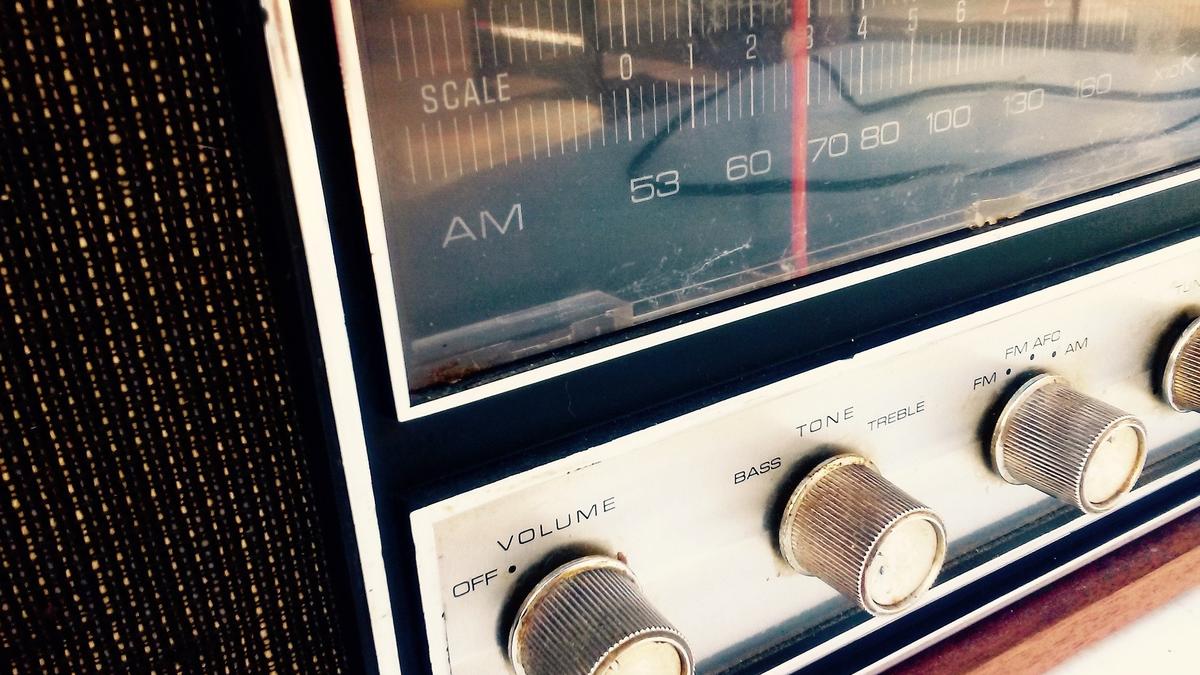
When you tune in to the radio, the announcer says, “Welcome to 100.1 FM Gold” or “You are listening to Akashvani at 783 AM”. The terms ‘AM’ and ‘FM’ refer to forms of signal modulation — a method at the heart of modern long-distance communications. Signal modulation simplifies the technologies required to send and receive good-quality signals carrying information, like the news and songs on the radio.

How do we ‘measure’ waves?

Imagine a vast, quiet lake. The water is as still as a statue. At the centre of the lake is a small island of pebbles. You pick up and drop a pebble into the water. A single wave ripples across the lake, forming a circle that expands in all directions. That is: a single, short disruption triggered the release of a single wave. After the wave passed, the lake became quiet again.

If you dropped a small gravel, the resulting wave would have had a short height. If the stone had been heavier, the impact would have been more energetic and the wave would have been taller. This height is called the wave’s amplitude. A high amplitude sound wave will be louder; a high amplitude light wave will be brighter.

Dropping a stone every second will create a series of waves, traversing the surface one after another in concentric circles. If I’m sitting in a boat at some distance from the tower, and the wave strikes the boat, it will heave up and down. By measuring how much the boat is lifted, I can calculate the amplitude and from that the weight of the rock you dropped. I can also determine how frequently you drop new stones by counting how often my boat seesaws

The number of successive crests arriving at a spot per second is the wave’s frequency, measured in hertz (Hz). One Hz equals one cycle per second. This means the Chennai Akashvani radio station produces radio waves with 783,000 crests in one second. The interval between two successive crests (or troughs) is called the wavelength, measured in metres.

What are FM and AM?

Suppose we agree to use the Morse code: two stones dropped in quick succession equals a dot (•) and a longer gap between two stones is a dash (–).

When two stones are dropped one after the other, the waves are closely spaced, resulting in a higher frequency. If we drop the pebbles with a big time gap, the frequency drops.

By monitoring the frequency of the incoming waves far from the shore, I can distinguish between • and –. And based on the series of • and –, I can decipher the message.

This technique of information communication is called frequency modulation (FM). Here, we modulate, or adjust, the frequency to transmit a message.

We can also agree to another code: a heavy stone indicates a • and a light stone indicates a –. To convey • –  • •  • – • (Morse for ‘air’), you drop heavy, light, heavy, heavy, heavy, light, heavy in that order, at regular intervals. The resulting waves will have varying amplitudes: tall, short, tall, tall, tall, short, tall. I can figure out the pattern by observing how much my boat sways and decipher your message.

This is amplitude modulation (AM). You fix the frequency by dropping the stones at fixed intervals. Instead you change the pebbles’ weight, resulting in waves of different amplitudes.

What is phase modulation?

We can have two waves with the same frequencies but different phases, meaning one wave starts slightly later than the previous one. It’s like in march-past in which one set of people are out of step. So the corresponding crests (or troughs) of the waves will be slightly out of phase.

When a crest meets another crest, they combine and become more prominent. When a crest hits a trough, they cancel out. This way, out-of-phase waves can be made to stack up uniquely to produce a bigger wave.

People use the phase difference between two waves of the same frequency to encode a message.

The advantage of PM is that slight changes in the signal amplitude won’t degrade the information it carries. This is because the modulating signal is not transmitted by the amplitude of the pulses, so pulse modulation is nearly impervious to amplitude fluctuations produced by interference and noise.

This is why operators choose PM over AM or FM for crystal-clear digital transmission, such as in Wi-Fi.

What are digital and analog?

PM is unsuitable for analog radio or TV broadcasts because it’s digital. When we use AM, FM or PM modes to transmit • and – (or 0s and 1s), we have digital transmission. When we use AM or FM to propagate composite waves, it’s analog transmission. Analog signals are continuous while digital signals are discrete.

In one critical respect, water waves and electromagnetic waves — such as radio signals — differ. Water waves travel on a medium. Electromagnetic waves consist of electrical and magnetic fields oscillating in the three spatial dimensions.

This said, an electromagnetic wave’s phase, frequency, and amplitude can communicate messages the same way waves on the surface of an ideal lake can.

How is signal modulation used?

An important advantage of modulation is that multiple signals modulated differently can travel in the same channel — like the airwaves in a city or a fibre-optic cable — without interrupting each other.

In the same vein, lightning produces radio waves that interfere with signals, resulting in static and noise. They have little influence on digital transmission thanks to modulation. This is why we have advanced communications technologies like the internet.

Operators prefer television and signals to be analog instead because analog receivers are cheaper. This is why TV and radio broadcast signals are AM or FM.

The International Telecommunication Union allocates frequency bands to different services to minimise interference and increase transmission efficiency.

AM’s frequency range, from 535 to 1,705 kHz, makes room for high wavelength signals that can pass over mountains and buildings, providing more coverage.

FM provides superior quality since it is unaffected by static. However, because its frequency range is 88-108 MHz, the waves have lower wavelengths and the transmission distance is limited to line of sight. The receiver is also more expensive.

Nonetheless, as the prices of electronic components continue to decline, the world at large is moving from analog to digital broadcasting.

T.V. Venkateswaran is a science communicator and visiting faculty member at the Indian Institute of Science Education and Research, Mohali.

Published – September 14, 2024 07:09 am IST


Source link

Science

Post navigation

Previous Post: Rahul Gandhi Sends Gift to UP Barber Who Trimmed His Beard Months Ago
Next Post: Sunita Williams Could Have Returned On Starliner. Why She Didn’t

Related Posts

  • Turning carrot waste into edible material again
    Turning carrot waste into edible material again Science
  • Study cracks when cracks come and go in paint, clay, milk, blood
    Study cracks when cracks come and go in paint, clay, milk, blood Science
  • Hidden pandemic of AMR poses challenge for modern medicine
    Hidden pandemic of AMR poses challenge for modern medicine Science
  • Ancient Egypt’s ‘screaming’ mummy woman may have died in agony
    Ancient Egypt’s ‘screaming’ mummy woman may have died in agony Science
  • March is tenth straight month to be hottest on record, scientists say
    March is tenth straight month to be hottest on record, scientists say Science
  • Leprosy spread between red squirrels and people in medieval England: study
    Leprosy spread between red squirrels and people in medieval England: study Science

More Related Articles

Why India’s Green Revolution isn’t a blueprint to feed a hungry planet Why India’s Green Revolution isn’t a blueprint to feed a hungry planet Science
What is futuristic marine and space biotechnology? | Explained What is futuristic marine and space biotechnology? | Explained Science
Tropical cyclones are intensifying more rapidly and frequently: INCOIS study Tropical cyclones are intensifying more rapidly and frequently: INCOIS study Science
Watch: How is India responding to calls for shipping decarbonisation? Watch: How is India responding to calls for shipping decarbonisation? Science
U.K. rejoining Europe’s Horizon science programme U.K. rejoining Europe’s Horizon science programme Science
Gaganyaan mission: ISRO completes second Integrated Air Drop Test Gaganyaan mission: ISRO completes second Integrated Air Drop Test Science
SiteLock

Archives

  • May 2026
  • April 2026
  • March 2026
  • February 2026
  • January 2026
  • December 2025
  • November 2025
  • October 2025
  • September 2025
  • August 2025
  • July 2025
  • June 2025
  • May 2025
  • April 2025
  • March 2025
  • February 2025
  • January 2025
  • December 2024
  • November 2024
  • October 2024
  • September 2024
  • August 2024
  • July 2024
  • June 2024
  • May 2024
  • April 2024
  • March 2024
  • February 2024
  • January 2024
  • December 2023
  • November 2023
  • October 2023
  • September 2023
  • August 2023
  • July 2023
  • June 2023
  • May 2023
  • April 2023
  • March 2023
  • February 2023
  • January 2023
  • December 2022
  • November 2022
  • October 2022
  • September 2022
  • August 2022
  • July 2022
  • June 2022
  • May 2022

Categories

  • Business
  • Nation
  • Science
  • Sports
  • World

Recent Posts

  • Visakhapatnam gets ₹1,501.03 crore Centre nod for water, drainage projects; Madhurawada gets lion’s share
  • Cipla misses Q4 profit estimates on weak U.S. sales
  • U.K. police pull bodies of three women from sea at Brighton
  • Akshay Kumar, Vidya Balan’s untitled comedy with Anees Bazmee gets release date
  • Small study hints that revving up immune cells might help fight HIV

Recent Comments

  1. WilliamGoT on UP Teacher Who Asked Students To Slap Muslim Classmate
  2. StanleyPeapy on UP Teacher Who Asked Students To Slap Muslim Classmate
  3. WilliamTOP on UP Teacher Who Asked Students To Slap Muslim Classmate
  4. DavidAnymn on UP Teacher Who Asked Students To Slap Muslim Classmate
  5. Jesusetexy on UP Teacher Who Asked Students To Slap Muslim Classmate
  • Supreme Court’s Verdict On Arvind Kejriwal’s Plea Challenging Probe Agency’s Arrest Today
    Supreme Court’s Verdict On Arvind Kejriwal’s Plea Challenging Probe Agency’s Arrest Today Nation
  • Access Denied Sports
  • Access Denied
    Access Denied Nation
  • “You’re On A Roll”: Gautam Adani Lauds R Praggnanandhaa For Beating World No.2 Fabiano Caruana
    “You’re On A Roll”: Gautam Adani Lauds R Praggnanandhaa For Beating World No.2 Fabiano Caruana Sports
  • Fed Up With Alcoholic Husbands, 2 Women Leave Home, Marry Each Other In UP
    Fed Up With Alcoholic Husbands, 2 Women Leave Home, Marry Each Other In UP Nation
  • Access Denied Business
  • DK Shivakumar On Karnataka Power Tussle
    DK Shivakumar On Karnataka Power Tussle Nation
  • 60-Year-Old Man Rapes Five Years Old Girl In UP, Then Kills Himself: Cops
    60-Year-Old Man Rapes Five Years Old Girl In UP, Then Kills Himself: Cops Nation

Editor-in-Chief:
Mohammad Ariff,
MSW, MAJMC, BSW, DTL, CTS, CNM, CCR, CAL, RSL, ASOC.
editor@artifex.news

Associate Editors:
1. Zenellis R. Tuba,
zenelis@artifex.news
2. Haris Daniyel
daniyel@artifex.news

Photograher:
Rohan Das
rohan@artifex.news

Artifex.News offers Online Paid Internships to college students from India and Abroad. Interns will get a PRESS CARD and other online offers.
Send your CV (Subjectline: Paid Internship) to internship@artifex.news

Links:
Associate Journalism
About Us
Privacy Policy

News Links:
Breaking News
World
Nation
Sports
Business
Entertainment
Lifestyle

Registered Office:
72/A, Elliot Road, Kolkata - 700016
Tel: 033-22277777, 033-22172217
Email: office@artifex.news

Editorial Office / News Desk:
No. 13, Mezzanine Floor, Esplanade Metro Rail Station,
12 J. L. Nehru Road, Kolkata - 700069.
(Entry from Gate No. 5)
Tel: 033-46011099, 033-46046046
Email: editor@artifex.news

Copyright © 2023 Artifex.News Newsportal designed by Artifex Infotech.