

Skip to content
  • Facebook
  • X
  • Linkedin
  • WhatsApp
  • YouTube
  • Associate Journalism
  • About Us
  • Privacy Policy
  • 033-46046046
  • editor@artifex.news
Artifex.News

Artifex.News

Stay Connected. Stay Informed.

  • Breaking News
  • World
  • Nation
  • Sports
  • Business
  • Science
  • Entertainment
  • Lifestyle
  • Toggle search form
  • Mali army says situation ‘under control’ after ‘terrorist’ attack
    Mali army says situation ‘under control’ after ‘terrorist’ attack World
  • Putin congratulates Trump in first public comments on U.S. election results
    Putin congratulates Trump in first public comments on U.S. election results World
  • Key US Muslim Advocacy Group Endorses Kamala Harris, Says Trump Bigger Danger
    Key US Muslim Advocacy Group Endorses Kamala Harris, Says Trump Bigger Danger World
  • Sri Lanka fights back to reach 178-8 at tea on Day 1 of the opening test against England
    Sri Lanka fights back to reach 178-8 at tea on Day 1 of the opening test against England Sports
  • Arvind Kejriwal, AAP Promise Rs 1,000 Every Month For Delhi Women, Delhi Assembly Elections
    Arvind Kejriwal, AAP Promise Rs 1,000 Every Month For Delhi Women, Delhi Assembly Elections Nation
  • Arvind Kejriwal Big Claim If BJP Wins
    Arvind Kejriwal Big Claim If BJP Wins Nation
  • Access Denied Sports
  • AAP Demands Seat-Sharing Discussion For All States In INDIA’s Mumbai Meet
    AAP Demands Seat-Sharing Discussion For All States In INDIA’s Mumbai Meet Nation
Study cracks when cracks come and go in paint, clay, milk, blood

Study cracks when cracks come and go in paint, clay, milk, blood

Posted on February 3, 2025 By admin


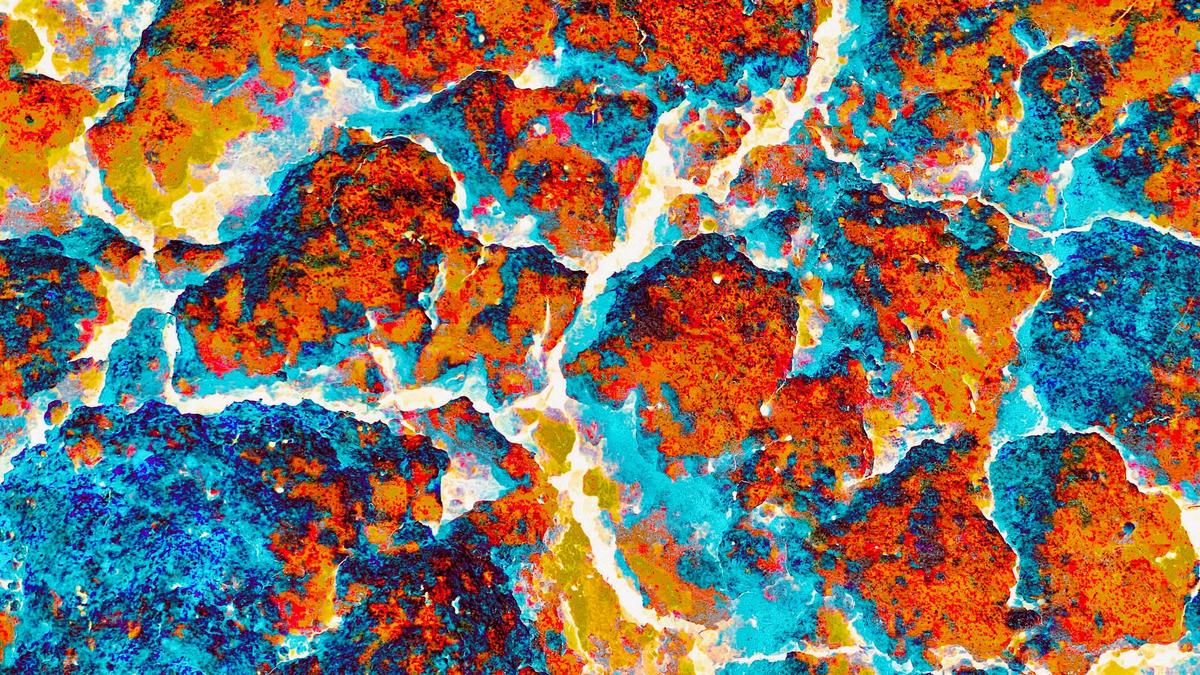
Cracks in paint coatings could soon become a thing of the past. In a new study, researchers from the Raman Research Institute (RRI) in Bengaluru have found a way to delay the onset of cracks after studying them in great detail.

As playful as this sounds, the technique has potential applications in diagnosing diseases and checking whether food has spoiled.

In general, cracks are ubiquitous, even a part of life. They adorn old flower vases, the outer surfaces of buildings that have suffered both hot summers and chill winters, streams of cooling lava, the ground when it has become sapped of moisture, even the scaly heads of reptiles like crocodiles. But how often do we stop and take a closer look?

Cracks may appear simple but they’re formed as the result of a complex phenomenon. In older studies, scientists have found that new cracks always meet an older one at 90o — except in a very thin layer of drying paint, where they prefer an angle of 120o instead. Perhaps you’d like to pick up a magnifying glass, a protractor, and go take a look.

From clay to chicken nuggets

In the new study, researchers Vaibhav Parmar, a PhD student, and professor Ranjini Bandyopadhyay of the Soft Condensed Matter group at RRI examined how the elasticity of clay changed as it dried, slowly changing from a flowing liquid to a thick yet soft solid to a brittle sheet. A more elastic solid will more readily return to its original shape after it is distorted in some way.

The duo discovered a relationship between the elasticity of clay and how quickly cracks emerged in it. Using this relationship, they concluded that they could predict when cracks would develop based on the initial thickness of the sample and its elasticity.

The beauty of an equation is if its left-hand side equals its right-hand side, the reverse is true as well. That is, the researchers found they could delay the onset of cracks by tuning the elasticity. They were able to do the latter by mixing different additives into the clay.

When it was common salt, the cracks emerged faster than when they added a food additive called tetrasodium pyrophosphate (TSPP). TSPP is found in foodstuffs like chicken nuggets, marshmallows, and meat and egg alternatives, and as a thickening agent in toothpastes. Indeed, the duo hit a eureka moment when TSPP was found to significantly delay the birth of cracks in clay.

Their findings were published in a paper in the journal Physics of Fluids in November 2024.

Here a crack, there a crack

An immediate application of their findings is a way to make paint coatings resistant to cracks. Manufacturers generally add clay to their paints and coating liquids to give them a thicker consistency. The new study suggests they can improve their products’ crack-resistance by adding clay of a certain elasticity to the liquid at the time of their manufacture itself.

In fact, the findings could apply almost anywhere that cracks make an appearance.

“Just like clay, milk and blood are made of tiny particles in a liquid, and they behave in similar ways when they dry,” Kirti Chandra Sahu, a professor in the Department of Chemical Engineering at IIT Hyderabad, said. “The same principles about how cracks form could help study drying patterns in these materials. For example, crack patterns could reveal structural changes in protein networks, like in milk or clot formation in blood.”

Clay, milk, blood, and paint are all colloids: a mixture in which small insoluble particles of one type are dispersed in a liquid of another type. Sahu, who wasn’t involved in the RRI study, asserted that its findings could be applied to all colloids beset by cracks.

“Adulterants might affect the milk’s properties, creating unique drying patterns or crack formations. The study’s approach could help identify [the] changes by comparing the drying patterns of pure and adulterated milk,” he said. “It’s a smart and straightforward method to test milk quality.”

“Blood from patients with conditions like anaemia … displays distinct differences in red blood cell count, shape, and rigidity compared to the blood of healthy individuals,” Bandyopadhyay, one of the study’s coauthors, said. “Any change in red blood cell characteristics will change the crack patterns left behind on a substrate after a drop of blood has dried completely.”

‘Significant potential’

She added that a machine-learning model that has been taught to distinguish between various crack patterns in dried blood could also discriminate between the blood of a person before and after intense exercise “with 95% accuracy”.

Yet another potential application of the findings is in the study of how old paintings have been restored over time. Like drying clay, such paintings develop a network of fine cracks over time called the craquelure. By understanding how environmental and mechanical factors affect the craquelure, experts could better conserve valuable works of art.

With so many applications, Sahu said the study seems to deepen our understanding of material properties. “This research advances our understanding by linking the internal structure, mechanical properties, and cracking behaviour of aging colloidal materials,” he said, adding that the findings “have significant potential for … enhancing our understanding of the behaviour of soft materials”.

The duo at RRI also has more work planned. The paint applied on a building undergoes significant changes in temperature and humidity every day. The researchers intend to perform controlled experiments in which they vary these parameters and study how the formation of cracks changes accordingly.

“We [also] want to confirm the validity of the proposed relationship experimentally in other materials, such as in cornstarch, toothpaste and ketchup,” Bandyopadhyay said.

Unnati Ashar is a freelance journalist.

Published – February 03, 2025 05:30 am IST


Source link

Science

Post navigation

Previous Post: Artificial Intelligence plays key role in diagnosing cardiac diseases, says expert
Next Post: India reviewing crypto position due to global changes, senior official says

Related Posts

  • Post-surgical infections more likely due to skin bacteria than hospital bugs, study finds
    Post-surgical infections more likely due to skin bacteria than hospital bugs, study finds Science
  • Assam study sheds new light on sun’s surface tremors
    Assam study sheds new light on sun’s surface tremors Science
  • Antimatter observed to be falling down under influence of gravity
    Antimatter observed to be falling down under influence of gravity Science
  • National Science Day | What do scientists do? 
    National Science Day | What do scientists do?  Science
  • How much salt should you take every day?
    How much salt should you take every day? Science
  • Science quiz: Applications of lasers
    Science quiz: Applications of lasers Science

More Related Articles

India’s drug safety deficit: critical gaps in an overly complex system need urgent remedies India’s drug safety deficit: critical gaps in an overly complex system need urgent remedies Science
What the ‘science’ of delimitation and fertility struggles to capture What the ‘science’ of delimitation and fertility struggles to capture Science
China plans to cut CO2 emission by about 130 mln metric tons in key areas in 2024, 2025 China plans to cut CO2 emission by about 130 mln metric tons in key areas in 2024, 2025 Science
Sci-Five | The Hindu Science Quiz: On Radioactivity Sci-Five | The Hindu Science Quiz: On Radioactivity Science
‘Global South scientists can tip red tape by thinking, working together’ ‘Global South scientists can tip red tape by thinking, working together’ Science
Stanford/Elsevier rank list: why all that glitters is not gold Stanford/Elsevier rank list: why all that glitters is not gold Science
SiteLock

Archives

  • May 2026
  • April 2026
  • March 2026
  • February 2026
  • January 2026
  • December 2025
  • November 2025
  • October 2025
  • September 2025
  • August 2025
  • July 2025
  • June 2025
  • May 2025
  • April 2025
  • March 2025
  • February 2025
  • January 2025
  • December 2024
  • November 2024
  • October 2024
  • September 2024
  • August 2024
  • July 2024
  • June 2024
  • May 2024
  • April 2024
  • March 2024
  • February 2024
  • January 2024
  • December 2023
  • November 2023
  • October 2023
  • September 2023
  • August 2023
  • July 2023
  • June 2023
  • May 2023
  • April 2023
  • March 2023
  • February 2023
  • January 2023
  • December 2022
  • November 2022
  • October 2022
  • September 2022
  • August 2022
  • July 2022
  • June 2022
  • May 2022

Categories

  • Business
  • Nation
  • Science
  • Sports
  • World

Recent Posts

  • China, U.S. should be ‘partners not rivals’, says Xi Jinping after meeting Donald Trump
  • Iran working on Hormuz ‘protocol’ to cover ‘costs’, says Deputy Foreign Minister Gharibabadi
  • Zydus Lifesciences arm to acquire U.S. oncology firm Assertio for $166 million
  • Israel-Iran war LIVE: Iran working on Hormuz ‘protocol’ to cover ‘costs’, says Dy FM Gharibabadi
  • Russia to fulfil all agreements on energy supply to India: FM Lavrov

Recent Comments

  1. OrvalMaync on UP Teacher Who Asked Students To Slap Muslim Classmate
  2. Jeffreyroure on UP Teacher Who Asked Students To Slap Muslim Classmate
  3. Stevemonge on UP Teacher Who Asked Students To Slap Muslim Classmate
  4. RichardClage on UP Teacher Who Asked Students To Slap Muslim Classmate
  5. StevenLek on UP Teacher Who Asked Students To Slap Muslim Classmate
  • Access Denied Sports
  • Access Denied Sports
  • Change Name To “ClosedAI”, Elon Musk Tells Sam Altman’s OpenAI. Here’s Why
    Change Name To “ClosedAI”, Elon Musk Tells Sam Altman’s OpenAI. Here’s Why World
  • Dalit Girl Raped By Neighbour On Pretext Of Celebrating Her Birthday In UP: Cops
    Dalit Girl Raped By Neighbour On Pretext Of Celebrating Her Birthday In UP: Cops Nation
  • Access Denied
    Access Denied Nation
  • The Hindu Morning Digest, October 28, 2024
    The Hindu Morning Digest, October 28, 2024 Nation
  • Access Denied World
  • ACT Fibernet adds cities in A.P., NCR, as home broadband growth outpaces telecom
    ACT Fibernet adds cities in A.P., NCR, as home broadband growth outpaces telecom Business

Editor-in-Chief:
Mohammad Ariff,
MSW, MAJMC, BSW, DTL, CTS, CNM, CCR, CAL, RSL, ASOC.
editor@artifex.news

Associate Editors:
1. Zenellis R. Tuba,
zenelis@artifex.news
2. Haris Daniyel
daniyel@artifex.news

Photograher:
Rohan Das
rohan@artifex.news

Artifex.News offers Online Paid Internships to college students from India and Abroad. Interns will get a PRESS CARD and other online offers.
Send your CV (Subjectline: Paid Internship) to internship@artifex.news

Links:
Associate Journalism
About Us
Privacy Policy

News Links:
Breaking News
World
Nation
Sports
Business
Entertainment
Lifestyle

Registered Office:
72/A, Elliot Road, Kolkata - 700016
Tel: 033-22277777, 033-22172217
Email: office@artifex.news

Editorial Office / News Desk:
No. 13, Mezzanine Floor, Esplanade Metro Rail Station,
12 J. L. Nehru Road, Kolkata - 700069.
(Entry from Gate No. 5)
Tel: 033-46011099, 033-46046046
Email: editor@artifex.news

Copyright © 2023 Artifex.News Newsportal designed by Artifex Infotech.