



Skip to content
  • Facebook
  • X
  • Linkedin
  • WhatsApp
  • YouTube
  • Associate Journalism
  • About Us
  • Privacy Policy
  • 033-46046046
  • editor@artifex.news
Artifex.News

Artifex.News

Stay Connected. Stay Informed.

  • Breaking News
  • World
  • Nation
  • Sports
  • Business
  • Science
  • Entertainment
  • Lifestyle
  • Toggle search form
  • Access Denied
    Access Denied Nation
  • Access Denied Sports
  • UK names Sarah Mullally as first female Archbishop to lead Church of England
    UK names Sarah Mullally as first female Archbishop to lead Church of England World
  • Influencer, Mistaken For Captain Anshuman Singh’s Widow, Trolled Online
    Influencer, Mistaken For Captain Anshuman Singh’s Widow, Trolled Online Nation
  • Maldives presidential election heading for 2nd round after no clear winner emerges
    Maldives presidential election heading for 2nd round after no clear winner emerges World
  • Sri Lanka vs Pakistan Live Score Updates, Women’s Asia Cup T20 Semi Final
    Sri Lanka vs Pakistan Live Score Updates, Women’s Asia Cup T20 Semi Final Sports
  • Access Denied
    Access Denied Nation
  • Access Denied Sports
Scientists found a bacteria tricked a wasp to get rid of its males

Scientists found a bacteria tricked a wasp to get rid of its males

Posted on July 15, 2024 By admin


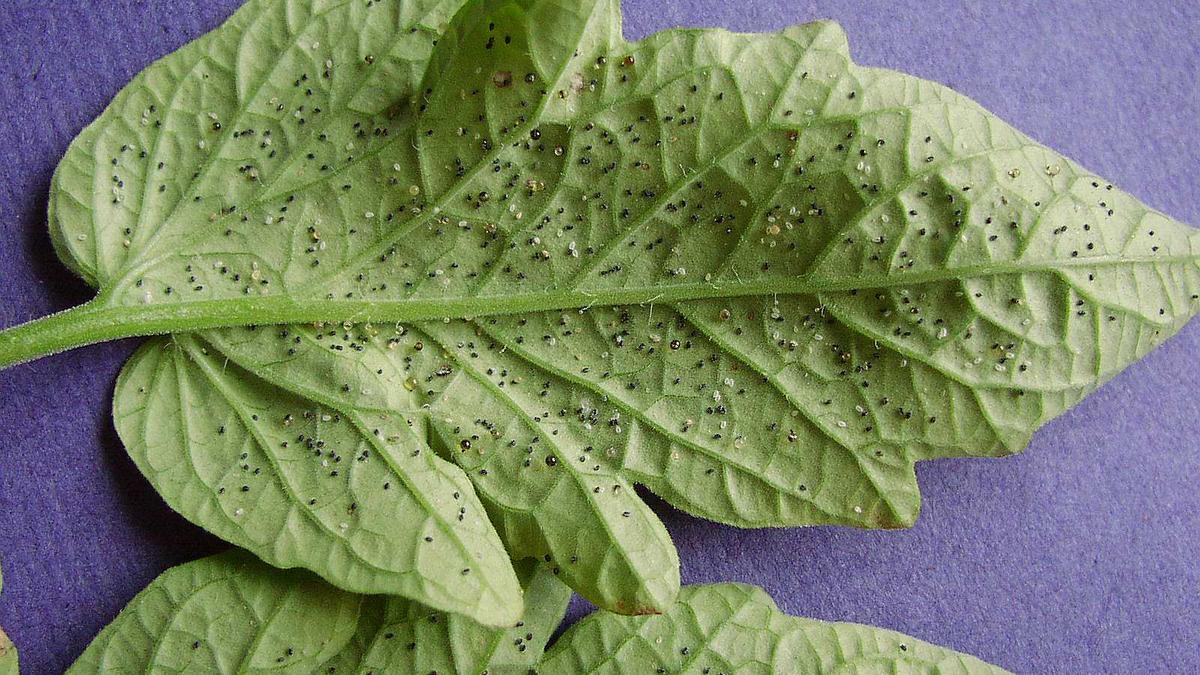
Tomato leaf with whitefly nymphs (white) parasitised by Encarsia formosa wasps (black), May 17, 2003. These wasps were among the world’s first agents of biological pest control.
| Photo Credit: Goldlocki (CC BY-SA 3.0)

A hundred years ago, two American researchers named Marshall Hertig and Simeon Burt Wolbach discovered that mosquitoes harboured bacteria within their cells. Other researchers later found similar bacteria in the cells of most insects and many other arthropods. The genus to which the bacteria belonged was named Wolbachia.

Wolbachia bacteria are also present in insect eggs but they are absent in the sperm. This means females can transmit Wolbachia to their offspring whereas males can’t — from the bacteria’s point of view, an evolutionary dead-end. As a result, Wolbachia have evolved ways to manipulate their insect hosts to produce more female than male progeny.

A new study reports that the bacteria may have taken it a bit too far this time. Researchers from Shenyang Agricultural University (SAU), China, published a paper in the June 3 issue of the journal Current Biology showing that Wolbachia bacteria had manipulated the wasp Encarsia formosa to entirely get rid of its males.

The farmer-friendly amazon

E. formosa wasps are of interest to agricultural scientists because they provide an efficient way to control whiteflies. Whiteflies feed on the sap of plant leaves, causing productivity losses, and are thus a major agricultural pest. Whiteflies belong to the insect order Hemiptera whereas wasps belong to the insect order Hymenoptera. The wasp seeks out the nymphs (or larvae) of whiteflies and lays its eggs on them. When the eggs hatch, the larvae that emerge penetrate the nymph, feed on its tissues, grow to adulthood, and in the process kill the nymph.

The progeny wasps emerge from the nymph’s carcass. As a parasitoid of whiteflies, the female wasp is in effect a search and destroy weapon. The male wasps are superfluous to this role.

Doubling up with Wolbachia

Generally, among hymenopterans such as ants, bees, and wasps, the eggs fertilised by sperm cells develop into females while unfertilised eggs develop into males. The males contain only one set of chromosomes, derived from the egg, and are thus said to be haploid. In contrast, the females are diploid because they contain two sets of chromosomes: one set derived from the egg and the other from the sperm.

The females use a specialised form of cell division called meiosis to transmit only one set of chromosomes to their eggs, while the males transmit their single chromosome set to all of their sperm by the more general cell-division process called mitosis. This, in a nutshell, is how haplo-diploid sex determination works.

The SAU researchers noticed that in the wild the E. formosa wasp almost never produced males. In the laboratory, however, they found that if the female wasp was treated with an antibiotic (usually tetracycline), almost 70% of the progeny were male.

(They are easy to identify with the eye. The females are tiny — about 0.6 mm long — and are black with a yellow abdomen; the males are only slightly larger but completely black.)

The reason for this was that antibiotic treatment reduced the titre, or concentration, of the Wolbachia bacteria. As a result, the chromosome number remained un-doubled and the eggs developed into males.

That is, normal titres of Wolbachia bacteria could induce unfertilised eggs to somehow double the chromosome number and enable the development of female wasps. We don’t (yet) know how the bacteria do this, but again this action rendered the males superfluous.

The findings are of interest even to scientists whose primary interest is not whitefly control.

A coleoptera gene to the rescue

A gene named tra has an evolutionarily conserved role in promoting female development in insects. (‘Evolutionarily conserved’ means all insects have it.) That is, if the tra gene mutates, cells won’t be able to make a functional Tra protein, and progeny development proceeds along the default mode towards male production. 

The SAU researchers found that the tra gene in the E. formosa genome was missing some ‘pieces’ important for its function. How then did the female wasps develop?

The researchers found the genome of the wasp’s Wolbachia bacteria contained a functional version of tra. Ordinarily, bacteria don’t have any reason to possess a tra gene. But the wasp’s Wolbachia acquired one from a distantly related insect, one belonging to the order coleoptera, which includes beetles. That is, the bacteria had acquired the gene through horizontal gene transfer.

Having lost its own tra gene, the E. formosa wasps had to rely on their Wolbachia’s tra gene to allow its eggs to develop into females. This is the first example of a bacterium using a horizontally transferred gene to manipulate female production in an insect.

No males, no species

The males produced by the SAU researchers after antibiotic treatment didn’t mate with females and didn’t inseminate them. This could be because the males were absent from E. formosa populations for so long that they have now lost their ability to mate. An alternative possibility is that the inability to mate was an unintended consequence of antibiotic treatment.

To resolve these two possibilities, scientists will now need to examine those rare naturally produced males to know whether at least a fraction of them can engage in sex with females. If sexual exchange is absolutely missing in the wasp, the species will no longer have the ability to purge bad mutations that accumulate in its genome. In this case, the wasp-Wolbachia duo faces a relatively early extinction.

The Wolbachia bacteria were shown to be smart enough to double the chromosome number in their host’s unfertilised eggs and to supply them with tra. But are they also smart enough to occasionally allow a few males to emerge and enable sexual exchange and thus delay their own extinction?

D.P. Kasbekar is a retired scientist.


Source link

Science

Post navigation

Previous Post: Copa America 2024 Final, Argentina vs Colombia LIVE: Start Of Match Delayed Due To Fan Chaos
Next Post: US Secret Service Faces Scrutiny After Trump Assassination Attempt

Related Posts

  • Sahara space rock 4.5 billion years old upends assumptions about the early Solar System
    Sahara space rock 4.5 billion years old upends assumptions about the early Solar System Science
  • Small animals acquire genes from bacteria that can produce antibiotics
    Small animals acquire genes from bacteria that can produce antibiotics Science
  • The 2025 Ig Nobel prizes: laugh, and then think
    The 2025 Ig Nobel prizes: laugh, and then think Science
  • How jumping genes and RNA bridges promise to shake up biomedicine
    How jumping genes and RNA bridges promise to shake up biomedicine Science
  • Heart failure patients in India die 10 years earlier: study
    Heart failure patients in India die 10 years earlier: study Science
  • Scientists gather to decode puzzle of world’s rarest whale
    Scientists gather to decode puzzle of world’s rarest whale Science

More Related Articles

Malaysia imposes anti-dumping duties on plastic imports from China, Indonesia  Malaysia imposes anti-dumping duties on plastic imports from China, Indonesia  Science
Sci-Five | The Hindu Science Quiz: On Asteroids Sci-Five | The Hindu Science Quiz: On Asteroids Science
Space startup Agnikul raises ₹150 crore to fund reusable rockets Space startup Agnikul raises ₹150 crore to fund reusable rockets Science
Genome-editing is helping us understand hereditary cancers better Genome-editing is helping us understand hereditary cancers better Science
India successfully test-fires long range hypersonic missile India successfully test-fires long range hypersonic missile Science
Webb Telescope Discovers Earliest-known ‘dead’ galaxy Webb Telescope Discovers Earliest-known ‘dead’ galaxy Science
SiteLock

Archives

  • May 2026
  • April 2026
  • March 2026
  • February 2026
  • January 2026
  • December 2025
  • November 2025
  • October 2025
  • September 2025
  • August 2025
  • July 2025
  • June 2025
  • May 2025
  • April 2025
  • March 2025
  • February 2025
  • January 2025
  • December 2024
  • November 2024
  • October 2024
  • September 2024
  • August 2024
  • July 2024
  • June 2024
  • May 2024
  • April 2024
  • March 2024
  • February 2024
  • January 2024
  • December 2023
  • November 2023
  • October 2023
  • September 2023
  • August 2023
  • July 2023
  • June 2023
  • May 2023
  • April 2023
  • March 2023
  • February 2023
  • January 2023
  • December 2022
  • November 2022
  • October 2022
  • September 2022
  • August 2022
  • July 2022
  • June 2022
  • May 2022

Categories

  • Business
  • Nation
  • Science
  • Sports
  • World

Recent Posts

  • Nicobarese oppose proposal for three wildlife sanctuaries
  • Visakhapatnam Collector calls for inter-departmental synergy to boost investments
  • Kohli’s masterful knock powers Royal Challengers to the top
  • Senior IPS officer Asra Garg posted IGP Intelligence
  • Vijay Narayan earns rare distinction of being Advocate General under two different governments

Recent Comments

  1. StevenLek on UP Teacher Who Asked Students To Slap Muslim Classmate
  2. Leonardren on UP Teacher Who Asked Students To Slap Muslim Classmate
  3. NathanQuins on UP Teacher Who Asked Students To Slap Muslim Classmate
  4. Davidgof on UP Teacher Who Asked Students To Slap Muslim Classmate
  5. NathanJobre on UP Teacher Who Asked Students To Slap Muslim Classmate
  • Israeli Strikes Kill 120 Palestinians In Gaza Over 48 Hours
    Israeli Strikes Kill 120 Palestinians In Gaza Over 48 Hours World
  • National Spelling Bee Accepts ‘Womyn’ As Alternative Spelling to ‘Women’. Internet Fumes
    National Spelling Bee Accepts ‘Womyn’ As Alternative Spelling to ‘Women’. Internet Fumes World
  • Cameroon Man Hides Cocaine Worth ₹ 11 Crore In Stomach, Arrested In Delhi
    Cameroon Man Hides Cocaine Worth ₹ 11 Crore In Stomach, Arrested In Delhi Nation
  • Carlos Alcaraz Storms Into Wimbledon Men’s Singles Final, Beats Daniil Medvedev In 4-Setter
    Carlos Alcaraz Storms Into Wimbledon Men’s Singles Final, Beats Daniil Medvedev In 4-Setter Sports
  • Kate Middleton Turns 43, Husband Prince William Pays Tribute
    Kate Middleton Turns 43, Husband Prince William Pays Tribute World
  • Israel PM Netanyahu’s office denies Hamas agreed to Gaza deal
    Israel PM Netanyahu’s office denies Hamas agreed to Gaza deal World
  • Federal judge tosses Trump’s defamation lawsuit against New York Times
    Federal judge tosses Trump’s defamation lawsuit against New York Times World
  • Access Denied
    Access Denied Nation

Editor-in-Chief:
Mohammad Ariff,
MSW, MAJMC, BSW, DTL, CTS, CNM, CCR, CAL, RSL, ASOC.
editor@artifex.news

Associate Editors:
1. Zenellis R. Tuba,
zenelis@artifex.news
2. Haris Daniyel
daniyel@artifex.news

Photograher:
Rohan Das
rohan@artifex.news

Artifex.News offers Online Paid Internships to college students from India and Abroad. Interns will get a PRESS CARD and other online offers.
Send your CV (Subjectline: Paid Internship) to internship@artifex.news

Links:
Associate Journalism
About Us
Privacy Policy

News Links:
Breaking News
World
Nation
Sports
Business
Entertainment
Lifestyle

Registered Office:
72/A, Elliot Road, Kolkata - 700016
Tel: 033-22277777, 033-22172217
Email: office@artifex.news

Editorial Office / News Desk:
No. 13, Mezzanine Floor, Esplanade Metro Rail Station,
12 J. L. Nehru Road, Kolkata - 700069.
(Entry from Gate No. 5)
Tel: 033-46011099, 033-46046046
Email: editor@artifex.news

Copyright © 2023 Artifex.News Newsportal designed by Artifex Infotech.