


Skip to content
  • Facebook
  • X
  • Linkedin
  • WhatsApp
  • YouTube
  • Associate Journalism
  • About Us
  • Privacy Policy
  • 033-46046046
  • editor@artifex.news
Artifex.News

Artifex.News

Stay Connected. Stay Informed.

  • Breaking News
  • World
  • Nation
  • Sports
  • Business
  • Science
  • Entertainment
  • Lifestyle
  • Toggle search form
  • Mobile phone in Prajwal Revanna’s prison cell: Several phone numbers found
    Mobile phone in Prajwal Revanna’s prison cell: Several phone numbers found Nation
  • Spencer Johnson Bags Five As Australia Beat Pakistan To Seal T20I Series
    Spencer Johnson Bags Five As Australia Beat Pakistan To Seal T20I Series Sports
  • Access Denied Sports
  • “Have Not Seen Ajit Pawar Indulging In Caste Politics Ever”: Raj Thackeray
    “Have Not Seen Ajit Pawar Indulging In Caste Politics Ever”: Raj Thackeray Nation
  • US On India’s Agni-5 MIRV Test
    US On India’s Agni-5 MIRV Test Nation
  • Germany vs Denmark Live Streaming Euro 2024 Round Of 16 Live Telecast: When And Where To Watch
    Germany vs Denmark Live Streaming Euro 2024 Round Of 16 Live Telecast: When And Where To Watch Sports
  • A powerful 6.2-magnitude earthquake shakes northern Chile
    A powerful 6.2-magnitude earthquake shakes northern Chile World
  • Five inmates, three guards killed in Mogadishu prison break shootout in Somalia
    Five inmates, three guards killed in Mogadishu prison break shootout in Somalia World
Life pays universe a ‘heat tax’ to run precise chemical reactions

Life pays universe a ‘heat tax’ to run precise chemical reactions

Posted on January 27, 2026 By admin


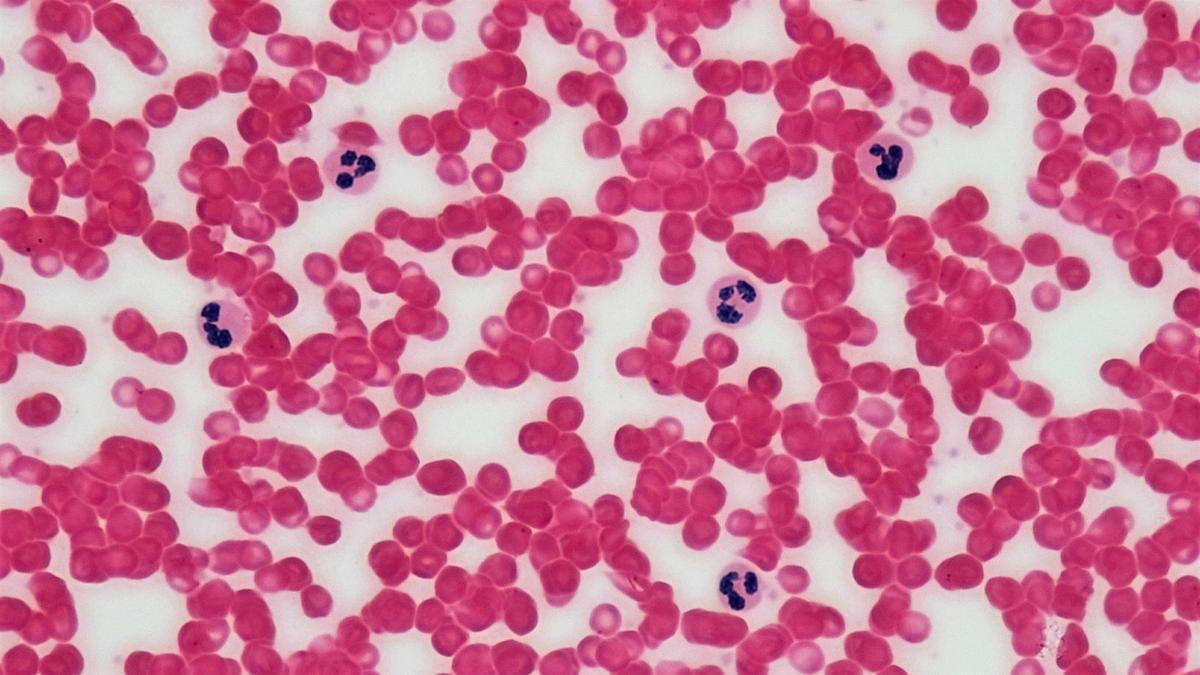
If there’s a soup of cells and you make them settle down and work together in orderly fashion, you reduce the system’s entropy.
| Photo Credit: Bioscience Image Library by Fayette Reynolds

Living things dump a lot of heat into their surroundings.

The universe is strict about conserving energy. If there’s a soup of cells and you make them settle down and work together in orderly fashion, you reduce the system’s entropy. In return you need to pay a ‘tax’ to the universe, to account for the drop in entropy. Scientists have interpreted the heat dumped by living things to be this tax.

There’s a problem, however: it’s two orders of magnitude higher than it needs to be to account for the entropy. What could the rest of the heat be about?

A new study by University of Freiburg, STFC Daresbury Laboratory, and University of Edinburgh researchers has argued that life produces so much heat because of how cells optimise their chemistry.

Cells have thousands of chemical reactions happening all the time. To work well, these reaction networks need to be precise and robust without trading off speed. When cells build proteins, they need to avoid making mistakes like putting the wrong amino acid in the chain. When cells build structures like their ‘skeleton’, they need to make parts of very particular sizes. And when they respond to stress, like sudden heat, they need to react quickly.

The researchers have proposed that cells achieve all these different goals using the same chemical setup, so to speak, i.e. they create chemical cycles that are driven far from equilibrium — like pushing a merry-go-round really hard instead of letting it just slow down once molecules have had their turns on it.

Say there’s a reversible chemical reaction: A ⇌ B. At equilibrium, the reaction will reach a balance where A converts to B at exactly the same rate at which B converts to A, so everything will settle into stable proportions and just sit there. Then, say you force the system away from this natural balance by constantly pumping in more and more A. Now the reaction will be driven in one direction and the system will no longer be at rest. This state is said to be far from equilibrium.

In the paper, the researchers focused on a reaction called ATP hydrolysis: ATP ⇌ ADP + phosphate. At equilibrium this reaction settles into certain proportions of ATP versus ADP. However, cells actively maintain the ratio at about 10 billion times what equilibrium would be, which is extremely far from equilibrium. They do this by constantly making fresh ATP, using up the ATP in cellular reactions, and preventing the reverse reaction from happening much.

When reactions are far from equilibrium, they can do useful work and can be controlled precisely. But when they’re at equilibrium they’re practically dead: you can’t control anything because there’s no net energy flow.

Maintaining this imbalance and running all the reaction cycles will necessarily generate an enormous amount of heat. It’s effectively a tax cells pay to remain versatile.

The paper’s calculations showed that these driven chemical cycles account for a large fraction of the heat that organisms dump. And evolution has apparently decided that this is worth it.

mukunth.v@thehindu.co.in

Published – January 27, 2026 06:00 am IST



Source link

Science

Post navigation

Previous Post: Access Denied
Next Post: Access Denied

Related Posts

  • Loggerhead turtles use geomagnetic field to navigate large distances
    Loggerhead turtles use geomagnetic field to navigate large distances Science
  • De-extinction company Colossal Biosciences announces 0 million series C financing
    De-extinction company Colossal Biosciences announces $200 million series C financing Science
  • If tardigrades crowd-sourced their remarkable genes, can humans?
    If tardigrades crowd-sourced their remarkable genes, can humans? Science
  • When a ‘fellow traveller’ went to space
    When a ‘fellow traveller’ went to space Science
  • Pragyan rover finds an unexpected surprise on the moon: sulphur | Explained
    Pragyan rover finds an unexpected surprise on the moon: sulphur | Explained Science
  • What is ‘mirror life’ and why have scientists opposed it?
    What is ‘mirror life’ and why have scientists opposed it? Science

More Related Articles

India backing high risk, high impact R&D projects: PM Modi India backing high risk, high impact R&D projects: PM Modi Science
How women in India have fared How women in India have fared Science
Social relationships help vampire bats facilitate their unusual blood diets Social relationships help vampire bats facilitate their unusual blood diets Science
Tamil Nadu uses inexpensive method to treat rodenticide poisoning Tamil Nadu uses inexpensive method to treat rodenticide poisoning Science
RRI team use quantum magnetometry to make more precise atomic clocks RRI team use quantum magnetometry to make more precise atomic clocks Science
What is planetary protection? – The Hindu What is planetary protection? – The Hindu Science
SiteLock

Archives

  • September 2026
  • August 2026
  • July 2026
  • June 2026
  • May 2026
  • April 2026
  • March 2026
  • February 2026
  • January 2026
  • December 2025
  • November 2025
  • October 2025
  • September 2025
  • August 2025
  • July 2025
  • June 2025
  • May 2025
  • April 2025
  • March 2025
  • February 2025
  • January 2025
  • December 2024
  • November 2024
  • October 2024
  • September 2024
  • August 2024
  • July 2024
  • June 2024
  • May 2024
  • April 2024
  • March 2024
  • February 2024
  • January 2024
  • December 2023
  • November 2023
  • October 2023
  • September 2023
  • August 2023
  • July 2023
  • June 2023
  • May 2023
  • April 2023
  • March 2023
  • February 2023
  • January 2023
  • December 2022
  • November 2022
  • October 2022
  • September 2022
  • August 2022
  • July 2022
  • June 2022
  • May 2022

Categories

  • Business
  • Nation
  • Science
  • Sports
  • World

Recent Posts

  • Australia completes cricket series sweep with 1-wicket win against Zimbabwe in third ODI
  • Far-left Elif Eralp wins Berlin vote on anti-AfD, pro-poor campaign
  • Premier League: Man City outgun Sunderland despite Brobbey hat-trick, Liverpool marks Iraola’s winning return
  • INLD’s Sampat Singh attacks BJP’s ‘Seva Sankalp Abhiyaan’, alleges misuse of State machinery
  • Iran shuts language centre linked to French embassy

Recent Comments

  1. LarryKef on UP Teacher Who Asked Students To Slap Muslim Classmate
  2. Josephjab on UP Teacher Who Asked Students To Slap Muslim Classmate
  3. LarryKef on UP Teacher Who Asked Students To Slap Muslim Classmate
  4. Jasonnekly on UP Teacher Who Asked Students To Slap Muslim Classmate
  5. Jasonnekly on UP Teacher Who Asked Students To Slap Muslim Classmate
  • Galactic tides: Pushing and pulling the heavens
    Galactic tides: Pushing and pulling the heavens Science
  • Access Denied
    Access Denied Nation
  • Dozens of migrants are dead after a boat rips apart in waters off northern France
    Dozens of migrants are dead after a boat rips apart in waters off northern France World
  • What happens to Donald Trump’s tariffs now that federal appeals court has knocked them down
    What happens to Donald Trump’s tariffs now that federal appeals court has knocked them down World
  • Access Denied
    Access Denied Nation
  • China opens its first cross-sea bullet train, linking major cities in the southeastern Fujian province
    China opens its first cross-sea bullet train, linking major cities in the southeastern Fujian province World
  • Access Denied Sports
  • Lanier, An Se-young crowned world champions
    Lanier, An Se-young crowned world champions Sports

Editor-in-Chief:
Mohammad Ariff,
MSW, MAJMC, BSW, DTL, CTS, CNM, CCR, CAL, RSL, ASOC.
editor@artifex.news

Associate Editors:
1. Zenellis R. Tuba,
zenelis@artifex.news
2. Haris Daniyel
daniyel@artifex.news

Photograher:
Rohan Das
rohan@artifex.news

Artifex.News offers Online Paid Internships to college students from India and Abroad. Interns will get a PRESS CARD and other online offers.
Send your CV (Subjectline: Paid Internship) to internship@artifex.news

Links:
Associate Journalism
About Us
Privacy Policy

News Links:
Breaking News
World
Nation
Sports
Business
Entertainment
Lifestyle

Registered Office:
72/A, Elliot Road, Kolkata - 700016
Tel: 033-22277777, 033-22172217
Email: office@artifex.news

Editorial Office / News Desk:
No. 13, Mezzanine Floor, Esplanade Metro Rail Station,
12 J. L. Nehru Road, Kolkata - 700069.
(Entry from Gate No. 5)
Tel: 033-46011099, 033-46046046
Email: editor@artifex.news

Copyright © 2023 Artifex.News Newsportal designed by Artifex Infotech.