




Let us begin with a basic truism. Every age wants to believe that it is uniquely doomed. There is narcissistic self-love disguised as loathing, as well as an exaggerated projection of achievement bordering on destruction in that belief. Poets, writers, film-makers, culture-pundits, all invest various vocabularies of panic to creatively design doom stories, the more manipulative ones also profiting from the panic. Alfred Tennyson’s elegy, In Memoriam, written in 1850, in the wake of post-Darwinian cultural panic and death of the poet’s close friend Arthur C. Hallam, is a long lament about loss of belief systems, the randomness and casual violence embedded in natural selection and progression, and the accidental qualities that encode and erase kinship, and is one of the finest poems about anxiety at a personal, subjective as well as shared social level. It speaks to subsequent cultures of lament and loss through its rendition of grief and anticipation of a non-causal, godless future. It also invites literature and memory studies students to think about the complex qualities of anxiety at molecular as well as monumental dimensions.
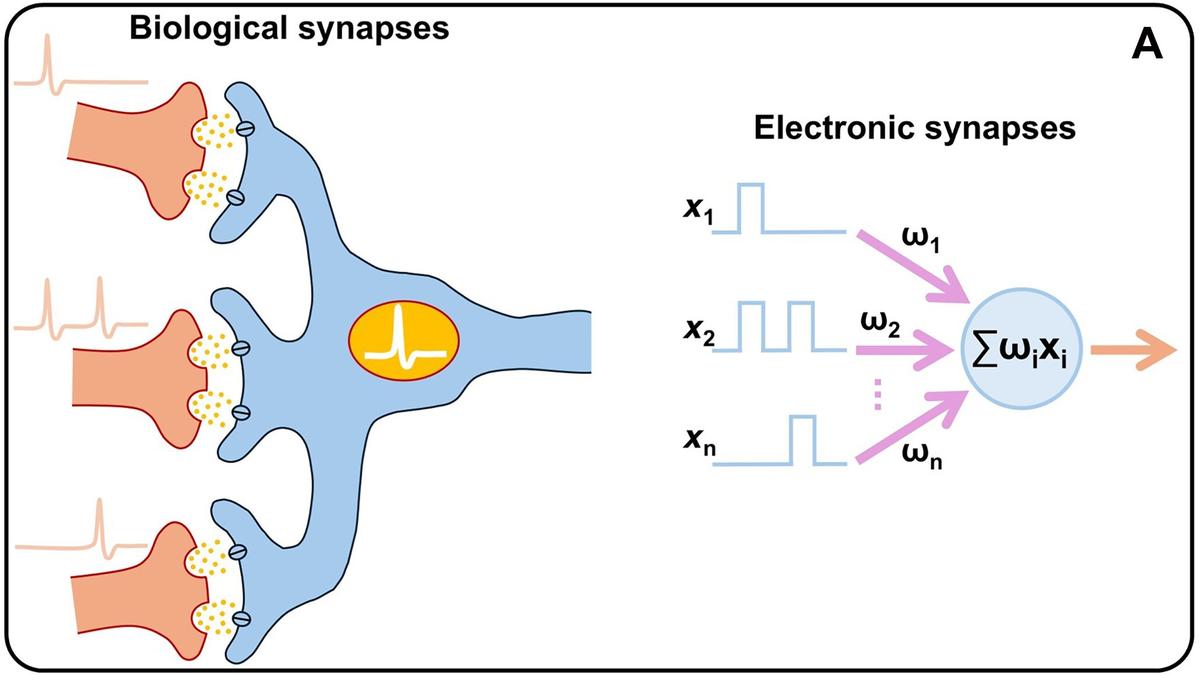
Joseph LeDoux’s brilliant book Anxious (2015) offers a neuroscientific as well as an evolutionary examination of anxiety in ways that have affected the human brain across centuries. Famed for his work on synapses and the synaptic self, LeDoux, like Antonio Damasio, V. S. Ramachandran, and Charan Ranganathan, writes about insights from neuroscientific research in creative correspondence with cultural conditions and lived realities. In Anxious, LeDoux posits the argument that anxiety is the price that the human brain has had to pay for its ability to anticipate the future. This offers an interesting angle to look at anxiety from a cultural perspective, inviting us to wonder whether the information-overload that creates anticipatory behavioural mechanisms is also the subliminal instrument through which anxiety is produced and perpetuated in contemporary conditions.
The gift of anticipation
If we are uniquely gifted in our complexly-constructed mammalian brains to anticipate scenarios with the possibility to perfect or pre-empt the same, it is the same gift of anticipation that creates anxious conditions, as the brain would then be also involved in projecting simulated situations before those happen, establishing a neural feedback loop, and experiencing the entire process emotionally. Therefore, one ought to espouse a more ambivalent attitude towards anxiety despite the obvious emotional overkill that it may cause at neural and existential levels. For the literary geek, this theory helps makes sense of Hamlet’s dilemma and procrastinations in avenging his father’s murder and fixing the political problems of his country: the Prince of Denmark is a philosophy nerd at the University of Wittenberg, intellectually oriented to anticipating multiple possibilities and dimensions of truth. And it is ironically this polyphonic orientation towards anticipation that makes Hamlet so anxious and so uniquely unfit for swift clinical action, even as his Norwegian counterpart Fortinbras threatens imminent military invasion. But let us move on now to the ontology and experience of anxiety in contemporary post-digital post-algorithmic cultural conditions.
As memory studies scholar Andrew Hoskins states, the fundamental change in memory-ecology and memory-experience in the post-digital age of algorithms is the episodic, kinetic, and contagious quality in processes of remembering and forgetting. Acts of memory-making and commemoration often operate through digitally designed ephemeral portals marked by kinetic algorithmic aesthetics that aspire to become contagious. The emergent and connective qualities in post-digital ecologies redefine sites of memory through interstitial interfaces across subjects and surfaces.
Data and the mind
Post-digital architectonics also offer ways in which memory-making may be calibrated and quantified by metrics, through number of hits, likes, views, and reels. At a temporal level, this achieves a complex triangulation simultaneously: the moment of memory-making, the moment of memory-recall, and the moment of memory-validation. This also invites (and perhaps compels) the iterating subject to project possibilities of reception, in terms of imaging and curating how memory-making may be received through responses. Consequently, memory-making becomes co-temporal with anticipation, quite literally, and one can see similar patterns across other interfaces in the post-digital world.
Memories of purchases and consumption translate into data that may be dangled by sophisticated algorithms as anticipatory procurements. Companies with enormous capital can chronicle away and itemise information in an endless memory-ecology that is at once mnemonic and anticipatory. In fact, the kinesis of algorithms achieves maximum sophistication when they operate as predictive and pre-emptive verticals and vectors. Just like memory in the brain takes place when neurons make love at the back of the head, memory-kinesis and memory-contagion in digital designs move when algorithms mix and merge to create repetitive and predictive patterns through notifications and pop-ups, when codes decode rituals of human behaviour and attempt to project predictions that may be manipulated as well as monetised. With this invisible infrastructure of information and episodic ecology of memory inhabited and internalised incessantly, how does the post-digital subject experience and engage with anxiety?
One of the finest Modernist poems about masculinity crisis and anxiety, T. S. Eliot’s The Love Song of J. Alfred Prufrock describes an image that appears “as if a magic lantern threw the nerves in patterns on a screen”. Anxiety in the post-digital age is a function of Prufrockian nerve patterns through a magic lantern that appears through absence as well as anticipation. The quick kinesis of memory-making in contemporary conditions creates its corresponding anxiety of approval. In a culture where the digital and the corporeal mix asymmetrically and create digicorporeal (a concept coined and theorised by this author) dimensions of self and subjectivity, anxiety is internalised and industrialised. The digicorporeal – whereby the corporeal and the digital are asymmetrically entangled – can assume anatomical and motor mechanisms, including what the medical humanities scholar Laura Salisbury calls doom scrolling. As human subjects compulsively consume negative (and often nonsensical) news through their digital devices, anxiety turns to a commodity that can be sold as well as recycled.

Contemporary anxiety
The anxious subject in contemporary conditions is a function of spasmodic digicorporeality that operates through quick kinesis and contagion. The faster memory moves in the post-digital networks, the speedier is it capable of arousing anxiety. For if memory and information can be quantified through metrics, the same process will produce the mechanism of validation that will in turn generate anxiety. If we are becoming digicorporeal in ways which are often enabling and liberating, this digicorporeality also generates its unique culture, code, and vocabulary of anxiety. The anxious subject of the post-digital world is both saturated as well as suspended in space and time, in memory-making, meaning-making networks that can be narrative as well as neurotic. Anxiety can operate in these conditions not merely as an absence, but as a functional fallout of gratification and anticipation.
Unsurprisingly, biological and digital health can converge complexly in this experiential ecology of anxiety, whereby body beats and internet speed, pop-ups, views, and likes (or the lack thereof) correspond to each other in ways that require nuanced research. The digicorporeal is, of course, already instrumentalised through a plethora of machines from cardio watches to calorie metres. But health in contemporary cultures is also increasingly aligned to the digital in immediately experiential and affective ways through the intangible and often invisible infrastructures of information and validation. In such ecologies, neural networks and digital interfaces correspond and collude through peculiar pathways, whose kinesis and contagion compress space-time, mixing the here and now with an elusive elsewhere. In such algorithmic alchemy, anticipation and memory morph seamlessly into anxiety, to quote Eliot’s Prufrock again, “for a hundred indecisions/And for a hundred visions and revisions/ Before the taking of a toast and tea.”
(Avishek Parui is associate professor in English and memory studies at IIT Madras. He is also the faculty coordinator of IIT-M’s Centre for Memory Studies and co-founding chairperson of the Indian Network for Memory Studies. avishekparui@iitm.ac.in)
Published – November 15, 2025 05:30 pm IST