Skip to content
  • Facebook
  • X
  • Linkedin
  • WhatsApp
  • YouTube
  • Associate Journalism
  • About Us
  • Privacy Policy
  • 033-46046046
  • editor@artifex.news
Artifex.News

Artifex.News

Stay Connected. Stay Informed.

  • Breaking News
  • World
  • Nation
  • Sports
  • Business
  • Science
  • Entertainment
  • Lifestyle
  • Toggle search form
  • How Slovak PM Robert Fico’s Bodyguards Swung Into Action After He Was Shot
    How Slovak PM Robert Fico’s Bodyguards Swung Into Action After He Was Shot World
  • Fadnavis visits Pawan Kalyan in Mumbai hospital after shoulder surgery
    Fadnavis visits Pawan Kalyan in Mumbai hospital after shoulder surgery Nation
  • Trump suggests he would support a national ban on abortions around 15 weeks of pregnancy
    Trump suggests he would support a national ban on abortions around 15 weeks of pregnancy World
  • High Drama As Soldiers Fire In Air To Disperse Protesters In Manipur’s Bishnupur
    High Drama As Soldiers Fire In Air To Disperse Protesters In Manipur’s Bishnupur Nation
  • Ashok Gehlot Show Of Support As Vasundhara Raje Snubbed By BJP
    Ashok Gehlot Show Of Support As Vasundhara Raje Snubbed By BJP Nation
  • Access Denied
    Access Denied Nation
  • Rachin Ravindra Shines, Kane Williamson All Class On Comeback As New Zealand Outbat Pakistan In Cricket World Cup Warm-Up
    Rachin Ravindra Shines, Kane Williamson All Class On Comeback As New Zealand Outbat Pakistan In Cricket World Cup Warm-Up Sports
  • Singapore’s Indian-origin Leader of Opposition to go on trial in October for lying in Parliament
    Singapore’s Indian-origin Leader of Opposition to go on trial in October for lying in Parliament World
Why you get better care when you stop nodding and start asking why

Why you get better care when you stop nodding and start asking why

Posted on August 4, 2026 By admin


Priya walks into an orthopaedician’s clinic with knee pain that she says she has had for three months. The doctor spends eight minutes with her, orders an MRI, and asks her to come back with the images.

The MRI shows signs of early osteoarthritis. The doctor lists three options: injections, physiotherapy or wait and watch. Priya nods, does not ask why she needed an MRI when the doctor could have examined her knee, and does not ask what ‘early osteoarthritis’ actually means or what happens if she does nothing. She opts for injections because of how she thought the doctor said it — some inflection and tone.

Six months and four injections later, she has spent ₹15,000 but her pain is back. She is wondering if she got scammed, and if injections were ever the right call.

Priya was probably not scammed — but she made a decision about her body without understanding it. She did not know that she could have asked questions and she did not know that the doctor was not sure either.

Medicine is not certainty

You are taught that doctors discover diagnoses, that there is always a right answer, and that diagnoses are always objective. They are not. When the orthopaedician looked at Priya’s knee, he was thinking that the probability of osteoarthritis was 40%,  a meniscal tear 30%, a muscle strain 20% and in fact a 10% chance it was something else. He did not know for certain; his estimates were based on knowledge and experience, and probably what his last 10 patients had.

The MRI showed signs of arthritis — but arthritis on imaging does not always mean it is also the cause of pain. Plenty of people have degenerative changes and feel nothing while an equal number have almost no changes and have terrible pain. Instead, the orthopaedician interpreted the image, made an educated guess, and advised treatment.

Another doctor might have looked at the same image and said, “Wait. Let us see if physiotherapy helps first.” A third doctor might have said, “This is asymptomatic degeneration. Leave it alone.”

None of them would be objectively wrong. They are all interpreting the same evidence differently based on their experience, training, risk tolerance, and — honestly — how busy their practice is and what procedures they are equipped to do.

This is clinical medicine. It is not a process of discovery. It is almost always going to be a series of educated guesses filtered through a doctor’s particular worldview.

And once you understand this, you realise something: if there is no objective right answer, you need to have a say in the decision. Your life is not the doctor’s life. Your pain tolerance is not theirs. Your willingness to spend ₹15,000 on injections is not theirs.

On different tracks

Doctors are trained to approach illness in a particular way — whereas what you want out of treatment may be vastly different. When this is not discussed, a large mismatch in expectations can develop, resulting in a trust deficit, and ultimately, disappointment.

Medical schools teach budding doctors to prevent disease, minimise risk, and, when in doubt, to investigate. This makes sense if you have seen someone die of a missed diagnosis. The goal becomes to not miss anything, ever.

The orthopedician was thinking: arthritis found, need to prevent progression, imaging confirms it, treat aggressively. Priya was thinking: my knee hurts, what is the quickest solution? One of them is inevitably frustrated and dissatisfied.

This happens every day in Indian hospitals. A doctor sees borderline blood pressure and recommends medication. Patient thinks: I feel fine, I do not need this. Both are right. Both are wrong. That is because they are having two separate conversations.

Crucially, the system does not teach doctors to fix this. As a patient, you can respond by asking questions.

How to be a good patient

To be a good patient:

First, demand clarity on usefulness. Ask“what will this tell us that changes my treatment?”, “what happens if it is normal?”, “what happens if it is abnormal?”, “how will you use this information?”, and “what are the guidelines to treat this?”.

Why? A doctor who can answer gets to keep your trust. But if the doctor dodges or gets irritated, you now know something important about how they practice.

Second, insist on options. Even osteoarthritis does not have just one treatment. The options include observation, physiotherapy, medications, injections, and surgery.

Why? A doctor operating in good faith might say, “We could try A, which works for some people but has risks, or B, which is safer but might not work. What matters more to you?”

Third, interrupt when you are confused. Do not nod and leave confused. Say “I did not follow that. Please explain it differently.”

Why? Doctors do not mind. They would rather know and try again than have you leave thinking you understood.

One important question

Before any major treatment, ask: “What would you do if this was your mother?”

The answer is often different from what the doctors are recommending for you. This does not mean they are being unethical; it often means something else. Maybe they do not know your full picture: your job, your life, your ability to cope with side effects. With their mother, they know all of it. Or maybe they are being more cautious with their mother not because it is better medicine but because emotion changes judgment. Or maybe they realise there are actually multiple valid approaches and they have been presenting one option like it is the easiest one.

Your doctor knows there are choices — and they may have recommended one for reasons they have not explained. So Priya could have asked, “If this was your mother’s knee, would you do four injections over six months?” The likely reply: “No. I would try physiotherapy first, and injections if that does not work.”

When you are still suffering

You followed the plan. You are compliant, you are taking your medicines, doing your exercises, and generally doing what you were told. Nothing is working. In these circumstances, you should have a different conversation, e.g.: “I am following your plan but not getting better. What does that mean?”

Do not think you are accusing the doctor; you are simply investigating. Maybe the diagnosis was wrong, you need to wait longer, you need surgery or something else. You and your doctor need to figure it out together.

Stop thinking your job is to obey. You know your body and yourself. The doctor knows medicine. Both of you are necessary to make a good decision. Making an informed choice is always better than a compliant one. It will also improve doctor-patient relations. As much as you deserve a good doctor, doctors also deserve good patients.

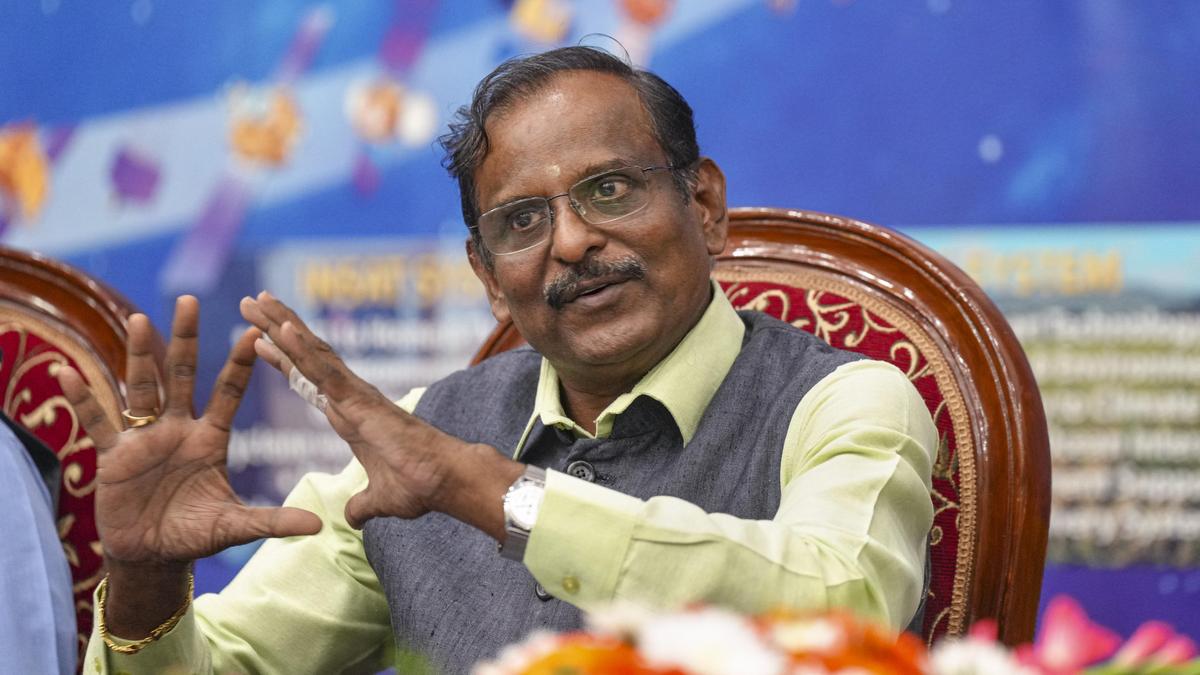
(Narayana Subramanian is Lead Consultant, Head and Neck Surgery and Oncology, Aster Hospitals, and Adjunct Faculty, Indian Institute of Science, Bengaluru.)




Source link

Science

Post navigation

Previous Post: New talks ‘last chance’ for Iran to forge deal, avoid escalation of U.S. strikes: Trump
Next Post: FSSAI prohibits Dabur from selling food products with ‘100%’ claims

Related Posts

  • 1998 Pokhran nuclear tests reflected India’s scientific excellence: PM on National Technology Day
    1998 Pokhran nuclear tests reflected India’s scientific excellence: PM on National Technology Day Science
  • STS-8: Launching and landing at night, with an Indian connection
    STS-8: Launching and landing at night, with an Indian connection Science
  • What is it? IceCube: The big, chill neutrino-spotter
    What is it? IceCube: The big, chill neutrino-spotter Science
  • ‘Sholay’, Shubman Gill, and the non-random randomness of coin tosses
    ‘Sholay’, Shubman Gill, and the non-random randomness of coin tosses Science
  • India’s first privately developed orbital-class rocket Vikram-1 set for launch
    India’s first privately developed orbital-class rocket Vikram-1 set for launch Science
  • Ohsumi, Japan’s first successful satellite
    Ohsumi, Japan’s first successful satellite Science

More Related Articles

Chemicals in plastics far more numerous than previous estimates, report says Chemicals in plastics far more numerous than previous estimates, report says Science
G20 satellite expected to be launched in 2027: ISRO chief Narayanan G20 satellite expected to be launched in 2027: ISRO chief Narayanan Science
Astronomers unravel the mystery of the ‘Dragon’s Egg’ nebula Astronomers unravel the mystery of the ‘Dragon’s Egg’ nebula Science
How genetic history reveals why some languages are so unique How genetic history reveals why some languages are so unique Science
Vaccine for dengue may be available commercially by mid-2026  Vaccine for dengue may be available commercially by mid-2026  Science
Qianhai Shenzhen–Hong Kong Youth Innovation and Entrepreneur Hub Debuts at GITEX AI ASIA Qianhai Shenzhen–Hong Kong Youth Innovation and Entrepreneur Hub Debuts at GITEX AI ASIA Science
SiteLock

Archives

  • October 2026
  • September 2026
  • August 2026
  • July 2026
  • June 2026
  • May 2026
  • April 2026
  • March 2026
  • February 2026
  • January 2026
  • December 2025
  • November 2025
  • October 2025
  • September 2025
  • August 2025
  • July 2025
  • June 2025
  • May 2025
  • April 2025
  • March 2025
  • February 2025
  • January 2025
  • December 2024
  • November 2024
  • October 2024
  • September 2024
  • August 2024
  • July 2024
  • June 2024
  • May 2024
  • April 2024
  • March 2024
  • February 2024
  • January 2024
  • December 2023
  • November 2023
  • October 2023
  • September 2023
  • August 2023
  • July 2023
  • June 2023
  • May 2023
  • April 2023
  • March 2023
  • February 2023
  • January 2023
  • December 2022
  • November 2022
  • October 2022
  • September 2022
  • August 2022
  • July 2022
  • June 2022
  • May 2022

Categories

  • Business
  • Nation
  • Science
  • Sports
  • World

Recent Posts

  • Delhi journalist who accused ACP of sexual harassment slapped with SC/ST Act over ‘casteist remarks’
  • Three Indians killed in Germany building fire: reports
  • Govt. to roll out National Electricity Data Sharing framework in October: Power Secretary
  • BCCI steps in to prevent further forfeitures by Arunachal Pradesh
  • TCCI seeks review of steep parking, access charges at Thiruvananthapuram airport

Recent Comments

  1. RobertTes on UP Teacher Who Asked Students To Slap Muslim Classmate
  2. Manuelret on UP Teacher Who Asked Students To Slap Muslim Classmate
  3. RobertTes on UP Teacher Who Asked Students To Slap Muslim Classmate
  4. RobertTes on UP Teacher Who Asked Students To Slap Muslim Classmate
  5. BrentWes on UP Teacher Who Asked Students To Slap Muslim Classmate
  • Access Denied Business
  • Why no action taken against health official accused of harassing lady doctor in a Delhi govt hospital: AAP asks L-G Saxena
    Why no action taken against health official accused of harassing lady doctor in a Delhi govt hospital: AAP asks L-G Saxena Nation
  • Access Denied World
  • Philippines, China Reach “Arrangement” For South China Sea Resupply Missions
    Philippines, China Reach “Arrangement” For South China Sea Resupply Missions World
  • Rupee falls 9 paise to 88.77 against U.S. dollar in early trade
    Rupee falls 9 paise to 88.77 against U.S. dollar in early trade Business
  • IPL 2026 RR vs LSG: Sooryavanshi’s stunning knock takes Royals closer to playoffs
    IPL 2026 RR vs LSG: Sooryavanshi’s stunning knock takes Royals closer to playoffs Sports
  • Fire at South Korean auto parts factory injures at least 53
    Fire at South Korean auto parts factory injures at least 53 World
  • Access Denied
    Access Denied Nation

Editor-in-Chief:
Mohammad Ariff,
MSW, MAJMC, BSW, DTL, CTS, CNM, CCR, CAL, RSL, ASOC.
editor@artifex.news

Associate Editors:
1. Zenellis R. Tuba,
zenelis@artifex.news
2. Haris Daniyel
daniyel@artifex.news

Photograher:
Rohan Das
rohan@artifex.news

Associate Journalists
1. Subrata Paul - AN/2020/01
2. Quamruz Zaman - AN/2021/22
3. Ahmed Sha - AN/2021/035
4. Ajay Kumar Shaw - AN/2021/39
5. Tahqiqul Hoda - AN/2021/21

Artifex.News offers Online Paid Internships to college students from India and Abroad. Interns will get a PRESS CARD and other online offers.
Send your CV (Subjectline: Paid Internship) to internship@artifex.news

Links:
Associate Journalism
About Us
Privacy Policy

News Links:
Breaking News
World
Nation
Sports
Business
Entertainment
Lifestyle

Registered Office:
72/A, Elliot Road, Kolkata - 700016
Tel: 033-22277777, 033-22172217
Email: office@artifex.news

Editorial Office / News Desk:
No. 13, Mezzanine Floor, Esplanade Metro Rail Station,
12 J. L. Nehru Road, Kolkata - 700069.
(Entry from Gate No. 5)
Tel: 033-46011099, 033-46046046
Email: editor@artifex.news

Copyright © 2023 Artifex.News Newsportal designed by Artifex Infotech.