



Where it all began…
Did you know that a rough conservative estimate of India’s tiger population at the start of the 20the Century was around 40,000? The top end of the estimates even placed the number of tigers in the Indian subcontinent in 1900 at around 1,00,000!
That number, however, nosedived to a mere 1,827 in 1972, the estimated population figure the result of a nation-wide tiger census conducted that year. This meant that in just 70 years, only about one in every 25 tigers (or 4 out of every 100) remained, even if we were to start with the conservative estimate.
The dismally low number was an urgent call for action. The Government of India set up the Project Tiger in 1973 with the primary objective of protecting the Bengal Tiger, and its natural habitats, while ensuring a viable tiger population for ecological balance. Secondary objectives included controlling poaching and illegal trades, raising awareness about tiger conservation among the public, and developing and incorporating better methods to monitor tiger populations.
How was it implemented?
A multi-pronged approach has been employed to implement Project Tiger through the last half a century or so. Central to it has been the establishment of tiger reserves, which are managed with a core-buffer strategy. While the core areas enjoy legal protection as national parks or sanctuaries, buffer zones around the core areas allow for sustainable human activities, balancing conservation efforts with local needs. The tiger reserves are designed such that they serve as secure habitats for the tigers, and minimise human-wildlife conflict.
The National Tiger Conservation Authority (NTCA) was established under the Wild Life (Protection) Act of 1972 and serves as the wildlife conservation agency that provides regulatory oversight and also manages the funding of Project Tiger. Even though the project is an initiative by the Indian government, a number of collaborators from other countries and organisations have also lent their support to aid the efforts of tiger conservation.
Data that highlights the project’s success
50+ When the project was started, there were nine tiger reserves, including the iconic Jim Corbett National Park – India’s first national park, established in 1936. In a little over 50 years, the number of tiger reserves have ballooned to more than 50, meaning that the country has been adding almost one tiger reserve every year.
As big as Jharkhand When Project Tiger was launched in 1973, an area of 9,115 sq. km was encompassed by the nine reserves. As of 2025, the area under the 50+ reserves across 18 states in the country has gone past the 75,000 sq. km mark.
If all those areas were to be placed together to form a single parcel of land, it would be comparable with the state of Jharkhand, which has an area of 79,714 sq. km.
Over 2% of the country India has an overall area of 3.287 million sq. km. If the area demarcated as tiger reserves were compared with the total area of the country, it is a little over one-fiftieth of the total area. This means that over 2% (2.2%, if you wish to be more precise) of India’s landmass is now devoted to this project.
More than 3,000 tigers The most recent estimate of tiger population in the country ranges from a minimum of 3,167 to a maximum of 3,925, with an average of 3,682 – generally given out as the number of tigers in India.
While a jump from 1,827 in 1973 to 3,682 in 2022 represents a commendable annual growth rate of 6.1%, the growth in reality was far from linear. This means that the rate of growth didn’t steadily keep on increasing, and there were, in fact, even some dips before the numbers bounced back.
The estimate in 2006, for instance, was 1,411 – even lower than the 1972 mark! This decrease from previous estimates actually led to a major overhaul in the way in which things were done, and they have borne fruit as the tiger numbers have more than doubled in the last two decades.
Roughly 75% India’s tiger population has, in fact, doubled in a decade according to a study whose results were published earlier this year. As a result, India is now home to roughly 75% of the global tiger population. Yes, you read that right. Three out of every four tigers in the world are now in India!
A tigress’s tale
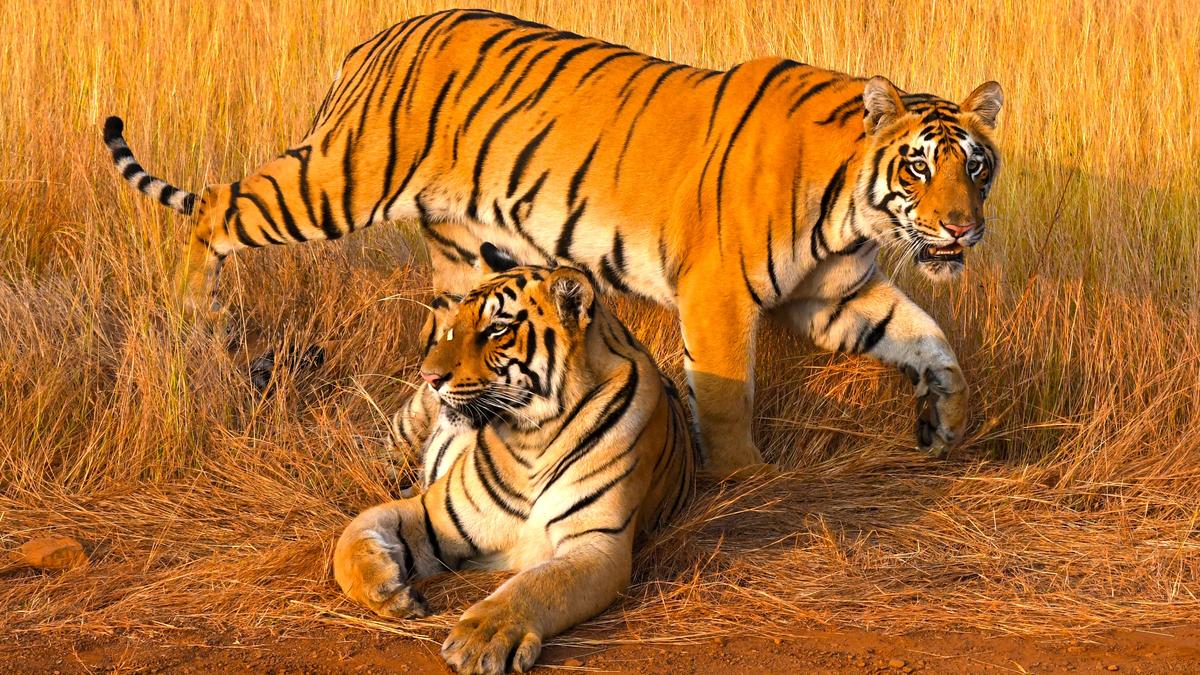
Programmes like Project Tiger do better off with a face. Machhli was the poster child of this conservation effort as she saw the numbers of her species both decline and grow during her lifetime.
Meet Machhli
Name: Machhli, also spelt Machli or Machali
Tiger code: T-16
Gender: Female
Species: Bengal tiger
First seen: 1997
Died: August 18, 2016
Habitat: Ranthambore National Park
Nicknames: Queen Mother of Tigers, Tigress Queen of Ranthambore, The Lady of the Lakes, Crocodile Killer
Claims to fame: India’s most famous tigress; labelled most photographed tigress in the world.
Machhli inherited her name – Hindi word for “fish” – from her mother and also because of the fish-shaped mark on her left ear. A dominant cub, she started hunting at the age of two and her ferocity was well documented throughout her lifetime. The most famous incident showcasing this is her fight with a 14-foot mugger crocodile, which she killed while losing a couple of canine teeth.
Machhli served as the poster child of Project Tiger for a couple of decades.
Photography by Dharmendra Khandal, Conservation Biologist, Tiger Watch, Ranthambhorem Sawai Madhopur, Rajasthan, INDIA
| Photo Credit:
DHARMENDRA KHANDAL
She gave birth to five litters and raised 11 cubs, contributing significantly to the park’s tiger count. Some of her cubs were even relocated as a couple of female cubs were transferred to Sariska Tiger Reserve to boost the big cats population there as well.
She soon became a favourite subject for wildlife photographers and filmmakers, and her photogenic nature even earned her the title of being the most photographed tigress in the world. This had a strong impact on both tourism and conservation, as it brought more footfalls to Ranthambore and more eyeballs to the conservations efforts.
As is to be expected, Machhli did split opinion as well. By the time she died in 2016 as a 19-year-old, she had far outlived most “wild” tigers, who generally live to the age of 10-15. Her fame and the money that she brought in meant that she was tended for as she aged, raising questions of whether she was still “wild” at all. If that weren’t enough, some commentators even stated that the establishment was going out of the way to keep its star alive, even though she was no longer performing any ecological function. This drain in resources, they believed, could have been better employed in actual conservation efforts.
Machhli was, doubtless, an icon. And when it comes to capturing the public’s imagination and grabbing their attention, an icon always works.
The Tiger Man of India
If Machhli is seen as the face of Project Tiger, then Kailash Sankhala is the brains behind it. Nicknamed the “Tiger Man of India,” Sankhala is an Indian biologist and conservationist who served as the first director of the project. Here’s more about the man who lived for a cause that he cared about…
An early start
Born in Jodhpur in 1925, Kailash Sankhala obtained his master’s degree in Botany from Jaswant College, Jodhpur in 1950. He went on to earn a postgraduate diploma in forestry from the Indian Forest College in Dehradun in 1953, and joined the Indian Forest Service (IFS) in 1957.
Less than a decade after independence, when much of India was still coming to its feet, Sankhala began raising awareness about the plight of the tigers. As early as 1956, Sankhala had begun spreading the word about the alarming decline in their numbers, establishing himself as an early advocate for tiger conservation. Bear in mind that this was a time when tiger hunting was still a common practice, and there were countless problems plaguing the country as it was taking baby steps towards governing itself.
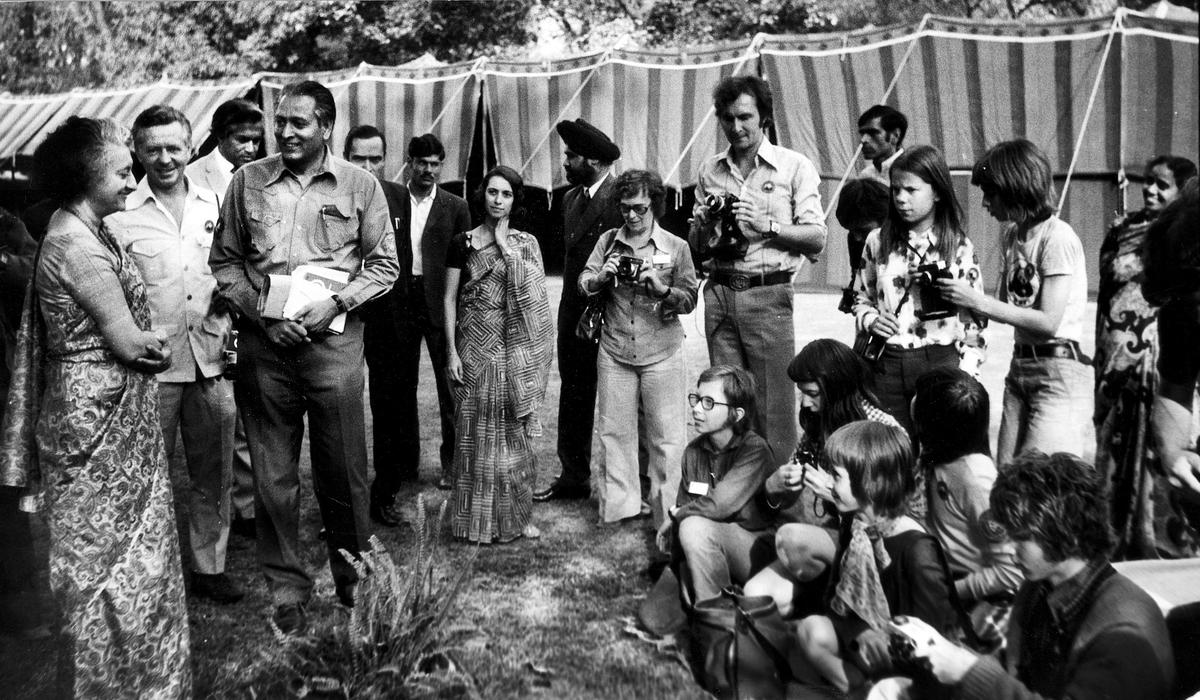
Kailash Sankhala (third from left), the Tiger Man of India, seen alongside Prime Minister Indira Gandhi (left) during a Project Tiger event in 1975.
| Photo Credit:
THE HINDU ARCHIVES
Research and management
As an IFS officer, Sankhala had a distinguished career. He managed a number of wildlife sanctuaries, including the ones at Sariska, Bharatpur, Van Vihar, and Ranthambore. By 1965, Sankhala had accepted the position of Director at the Delhi Zoological Park, a position he held for five years.
His methods and innovative approach to zoo management earned him recognition as he completely changed how zoos in the country function. The practice of having animals perform for onlookers was stopped, and animals were provided enclosures that were akin to their natural habitats.
By 1970, Sankhala had extensively studied tigers. His research on tiger population, their behaviour and population dynamics, paved the way for Project Tiger. He was also the first civil servant to receive the Jawaharlal Nehru Fellowship in 1969-70 to study tigers.
The first director
Sankhala realised that the onus was on him to employ his knowledge to educate the public and persuade the government for conservation efforts. His efforts brought the attention of both national and international media to the issue of tiger conservation.
Indira Gandhi, who was India’s Prime Minister at the time, took notice of Sankhala’s work. The hunting of wild animals was first banned, and then efforts were taken to protect tigers. When she set up a task force for the protection of tigers, Sankhala was part of it. Once the Wild Life (Protection) Act of 1972 was passed, it was a matter of time before Project Tiger kicked-off. Gandhi had no doubts in appointing Sankhala as the project’s first director.
Under Sankhala’s leadership, the project established nine tiger reserves, putting in place a nationwide network of protected areas. Along with his team, he came up with conservation strategies and implemented them, protecting the tiger and its habitat.
Tiger Trust
Sankhala literally lived for the cause that he had taken up, spending much of his lifetime to protect tigers, even after his tenure as the director of Project Tiger. In 1989, he set up Tiger Trust, a non-governmental organisation focussed on tiger conservation. Through this NGO, he tried to further the involvement of the community in the conservation efforts, while also bringing about initiatives and measures to preserve habitats and prevent poaching.
He authored several influential books on wildlife and conservation, including “Tiger! The Story of the Indian Tiger.” He received the Padma Shri award in 1992, a couple of years before his death in 1994, aged 69.