





Skip to content
  • Facebook
  • X
  • Linkedin
  • WhatsApp
  • YouTube
  • Associate Journalism
  • About Us
  • Privacy Policy
  • 033-46046046
  • editor@artifex.news
Artifex.News

Artifex.News

Stay Connected. Stay Informed.

  • Breaking News
  • World
  • Nation
  • Sports
  • Business
  • Science
  • Entertainment
  • Lifestyle
  • Toggle search form
  • Access Denied
    Access Denied Nation
  • Shaheen Afridi Likely To Miss Pakistan’s Next Assignment? Head Coach Reveals Reason
    Shaheen Afridi Likely To Miss Pakistan’s Next Assignment? Head Coach Reveals Reason Sports
  • ICC to hold virtually the boards meeting on November 29 to discuss hybrid model of champions trophy 2025 and the schedule
    ICC to hold virtually the boards meeting on November 29 to discuss hybrid model of champions trophy 2025 and the schedule Sports
  • Rohit Sharma Falls For Golden Duck On MI’s Night Of Horror vs RR, Tops Dubious List
    Rohit Sharma Falls For Golden Duck On MI’s Night Of Horror vs RR, Tops Dubious List Sports
  • Access Denied
    Access Denied Nation
  • Intense U.S. naval, air power buildup sets stage for potential Iran war
    Intense U.S. naval, air power buildup sets stage for potential Iran war World
  • Dharma must be taught properly, says RSS chief Mohan Bhagwat
    Dharma must be taught properly, says RSS chief Mohan Bhagwat Nation
  • BCCI Blasted On Reports Of Rookie Being Inducted vs Australia In Perth: “Like Sourav Ganguly Did…”
    BCCI Blasted On Reports Of Rookie Being Inducted vs Australia In Perth: “Like Sourav Ganguly Did…” Sports
Mitochondria keep your brain cells alive − helping them run smoothly may protect against Parkinson’s disease

Mitochondria keep your brain cells alive − helping them run smoothly may protect against Parkinson’s disease

Posted on August 31, 2024 By admin


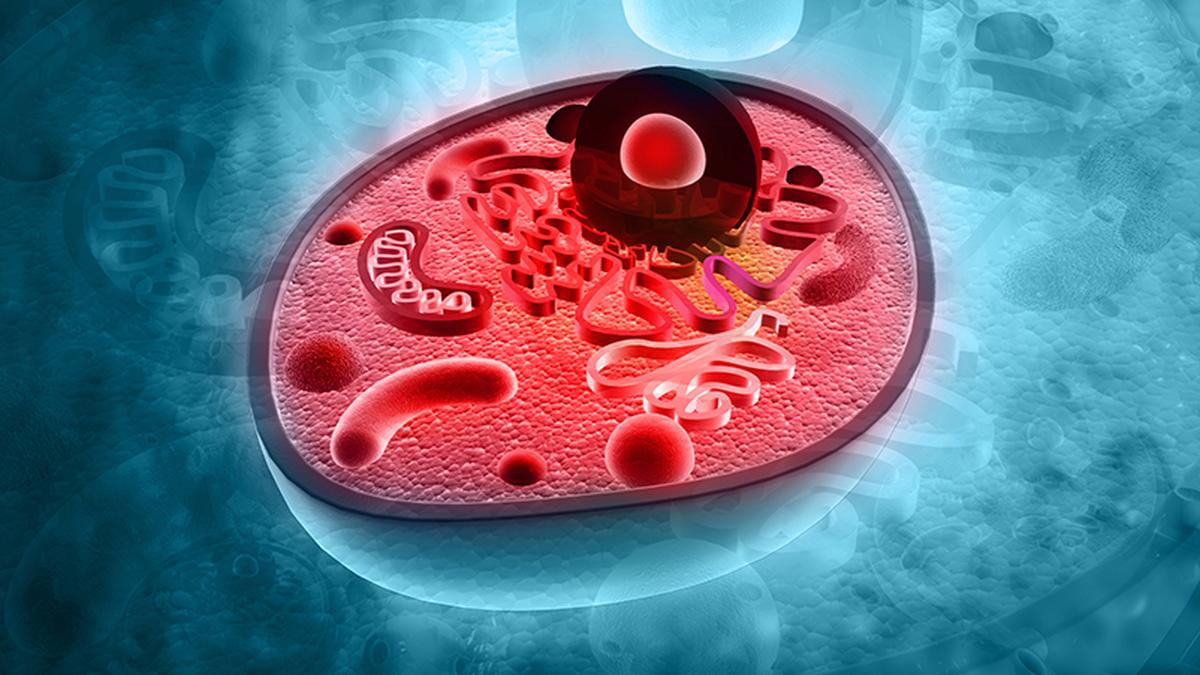
Mitochondria are dynamic. They constantly shift in size, number and location, traveling between many different parts of the cells to meet different demands. Photograph used for representational purposes only
| Photo Credit: Getty Images/iStockphoto

In 1817, a British physician named James Parkinson published An Essay on the Shaking Palsy, describing for the first time, cases of a neurodegenerative disorder now known as Parkinson’s disease. Today, Parkinson’s disease is the second most common neurodegenerative disease in the U.S. It affects about 1 million Americans and more than 10 million people worldwide.

The signature shaking in patients with the disease is the result of dying brain cells that control movement. To date, there are no treatments available that can stop or slow down the death of those cells.

We are researchers who studyParkinson’s disease. For over a decade, our lab has been investigating the role that mitochondria – the powerhouses that fuel cells – play in Parkinson’s.

Our research has identified a key protein that could lead to new treatments for Parkinson’s disease and other brain conditions.

Mitochondrial dynamics and neurodegeneration

Unlike actual power plants, which are set in size and location, mitochondria are rather dynamic. They constantly shift in size, number and location, traveling between many different parts of the cells to meet different demands. These mitochondrial dynamics are vital to not only the function of mitochondria but also the health of cells overall.

A cell is like a factory. Multiple departments must seamlessly work together for smooth operations. Because many major processes interconnect, impaired mitochondrial dynamics could cause a domino effect across departments and vice versa. Collective malfunction in different parts of the cell eventually leads to cell death.

Emerging studies have linked imbalances in mitochondrial processes to different neurodegenerative diseases, including Parkinson’s disease. In many neurodegenerative disorders, certain disease-related factors, such as toxic proteins and environmental neurotoxins, disrupt the harmony of mitochondrial fusion and division.

Impaired mitochondrial dynamics also take down the cell’s cleaning and waste recycling processes, leading to a pileup of toxic proteins that form harmful aggregates inside the cell. In Parkinson’s, the presence of these toxic protein aggregates is a hallmark of the disease.

Targeting mitochondria to treat Parkinson’s

Our team hypothesized that restoring mitochondrial function by manipulating its own dynamics could protect against neuronal dysfunction and cell death.

In an effort to restore mitochondrial function in Parkinson’s, we targeted a key protein that controls mitochondrial dynamics called dynamin-related protein 1, or Drp1. Naturally abundant in cells, this protein travels to mitochondria when they divide into smaller sizes for higher mobility and quality control. However, too much Drp1 activity causes excessive division, leading to fragmented mitochondria with impaired function.

Using different lab models of Parkinson’s, including neuronalcell cultures and rat and mice models, we found that the presence of environmental toxins and toxic proteins linked to Parkinson’s, cause mitochondria to become fragmented and dysfunctional. Their presence also coincided with the buildup of those same toxic proteins, worsening the health of neuronal cells until they eventually started dying.

We also observed behavior changes in rats that impaired their movements. By reducing the activity of Drp1, however, we were able to restore mitochondria to their normal activity and function. Their neurons were protected from disease and able to continue functioning.

In our 2024 study, we found an additional benefit of targeting Drp1.

We exposed neuronal cells to manganese, a heavy metal linked to neurodegeneration and an increased risk of parkinsonism. Surprisingly, we found that manganese was more harmful to the cell’s waste recycling system than to its mitochondria, causing buildup of toxic proteins before mitochondria became dysfunctional. Inhibiting Drp1, however, coaxed the waste recycling system back into action, cleaning up toxic proteins despite the presence of manganese.

Our findings indicate that inhibiting Drp1 from more than one pathway could protect cells from degeneration. Now, we’ve identified some FDA-approved compounds that target Drp1 and are testing them as potential treatments for Parkinson’s.

Rebecca Zhangqiuzi Fan is Post-doctoral Research Associate in Environmental Health Sciences, Florida International University

Kim Tieu is Professor of Environmental Health Sciences, Florida International University

This article is republished from The Conversation under a Creative Commons license. Read the original article here



Source link

Science Tags:causes of parkinson’s, how is the brain affected in parkinson’s, latest research in parkinson’s, treatment for parkinsons’s

Post navigation

Previous Post: Brazil blocks Musk’s X after company refuses to name local representative amid feud with Judge
Next Post: Brazil Block On Elon Musk’s X Comes Into Effect

Related Posts

  • The physics of why Shami’s ‘bolt upright’ seam works magic
    The physics of why Shami’s ‘bolt upright’ seam works magic Science
  • A bistable gene in a deadly bacterium offers a clue to beating it
    A bistable gene in a deadly bacterium offers a clue to beating it Science
  • Will chocolate’s future hinge on success of growing cocoa in the lab?
    Will chocolate’s future hinge on success of growing cocoa in the lab? Science
  • What do leading scientists make of the R&D Budget in Modi’s third term?
    What do leading scientists make of the R&D Budget in Modi’s third term? Science
  • Could the key to how good we are at maths be hidden in our brains?
    Could the key to how good we are at maths be hidden in our brains? Science
  • Rift among Indian scientists as International Olympiad on Astronomy and Astrophysics bans Israel from future editions
    Rift among Indian scientists as International Olympiad on Astronomy and Astrophysics bans Israel from future editions Science

More Related Articles

Millions of diabetes, heart disease cases globally linked to sugary drinks Millions of diabetes, heart disease cases globally linked to sugary drinks Science
The Science Quiz: Rovers on the moon and Mars The Science Quiz: Rovers on the moon and Mars Science
How an Indian start-up sparked a global girls’ space mission How an Indian start-up sparked a global girls’ space mission Science
IIT Madras researchers on a mission to develop technologies for space exploration IIT Madras researchers on a mission to develop technologies for space exploration Science
NASA overhauls Artemis moon programme with new docking test mission NASA overhauls Artemis moon programme with new docking test mission Science
Artemis II breaks Apollo 13’s distance record with daring moon flyby that included a solar eclipse Artemis II breaks Apollo 13’s distance record with daring moon flyby that included a solar eclipse Science
SiteLock

Archives

  • May 2026
  • April 2026
  • March 2026
  • February 2026
  • January 2026
  • December 2025
  • November 2025
  • October 2025
  • September 2025
  • August 2025
  • July 2025
  • June 2025
  • May 2025
  • April 2025
  • March 2025
  • February 2025
  • January 2025
  • December 2024
  • November 2024
  • October 2024
  • September 2024
  • August 2024
  • July 2024
  • June 2024
  • May 2024
  • April 2024
  • March 2024
  • February 2024
  • January 2024
  • December 2023
  • November 2023
  • October 2023
  • September 2023
  • August 2023
  • July 2023
  • June 2023
  • May 2023
  • April 2023
  • March 2023
  • February 2023
  • January 2023
  • December 2022
  • November 2022
  • October 2022
  • September 2022
  • August 2022
  • July 2022
  • June 2022
  • May 2022

Categories

  • Business
  • Nation
  • Science
  • Sports
  • World

Recent Posts

  • Visakhapatnam Collector calls for inter-departmental synergy to boost investments
  • Kohli’s masterful knock powers Royal Challengers to the top
  • Vijay Narayan earns rare distinction of being Advocate General under two different governments
  • Learn from Sri Lanka’s experience on impact of fertilizer supply chains: experts
  • Sewage pollution of Cooum, groundwater depletion raise alarm

Recent Comments

  1. Leonardren on UP Teacher Who Asked Students To Slap Muslim Classmate
  2. NathanQuins on UP Teacher Who Asked Students To Slap Muslim Classmate
  3. Davidgof on UP Teacher Who Asked Students To Slap Muslim Classmate
  4. NathanJobre on UP Teacher Who Asked Students To Slap Muslim Classmate
  5. Davidcag on UP Teacher Who Asked Students To Slap Muslim Classmate
  • Access Denied
    Access Denied Nation
  • Indian tourists, pilgrims stranded across Nepal and along Nepal-China border
    Indian tourists, pilgrims stranded across Nepal and along Nepal-China border World
  • Access Denied
    Access Denied Nation
  • Akali Dal Chief Sukhbir Singh Badal Forms Parliamentary Board
    Akali Dal Chief Sukhbir Singh Badal Forms Parliamentary Board Nation
  • India’s economic ambitions need better gender data
    India’s economic ambitions need better gender data Business
  • This State Has Declared Paid Holiday On Voting Days During Lok Sabha Polls
    This State Has Declared Paid Holiday On Voting Days During Lok Sabha Polls Nation
  • Women's ACT Live: Unbeaten India Eye Silverware, Take On China In Final
    Women's ACT Live: Unbeaten India Eye Silverware, Take On China In Final Sports
  • Access Denied World

Editor-in-Chief:
Mohammad Ariff,
MSW, MAJMC, BSW, DTL, CTS, CNM, CCR, CAL, RSL, ASOC.
editor@artifex.news

Associate Editors:
1. Zenellis R. Tuba,
zenelis@artifex.news
2. Haris Daniyel
daniyel@artifex.news

Photograher:
Rohan Das
rohan@artifex.news

Artifex.News offers Online Paid Internships to college students from India and Abroad. Interns will get a PRESS CARD and other online offers.
Send your CV (Subjectline: Paid Internship) to internship@artifex.news

Links:
Associate Journalism
About Us
Privacy Policy

News Links:
Breaking News
World
Nation
Sports
Business
Entertainment
Lifestyle

Registered Office:
72/A, Elliot Road, Kolkata - 700016
Tel: 033-22277777, 033-22172217
Email: office@artifex.news

Editorial Office / News Desk:
No. 13, Mezzanine Floor, Esplanade Metro Rail Station,
12 J. L. Nehru Road, Kolkata - 700069.
(Entry from Gate No. 5)
Tel: 033-46011099, 033-46046046
Email: editor@artifex.news

Copyright © 2023 Artifex.News Newsportal designed by Artifex Infotech.