




Skip to content
  • Facebook
  • X
  • Linkedin
  • WhatsApp
  • YouTube
  • Associate Journalism
  • About Us
  • Privacy Policy
  • 033-46046046
  • editor@artifex.news
Artifex.News

Artifex.News

Stay Connected. Stay Informed.

  • Breaking News
  • World
  • Nation
  • Sports
  • Business
  • Science
  • Entertainment
  • Lifestyle
  • Toggle search form
  • Access Denied
    Access Denied Nation
  • Access Denied
    Access Denied Nation
  • Many Killed In Strikes On Gaza, Lebanon As Israel Faces US’ Aid Deadline
    Many Killed In Strikes On Gaza, Lebanon As Israel Faces US’ Aid Deadline World
  • Cell sizes, clumping finally explain how animals form sharp patterns
    Cell sizes, clumping finally explain how animals form sharp patterns Science
  • Install CCTVs in all rooms of police stations, M.P. High Court tells DGP
    Install CCTVs in all rooms of police stations, M.P. High Court tells DGP Nation
  • Third Time Lucky? SpaceX Set For Starship Launch Test After Last 2 Blew Up
    Third Time Lucky? SpaceX Set For Starship Launch Test After Last 2 Blew Up World
  • Purpose of including cricket was to bring high-profile players: IOC president Thomas Bach
    Purpose of including cricket was to bring high-profile players: IOC president Thomas Bach Sports
  • Turkey approves controversial stray dog cull
    Turkey approves controversial stray dog cull World
Scientists are using ancient DNA to reveal the Iberian lynx’s ‘weapon’ against extinction

Scientists are using ancient DNA to reveal the Iberian lynx’s ‘weapon’ against extinction

Posted on September 26, 2024 By admin


Many large mammals have lost genetic diversity, often thanks to the actions of people shrinking their populations. The implications can be severe because without genetic diversity, a population does not have a “genetic database” to fall back on to adapt to environmental change.

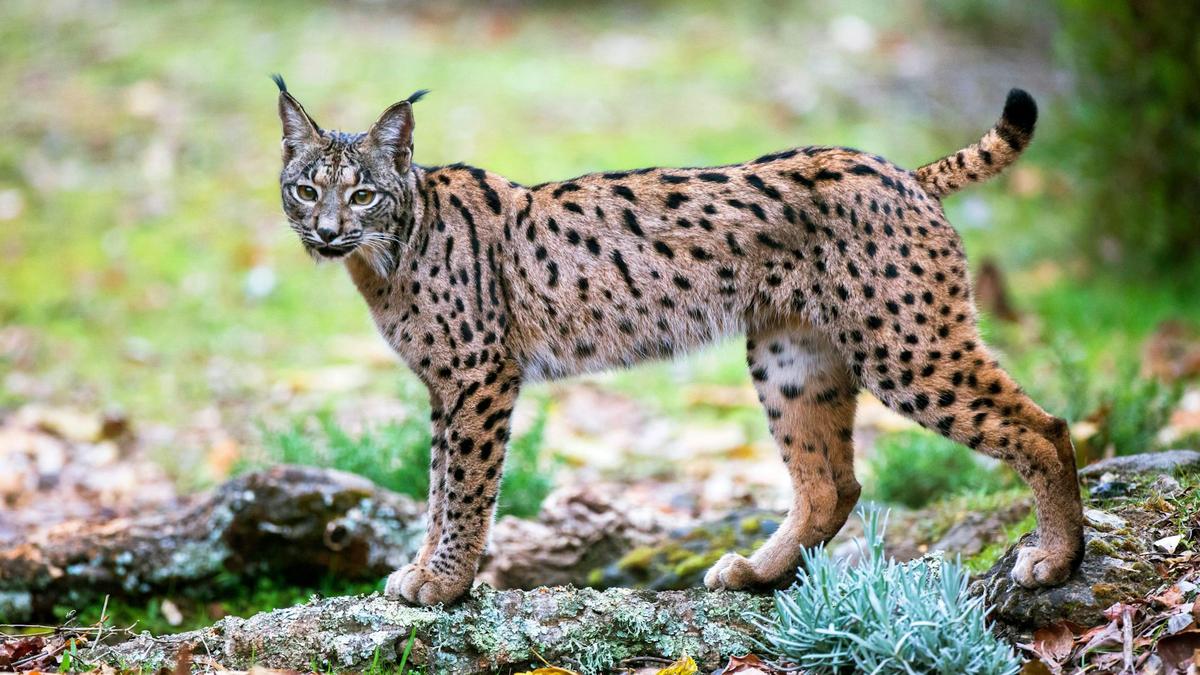
The Iberian lynx (Lynx pardinus) is no stranger to this reduction in diversity. Human activity has driven populations to dangerously low numbers, leaving them with a shrinking genetic pool. This loss threatens the lynx’s ability to adapt to changing environments, putting their survival at risk.

Our team’s research reveals how the Iberian lynx interbred with its cousin, the Eurasian lynx (Lynx lynx) over the past few thousand years. This mingling may have boosted the Iberian lynx’s genetic diversity. This is a crucial factor for its survival, especially as the species faces such an uncertain future.

Low genetic diversity can lead to “inbreeding depression”, where closely related animals breed and produce offspring that are less fit for survival. In extreme cases, this can push entire populations, or even species, to the brink of extinction.

To boost the genetic diversity of populations on the brink, conservationists sometimes turn to “genetic rescue”. This involves introducing individuals from different populations in the hope that they will breed with the local animals, reducing inbreeding and enhancing genetic diversity.

While this strategy can be effective, it’s not without risks. Introducing animals that are too genetically different can disrupt or dilute beneficial traits, potentially harming the population’s ability to survive and reproduce. It’s a phenomenon known as “outbreeding depression”. Despite these risks, genetic rescue remains a valuable tool in conservation, though it’s often approached with caution.

One of the most severe cases of reduced genetic diversity is the Iberian lynx, once the world’s most threatened cat species. It’s mostly found in parts of Spain and Portugal.

Rescue and recovery

Today, the Iberian lynx is recovering from near extinction. More than 400 reproductive females were reported in the 2023 census. This is a massive increase from just 25 in 2002. This turnaround is largely thanks to an ambitious conservation programme over the past two decades, involving coordinated breeding programmes and reintroductions.

Part of this success is due to the “genetic rescue” effect, where mixing the two remaining genetically distinct populations helped boost the species’ genetic diversity. Despite this progress, the Iberian lynx still faces significant challenges. The population is far from reaching the minimum of 1,100 reproductive females needed to be considered genetically viable. So, its genetic diversity remains one of the lowest ever recorded.

Further genetic rescue could be a solution to enhance diversity. But there’s a catch – no other Iberian lynx populations exist in the world that could serve as a source of new genetic material.

Ancient DNA can be extracted from historical remains or subfossil (animals that are not ancient enough to be considered true fossils but are not considered modern either) samples. By studying these, scientists can gain valuable insights into the genetic past of species, offering a stark comparison with their present day counterparts.

In 2015, our colleague Maria Lucena-Perez first visited the lab of another of our colleagues, Michael Hofreiter, in Germany to generate the very first whole genome data from ancient Iberian lynx bones. Extracting ancient DNA from bones is a highly specialised process that requires dedicated cleanroom facilities to prevent contamination from modern DNA.

Working together, our team successfully extracted nuclear DNA from three ancient Iberian lynx specimens. Two of these were approximately 2,500 years old. The third dated back more than 4,000 years. This marked the first time nuclear DNA had ever been retrieved from ancient Iberian lynx. Maria’s achievement has significantly advanced our understanding of how the genetic makeup of the Iberian lynx has evolved over thousands of years.

Our team analysed and compared the DNA with that of modern Iberian lynx. To our surprise, the ancient lynx showed even lower genetic diversity than their modern descendants. Given the sharp decline in their populations over the past few centuries, this finding was both unexpected and puzzling.

Species interbreeding

The missing piece of the puzzle came with the discovery that modern Iberian lynx populations share more genetic variants with the closely related Eurasian lynx than their ancient counterparts did. This suggests that the two species successfully interbred within the past 2,500 years, boosting the genetic diversity of today’s Iberian lynx.

These findings align with extensive genomic evidence of ancient gene flow from Eurasian lynx into the Iberian lynx genome. While the two species don’t share the same habitats today, they once coexisted in the Iberian Peninsula, and possibly in southern France and northern Italy. This situation would have provided plenty of opportunities for interbreeding.

The potential for these two species to naturally meet and breed is growing once more as their ranges continue to expand. This could open up new possibilities for genetic diversity in the future.

The advent of whole nuclear genome analysis over the past 30 years has revealed numerous cases of cross-species interbreeding, such as between polar bears and brown bears. This suggests that the case of the lynx is not so unusual. But the Iberian lynx stands out as the first documented example where interspecies breeding significantly increased species-wide genetic diversity.

We still don’t fully understand the exact effect of this genetic boost, particularly whether it improved the population’s fitness and survival. One intriguing possibility is that the Iberian lynx has managed to persist despite its extremely low genetic diversity, thanks to recurrent genetic rescues by the Eurasian lynx.

While there’s more to learn, our research offers an unexpected but important case study for the broader discussion on genetic rescue. If we can better predict the chances of inbreeding and outbreeding depression when interbreeding happens, we could use genetic rescue more effectively as a conservation tool in the ongoing biodiversity crisis.

This article is republished from The Conversation under a Creative Commons license. Read the original article.

Published – September 26, 2024 03:46 pm IST



Source link

Science Tags:animal news, Eurasian lynx, genetic diversity, How did the iberian lynx protect itself from extinction, Iberian lynx, Is the Iberian lynx going extinct?, science news

Post navigation

Previous Post: Pope Francis lands in Luxembourg, first leg of rare European trip
Next Post: Could rotating black holes be the wind turbines powering the distant future?

Related Posts

  • V. Narayanan appointed new Space Secretary and ISRO chief
    V. Narayanan appointed new Space Secretary and ISRO chief Science
  • Understanding ovarian cancer: its causes, symptoms, and screening methods
    Understanding ovarian cancer: its causes, symptoms, and screening methods Science
  • Why can’t we see well right after entering a darker room?
    Why can’t we see well right after entering a darker room? Science
  • Pipeline work leads to vast megalithic site in Kerala
    Pipeline work leads to vast megalithic site in Kerala Science
  • Proba-3 mission launch delayed to December 5 due to anomaly: ISRO
    Proba-3 mission launch delayed to December 5 due to anomaly: ISRO Science
  • Iceland’s ‘Mammoth’ raises potential for carbon capture
    Iceland’s ‘Mammoth’ raises potential for carbon capture Science

More Related Articles

India-made typhoid vaccine efficacy lasts for four years: study India-made typhoid vaccine efficacy lasts for four years: study Science
Aditya-L1, first space-based Indian observatory to check the solar, to be introduced on Sept. 2 Aditya-L1, first space-based Indian observatory to check the solar, to be introduced on Sept. 2 Science
Which country is closest to space? Which country is closest to space? Science
How SpaceX’s rocket diplomacy backfired in the Bahamas How SpaceX’s rocket diplomacy backfired in the Bahamas Science
Naturally occurring bile acid can blunt statin-induced diabetes Naturally occurring bile acid can blunt statin-induced diabetes Science
AI simulation of Mount Fuji eruption being used to prepare Tokyo AI simulation of Mount Fuji eruption being used to prepare Tokyo Science
SiteLock

Archives

  • May 2026
  • April 2026
  • March 2026
  • February 2026
  • January 2026
  • December 2025
  • November 2025
  • October 2025
  • September 2025
  • August 2025
  • July 2025
  • June 2025
  • May 2025
  • April 2025
  • March 2025
  • February 2025
  • January 2025
  • December 2024
  • November 2024
  • October 2024
  • September 2024
  • August 2024
  • July 2024
  • June 2024
  • May 2024
  • April 2024
  • March 2024
  • February 2024
  • January 2024
  • December 2023
  • November 2023
  • October 2023
  • September 2023
  • August 2023
  • July 2023
  • June 2023
  • May 2023
  • April 2023
  • March 2023
  • February 2023
  • January 2023
  • December 2022
  • November 2022
  • October 2022
  • September 2022
  • August 2022
  • July 2022
  • June 2022
  • May 2022

Categories

  • Business
  • Nation
  • Science
  • Sports
  • World

Recent Posts

  • Congress councillor in Thoothukudi resigns from party posts over TVK alliance
  • Lt. Gen. N.S. Raja Subramani to take over as CDS; Vice Admiral Krishna Swaminathan appointed Navy Chief
  • IPL 2026: Caps race is turning heads
  • ISL: Blasters wary of a resurgent Mohammedan SC
  • Southern districts receive widespread summer rainfall

Recent Comments

  1. KennethCof on UP Teacher Who Asked Students To Slap Muslim Classmate
  2. WalterAston on UP Teacher Who Asked Students To Slap Muslim Classmate
  3. JosephSpupE on UP Teacher Who Asked Students To Slap Muslim Classmate
  4. CharlesFlith on UP Teacher Who Asked Students To Slap Muslim Classmate
  5. DonaldGlymn on UP Teacher Who Asked Students To Slap Muslim Classmate
  • “With Due Respect To Axar Patel…”: Rahul Dravid’s ‘VVS Laxman’ Remark On Batting Order
    “With Due Respect To Axar Patel…”: Rahul Dravid’s ‘VVS Laxman’ Remark On Batting Order Sports
  • Ex Kazakh Minister Gets 24 Years In Jail For Murdering Wife
    Ex Kazakh Minister Gets 24 Years In Jail For Murdering Wife World
  • Access Denied World
  • NPS employees announce dharna on February 7
    NPS employees announce dharna on February 7 Nation
  • China agrees to rare visit by Papal envoy for Ukraine talks
    China agrees to rare visit by Papal envoy for Ukraine talks World
  • Access Denied Business
  • Rupee rises 9 paise to close at 87.93 against U.S. dollar
    Rupee rises 9 paise to close at 87.93 against U.S. dollar Business
  • “Things Will Get…”: Harbhajan Singh’s Shocking Prophecy On Mohammed Siraj-Travis Head Spat
    “Things Will Get…”: Harbhajan Singh’s Shocking Prophecy On Mohammed Siraj-Travis Head Spat Sports

Editor-in-Chief:
Mohammad Ariff,
MSW, MAJMC, BSW, DTL, CTS, CNM, CCR, CAL, RSL, ASOC.
editor@artifex.news

Associate Editors:
1. Zenellis R. Tuba,
zenelis@artifex.news
2. Haris Daniyel
daniyel@artifex.news

Photograher:
Rohan Das
rohan@artifex.news

Artifex.News offers Online Paid Internships to college students from India and Abroad. Interns will get a PRESS CARD and other online offers.
Send your CV (Subjectline: Paid Internship) to internship@artifex.news

Links:
Associate Journalism
About Us
Privacy Policy

News Links:
Breaking News
World
Nation
Sports
Business
Entertainment
Lifestyle

Registered Office:
72/A, Elliot Road, Kolkata - 700016
Tel: 033-22277777, 033-22172217
Email: office@artifex.news

Editorial Office / News Desk:
No. 13, Mezzanine Floor, Esplanade Metro Rail Station,
12 J. L. Nehru Road, Kolkata - 700069.
(Entry from Gate No. 5)
Tel: 033-46011099, 033-46046046
Email: editor@artifex.news

Copyright © 2023 Artifex.News Newsportal designed by Artifex Infotech.