



Skip to content
  • Facebook
  • X
  • Linkedin
  • WhatsApp
  • Associate Journalism
  • About Us
  • Privacy Policy
  • 033-46046046
  • editor@artifex.news
Artifex.News

Artifex.News

Stay Connected. Stay Informed.

  • Breaking News
  • World
  • Nation
  • Sports
  • Business
  • Science
  • Entertainment
  • Lifestyle
  • Toggle search form
  • China tells NATO not to create chaos in Asia; rejects label of ‘enabler’ of Russia’s Ukraine war World
  • ‘Watching On TV To Sharing Dressing Room’: CSK Youngster’s Heartfelt Post For MS Dhoni Sports
  • Nobel Literature laureate Mo Yan is accused in patriotism lawsuit of insulting China’s heroes World
  • Made Payment To Wrong UPI Address? Here’s How To Reverse It Nation
  • French Government On Letter Sent To School Boy Who Killed Self World
  • “Jo Gaali De Rahe Hain…”: India Star Reveals How Hardik Pandya Dealt With Booing Sports
  • Goods Train Derails in UP’s Amroha, 15 Trains Cancelled Or Diverted Nation
  • ‘Would Rather Fail Than Play Safe”: Ravichandran Ashwin’s Mantra Of Living Life Sports

Mitochondria keep your brain cells alive − helping them run smoothly may protect against Parkinson’s disease

Posted on August 31, 2024 By admin


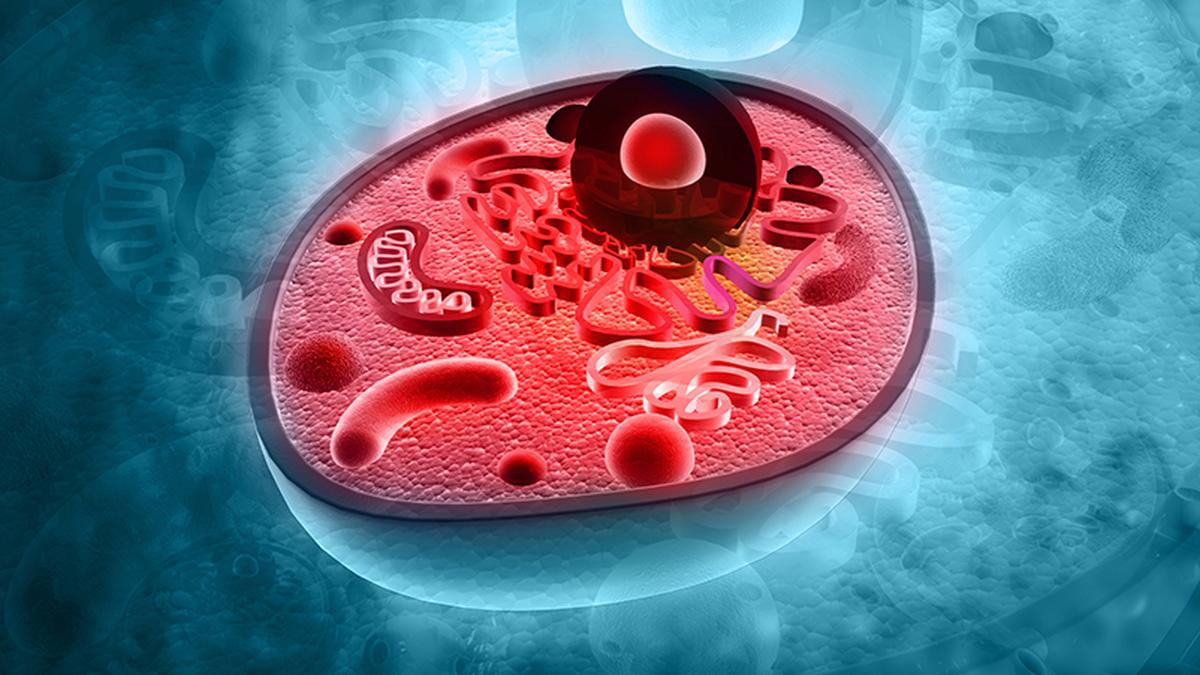
Mitochondria are dynamic. They constantly shift in size, number and location, traveling between many different parts of the cells to meet different demands. Photograph used for representational purposes only
| Photo Credit: Getty Images/iStockphoto

In 1817, a British physician named James Parkinson published An Essay on the Shaking Palsy, describing for the first time, cases of a neurodegenerative disorder now known as Parkinson’s disease. Today, Parkinson’s disease is the second most common neurodegenerative disease in the U.S. It affects about 1 million Americans and more than 10 million people worldwide.

The signature shaking in patients with the disease is the result of dying brain cells that control movement. To date, there are no treatments available that can stop or slow down the death of those cells.

We are researchers who studyParkinson’s disease. For over a decade, our lab has been investigating the role that mitochondria – the powerhouses that fuel cells – play in Parkinson’s.

Our research has identified a key protein that could lead to new treatments for Parkinson’s disease and other brain conditions.

Mitochondrial dynamics and neurodegeneration

Unlike actual power plants, which are set in size and location, mitochondria are rather dynamic. They constantly shift in size, number and location, traveling between many different parts of the cells to meet different demands. These mitochondrial dynamics are vital to not only the function of mitochondria but also the health of cells overall.

A cell is like a factory. Multiple departments must seamlessly work together for smooth operations. Because many major processes interconnect, impaired mitochondrial dynamics could cause a domino effect across departments and vice versa. Collective malfunction in different parts of the cell eventually leads to cell death.

Emerging studies have linked imbalances in mitochondrial processes to different neurodegenerative diseases, including Parkinson’s disease. In many neurodegenerative disorders, certain disease-related factors, such as toxic proteins and environmental neurotoxins, disrupt the harmony of mitochondrial fusion and division.

Impaired mitochondrial dynamics also take down the cell’s cleaning and waste recycling processes, leading to a pileup of toxic proteins that form harmful aggregates inside the cell. In Parkinson’s, the presence of these toxic protein aggregates is a hallmark of the disease.

Targeting mitochondria to treat Parkinson’s

Our team hypothesized that restoring mitochondrial function by manipulating its own dynamics could protect against neuronal dysfunction and cell death.

In an effort to restore mitochondrial function in Parkinson’s, we targeted a key protein that controls mitochondrial dynamics called dynamin-related protein 1, or Drp1. Naturally abundant in cells, this protein travels to mitochondria when they divide into smaller sizes for higher mobility and quality control. However, too much Drp1 activity causes excessive division, leading to fragmented mitochondria with impaired function.

Using different lab models of Parkinson’s, including neuronalcell cultures and rat and mice models, we found that the presence of environmental toxins and toxic proteins linked to Parkinson’s, cause mitochondria to become fragmented and dysfunctional. Their presence also coincided with the buildup of those same toxic proteins, worsening the health of neuronal cells until they eventually started dying.

We also observed behavior changes in rats that impaired their movements. By reducing the activity of Drp1, however, we were able to restore mitochondria to their normal activity and function. Their neurons were protected from disease and able to continue functioning.

In our 2024 study, we found an additional benefit of targeting Drp1.

We exposed neuronal cells to manganese, a heavy metal linked to neurodegeneration and an increased risk of parkinsonism. Surprisingly, we found that manganese was more harmful to the cell’s waste recycling system than to its mitochondria, causing buildup of toxic proteins before mitochondria became dysfunctional. Inhibiting Drp1, however, coaxed the waste recycling system back into action, cleaning up toxic proteins despite the presence of manganese.

Our findings indicate that inhibiting Drp1 from more than one pathway could protect cells from degeneration. Now, we’ve identified some FDA-approved compounds that target Drp1 and are testing them as potential treatments for Parkinson’s.

Rebecca Zhangqiuzi Fan is Post-doctoral Research Associate in Environmental Health Sciences, Florida International University

Kim Tieu is Professor of Environmental Health Sciences, Florida International University

This article is republished from The Conversation under a Creative Commons license. Read the original article here


Source link

Science Tags:causes of parkinson’s, how is the brain affected in parkinson’s, latest research in parkinson’s, treatment for parkinsons’s

Post navigation

Previous Post: Brazil blocks Musk’s X after company refuses to name local representative amid feud with Judge
Next Post: Brazil Block On Elon Musk’s X Comes Into Effect

Related Posts

  • Fighting every wildfire makes bigger fires more extreme, study says Science
  • Fighting mosquito menace with repellents, vaccines Science
  • See first images of human brain scanned by world’s most powerful MRI Science
  • Song lyrics are getting simpler, more repetitive: study Science
  • Why does our hair grow and become grey?  Science
  • What is the ‘responsible quantum technologies’ movement? | Explained Science

More Related Articles

Attophysics — new tools to fathom the world of electrons | Explained Science
NASA just shut down a planetary defence mission that tracks asteroids. Now what? Science
SpaceX’s Polaris Dawn mission: Who are the astronauts doing the spacewalk? Science
ISRO celebrates National Space Day at MBU campus Science
The Science Quiz | Security features of rupee notes Science
India’s mission to drill a 6-km deep hole in Koyna, Maharashtra | Explained Science
SiteLock

Archives

  • September 2024
  • August 2024
  • July 2024
  • June 2024
  • May 2024
  • April 2024
  • March 2024
  • February 2024
  • January 2024
  • December 2023
  • November 2023
  • October 2023
  • September 2023
  • August 2023
  • July 2023
  • June 2023
  • May 2023
  • April 2023
  • March 2023
  • February 2023
  • January 2023
  • December 2022
  • November 2022
  • October 2022
  • September 2022
  • August 2022
  • July 2022
  • June 2022
  • May 2022

Categories

  • Business
  • Nation
  • Science
  • Sports
  • World

Recent Posts

  • Kangana Ranaut Emergency Release Date: Sensitive Content
  • Daily Quiz: On Airline hijackings
  • Rupee falls 7 paise to 83.92 against U.S. dollar
  • Haryana MLA Devender Singh Babli, Two Others, Join BJP Ahead Of Polls
  • Why Netflix Content Chief Was Summoned Over ‘IC 814’

Recent Comments

  1. TpeEoPQa on UP Teacher Who Asked Students To Slap Muslim Classmate
  2. xULDsgPuBe on UP Teacher Who Asked Students To Slap Muslim Classmate
  3. KyJtkhneiLmcq on UP Teacher Who Asked Students To Slap Muslim Classmate
  4. mOyehudovB on UP Teacher Who Asked Students To Slap Muslim Classmate
  5. GFBvgSrWPcsp on UP Teacher Who Asked Students To Slap Muslim Classmate
  • Haitian gang leader vows to ‘fight’ Prime Minister, violence surges World
  • RBI Governor Shaktikanta Das Ranked Top Central Banker Globally Nation
  • Disney strikes deal to sell stake in India’s Tata Play: report Business
  • Former Sri Lanka Skipper Hospitalised After Horrifying Car Accident Sports
  • Earth Observation Satellite EOS-08 slated for launch: ISRO Science
  • China’s spacecraft carrying rocks from the far side of the moon leaves the lunar surface Science
  • Expecting India to win both CT and WTC final under Rohit’s captaincy: BCCI Secretary Shah Sports
  • Adani Group-Backed Sirius Digitech Acquires Cloud Platform Firm Coredge.io Nation

Editor-in-Chief:
Mohammad Ariff,
MSW, MAJMC, BSW, DTL, CTS, CNM, CCR, CAL, RSL, ASOC.
editor@artifex.news

Associate Editors:
1. Zenellis R. Tuba,
zenelis@artifex.news
2. Haris Daniyel
daniyel@artifex.news

Photograher:
Rohan Das
rohan@artifex.news

Artifex.News offers Online Paid Internships to college students from India and Abroad. Interns will get a PRESS CARD and other online offers.
Send your CV (Subjectline: Paid Internship) to internship@artifex.news

Links:
Associate Journalism
About Us
Privacy Policy

News Links:
Breaking News
World
Nation
Sports
Business
Entertainment
Lifestyle

Registered Office:
72/A, Elliot Road, Kolkata - 700016
Tel: 033-22277777, 033-22172217
Email: office@artifex.news

Editorial Office / News Desk:
No. 13, Mezzanine Floor, Esplanade Metro Rail Station,
12 J. L. Nehru Road, Kolkata - 700069.
(Entry from Gate No. 5)
Tel: 033-46011099, 033-46046046
Email: editor@artifex.news

Copyright © 2023 Artifex.News Newsportal designed by Artifex Infotech.