





Of all that we have been studying about the earth, earthquakes remain among the least understood. Scientists don’t yet have a way to predict when and where an earthquake will occur.
We know powerful earthquakes at the boundaries of tectonic plates, which measure more than 7.5 on the Richter scale, are almost certainly associated with a severe loss of infrastructure and life. In the ocean, these geological events trigger tsunamis. However, more minor earthquakes that occur in a plate’s interior are more challenging to predict because they occur at the least expected sites and could strike densely populated habitats.
This is why scientific deep drilling is an indispensable tool for progress in the earth sciences. Countries like the U.S., Russia, and Germany conducted such scientific projects in the 1990s. Recently, in 2023, there were reports of China undertaking a deep-drilling mission of its own.
What is scientific deep-drilling?
Scientific deep-drilling is the enterprise of strategically digging boreholes to observe and analyse deeper parts of the earth’s crust. It offers opportunities and access to study earthquakes and expands our understanding of the planet’s history, rock types, energy resources, life forms, climate change patterns, the evolution of life, and more.
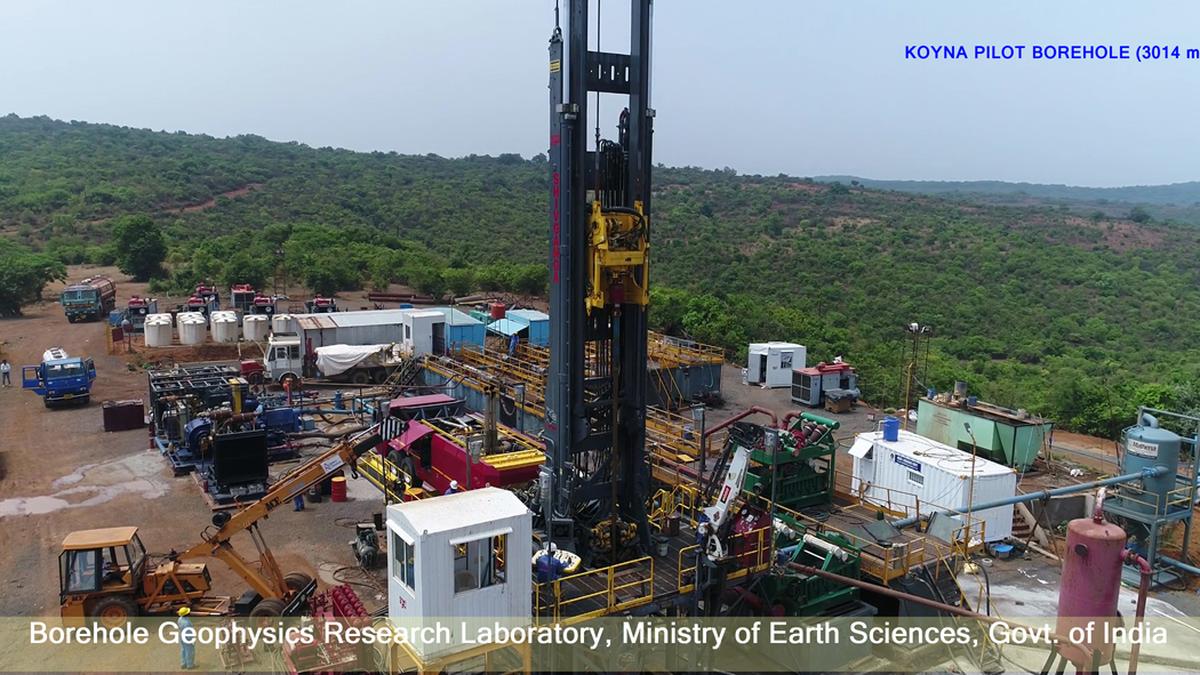
The Borehole Geophysics Research Laboratory (BGRL) in Karad, Maharashtra, is a specialised institute under the Ministry of Earth Sciences of the Government of India mandated to execute India’s sole scientific deep-drilling programme. Under BGRL, the aim is to drill the earth’s crust to a depth of 6 km and conduct scientific observations and analysis to help expand the understanding of reservoir-triggered earthquakes in the active fault zone in the Koyna-Warna region of Maharashtra.
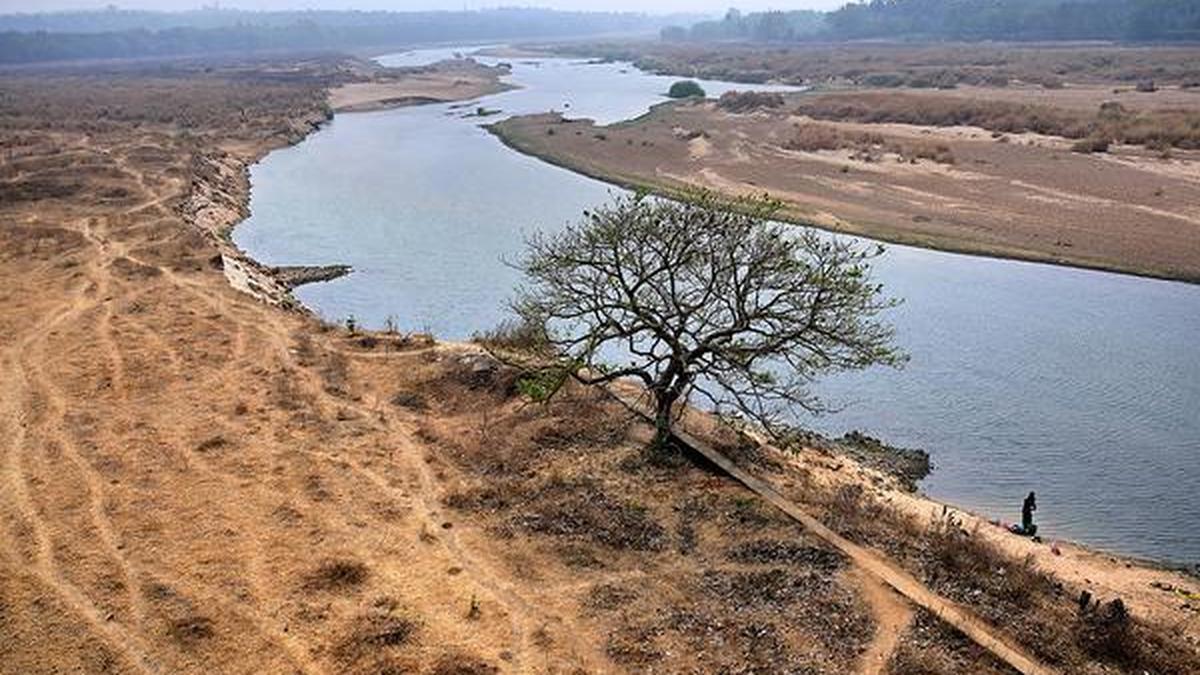
This region has been experiencing frequent and recurrent earthquakes since the Shivaji Sagar Lake, or the Koyna Dam, was impounded in 1962. BGRL’s pilot borehole — to a depth of 3 km in Koyna — is complete, and the Ministry of Earth Sciences is committed to completing the task of reaching a depth of 6 km.
How can a deep-drilling mission help?
Earthquakes are challenging topics of study. Surface-level observations don’t suffice to understand them completely. The recurrent earthquakes in Koyna are synchronous with the dam’s loading and unloading during the monsoon and post-monsoon periods, offering a unique opportunity to widen our understanding of earthquakes and to use the resulting knowledge for scientific and public good.
However, making observations inside the earth is a different ball game due to challenges of access. Scientifically drilled boreholes to great depths can be thought of as downward-looking telescopes, which when instrumented with sensors serve as geological observatories. They can be a hub of direct, in-situ experiments and observations and strategically monitor a region’s fault lines and earthquake behaviour (including nucleation, rupture, and arrest).
Scientific drilling also provides exact, fundamental, and globally significant knowledge of the composition of the earth’s crust, structure, and processes, and helps confirm or reject models based on surface studies. In this way, it can provide information to inform a range of societal problems related to geohazards and geo-resources in India.
Investing in scientific deep-drilling can also help expand scientific know-how and technological innovation, especially in seismology (the study of earthquakes). It can also spur the development of tools and equipment for drilling, observation, data analysis, sensors, etc., which is another front on which India has the opportunity to be self-reliant.
Why is scientific deep-drilling challenging?
Scientific deep drilling is the best tool to study the earth’s interior, and it is much easier said than done.
Other ways to study the interior include making geophysical measurements, such as of seismic wave speed, gravitational and magnetic fields, and electrical conductivity from the near surface. Scientists can also examine xenoliths: fragments of the crust brought from deep underground to the surface along with volcanic magma.
But scientific deep-drilling remains the most reliable method because it helps get direct (in situ) and near-source measurements. Researchers can also capture rock and sediment cores aligned with the earth’s timeline from within the borehole. It is also the most challenging method: deep-drilling is labour- and capital-intensive. The earth’s interior is also a hot, dark, high-pressure region that hinders long and continuous operations.
A cylindrical, 4-inch-wide core is recovered from a depth of around 2,600 m at Koyna. The core was used for laboratory analysis to reveal the physical and mechanical properties of rocks deep inside the earth.
| Photo Credit:
MoES-BGRL
Even with these challenges, however, scientific pursuits are important. Expanding earth-science research, especially of solid earth, is crucial. Aside from earthquakes, this is because many surface phenomena — the composition of water and air, their availability, and the resulting interactions with climate-affected phenomena — are linked to what happens inside the earth’s crust. So despite all the significant challenges deep-drilling presents, India is attempting it.
What is the drilling technique at Koyna?
The Koyna pilot borehole is about 0.45 m wide (at the surface) and roughly 3 km deep. It is unique in many ways. First, because of the drilling technique: a hybrid of two well-established techniques called mud rotary drilling and percussion drilling (a.k.a. air hammering).
The rotary drilling technique uses a rotating drilling rod made of steel, attached to a diamond-embedded drill bit at the bottom. As it cuts the rocks and penetrates the crust, it generates a lot of heat due to friction, so a cooling liquid or drilling mud is flushed through the drilling rod into the borehole to cool the drill bit. In addition to working as a coolant and a lubricant, the drilling mud also helps bring up the debris or rock cuttings from the borehole.
An annular (ring-shaped) space separates the drilling rod and borehole wall. The debris moves out from the annular ring space due to the pressure of the drilling mud pumped from the top through the drilling rod. The deeper the borehole, the more pressure is required to bring up the debris from the annular space.
The second technique, air hammering, pushes highly compressed air (in place of the drilling mud) through the drilling rod to deepen the borehole and flush the cuttings out.
Deep-drilling operations at Koyna use a rig capable of both the mud rotary and the air hammering techniques. The decision to use each technique at a particular point of time is based on the site’s requirements, such as rock type, presence of highly fractured rock, water inflow zones, and the need to collect core samples, among others. Core samples from geological fault zones are essential for earthquake studies.
What are the challenges of drilling to 3 km?
Decisions of this kind are dynamic and require meticulous planning and drilling acumen. Whenever we had to acquire a sample of the core, operators invariably used the mud rotary technique because it allows us to capture long, intact cylindrical cores. In regions where operators used the air-hammering technique, the team collected rock chips scientists use for various studies of rock properties.
The operators also have to circulate the drilling mud while carrying out geophysical well logging — downhole measurements of the physical and the chemical properties of the borehole environment using probes for temperature, density, electrical conductivity, sonic velocity, rock porosity, and radioactivity. At the same time, operators also install steel casing pipes to secure the sides of the borehole once it has been created.
The hybrid technique has several challenges. A particularly critical limitation of scientific deep-drilling itself is the hook load capacity of the drilling rig mast. The load on the rig’s hook keeps increasing as the borehole gets deeper and with the addition of new drilling rods and steel casing pipes. Also with increasing depth, the required compressed air pressure to lift the drill cuttings increases manifold. For the operations at Koyna, for example, operators deployed a rig with a hook load capacity of 100 tonnes — just enough to hold the drill string and casing down to a depth of 3 km.
What are the challenges of drilling to 6 km?
In the next phase, when the borehole depth increases beyond 3 km and strikes for 6 km, the entire rig will have to be updated with exponentially enhanced capacity.
In addition, challenges to increasing the depth from 3 km to 6 km, the complexities of drilling through fractured rocks in the Koyna seismic zone, and the possibility of drill rods and sensors getting stuck all become significantly higher.
Troubleshooting also becomes more complicated because of limited access (to instruments, probes or cables), in turn because the rocks at these depths are softer. So there is loss of drilling mud. Further, a 4-in-wide and 9-metre-long granite core can weigh as much as 200 kg, and lifting it through a distance of more than 3 km is technically exacting. Operators will also encounter more frequent fault lines and fracture zones, through which water could enter the borehole and stall the drilling exercise.
Finally, if any of the above situations arise and troubleshooting fails, we may have to abandon the borehole. Another challenge is to steer the borehole at the desired inclination from the top, using vertically controlled actions. This requires special equipment like drill motors, imaging tools, and monitoring devices that can be ‘tuned’ every minute. The planning and execution of deep-drilling are thus dynamic and must be meticulous and foolproof.
Human resources are also a challenge in scientific deep drilling. The process needs highly skilled and trained technical personnel for a 24/7 on-site engagement for about six to eight months at a time in harsh weather conditions — and this was the case for the 3 km pilot borehole. For a 6 km borehole, 24/7 drilling will last for at least 12-14 months.
What have scientists found so far?
The pilot drilling mission was a success and has yielded significant new information about the subsurface geological environment, which in turn can reveal new insights to reservoir-triggered earthquake mechanisms.
For one, it revealed 1.2-km thick and 65 million-year-old Deccan trap lava flows, and below them 2,500-2,700-million-year-old granitic basement rocks. For another, downhole measurements of core samples and conditions from a depth of 3 km have provided hitherto unknown information on the physical and mechanical properties of rocks, the chemical and isotopic composition of formation fluids and gases, temperature and stress regimes, and fracture orientations at depth.
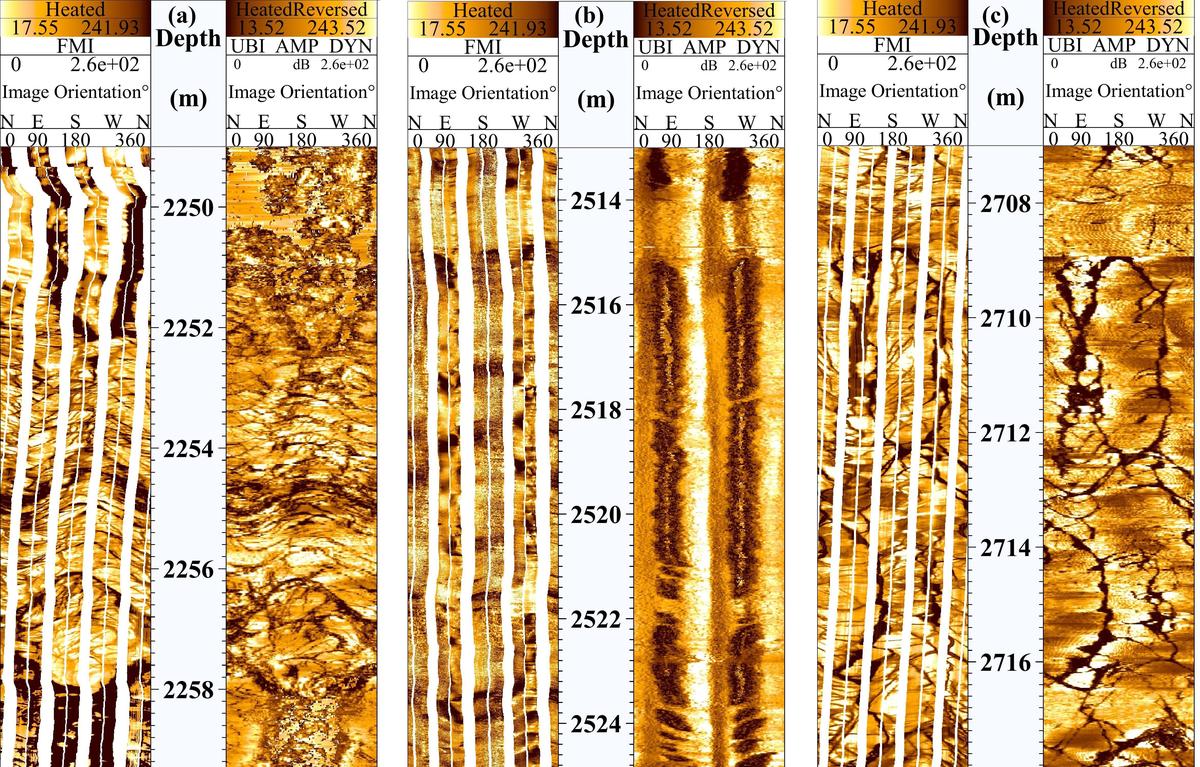
High-resolution images (electrical and acoustic) of the borehole wall at a depth of 2,248-2,718 m in the Koyna pilot borehole showing the presence of fault-fracture zones and rock deformation features in detail.
| Photo Credit:
MoES-BGRL
We also captured high-resolution images of the borehole wall using acoustic and micro-resistivity techniques. These data provide an opportunity for scientists worldwide to validate or corroborate data extracted from other cores. The team at Koyna also conducted hydraulic fracturing experiments (akin to synthetically induced triggers) to measure the in-situ stress regime of the rocks. We expect data from these experiments to be useful for many years, especially to understand the reasons for recurrent earthquakes in specific geographies. By integrating various datasets and using advanced analysis, the team could also detect buried fault zones and study their properties.
One significant finding was the presence of water down to 3 km! It was found to be meteoric or rain-fed, implying deep percolation and circulation are possible. Another key finding was that the Koyna region is critically stressed, so even small stress perturbations could cause the rock to fail and potentially trigger frequent, small-magnitude earthquakes in the region.
What next?
The pilot data will help plan future drilling. Modelling experiments have revealed the expected temperature at 6 km could be 110-130 degrees C. Therefore, drilling equipment, downhole data acquisition systems, and sensors for long-term placement at depth need to be designed accordingly.
The Koyna data and samples will also facilitate new experiments. More than 20 research groups nationwide are already studying the Koyna samples. For example, one group is examining the gouge from fault zones — the rock dust generated by friction — to understand the frictional properties of rocks in quake-prone regions. Another is characterising the microbes on these rocks to understand life forms that thrive in dark, hot, and nutrient-poor environments. Their findings could potentially yield new molecules and clues to improve industrial processes.
Members of the international geological research community have also been requesting access to core samples for collaborative projects in emerging fields such as carbon capture and storage in the deep Deccan traps, which could help mitigate climate change.
In sum, the Koyna exercise is establishing a firm footing in scientific deep-drilling for India. Its lessons will inform future deep-drilling experiments as well as expand academic knowledge in multiple ways.
Bhavya Khanna is a Scientist D (communication in science) at the Ministry of Earth Sciences (MoES); Sukanta Roy is a Scientist G and Head of Borehole Geophysics Research Laboratory, Karad, under MoES; and M. Ravichandran is the Secretary to the Government of India, MoES.