

Skip to content
  • Facebook
  • X
  • Linkedin
  • WhatsApp
  • YouTube
  • Associate Journalism
  • About Us
  • Privacy Policy
  • 033-46046046
  • editor@artifex.news
Artifex.News

Artifex.News

Stay Connected. Stay Informed.

  • Breaking News
  • World
  • Nation
  • Sports
  • Business
  • Science
  • Entertainment
  • Lifestyle
  • Toggle search form
  • India Versus Pakistan: Virat Kohli’s Video With Pakistan Supporter Resurfaces Ahead Of Asia Cup 2023 Clash. What The Fan Says Is Gold
    India Versus Pakistan: Virat Kohli’s Video With Pakistan Supporter Resurfaces Ahead Of Asia Cup 2023 Clash. What The Fan Says Is Gold Sports
  • Pregnant Maharashtra Woman Detected With Rare ‘Fetus In Fetu’ Condition
    Pregnant Maharashtra Woman Detected With Rare ‘Fetus In Fetu’ Condition Nation
  • Israeli strikes hit Yemeni capital Sanaa
    Israeli strikes hit Yemeni capital Sanaa World
  • Access Denied Sports
  • Access Denied World
  • Blinken calls for protection of civilians as Israel prepares for expected assault on Gaza
    Blinken calls for protection of civilians as Israel prepares for expected assault on Gaza World
  • Revanth Reddy Invokes Lord Krishna To Support Nagarjuna’s N-Convention Centre Demolition
    Revanth Reddy Invokes Lord Krishna To Support Nagarjuna’s N-Convention Centre Demolition Nation
  • UN After Thousands Break Into Aid Centres In Gaza
    UN After Thousands Break Into Aid Centres In Gaza World
Rapa Nui genomes restore the real history of an old, troubled people

Rapa Nui genomes restore the real history of an old, troubled people

Posted on September 18, 2024 By admin


The volcanic island of Rapa Nui has long been shrouded in mystery. European sailors first arrived on its shores on Easter Sunday in 1722, giving it its colloquial name: Easter Island. It covers just 160 sq. km and is one of the most remote islands on the planet. Today, Rapa Nui is part of Polynesia and is officially a territory of Chile.

Early Polynesian explorers are believed to have traversed thousands of kilometres of open ocean to reach and settle the island, likely arriving centuries before the Europeans. The island’s geography is harsh and challenging for humans. Its lava-covered terrain is rocky with limited freshwater sources, poor soil quality, and a low diversity of flora and fauna.

Despite these challenges, its first humans likely established a unique society in order to survive their exacting environs. However, the island’s offerings would still have been quite finite and ingenuity could only have taken the people so far. These realities gave rise to a widely held notion that the humans eventually overpopulated the island, resulting in ecological collapse and its people’s demise.

But new evidence suggests this view may be fiction.

Turning the gaze within

Rapa Nui is famous for its large statues called moai. They are shaped like large human heads and erected on stone pedestals. Some moaistand 40 ft tall and weigh 75 tonnes. They were carved in volcanic stone at quarries and then moved to their current locations across the island. Scholars believe the Rapa Nui built the moai between the 13th and the 16th centuries and represented their revered ancestors.

The statues all face inland, towards the people. Over 900 moaihave been found on the island to date; more than half of them were transported across considerable distances from the quarries.

In his book 2004 Collapse, Jared Diamond proposed the population of Rapa Nui collapsed after overexploiting resources. The idea quickly found wide acceptance and became an example of the importance of sustainable living. But some scholars have called into question the feeble evidence to support the hypothesis.

The Ahu Tongariki stone platform on Rapa Nui with all its 15 moai, restored in the 1990s.
| Photo Credit:
Bjørn Christian Tørrissen (CC BY-SA 3.0)

Protecting the soil

Scientists think the island’s population had declined by around 1600, before European explorers arrived in the 18th century. By then the population was estimated to be around 1,500-3,000.

Due to the limited availability of freshwater and the abundance of rocks, which limited widespread agriculture, the natives are believed to have burnt the palm vegetation to improve soil productivity.

They were also expected to have used rock gardening, a.k.a. lithic mulching: a way to protect soil moisture by regulating the temperature.

Either way, before the European settlers made contact with the Rapa Nui, the latter practised a limited agriculture to produce their food.

A long-awaited census

In July, researchers from Columbia University, Arizona University, and Binghamton University, plus independent researchers from Rapa Nui, reported training an AI model to identify locations in satellite images of the island where its inhabitants practised rock-gardening.

The researchers estimated rock gardening was practised in less than 1 sq. km of the land, lower than previous estimates of 4-20 sq. km. Assuming the inhabitants exclusively cultivated sweet potatoes, the findings suggest they may have numbered fewer than 4,000 people.

Genetic studies have in the past have provided unique insights into the histories of Indigenous and ancestral populations around the world. In 2014, Current Biology journal published a paper in which researchers analysed 27 genomes of the Rapa Nui people and concluded they had a considerable Native American ancestry, of around 8%. They also found the admixture with Native Americans happened before the 18th century. A significant European admixture followed when Europeans discovered and then colonised the island in the 18th century.

Two catastrophes

In the event of an ecological collapse or a population bottleneck (when the genetic diversity of the population becomes so low as to become unable to withstand shocks like new diseases or disasters), the genomes would have been quite un-diverse in the population’s descendants. Such ‘signals’ could in turn provide insights into bottlenecks in the history of that population.

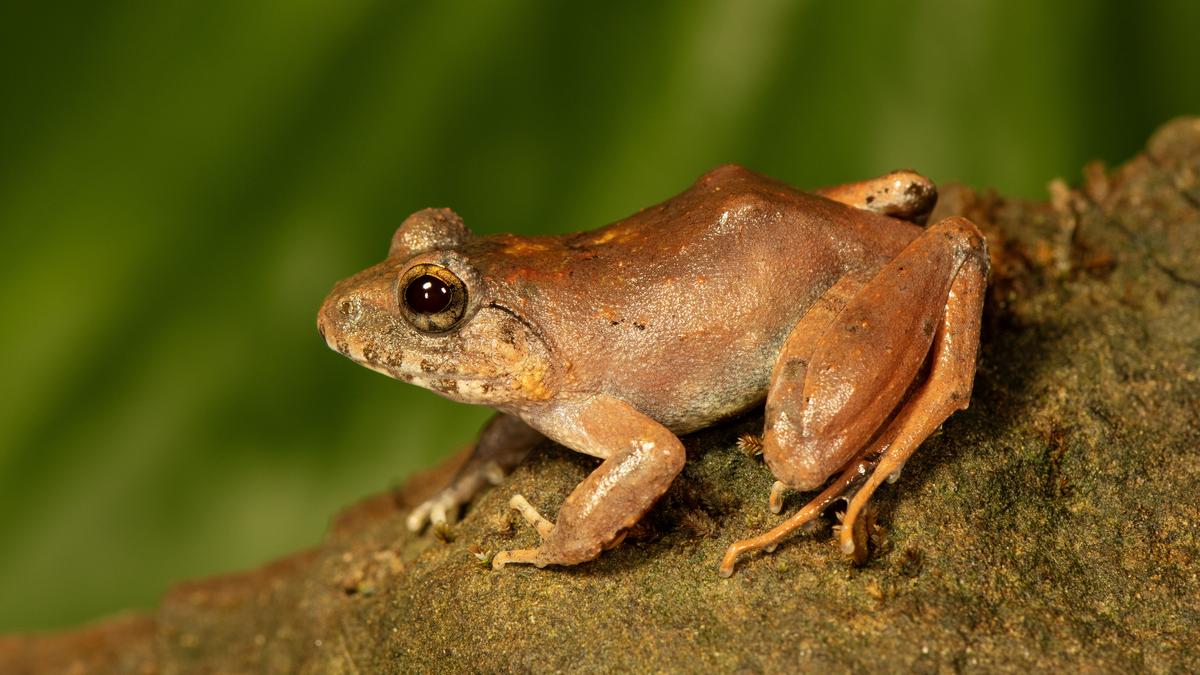
Members of the Rapa Nui community resisted an initial attempt by researchers to study their genomes. So a team led by Víctor Moreno-Mayar at the University of Copenhagen turned to the remains of 15 Rapa Nui people secured at a museum in Paris. The remains were dated to have originated between 1670 and 1950 AD. The team extracted and sequenced DNA from tissue samples, and reported their findings on September 11 in Nature.

According to the study, the Rapa Nui population developed a bottleneck around 1300 AD — confirming a previous finding that highlighted the same date and, crucially, ruling out a population decline in around 1600 AD. Instead, the study suggested the population steadily grew until the European settlers arrived, followed by two catastrophic events: Chilean slave traders abducted more than a third of the population and then there was a large outbreak of smallpox. The local population soon dwindled to a hundred or so individuals as a result.

Restoring real histories

So there we have it: the pre-modern Rapa Nui didn’t overexploit the resources of their small island. In fact, they may have been living responsibly, only to be decimated by the apathy of other peoples.

Studying indigenous genomes offers invaluable insights into historical population dynamics, ecological adaptations, and the complex stories of human migration and survival. In many ways, the Rapa Nui genomes also show how genomic evidence can expose the derogatory myths that often surround Indigenous people and give them their real histories back.

The authors are senior consultants at Karkinos Healthcare and adjunct professors at IIT Kanpur and the D.Y. Patil Medical College, Pune.

Published – September 18, 2024 05:30 am IST


Source link

Science

Post navigation

Previous Post: Bangladesh wishes to have normal relation with Pakistan: Foreign Affairs Adviser of Bangladesh
Next Post: Head Of US Secret Service To Trump

Related Posts

  • The Science Quiz | Cholesterol
    The Science Quiz | Cholesterol Science
  • What is xenobiology? – The Hindu
    What is xenobiology? – The Hindu Science
  • From light waves to quantum physics: the science behind smart washbasins
    From light waves to quantum physics: the science behind smart washbasins Science
  • Early jacaranda bloom sparks debate about climate change in Mexicoca
    Early jacaranda bloom sparks debate about climate change in Mexicoca Science
  • Conclave in November to showcase ‘evolution’ of Indian science
    Conclave in November to showcase ‘evolution’ of Indian science Science
  • First robot leg with ‘artificial muscles’ jumps nimbly: study
    First robot leg with ‘artificial muscles’ jumps nimbly: study Science

More Related Articles

Indian astro community’s vision for solar physics, space weather Indian astro community’s vision for solar physics, space weather Science
ISRO targets to launch Venus mission in March 2028 for 112-day journey to planet  ISRO targets to launch Venus mission in March 2028 for 112-day journey to planet  Science
Divisive review asserts link between fluoride levels, IQ loss Divisive review asserts link between fluoride levels, IQ loss Science
New light-based tool could cut cost of spotting viral infections New light-based tool could cut cost of spotting viral infections Science
Invasive water hyacinth threatens fishers’ livelihoods on popular Kenyan lake Invasive water hyacinth threatens fishers’ livelihoods on popular Kenyan lake Science
Fetus in fetu – The Hindu Fetus in fetu – The Hindu Science
SiteLock

Archives

  • May 2026
  • April 2026
  • March 2026
  • February 2026
  • January 2026
  • December 2025
  • November 2025
  • October 2025
  • September 2025
  • August 2025
  • July 2025
  • June 2025
  • May 2025
  • April 2025
  • March 2025
  • February 2025
  • January 2025
  • December 2024
  • November 2024
  • October 2024
  • September 2024
  • August 2024
  • July 2024
  • June 2024
  • May 2024
  • April 2024
  • March 2024
  • February 2024
  • January 2024
  • December 2023
  • November 2023
  • October 2023
  • September 2023
  • August 2023
  • July 2023
  • June 2023
  • May 2023
  • April 2023
  • March 2023
  • February 2023
  • January 2023
  • December 2022
  • November 2022
  • October 2022
  • September 2022
  • August 2022
  • July 2022
  • June 2022
  • May 2022

Categories

  • Business
  • Nation
  • Science
  • Sports
  • World

Recent Posts

  • FIR against Tumakuru madrasa management after 24 runaway children allege abuse and forced labour
  • Six die in an accident in Tiruppur district
  • Stock markets pare early gains; trade lower
  • Watch: Trump: ‘Believe it or not, we’re going to get a settlement between Russia and Ukraine’
  • PM Modi reduces convoy size: Sources

Recent Comments

  1. DavidAnymn on UP Teacher Who Asked Students To Slap Muslim Classmate
  2. Jesusetexy on UP Teacher Who Asked Students To Slap Muslim Classmate
  3. JeffryFok on UP Teacher Who Asked Students To Slap Muslim Classmate
  4. StanleyPeapy on UP Teacher Who Asked Students To Slap Muslim Classmate
  5. RonaldLam on UP Teacher Who Asked Students To Slap Muslim Classmate
  • M Kharge Counters PM’s ‘8 Crore Jobs In 4 Years’ Remark
    M Kharge Counters PM’s ‘8 Crore Jobs In 4 Years’ Remark Nation
  • Rupee rises 14 paise to 86.50 against U.S. dollar in early trade
    Rupee rises 14 paise to 86.50 against U.S. dollar in early trade Business
  • Minnesota sue Trump admin to stop immigration crackdown
    Minnesota sue Trump admin to stop immigration crackdown World
  • Google Will Fund Global AI Education At The Cost Of 120M Dollars: Sundar Pichai
    Google Will Fund Global AI Education At The Cost Of 120M Dollars: Sundar Pichai World
  • Access Denied
    Access Denied Nation
  • Real Madrid vs Sevilla Live Streaming, La Liga 2024/25 Live Telecast: When And Where To Watch
    Real Madrid vs Sevilla Live Streaming, La Liga 2024/25 Live Telecast: When And Where To Watch Sports
  • Team India Receives Warm Welcome In Ahmedabad Ahead Of Cricket World Cup Match vs Pakistan. Watch
    Team India Receives Warm Welcome In Ahmedabad Ahead Of Cricket World Cup Match vs Pakistan. Watch Sports
  • Access Denied World

Editor-in-Chief:
Mohammad Ariff,
MSW, MAJMC, BSW, DTL, CTS, CNM, CCR, CAL, RSL, ASOC.
editor@artifex.news

Associate Editors:
1. Zenellis R. Tuba,
zenelis@artifex.news
2. Haris Daniyel
daniyel@artifex.news

Photograher:
Rohan Das
rohan@artifex.news

Artifex.News offers Online Paid Internships to college students from India and Abroad. Interns will get a PRESS CARD and other online offers.
Send your CV (Subjectline: Paid Internship) to internship@artifex.news

Links:
Associate Journalism
About Us
Privacy Policy

News Links:
Breaking News
World
Nation
Sports
Business
Entertainment
Lifestyle

Registered Office:
72/A, Elliot Road, Kolkata - 700016
Tel: 033-22277777, 033-22172217
Email: office@artifex.news

Editorial Office / News Desk:
No. 13, Mezzanine Floor, Esplanade Metro Rail Station,
12 J. L. Nehru Road, Kolkata - 700069.
(Entry from Gate No. 5)
Tel: 033-46011099, 033-46046046
Email: editor@artifex.news

Copyright © 2023 Artifex.News Newsportal designed by Artifex Infotech.