Skip to content
  • Facebook
  • X
  • Linkedin
  • WhatsApp
  • YouTube
  • Associate Journalism
  • About Us
  • Privacy Policy
  • 033-46046046
  • editor@artifex.news
Artifex.News

Artifex.News

Stay Connected. Stay Informed.

  • Breaking News
  • World
  • Nation
  • Sports
  • Business
  • Science
  • Entertainment
  • Lifestyle
  • Toggle search form
  • “Whatever You Put, It Leaks”: Former India Cricketer On Pakistan Cricket After Gary Kirsten Leaks
    “Whatever You Put, It Leaks”: Former India Cricketer On Pakistan Cricket After Gary Kirsten Leaks Sports
  • Access Denied Business
  • “R Ashwin Not Treated Fairly, Rohit Sharma Said…”: Ex CSK Star Makes Bold Claim
    “R Ashwin Not Treated Fairly, Rohit Sharma Said…”: Ex CSK Star Makes Bold Claim Sports
  • Access Denied
    Access Denied Nation
  • Dropped By BJP, Varun Gandhi’s Vow To Pilibhit
    Dropped By BJP, Varun Gandhi’s Vow To Pilibhit Nation
  • EU weighs extending carbon market to flights beyond Europe
    EU weighs extending carbon market to flights beyond Europe World
  • Ukraine downs five Russian ballistic missiles as Kyiv looks to harden air defences
    Ukraine downs five Russian ballistic missiles as Kyiv looks to harden air defences World
  • Access Denied World
How was popcorn discovered? An archaeologist explains

How was popcorn discovered? An archaeologist explains

Posted on July 3, 2024 By admin


You can imagine that popping maize kernels was first discovered by accident. Some maize probably fell into a cooking fire, and whoever was nearby figured out that this was a handy new way of preparing the food. 
| Photo Credit: pexels.com

You have to wonder how people originally figured out how to eat some foods that are beloved today. The cassava plant is toxic if not carefully processed through multiple steps. Yogurt is basically old milk that’s been around for a while and contaminated with bacteria. And who discovered that popcorn could be a toasty, tasty treat?

These kinds of food mysteries are pretty hard to solve. Archaeology depends on solid remains to figure out what happened in the past, especially for people who didn’t use any sort of writing. Unfortunately, most stuff people traditionally used made from wood, animal materials or cloth decays pretty quickly, and archaeologists like me never find it.

We have lots of evidence of hard stuff, such as pottery and stone tools, but softer things – such as leftovers from a meal – are much harder to find. Sometimes we get lucky, if softer stuff is found in very dry places that preserve it. Also, if stuff gets burned, it can last a very long time.

Corn’s ancestors

Luckily, corn – also called maize – has some hard parts, such as the kernel shell. They’re the bits at the bottom of the popcorn bowl that get caught in your teeth. And since you have to heat maize to make it edible, sometimes it got burned, and archaeologists find evidence that way. Most interesting of all, some plants, including maize, contain tiny, rock-like fragments called phytoliths that can last for thousands of years.

Scientists are pretty sure they know how old maize is. We know maize was probably first farmed by Native Americans in what is now Mexico. Early farmers there domesticated maize from a kind of grass called teosinte.

Before farming, people would gather wild teosinte and eat the seeds, which contained a lot of starch, a carbohydrate like you’d find in bread or pasta. They would pick teosinte with the largest seeds and eventually started weeding and planting it. Over time, the wild plant developed into something like what we call maize today. You can tell maize from teosinte by its larger kernels.

There’s evidence of maize farming from dry caves in Mexico as early as 9,000 years ago. From there, maize farming spread throughout North and South America.

Popped corn, preserved food

Figuring out when people started making popcorn is harder. There are several types of maize, most of which will pop if heated, but one variety, actually called “popcorn,” makes the best popcorn. Scientists have discovered phytoliths from Peru, as well as burned kernels, of this type of “poppable” maize from as early as 6,700 years ago.

You can imagine that popping maize kernels was first discovered by accident. Some maize probably fell into a cooking fire, and whoever was nearby figured out that this was a handy new way of preparing the food. Popped maize would last a long time and was easy to make.

Ancient popcorn was probably not much like the snack you might munch at the movie theater today. There was probably no salt and definitely no butter, since there were no cows to milk in the Americas yet. It probably wasn’t served hot and was likely pretty chewy compared with the version you’re used to today.

It’s impossible to know exactly why or how popcorn was invented, but I would guess it was a clever way to preserve the edible starch in corn by getting rid of the little bit of water inside each kernel that would make it more susceptible to spoiling. It’s the heated water in the kernel escaping as steam that makes popcorn pop. The popped corn could then last a long time. What you may consider a tasty snack today probably started as a useful way of preserving and storing food.

This article is republished from The Conversation under a Creative Commons license. Read the original article.


Source link

Science Tags:archaeology, earliest evidence of popcorn, food science, popcorn, science

Post navigation

Previous Post: Satwiksairaj Rankireddy-Chirag Shetty Eyeing ‘Great Things’ At Paris Olympics
Next Post: How do vapes work? A look inside

Related Posts

  • ‘Universal’ equation predicts how often bird, bat, insect wings beat
    ‘Universal’ equation predicts how often bird, bat, insect wings beat Science
  • The Science Quiz | How well acquainted are you with your face?
    The Science Quiz | How well acquainted are you with your face? Science
  • ISRO to sign off 2024 with space docking experiment mission on December 30
    ISRO to sign off 2024 with space docking experiment mission on December 30 Science
  • Scientists spin diamonds at a billion RPM to test the limits of physics
    Scientists spin diamonds at a billion RPM to test the limits of physics Science
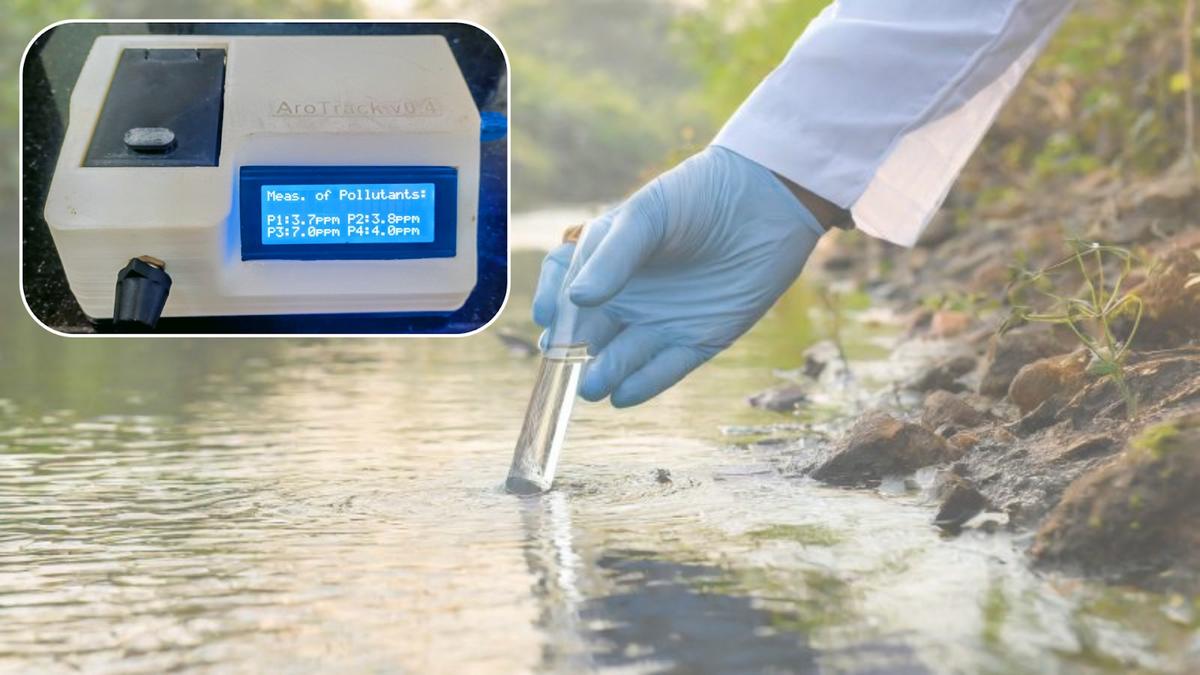
  • IIT Bombay scientists develop water-pollutant detecting device ‘AroTrack’
    IIT Bombay scientists develop water-pollutant detecting device ‘AroTrack’ Science
  • Budget may cut reliance on foreign telescopes; trips on space spending
    Budget may cut reliance on foreign telescopes; trips on space spending Science

More Related Articles

How an altered protein and fussy neurons conspire to cause microcephaly How an altered protein and fussy neurons conspire to cause microcephaly Science
New low-cost MRI machine can improve access to diagnostics in India New low-cost MRI machine can improve access to diagnostics in India Science
Leafy chemistry: What happens when a leaf changes colour in autumn? Leafy chemistry: What happens when a leaf changes colour in autumn? Science
Early climate warning systems: getting there, but not there yet Early climate warning systems: getting there, but not there yet Science
If data is the new oil, what does that make data centres? If data is the new oil, what does that make data centres? Science
How the 2004 Indian Ocean earthquake transformed tsunami science How the 2004 Indian Ocean earthquake transformed tsunami science Science
SiteLock

Archives

  • October 2026
  • September 2026
  • August 2026
  • July 2026
  • June 2026
  • May 2026
  • April 2026
  • March 2026
  • February 2026
  • January 2026
  • December 2025
  • November 2025
  • October 2025
  • September 2025
  • August 2025
  • July 2025
  • June 2025
  • May 2025
  • April 2025
  • March 2025
  • February 2025
  • January 2025
  • December 2024
  • November 2024
  • October 2024
  • September 2024
  • August 2024
  • July 2024
  • June 2024
  • May 2024
  • April 2024
  • March 2024
  • February 2024
  • January 2024
  • December 2023
  • November 2023
  • October 2023
  • September 2023
  • August 2023
  • July 2023
  • June 2023
  • May 2023
  • April 2023
  • March 2023
  • February 2023
  • January 2023
  • December 2022
  • November 2022
  • October 2022
  • September 2022
  • August 2022
  • July 2022
  • June 2022
  • May 2022

Categories

  • Business
  • Nation
  • Science
  • Sports
  • World

Recent Posts

  • Private bus operators to begin indefinite hunger strike on October 27
  • Yemen’s Houthis vow more attacks on Saudi airports, oil facilities after Aramco HQ hit
  • Ranji Trophy | Assam weathers Punjab’s push for an outright win
  • BJP party worker killed in Bengaluru as high-end car rams gas tanker near Devanahalli; three injured
  • Rupee rises 19 paise to close at 95.17 against U.S. dollar

Recent Comments

  1. RobertTes on UP Teacher Who Asked Students To Slap Muslim Classmate
  2. Manuelret on UP Teacher Who Asked Students To Slap Muslim Classmate
  3. RobertTes on UP Teacher Who Asked Students To Slap Muslim Classmate
  4. RobertTes on UP Teacher Who Asked Students To Slap Muslim Classmate
  5. BrentWes on UP Teacher Who Asked Students To Slap Muslim Classmate
  • U.S. appeals court finds Trump’s global tariffs illegal, but leaves them in place now
    U.S. appeals court finds Trump’s global tariffs illegal, but leaves them in place now World
  • Access Denied
    Access Denied Nation
  • 15-Year-Old Girl Raped By Truck Driver In Madhya Pradesh Forest: Police
    15-Year-Old Girl Raped By Truck Driver In Madhya Pradesh Forest: Police Nation
  • Access Denied Business
  • Access Denied World
  • Rafael Nadal’s Withdrawal Hands Main Draw Slot To Sumit Nagal In Indian Wells
    Rafael Nadal’s Withdrawal Hands Main Draw Slot To Sumit Nagal In Indian Wells Sports
  • Access Denied Sports
  • White House Says US, India Share Unique Bond Of Friendship
    White House Says US, India Share Unique Bond Of Friendship Nation

Editor-in-Chief:
Mohammad Ariff,
MSW, MAJMC, BSW, DTL, CTS, CNM, CCR, CAL, RSL, ASOC.
editor@artifex.news

Associate Editors:
1. Zenellis R. Tuba,
zenelis@artifex.news
2. Haris Daniyel
daniyel@artifex.news

Photograher:
Rohan Das
rohan@artifex.news

Associate Journalists
1. Subrata Paul - AN/2020/01
2. Quamruz Zaman - AN/2021/22
3. Ahmed Sha - AN/2021/035
4. Ajay Kumar Shaw - AN/2021/39
5. Tahqiqul Hoda - AN/2021/21

Artifex.News offers Online Paid Internships to college students from India and Abroad. Interns will get a PRESS CARD and other online offers.
Send your CV (Subjectline: Paid Internship) to internship@artifex.news

Links:
Associate Journalism
About Us
Privacy Policy

News Links:
Breaking News
World
Nation
Sports
Business
Entertainment
Lifestyle

Registered Office:
72/A, Elliot Road, Kolkata - 700016
Tel: 033-22277777, 033-22172217
Email: office@artifex.news

Editorial Office / News Desk:
No. 13, Mezzanine Floor, Esplanade Metro Rail Station,
12 J. L. Nehru Road, Kolkata - 700069.
(Entry from Gate No. 5)
Tel: 033-46011099, 033-46046046
Email: editor@artifex.news

Copyright © 2023 Artifex.News Newsportal designed by Artifex Infotech.