Skip to content
  • Facebook
  • X
  • Linkedin
  • WhatsApp
  • YouTube
  • Associate Journalism
  • About Us
  • Privacy Policy
  • 033-46046046
  • editor@artifex.news
Artifex.News

Artifex.News

Stay Connected. Stay Informed.

  • Breaking News
  • World
  • Nation
  • Sports
  • Business
  • Science
  • Entertainment
  • Lifestyle
  • Toggle search form
  • Pacific bloc backs joint police plan, maintains Taiwan ties
    Pacific bloc backs joint police plan, maintains Taiwan ties World
  • U.S. Defence Secretary Antony Blinken in Israel to meet with its leaders, see America’s security assistance
    U.S. Defence Secretary Antony Blinken in Israel to meet with its leaders, see America’s security assistance World
  • Who Will Be Maharashtra Chief Minister? What Devendra Fadnavis Said
    Who Will Be Maharashtra Chief Minister? What Devendra Fadnavis Said Nation
  • In Arvind Kejriwal’s Absence, Wife Becomes Face Of AAP’s Lok Sabha Campaign
    In Arvind Kejriwal’s Absence, Wife Becomes Face Of AAP’s Lok Sabha Campaign Nation
  • Access Denied World
  • Access Denied
    Access Denied Nation
  • “Delhi Police Revokes Security Of Women Wrestlers Testifying Against Brij Bhushan Sharan Singh”: Vinesh Phogat
    “Delhi Police Revokes Security Of Women Wrestlers Testifying Against Brij Bhushan Sharan Singh”: Vinesh Phogat Sports
  • Union Budget 2024: Empowers Middle Class, Gives Unprecedented Push To Jobs: PM Modi On Budget
    Union Budget 2024: Empowers Middle Class, Gives Unprecedented Push To Jobs: PM Modi On Budget Nation
New low-cost MRI machine can improve access to diagnostics in India

New low-cost MRI machine can improve access to diagnostics in India

Posted on June 10, 2024 By admin


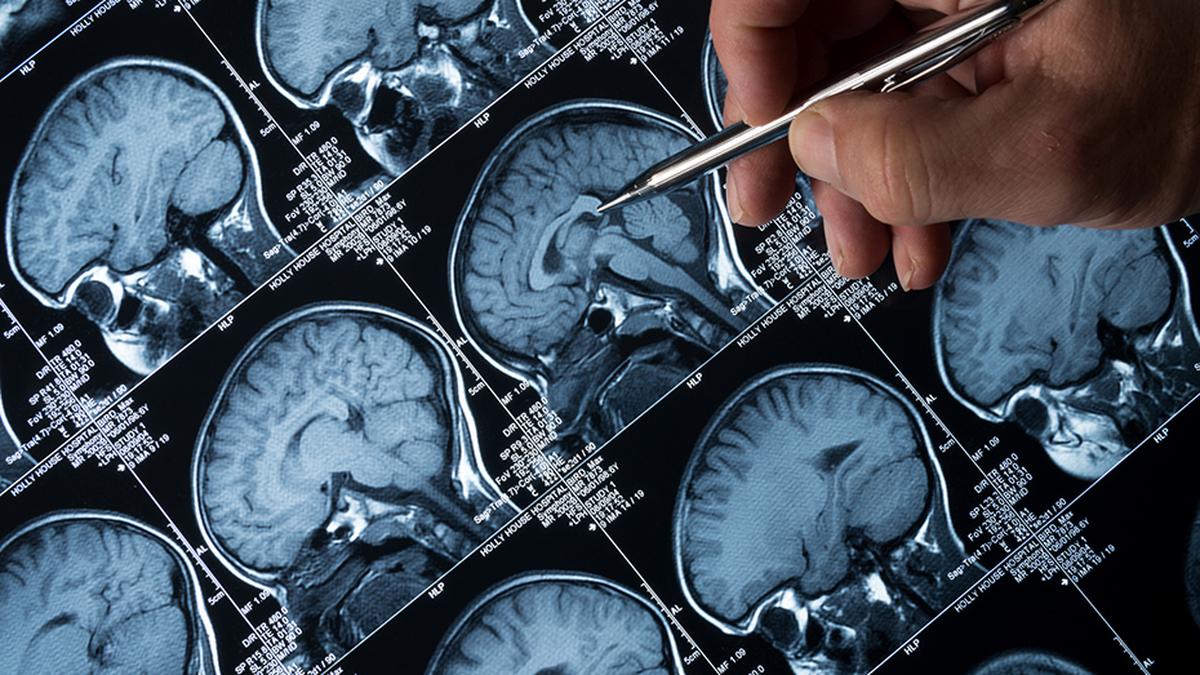
Scientists have designed a magnetic resonance imaging (MRI) scanner that costs a fraction of existing machines, setting the stage for improving access to this widely used diagnostic tool.

A MRI helps visualise minute details in the human body, with which doctors can diagnose disorders and select treatments for the brain, the heart, various cancers, and orthopaedic conditions.

These scanners work by using strong magnetic fields, measured in units called tesla (T), and radio waves to generate images of internal organs. The strength of these magnetic fields in clinical MRI setups range between 1.5 T and 3 T — or 4-8-times stronger than the typical magnetic field in a sunspot on the Sun.

Around 50-times cheaper

This potentially life-saving medical technology remains inaccessible to most of the population, especially in low- and middle-income countries like India, largely because of the scanner’s high cost and the infrastructure required to handle such a powerful instrument. This includes shielding the room that houses the machine to contain the effects of strong magnets; liquid helium to cool the magnets when they heat up during operation; and the electric power required to operate the scanner.

“A 3-T MRI machine can cost anywhere between 9 and 13 crore rupees,” Mukul Mutatkar, an interventional radiology consultant with several hospitals in Pune, including Deenanath Mangeshkar Hospital and Ruby Hall Clinic, said. “And that’s just the machine. There are additional infrastructure costs.”

To address this problem, a team led by Ed Wu at the University of Hong Kong designed and built an MRI machine using low strength magnets and store-bought hardware. This simplified machine costs around $22,000, or about Rs 18.4 lakh. The machine uses 0.05 T magnets and doesn’t need a shielded room or helium coolant to operate. It can be plugged into standard wall-power outlets.

Prototype of a low-cost, low-power, compact, and shielding-free imaging system using an open 0.05-T permanent magnet. It incorporates active sensing and deep learning to address electromagnetic interference signals.
| Photo Credit:
DOI: 10.1126/science.adm7168

“This will usher in an entirely new class of MRI scanners that are affordable, low-power, and compact,” Dr. Wu wrote in an email.

A paper describing the design and its working was published in the journal Science on May 10.

Test with 30 volunteers

Using low-strength magnets in MRI is not novel: researchers used 0.05 T machines to generate images during initial work on MRI in the 1970s. But they abandoned this option in favour of 1.5 T magnets in the 1980s. The stronger the magnetic field strength, the better the image produced. A 1.5-T scanner can detect tissue damage as small as 1 mm whereas the smallest damage detectable at 0.05 T is 4 mm.

“A 0.05-T MRI machine won’t give you the exact image quality as a 3 T machine,” said Jyoti Narayan, a clinical associate in the imaging department at Mumbai’s Jaslok Hospital. “There are anatomical areas from which information needs to be extracted, which will not show up.”

To compensate for lower detail in images, Dr. Wu & co. used an artificial intelligence (AI)-based deep-learning algorithm. This algorithm — trained on data from high-resolution images of human organs — helped reduce background noise and obtain sharper images.

They tested their setup with 30 healthy adult volunteers, and obtained clear images for brain tissue, spinal cord, cerebrospinal fluid, and abdominal organs like the liver, kidneys, and the spleen. They could also visualise details in the lungs and the heart, and knee structures such as cartilage. They found that the image quality the 0.05-T machine coupled with AI produced was comparable to that of images obtained from a 3-T MRI machine.

The research group wrote that their machine was also less noisy during operation, meaning it could be used in paediatric settings as well. The lower-strength magnets could also be set up in an open scanning environment, alleviating the claustrophobia that sometimes arises when an individual slides into a conventional MRI machine.

Good for access and emergencies

Dr. Narayan said such a machine offered several advantages, including the possibility of being lighter, more portable, and not requiring specialised power sources (instead of a wall socket). As a result, she continued, MRIs can be more accessible to patients who live far from specialised hospitals that currently offer this diagnostic facility.

Such a machine could be practical in places where it is hard for people to access high power MRIs. Dr. Mutatkar agreed — but also said “the ultra-low field magnets cannot replace standard high-field magnets in MRI machines” due to the resolution advantage the latter offered.

Dr. Wu said the scanner could nonetheless complement the high-field scanners in radiology departments.

Neither Dr. Narayan nor Dr. Mutatkar was aware of any centres in India that used a 0.05-T machine. That could change with the cost advantage the new design offered. “Conventional MRI [scans] can cost anywhere between Rs 7,000 and Rs 15,000,” Dr. Narayan said. Some facilities may offer scans for as low as Rs 2,000 but the waiting period will be in the order of months, she added.

Both doctors also said such scanners could be useful during emergencies, without making patients wait for an appointment, and help first responders make more informed medical decisions.

Aside from acute interventions to help stroke patients, such scanners could help in traumatic accidents to assess a patient’s injury at the accident site. Healthcare providers can then decide whether the patient can be safely transferred to a hospital and/or which mode of transport would be most suitable. Such a scanner could also serve as the first level of imaging in case of emergencies in hospitals with otherwise occupied MRI machines, Dr. Mutatkar added.

‘Get basic things done’

According to both Dr. Narayan and Dr. Mutatkar, using a lower power magnet also has the advantage of preventing metal items such as oxygen cylinders, wheelchairs, and stethoscopes from being pulled into the MRI machine. This is a persistent risk around conventional machines. Although such events are rare, they do take place, and can harm both the patient and the machine.

An MRI machine with low strength magnets may generate fewer artefacts due to implants or prosthetics in the final image; such artefacts have been known to mislead doctors about the original anatomy of the tissue, Dr. Narayan said. (Many of these objects are made of titanium, which is paramagnetic, i.e. weakly affected by a magnetic field.)

Dr. Mutatkar added that pacemakers can’t be scanned in current MRI machines. And “what happens to pacemakers [in the low strength machine] still remains to be seen.”

He added that the new design will need to be tested in other centres; the data in the current study was from only one. “Even if the image quality is not very good,” he added, “if we can manage this in small places and get basic things done, then this will make a difference.”

Sneha Khedkar is a biologist turned freelance science journalist.


Source link

Science

Post navigation

Previous Post: India’s aviation market growth needs to be matched with capacity; open for partnerships: Emirates CCO
Next Post: Sensex breaches 77,000-mark for first time; Nifty hits new record high level in early trade

Related Posts

  • IIT Bombay scientists develop water-pollutant detecting device ‘AroTrack’
    IIT Bombay scientists develop water-pollutant detecting device ‘AroTrack’ Science
  • Shorebird from Australia spotted over 7,400 km away on island in Andamans: Expert
    Shorebird from Australia spotted over 7,400 km away on island in Andamans: Expert Science
  • Bovine H5N1 displays pronounced neurotropism in many mammals
    Bovine H5N1 displays pronounced neurotropism in many mammals Science
  • After Chandrayaan-3, Space Physics Lab at Vikram Sarabhai Space Centre prepares to study solar wind
    After Chandrayaan-3, Space Physics Lab at Vikram Sarabhai Space Centre prepares to study solar wind Science
  • Why do students fear math? | National Mathematics Day
    Why do students fear math? | National Mathematics Day Science
  • Massive experiments could soon reveal more about nature of ‘ghostly’ particles
    Massive experiments could soon reveal more about nature of ‘ghostly’ particles Science

More Related Articles

IISc scientists develop synthetic antibody to neutralise deadly snake bite toxin IISc scientists develop synthetic antibody to neutralise deadly snake bite toxin Science
Explained | After Chandrayaan-3, what has ISRO planned? Explained | After Chandrayaan-3, what has ISRO planned? Science
Auction of world’s largest Mars meteorite sparks ownership debate Auction of world’s largest Mars meteorite sparks ownership debate Science
Antibiotic resistance fuels 87% of India’s typhoid economic burden: Study Antibiotic resistance fuels 87% of India’s typhoid economic burden: Study Science
Former CSIR chief Girish Sahni passes away Former CSIR chief Girish Sahni passes away Science
Indore tragedy: why do EV batteries catch fire? | Explained Indore tragedy: why do EV batteries catch fire? | Explained Science
SiteLock

Archives

  • May 2026
  • April 2026
  • March 2026
  • February 2026
  • January 2026
  • December 2025
  • November 2025
  • October 2025
  • September 2025
  • August 2025
  • July 2025
  • June 2025
  • May 2025
  • April 2025
  • March 2025
  • February 2025
  • January 2025
  • December 2024
  • November 2024
  • October 2024
  • September 2024
  • August 2024
  • July 2024
  • June 2024
  • May 2024
  • April 2024
  • March 2024
  • February 2024
  • January 2024
  • December 2023
  • November 2023
  • October 2023
  • September 2023
  • August 2023
  • July 2023
  • June 2023
  • May 2023
  • April 2023
  • March 2023
  • February 2023
  • January 2023
  • December 2022
  • November 2022
  • October 2022
  • September 2022
  • August 2022
  • July 2022
  • June 2022
  • May 2022

Categories

  • Business
  • Nation
  • Science
  • Sports
  • World

Recent Posts

  • Nicobarese oppose proposal for three wildlife sanctuaries
  • Visakhapatnam Collector calls for inter-departmental synergy to boost investments
  • Kohli’s masterful knock powers Royal Challengers to the top
  • Senior IPS officer Asra Garg posted IGP Intelligence
  • Vijay Narayan earns rare distinction of being Advocate General under two different governments

Recent Comments

  1. StevenLek on UP Teacher Who Asked Students To Slap Muslim Classmate
  2. Leonardren on UP Teacher Who Asked Students To Slap Muslim Classmate
  3. NathanQuins on UP Teacher Who Asked Students To Slap Muslim Classmate
  4. Davidgof on UP Teacher Who Asked Students To Slap Muslim Classmate
  5. NathanJobre on UP Teacher Who Asked Students To Slap Muslim Classmate
  • Access Denied World
  • Union Minister’s Response To 4 Questions In Parliament On Manipur Illegal Opium Poppy Cultivation
    Union Minister’s Response To 4 Questions In Parliament On Manipur Illegal Opium Poppy Cultivation Nation
  • The man who gave us “photographs”
    The man who gave us “photographs” Science
  • Oil Tanker Seized By Iran In 2023 Bound For Oman Port, Shows Tracking Data
    Oil Tanker Seized By Iran In 2023 Bound For Oman Port, Shows Tracking Data World
  • Access Denied Sports
  • Champions Trophy 2025: Star-Studded Panel Of Commentators For All 9 Language Feeds
    Champions Trophy 2025: Star-Studded Panel Of Commentators For All 9 Language Feeds Sports
  • Access Denied Business
  • Anand Mahindra Terms Virat Kohli’s Last-Ball Six vs Pakistan ‘Surgical Strike’, Calls Him ‘Doctor’
    Anand Mahindra Terms Virat Kohli’s Last-Ball Six vs Pakistan ‘Surgical Strike’, Calls Him ‘Doctor’ Sports

Editor-in-Chief:
Mohammad Ariff,
MSW, MAJMC, BSW, DTL, CTS, CNM, CCR, CAL, RSL, ASOC.
editor@artifex.news

Associate Editors:
1. Zenellis R. Tuba,
zenelis@artifex.news
2. Haris Daniyel
daniyel@artifex.news

Photograher:
Rohan Das
rohan@artifex.news

Artifex.News offers Online Paid Internships to college students from India and Abroad. Interns will get a PRESS CARD and other online offers.
Send your CV (Subjectline: Paid Internship) to internship@artifex.news

Links:
Associate Journalism
About Us
Privacy Policy

News Links:
Breaking News
World
Nation
Sports
Business
Entertainment
Lifestyle

Registered Office:
72/A, Elliot Road, Kolkata - 700016
Tel: 033-22277777, 033-22172217
Email: office@artifex.news

Editorial Office / News Desk:
No. 13, Mezzanine Floor, Esplanade Metro Rail Station,
12 J. L. Nehru Road, Kolkata - 700069.
(Entry from Gate No. 5)
Tel: 033-46011099, 033-46046046
Email: editor@artifex.news

Copyright © 2023 Artifex.News Newsportal designed by Artifex Infotech.