



Skip to content
  • Facebook
  • X
  • Linkedin
  • WhatsApp
  • YouTube
  • Associate Journalism
  • About Us
  • Privacy Policy
  • 033-46046046
  • editor@artifex.news
Artifex.News

Artifex.News

Stay Connected. Stay Informed.

  • Breaking News
  • World
  • Nation
  • Sports
  • Business
  • Science
  • Entertainment
  • Lifestyle
  • Toggle search form
  • How Manmohan Singh Defended Landmark 1991 Union Budget
    How Manmohan Singh Defended Landmark 1991 Union Budget Nation
  • Access Denied
    Access Denied Nation
  • India’s U19 Stars Of IPL Mega Auction: Who Will Be Next ‘Virat Kohli’ Of The League?
    India’s U19 Stars Of IPL Mega Auction: Who Will Be Next ‘Virat Kohli’ Of The League? Sports
  • Access Denied Business
  • Access Denied
    Access Denied Nation
  • Sensex rallies 117 points in early trade
    Sensex rallies 117 points in early trade Business
  • Indian economy to record high growth despite volatile external environment: RBI Governor
    Indian economy to record high growth despite volatile external environment: RBI Governor Business
  • Israel objects to U.S. announcement of leaders who will help oversee next steps in Gaza
    Israel objects to U.S. announcement of leaders who will help oversee next steps in Gaza World
What ended the ‘dark ages’ in the early universe? Webb telescope finds clue

What ended the ‘dark ages’ in the early universe? Webb telescope finds clue

Posted on March 5, 2024 By admin


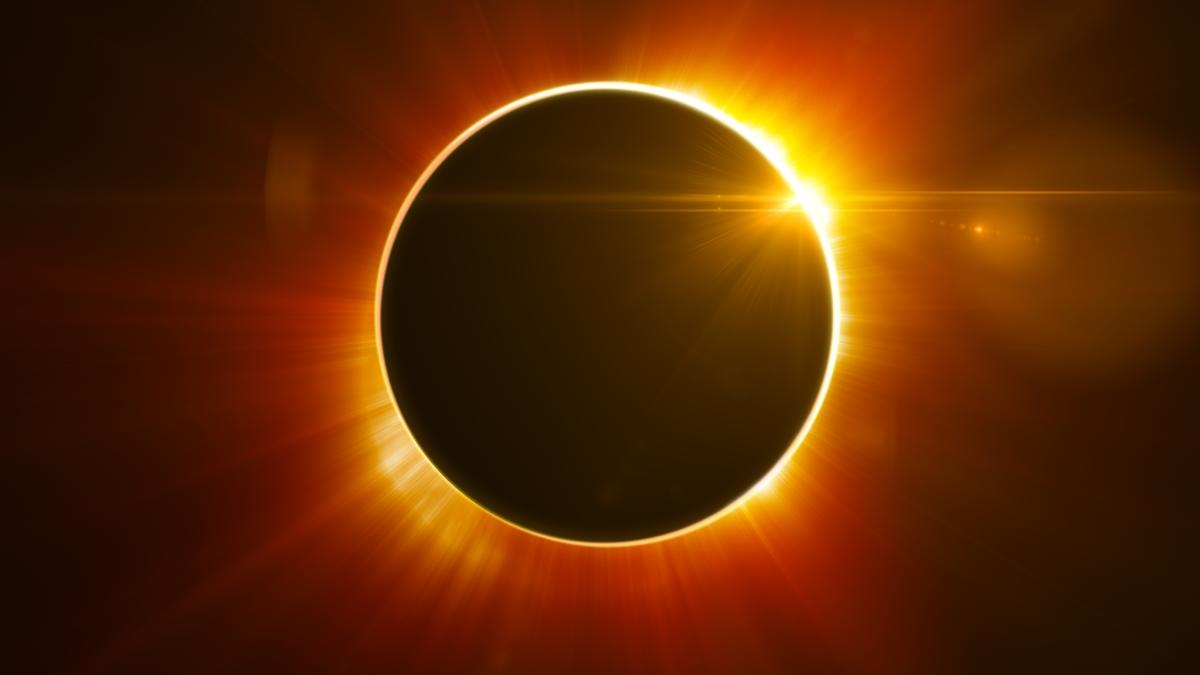
Which stars produced the light that ended the dark ages and triggered this so-called “epoch of reionisation”? Image for Representation.
| Photo Credit: AP

About 400,000 years after the Big Bang, the cosmos was a very dark place. The glow of the universe’s explosive birth had cooled, and space was filled with dense gas – mostly hydrogen – with no sources of light.

Slowly, over hundreds of millions of years, the gas was drawn into clumps by gravity, and eventually the clumps grew big enough to ignite. These were the first stars.

At first their light didn’t travel far, as much of it was absorbed by a fog of hydrogen gas. However, as more and more stars formed, they produced enough light to burn away the fog by “reionising” the gas – creating the transparent universe dotted with brilliant points of light we see today.

But exactly which stars produced the light that ended the dark ages and triggered this so-called “epoch of reionisation”? In research published in Nature, we used a gigantic cluster of galaxies as a magnifying glass to gaze at faint relics of this time – and discovered that stars in small, faint dwarf galaxies were likely responsible for this cosmic-scale transformation.

What ended the dark ages?

Most astronomers already agreed that galaxies were the main force in reionising the universe, but it wasn’t clear how they did it. We know that stars in galaxies should make a lot of ionising photons, but these photons need to escape the dust and gas inside their own galaxy to ionise hydrogen out in the space between galaxies.

It hasn’t been clear what kind of galaxies would be able to produce and emit enough photons to get the job done. (And indeed, there are those who think more exotic objects like big black holes may have been responsible.)

There are two camps among adherents of the galaxy theory.

The first thinks huge, massive galaxies produced the ionising photons. There were not many of these galaxies in the early universe, but each one produced a lot of light. So if a certain fraction of that light managed to escape, it might have been enough to reionise the universe.

The second camp thinks we are better off ignoring the giant galaxies and focussing on the huge number of much smaller galaxies in the early universe. Each one of these would have produced far less ionising light, but with the weight of their numbers they could have driven the epoch of reionisation.

A magnifying glass 4 million lightyears wide

Trying to look at anything in the early universe is very hard. The massive galaxies are rare, so they are hard to find. Smaller galaxies are more common but they are very faint, which makes it difficult (and expensive) to get high-quality data.

We wanted a look at some of the faintest galaxies around, so we used a huge group of galaxies called Pandora’s Cluster as a magnifying glass. The enormous mass of the cluster distorts space and time, amplifying the light from objects behind it.

As part of the UNCOVER program, we used the James Webb Space Telescope to look at magnified infrared images of faint galaxies behind Pandora’s Cluster.

We first looked at many different galaxies, then chose a few particularly distant (and therefore ancient) ones to examine more closely. (This kind of close examination is expensive, so we could only look at eight galaxies in greater detail.)

The bright glow of hydrogen

We selected some sources which were around 0.5% of the brightness of our Milky Way galaxy at that time, and checked them for the telltale glow of ionised hydrogen. These galaxies are so faint they were only visible at all thanks to the magnifying effect of Pandora’s Cluster.

Our observations confirmed that these small galaxies did exist in the very early universe. What’s more, we confirmed they produced around four times as much ionising light as we would consider “normal”. This is at the highest end of what we had predicted, based on our understanding of how early stars formed.

Because these galaxies produced so much ionising light, only a small fraction of it would have needed to escape to reionise the universe.

Previously, we had thought that around 20% of all ionising photons would need to escape from these smaller galaxies if they are to be the dominant contributor to reionisation. Our new data suggests even 5% would be sufficient – which is about the fraction of ionising photons we see escaping from modern galaxies.

So now we can confidently say these smaller galaxies could have played a very large role in the epoch of reionisation. However, our study was only based on eight galaxies, all close to a single line of sight. To confirm our results we will need to look at different parts of the sky.

We have new observations planned which will target other large galaxy clusters elsewhere in the universe, to find yet more magnified, faint galaxies to test. If all goes well, we will have some answers in a few years.

The Conversation

Themiya Nanayakkara, Senior Scientist at the James Webb Australian Data Centre, Swinburne University of Technology

This article is republished from The Conversation under a Creative Commons license. Read the original article.

Source link

Science Tags:dark ages of the the Universe, science news, Universe, Webb telescope’s findings, what ended the dark ages of the universe

Post navigation

Previous Post: Maldives President says no Indian troops to remain on his island; not even in civilian clothing
Next Post: Karnataka Chief Minister, Several MLAs Get Bomb Threat Mail, Probe Ordered

Related Posts

  • Pi Day 2026: significance of the mathematical constant π
    Pi Day 2026: significance of the mathematical constant π Science
  • IIA finds new way to probe deeper into the sun’s secrets
    IIA finds new way to probe deeper into the sun’s secrets Science
  • India’s frogs are finding allies from citizen science to sanctuaries
    India’s frogs are finding allies from citizen science to sanctuaries Science
  • Sci-Five | The Hindu Science Quiz: On Indian Institute of Astrophysics
    Sci-Five | The Hindu Science Quiz: On Indian Institute of Astrophysics Science
  • How agriPV can turn India’s farms into dual-purpose powerhouses
    How agriPV can turn India’s farms into dual-purpose powerhouses Science
  • No smartphone or internet? No problem; AI-backed phone has the answers
    No smartphone or internet? No problem; AI-backed phone has the answers Science

More Related Articles

Science and the City: Sci560 captures Bengaluru’s rich legacy Science and the City: Sci560 captures Bengaluru’s rich legacy Science
Hepatitis A vaccination will be cost-effective in Kerala: study Hepatitis A vaccination will be cost-effective in Kerala: study Science
Ahead of Chandrayaan-4, IIT and PRL team decodes moon’s titanium-rich rocks Ahead of Chandrayaan-4, IIT and PRL team decodes moon’s titanium-rich rocks Science
Why scientists are rethinking the chemical ‘arms race’ against fungi Why scientists are rethinking the chemical ‘arms race’ against fungi Science
How are hydrocarbons extracted from under the ground? | Explained How are hydrocarbons extracted from under the ground? | Explained Science
Norway’s proposed moratorium on smart glasses | Explained Norway’s proposed moratorium on smart glasses | Explained Science
SiteLock

Archives

  • October 2026
  • September 2026
  • August 2026
  • July 2026
  • June 2026
  • May 2026
  • April 2026
  • March 2026
  • February 2026
  • January 2026
  • December 2025
  • November 2025
  • October 2025
  • September 2025
  • August 2025
  • July 2025
  • June 2025
  • May 2025
  • April 2025
  • March 2025
  • February 2025
  • January 2025
  • December 2024
  • November 2024
  • October 2024
  • September 2024
  • August 2024
  • July 2024
  • June 2024
  • May 2024
  • April 2024
  • March 2024
  • February 2024
  • January 2024
  • December 2023
  • November 2023
  • October 2023
  • September 2023
  • August 2023
  • July 2023
  • June 2023
  • May 2023
  • April 2023
  • March 2023
  • February 2023
  • January 2023
  • December 2022
  • November 2022
  • October 2022
  • September 2022
  • August 2022
  • July 2022
  • June 2022
  • May 2022

Categories

  • Business
  • Nation
  • Science
  • Sports
  • World

Recent Posts

  • India’s IT exports: Deliver the code, chase the cash
  • Is Wetland Authority accountable to government or construction companies, asks Anbumani
  • TCS looks to quantum computing to solve complex ‘what if’ problems
  • AIADMK, BJP leaders slam TVK-led Tamil Nadu government over electricity purchase at high rate
  • Two arrested for attacking security guard with knife in Besant Nagar

Recent Comments

  1. RobertTes on UP Teacher Who Asked Students To Slap Muslim Classmate
  2. Manuelret on UP Teacher Who Asked Students To Slap Muslim Classmate
  3. RobertTes on UP Teacher Who Asked Students To Slap Muslim Classmate
  4. RobertTes on UP Teacher Who Asked Students To Slap Muslim Classmate
  5. BrentWes on UP Teacher Who Asked Students To Slap Muslim Classmate
  • Access Denied Sports
  • Supreme Court’s Demolition Verdict Will Help Curb Organised Crime: UP
    Supreme Court’s Demolition Verdict Will Help Curb Organised Crime: UP Nation
  • Access Denied Sports
  • After school strike, U.N. rapporteur accuses Israel of ‘genocide’
    After school strike, U.N. rapporteur accuses Israel of ‘genocide’ World
  • India Slams Pakistan’s Airstrikes On Afghanistan
    India Slams Pakistan’s Airstrikes On Afghanistan World
  • Access Denied
    Access Denied Nation
  • Access Denied Sports
  • Access Denied World

Editor-in-Chief:
Mohammad Ariff,
MSW, MAJMC, BSW, DTL, CTS, CNM, CCR, CAL, RSL, ASOC.
editor@artifex.news

Associate Editors:
1. Zenellis R. Tuba,
zenelis@artifex.news
2. Haris Daniyel
daniyel@artifex.news

Photograher:
Rohan Das
rohan@artifex.news

Associate Journalists
1. Subrata Paul - AN/2020/01
2. Quamruz Zaman - AN/2021/22
3. Ahmed Sha - AN/2021/035
4. Ajay Kumar Shaw - AN/2021/39
5. Tahqiqul Hoda - AN/2021/21

Artifex.News offers Online Paid Internships to college students from India and Abroad. Interns will get a PRESS CARD and other online offers.
Send your CV (Subjectline: Paid Internship) to internship@artifex.news

Links:
Associate Journalism
About Us
Privacy Policy

News Links:
Breaking News
World
Nation
Sports
Business
Entertainment
Lifestyle

Registered Office:
72/A, Elliot Road, Kolkata - 700016
Tel: 033-22277777, 033-22172217
Email: office@artifex.news

Editorial Office / News Desk:
No. 13, Mezzanine Floor, Esplanade Metro Rail Station,
12 J. L. Nehru Road, Kolkata - 700069.
(Entry from Gate No. 5)
Tel: 033-46011099, 033-46046046
Email: editor@artifex.news

Copyright © 2023 Artifex.News Newsportal designed by Artifex Infotech.