

Skip to content
  • Facebook
  • X
  • Linkedin
  • WhatsApp
  • YouTube
  • Associate Journalism
  • About Us
  • Privacy Policy
  • 033-46046046
  • editor@artifex.news
Artifex.News

Artifex.News

Stay Connected. Stay Informed.

  • Breaking News
  • World
  • Nation
  • Sports
  • Business
  • Science
  • Entertainment
  • Lifestyle
  • Toggle search form
  • IND vs ZIM Live Streaming 1st T20I Live Telecast: When And Where To Watch Match Live?
    IND vs ZIM Live Streaming 1st T20I Live Telecast: When And Where To Watch Match Live? Sports
  • ‘Misperception stops healthcare providers from prescribing life-saving ORS for child diarrhoea’ 
    ‘Misperception stops healthcare providers from prescribing life-saving ORS for child diarrhoea’  Science
  • India’s development did not come to standstill despite oil supply crisis: PM Modi
    India’s development did not come to standstill despite oil supply crisis: PM Modi Nation
  • Access Denied World
  • JPMorgan To Add India To Its Emerging-Markets Bond Index
    JPMorgan To Add India To Its Emerging-Markets Bond Index Business
  • Raghav Chadha Hits Back After Finance Minister’s Remarks
    Raghav Chadha Hits Back After Finance Minister’s Remarks Nation
  • Access Denied
    Access Denied Nation
  • Access Denied Sports
India’s frogs are finding allies from citizen science to sanctuaries

India’s frogs are finding allies from citizen science to sanctuaries

Posted on March 17, 2026 By admin


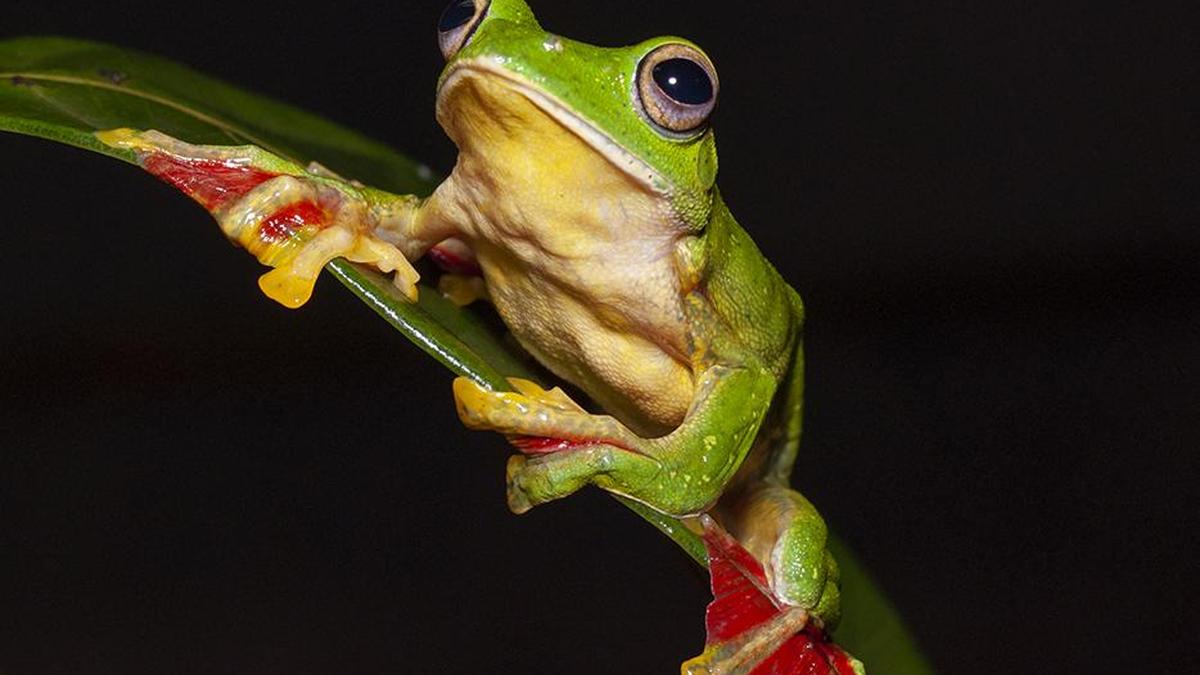
World Frog Day on March 20 celebrates the role of frogs, the world’s most numerous amphibians. They live at the interface between freshwater and terrestrial ecosystems, eat insects and in turn get eaten by other vertebrates, and are thus crucial in converting insect biomass into vertebrate biomass.

Losing them can mean a boom in insects that prey on plants as well as a depleted food base for many terrestrial vertebrates, which in turn can irreparably damage both freshwater and terrestrial ecosystems. Unfortunately for the earth, since the 1980s, frog and other amphibian populations have been on the decline worldwide. In 2023, the International Union for Conservation of Nature (IUCN)’s Global Amphibian Assessment Report said 37 species have become extinct and continue to decline, making them the most threatened vertebrate group.

The most prominent historical driver of amphibian decline has been chytridiomycosis, a fungal disease caused by Batrachochytrium dendrobatidis and Bactrachochytrium salamandrivorans in frogs and salamanders, respectively. This disease affects their skin — an organ that protects them as well as allows respiration and exchange of ions to maintain electrolyte balance. In the last two decades, more than 60% of amphibians globally have been affected by it — although intensive monitoring and conservation efforts have reduced the extinction risk of 63 species, halving the impact.

Today, however, the most important drivers of extinction are climate change for 39% of species and habitat loss for 37%.

The Indian scene

India is home to more than 450 amphibian species, and roughly a quarter of them are categorised as ‘threatened’ and one-fifth as ‘data deficient’. The burden of B. dendrobatidis and B. salamandrivorans fungi in India is substantial but it has not caused mass mortality the way it has for frogs in the Americas and Australia. 

B.dendrobatidis and B. salamandrivorans both had their roots in Asia and spread worldwide through the trade on frog legs and salamanders as pets. In 1987, after Humayun Abdul Ali from Bombay Natural History Society published a scientific report highlighting their role in controlling agricultural pests, this trade was banned. However, by then, frog and salamander populations had been significantly affected as B. dendrobatidis had spread from Asia to Europe, the Americas, and Australia.

The situation in India itself is rather unique. Until 2015, scientists were unsure of the status of B. dendrobatidis; a diagnostic test emerged only in 2023. That said, while scientists in the country have not documented mass die-offs, they also haven’t found the status of amphibians to have improved in the last two decades. Since they lack long-term monitoring data for any species, it is difficult to pinpoint the causes.

In fact, India hosts a significant share of the world’s ‘data deficient’ amphibian species. And of the 157 threatened species in India, only six are protected under the Wildlife Protection Act 1972.

Climate change in India also presents a serious challenge. One well-known consequence is the mismatch between seasons and the natural rhythms of plants and animals. So a false cue of an early monsoon followed by a prolonged dry period can result in catastrophic breeding outcomes. At the same time, thanks to the lack of long-term datasets on surface water availability and amphibian populations in the region, scientists are also unable to predict the effects of climate change on them.

A time to care

The monsoons arrive at India’s shores predictably every year and are synonymous with the frogs’ chorus, when the adult males call out for mates. The females mate with several males and deposit their eggs in the water. The intensity of breeding frenzy wanes rapidly thereafter, when some laggards and first-time breeders might take a shot at breeding. While not all adult amphibians successfully breed every year, the intensity enhances the population’s chances of survival.

The breeding activity is focused on producing many tadpoles, which then engorge themselves on the luxuriant growth of algae in water bodies and grow quickly. They metamorphose into small froglets and hop on the land. In this phase, many lose out as they become prey to animals. Because of their short lifespan, the timing of their complex breeding behaviours with rain, and the availability of surface water in streams and puddles, is critical.

Other important conservation efforts include the creation of the salamander sanctuary in Jorepokhri in West Bengal in 1985 (although it does not support a breeding population at present), the University Grants Commission banning the dissection of frogs for educational purposes in 2011; and the ongoing conservation breeding programme for Himalayan salamanders at the Padmaja Naidu Zoo in Darjeeling.

Avenues to participate

There have also been more success stories of late. These include the Mapping Malabar Tree Toad Project, a citizen science project, coordinated by K.V. Gururaja in the Western Ghats; the Amphibian Recovery Project by S. Harikrishnan of the Wildlife Trust of India in Munnar, Kerala, with the Kanan Devan Hills Plantations Company Pvt. Ltd.; and the Himalayan Salamander Conservation Project led by Barkha Subba, in which she has involved the locals in protecting habitats. The CSIR-Centre for Cellular and Molecular Biology (where the authors are employed) has also been running a long-term programme to monitor stream frogs, in collaboration with the Maharashtra State Forest Department in Tillari Conservation Reserve.

The Padmaja Naidu Himalayan Zoo and the Nehru Zoological Park in Hyderabad also prominently display amphibians in their collection of animals and spread awareness to visitors. There is also a growing number of young professionals implementing conservation programmes.

For a nation that embodies its conservation values in its Constitution, citizens have many avenues to participate: for instance, one can take a few minutes of their time to record their calls or take photographs of both healthy and sick frogs following ethical guidelines and share them on citizen science portals like iNaturalist. Such efforts will help us move beyond a few charismatic species such as tigers and pandas.

The monsoon will arrive in a few months and we should play our role in amphibian conservation.

Karthikeyan Vasudevan is a Chief Scientist at the CSIR-Centre for Cellular and Molecular Biology, Hyderabad. He is a herpetologist who works on amphibian disease ecology.

Published – March 19, 2026 08:00 am IST


Source link

Science

Post navigation

Previous Post: Access Denied
Next Post: Access Denied

Related Posts

  • 3 craters discovered on Mars by scientists of Physical Research Laboratory
    3 craters discovered on Mars by scientists of Physical Research Laboratory Science
  • India calls for stronger global tech collaboration at BRICS meet
    India calls for stronger global tech collaboration at BRICS meet Science
  • Astronomers just found complex carbon molecules in space – a step closer to deciphering the origins of life
    Astronomers just found complex carbon molecules in space – a step closer to deciphering the origins of life Science
  • The green and the not-so-green of biofuels — explained | The Scope
    The green and the not-so-green of biofuels — explained | The Scope Science
  • AI and bioweapons: the problem with finding out when a model has been dangerous
    AI and bioweapons: the problem with finding out when a model has been dangerous Science
  • Low-pH cements could let microbes seal cracks in deep nuclear vaults
    Low-pH cements could let microbes seal cracks in deep nuclear vaults Science

More Related Articles

EU agencies track bird flu virus variants on increasing threat to humans EU agencies track bird flu virus variants on increasing threat to humans Science
How dead birds, old maps are helping scientists track biodiversity loss How dead birds, old maps are helping scientists track biodiversity loss Science
Extinct volcanoes could help sate humanity’s hunger for rare earth elements Extinct volcanoes could help sate humanity’s hunger for rare earth elements Science
Scans of seemingly empty space reveal black holes not far from earth Scans of seemingly empty space reveal black holes not far from earth Science
Quantum shift: On private industry and national research spending Quantum shift: On private industry and national research spending Science
‘Datura’ lands e-commerce platforms in trouble in Karnataka: What is the plant? ‘Datura’ lands e-commerce platforms in trouble in Karnataka: What is the plant? Science
SiteLock

Archives

  • September 2026
  • August 2026
  • July 2026
  • June 2026
  • May 2026
  • April 2026
  • March 2026
  • February 2026
  • January 2026
  • December 2025
  • November 2025
  • October 2025
  • September 2025
  • August 2025
  • July 2025
  • June 2025
  • May 2025
  • April 2025
  • March 2025
  • February 2025
  • January 2025
  • December 2024
  • November 2024
  • October 2024
  • September 2024
  • August 2024
  • July 2024
  • June 2024
  • May 2024
  • April 2024
  • March 2024
  • February 2024
  • January 2024
  • December 2023
  • November 2023
  • October 2023
  • September 2023
  • August 2023
  • July 2023
  • June 2023
  • May 2023
  • April 2023
  • March 2023
  • February 2023
  • January 2023
  • December 2022
  • November 2022
  • October 2022
  • September 2022
  • August 2022
  • July 2022
  • June 2022
  • May 2022

Categories

  • Business
  • Nation
  • Science
  • Sports
  • World

Recent Posts

  • Parts of Hyderabad receive brief showers on September 20
  • India thrash Indonesia 13-1 in Asian Games men’s hockey opener
  • Activists accuse Mumbai cops of pressuring people, raiding venues to stop Umar Khalid film screening
  • Red Bishop beats the odds to claim the Indian St. Leger
  • Minister promises exclusion of inhabited and agricultural areas from Ecologically Sensitive Area

Recent Comments

  1. Angelbem on UP Teacher Who Asked Students To Slap Muslim Classmate
  2. JeffreyPap on UP Teacher Who Asked Students To Slap Muslim Classmate
  3. TimmyMEs on UP Teacher Who Asked Students To Slap Muslim Classmate
  4. Angelbem on UP Teacher Who Asked Students To Slap Muslim Classmate
  5. JeffreyPap on UP Teacher Who Asked Students To Slap Muslim Classmate
  • “Yet To Achieve My Potential”: Neeraj Chopra After Winning Asian Games 2023 Gold
    “Yet To Achieve My Potential”: Neeraj Chopra After Winning Asian Games 2023 Gold Sports
  • CBI Questions Kolkata Hospital Ex Principal For 3rd Day, Seeks His Call Details
    CBI Questions Kolkata Hospital Ex Principal For 3rd Day, Seeks His Call Details Nation
  • Access Denied World
  • Watch: How are Coimbatore’s automotive firms gearing up for EV transition?
    Watch: How are Coimbatore’s automotive firms gearing up for EV transition? Science
  • More than 1.5 million without power as Hurricane Milton slams Florida, causes deaths and flooding
    More than 1.5 million without power as Hurricane Milton slams Florida, causes deaths and flooding World
  • The Science Quiz | Could you slow down?
    The Science Quiz | Could you slow down? Science
  • Access Denied World
  • Access Denied
    Access Denied Nation

Editor-in-Chief:
Mohammad Ariff,
MSW, MAJMC, BSW, DTL, CTS, CNM, CCR, CAL, RSL, ASOC.
editor@artifex.news

Associate Editors:
1. Zenellis R. Tuba,
zenelis@artifex.news
2. Haris Daniyel
daniyel@artifex.news

Photograher:
Rohan Das
rohan@artifex.news

Artifex.News offers Online Paid Internships to college students from India and Abroad. Interns will get a PRESS CARD and other online offers.
Send your CV (Subjectline: Paid Internship) to internship@artifex.news

Links:
Associate Journalism
About Us
Privacy Policy

News Links:
Breaking News
World
Nation
Sports
Business
Entertainment
Lifestyle

Registered Office:
72/A, Elliot Road, Kolkata - 700016
Tel: 033-22277777, 033-22172217
Email: office@artifex.news

Editorial Office / News Desk:
No. 13, Mezzanine Floor, Esplanade Metro Rail Station,
12 J. L. Nehru Road, Kolkata - 700069.
(Entry from Gate No. 5)
Tel: 033-46011099, 033-46046046
Email: editor@artifex.news

Copyright © 2023 Artifex.News Newsportal designed by Artifex Infotech.