


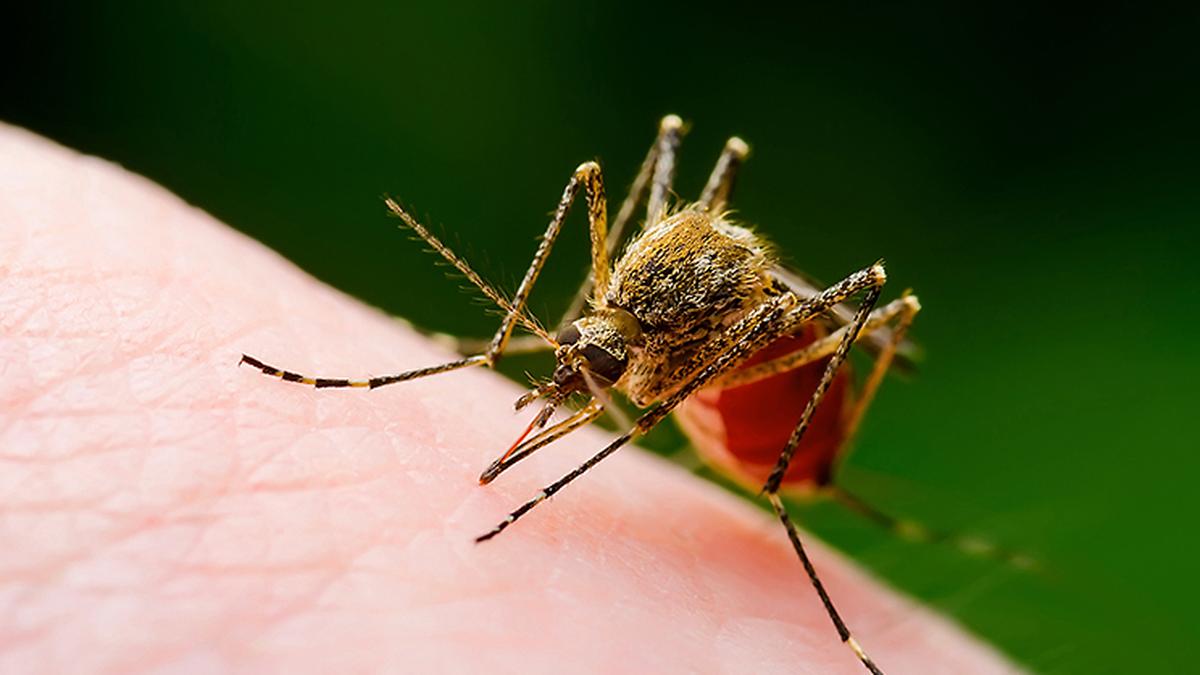
The U.S. Centres for Disease Control and Prevention (CDC) calls mosquitoes the “world’s deadliest animals”. They have good reason. Small, annoying but dangerous: this disease-carrying insect helps kill more than a million people in the world every year.
Now, as the world becomes warmer, their domain could be expanding. Previously, mosquitoes were only a concern in the warmer, tropical areas of the world. But now, malaria cases in the U.S. are on the rise, as are the number of warm and humid days when the insects can thrive.
Mosquitoes can adapt
Anopheles mosquitoes, which spread malaria, are spreading into cooler and drier parts of the African continent. A London School of Hygiene and Tropical Medicine study warned that if the current rate of emissions continues, billions more people will be at risk of dengue and malaria by 2100.
Mosquitoes can also adapt to higher temperatures. A team of University of California Berkeley scientists reported on January 7 that mosquitoes had natural variations in their genes that helped them tolerate heat better. “This paper found that mosquitoes might have the ability to respond to warming temperatures, rather than just being static players and just taking it and dying,” said Dr. Lisa Couper, an environmental health scientist at Stanford University and lead author of the paper.
Scientists previously believed that as some parts of the world got hotter, mosquitoes might be forced to move to cooler areas, shifting the populations of the mosquitoes. But if they can keep pace with the changing climate, mosquito populations may actually expand their territories even further.
Against the backdrop of a world increasingly in the clutches of mosquito-borne diseases, does it make sense for scientists to try and wipe out some mosquitoes altogether, especially the ones that spread diseases?
Molecular biologists, environmental health scientists, and mosquito ecologists are all united by the goal to reduce the deadly impact of mosquitoes in our world — yet each group has varying takes on the topic of eradicating them altogether.
Steering clear of extremes
“There are over 3,000 species of mosquitoes,” Dr. Couper said. “If we just target the few species that are vectors for human disease, like the ones that [carry] dengue and malaria, [or] West Nile virus for example, I don’t think that there’s major ecological harm that comes from eliminating those.”
Getting rid of all the mosquitoes could have ecological ramifications, as some of them may be plant pollinators or their larvae could be food to small fish. Of the 3,000+ species of mosquitoes, eradicating some could affect the delicate balance of certain food chains. But the ones that spread disease may not even have a major role to play in pollination.
Mosquito eradication also need not be permanent, according to Dr. Andrea Smidler, a molecular biologist working on genetic engineering in mosquitoes at the University of California, San Diego (UCSD).
In the 1930s, the U.S. used to have cases of malaria. But federal relief organisations took aggressive mosquito control and malaria prevention steps — improving drainage, eliminating breeding grounds, and spraying insecticides like DDT — until the disease was eliminated from the country in 1951. The Anopheles mosquitoes were temporarily eradicated or at least brought down to such low levels that they couldn’t spread the disease.
Later, however, there were mosquitoes that could transmit malaria again. “But when there’s a malaria case, the CDC comes in and wipes out the mosquito locally and eliminates transmission,” Dr. Smidler explained. “It’s probably too difficult to expect [eradication] to be permanent, right?”
‘Their one job in life…’
Some scientists believe using only insecticides to eradicate mosquitoes is futile because of how adaptable they are. “Eradicating mosquitoes is similar to killing bacteria with antibiotics,” Dr. Marcelo Jacobs-Lorena, an entomologist at the Johns Hopkins Bloomberg School of Public Health in Maryland, the US, said. “It works very well in the beginning [but] gradually the bacteria become resistant to the antibiotics, and that’s exactly what’s happening with the mosquitoes.”
He referred to a graph in the 2024 WHO Malaria Report, which shows how malaria-induced deaths worldwide dropped by nearly half from 2000 to 2015. “But from 2015 to present, there is no change. It stopped declining … because mosquitoes become resistant.”
Insecticides like DDT also wrought significant environmental harm. A 1962 book called Silent Spring by Rachel Carson documented how DDT caused birds to lay eggs without shells.
Enter chemical-free, species-specific elimination methods like the sterile insect technique. The idea was to sterilise the male mosquitoes of a specific species and release hundreds of them back into the population.
“The males are literally flying penises in these insect systems: they don’t bite; they don’t spread disease; their one job in life is to find a female and mate with her,” Dr. Smidler said. “In mosquitoes, it’s only females that bite and spread disease.”
When a normal female mates with one of the sterile males, they won’t produce any viable offspring. So briefly flooding the population with sterile males can lead to a population crash, a method that scientists have previously used to eliminate pests like the screw-worm fly (Cochliomyia hominivorax).
Frying pan or fire?
But traditional methods to sterilise the male flies involves irradiating their reproductive organs with X-rays, which leads to many males dying as well.
Some scientists are developing precision-guided sterile male techniques to further optimise the strategy. Using CRISPR-Cas9 methods to specifically target genes that affect fertility, Smidler and her colleagues in Dr. Omar Akbari’s lab at UCSD are trying to create genetically modified sterile males. They also aim to target genes that cause “femaleness”, such that all offspring end up being males.
The WHO also encourages research on genetically modified mosquitoes — as long as scientists are “supported by clear governance mechanisms to evaluate the health, environmental and ecological implications,” according to a 2020 position statement.
Additionally, scientists are repurposing existing drugs to be used as mosquito-killers. A team of scientists at Liverpool School of Tropical Medicine investigated the use of nitisinone, an FDA-approved drug that is taken by patients with rare metabolic disorders. They discovered that drinking blood containing the drug was lethal to the malaria-causing Anopheles gambiae, as it acts by blocking a key enzyme the mosquitoes rely on for digesting their blood meals. Nitisinone outperformed another mosquitocidal drug ivermectin and even killed insecticide-resistant mosquitoes.
However, Dr. Phil Lounibos, a mosquito ecologist at the University of Florida, said that mosquito reduction or eradication may not be the most prudent way forward to curb diseases. He pointed out that even if one species is locally removed, another, potentially more dangerous species could quickly move into the area — or the same species could reinvade as well.
“The chances of actually getting rid of many of these vector species is relatively challenging: not only do they reproduce very fast, many of them are species that have been skilled in invading new environments,” he said.
“Even if a project aimed at mosquito reduction is successful locally, you’re going to need to set up a laboratory skilled at producing more of the modified mosquitoes that are used in the reduction efforts,” Dr. Lounibos added.
‘Nothing is 100%’
Dr. Scott O’ Neill, founder and CEO of the World Mosquito Program non-profit, figured out a way to curb disease spread without eliminating mosquitoes altogether. He and his team discovered that Wolbachia, a naturally occurring bacteria in some insects, protected these insects from viral infections. They transferred Wolbachia into Aedes aegypti mosquitoes and realised that the bacteria prevented dengue viruses from growing inside the mosquitoes. It could also be used to target chikungunya, yellow fever, and Zika viruses.
When they bred and released these Wolbachia mosquitoes locally in some places in Australia, Brazil, Colombia, and other countries, the modified mosquitoes could not transmit viruses as much, leading to a reduced spread of dengue. The bacteria can also pass down generations in mosquitoes, making it a more sustainable disease control method. In the Australian regions where Dr. O’ Neill first deployed it, team members were even able to show that dengue transmission had completely stopped. “It is mosquito modification as opposed to mosquito reduction, and I still feel that this is potentially a much more powerful tool,” Dr. Lounibos said.
There was one drawback. Unlike Aedes aegypti mosquitoes that spread viruses, Anopheles mosquitoes spread a parasite called Plasmodium — which causes malaria — and Wolbachia didn’t seem to work well in these mosquitoes. But then, GlaxoSmithKline researchers stumbled upon a bacterium that seemed to prevent Plasmodium infections in their Anopheles mosquitoes. They reached out to Dr. Lorena for help.
Dr. Lorena and his colleagues found that this bacterium secreted a toxic product called harmane that could block Plasmodium parasites from developing in the mosquito gut. Just like Wolbachia in Aedes aegypti, this bacterium could “cure” Anopheles mosquitoes of the Plasmodium parasite, preventing them from carrying malaria. “The [bacteria method] does not rely on killing mosquitoes. So every mosquito becomes resistant. They continue to bite people but without transmitting the disease,” Lorena said.
Dr. Lorena and his team had also previously discovered a different bacterium that prevented Plasmodium infections in mosquitoes. This one had the advantage of being able to spread across mosquitoes more easily, passing down mosquito generations via the female’s eggs and being sexually transmitted from males to females. In the next steps, the scientists aim to test these methods extensively in wild Anopheles populations.
But Dr. Lorena doesn’t support the idea of stopping the killing of mosquitoes altogether. “Nothing is 100%,” he said. “What we envision is these bacteria being a new tool that’s added to all the existing tools.”
According to him, these different strategies should all be used together to stop mosquitoes from spreading diseases like malaria. Even the act of eradicating mosquitoes—like the other tools—need not be the ultimate goal, but just another cog in the wheel moving towards ridding the world of mosquito-borne diseases.
“We should continue treating people with malaria to eliminate the reservoir, we should continue killing the mosquitoes as well as we can—even though it’s getting less effective. We are now gradually introducing vaccines. What’s extremely important is not to rely on only one approach but to combine every single approach together,” he advised.
Rohini Subrahmanyam is a freelance journalist in Bengaluru.