Skip to content
  • Facebook
  • X
  • Linkedin
  • WhatsApp
  • YouTube
  • Associate Journalism
  • About Us
  • Privacy Policy
  • 033-46046046
  • editor@artifex.news
Artifex.News

Artifex.News

Stay Connected. Stay Informed.

  • Breaking News
  • World
  • Nation
  • Sports
  • Business
  • Science
  • Entertainment
  • Lifestyle
  • Toggle search form
  • Japan slips into recession; loses its spot as the world’s third-largest economy
    Japan slips into recession; loses its spot as the world’s third-largest economy Business
  • Access Denied Sports
  • Access Denied World
  • Access Denied World
  • Arohan Financial Services plans to hit capital market during middle of 2026-27 with ₹1,500 crore IPO
    Arohan Financial Services plans to hit capital market during middle of 2026-27 with ₹1,500 crore IPO Business
  • For MSMEs, GST is a concern that parties must address this election season
    For MSMEs, GST is a concern that parties must address this election season Business
  • Watch: IndiGo flight cancellations stretch into fourth straight day
    Watch: IndiGo flight cancellations stretch into fourth straight day World
  • Carlos Alcaraz Overcomes Slump To Reach Wimbledon Quarter-Finals
    Carlos Alcaraz Overcomes Slump To Reach Wimbledon Quarter-Finals Sports
On the heels of World Diabetes Day, the story of insulin discovery and the Flame of Hope

On the heels of World Diabetes Day, the story of insulin discovery and the Flame of Hope

Posted on November 15, 2024 By admin


In human physiology, the endocrine glands act by releasing chemical messengers called hormones. They are produced in extraordinarily small quantities, ranging from 10−9 to 10−12 grams. They travel through the bloodstream to influence distant organs and tissues, guiding bodily functions. Nervous and endocrine systems carry out a common mandate: to transmit the brain’s instructions to peripheral organs and tissues. Unlike the nervous system, which operates through a network of neurons, the endocrine system executes the brain’s orders across the body without an anatomical network. 

The pancreas holds a unique position as both an endocrine and exocrine organ. It plays an important role in managing blood sugar levels through insulin. 

Type 1 diabetes mellitus (T1DM) is an autoimmune disease where the immune system attacks insulin-beta cells in the pancreas, leading to high blood sugar resulting from insulin deficiency. Unlike type 2 DM, which is common in adults, T1DM often affects children and young adults. Globally, around 9 million people have T1DM. The incidence in India is 4.9 per 1,00,000 annually, as per information from the PIB in 2022. The exact cause remains unknown, but genetic and environmental factors, including viral infections, are suspected.

The fight against type 1 diabetes

Humans were fighting this illness until the last century without a clue. Symptoms of diabetes like excessive thirst, frequent urination, and “sweet urine” associated with the disease were found in all major civilisations. It was not until the mid-19th century that meaningful progress began, to decrypt the mystery. In 1869, Paul Langerhans discovered specialised clusters of cells within the pancreas — later known as the “islets of Langerhans” — and discovered the endocrine role in this organ. 

In 1889, German physiologists Oskar Minkowski and Joseph von Merin experimented by surgically removing the pancreas from a healthy dog to investigate its role in digestion. Post-surgery, they observed that the dog developed symptoms characteristic of diabetes, notably, elevated blood sugar levels and the presence of sugar in the urine. This experiment established a direct link between the pancreas and blood sugar regulation. Despite these insights, between 1890 and 1920, several researchers tried, with many unsuccessful attempts, to discover the pancreas’s role in diabetes.

Breakthrough at University of Toronto

After serving as an orthopaedic surgeon in the First World War, Frederick Banting returned to Canada as a war veteran. Driven to pursue research, he approached John Macleod, head of the physiology department at the University of Toronto, in 1920, with the idea of identifying the pancreatic secretion responsible for carbohydrate metabolism. Macleod, though hesitant, provided laboratory space and assigned Charles Best, a medical student, to assist him. Together, Banting and Best conducted experiments on dogs, leading to the successful isolation of insulin from the islets of Langerhans. 

James Collip, a biochemist, played another important role in the practical application of insulin therapy. In 1921, he joined Banting and Best at the University. While Banting and Best had successfully extracted insulin, their preparations were impure and caused adverse reactions in patients. Collip developed a method for purifying insulin, removing toxic impurities, and ensuring its safety and efficacy, as the insulin was prepared mostly from dogs and cows. This was crucial as without Collip’s efforts, insulin could not have been administered to patients, and Banting’s discovery might have remained theoretical. 

The first injection of insulin

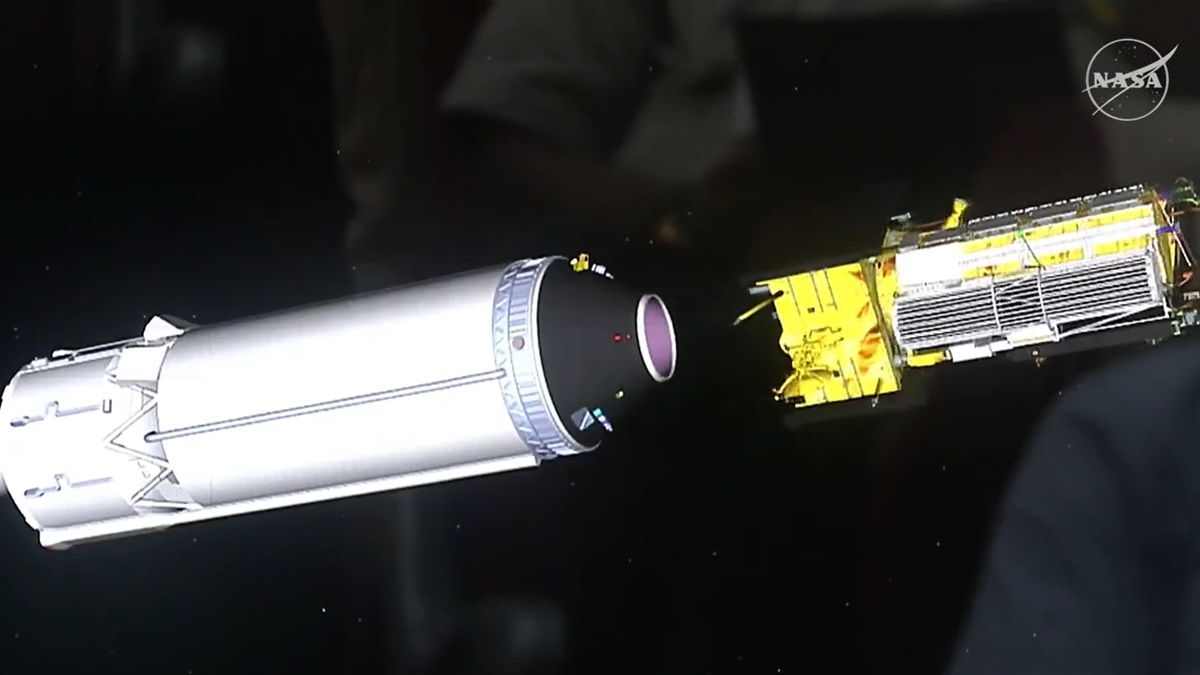
On January 11, 1922, Leonard Thompson, a 14-year-old boy with diabetes, became the first person to receive an injection of insulin. Unfortunately, the initial extract was impure, leading to an allergic reaction and minimal reduction in blood glucose levels. Recognising the need for improvement, Collip refined the purification process, producing a more potent and safer insulin extract. A second injection on January 23, 1922, resulted in a significant drop in blood glucose without adverse effects, marking a milestone for humanity.

In 1923, the Nobel Prize in Physiology or Medicine was awarded to Frederick Banting and John Macleod for discovering insulin, a rare instance of the prize being granted so soon after discovery. Macleod provided Banting with laboratory space and assigned an assistant. However, the award sparked controversy as Banting felt that Best, who had been instrumental in the research, deserved recognition instead of Macleod. Conversely, Macleod believed Collip, who refined the insulin extraction process, deserved credit. In response, Banting shared half of his Nobel Prize money with Best, and Macleod did the same with Collip. Decades later, the Nobel Committee acknowledged the oversight in not including Best, expressing regret for his exclusion from the original award.

Despite these conflicts, Banting, Best, Macleod, and Collip got to share their prize money among themselves. In a remarkable gesture, Banting sold the patent rights to the University of Toronto for just $1, ensuring that insulin could be produced widely and remain affordable.

Recombinant DNA Technology

Collip’s extraction techniques to purify insulin were viable for human use but not scalable for mass production. As diabetes cases increased since then, it became clear that a more efficient method was essential. Enter recombinant DNA technology in the 1980s: scientists developed a method to insert the human insulin gene into Escherichia coli bacteria using plasmids — small DNA molecules capable of self-replication. This approach enabled bacteria to produce large quantities of insulin identical to that made by human bodies. The recombinant process allowed for mass production to keep up with the demand. 

In 1989, Her Majesty Queen Elizabeth kindled the Flame of Hope in Sir Frederick G. Banting Square, London, Ontario, Canada, to honour Dr. Banting’s discovery of insulin. This eternal flame stands as a hope for millions affected by diabetes worldwide, representing the commitment to continue research until a definitive cure is found. 

The flame will remain lit until a cure is discovered. As we consider Banting’s legacy, we realise that insulin is not a cure but a treatment, allowing people with diabetes to live near-normal lives. His spirits might be happier when the flame of hope is extinguished after discovering a cure.

(Dr. C. Aravinda is an academic and public health physician. The views expressed are personal. aravindaaiimsjr10@hotmail.com)

Published – November 15, 2024 10:55 am IST


Source link

Science Tags:discovery of insulin, flame of hope diabetes, insulin research, who invented insulin

Post navigation

Previous Post: England Beat West Indies Again, Wrap Up T20I Series Win With Two Games To Go
Next Post: Cricket Australia Slap 10-Year Ban On Ex-Sri Lanka Player Due To “Inappropriate Behaviour”

Related Posts

  • Green paradox: planting trees will cool a megacity unless it’s dry
    Green paradox: planting trees will cool a megacity unless it’s dry Science
  • Is the bat’s brain wired for collective behaviour?
    Is the bat’s brain wired for collective behaviour? Science
  • Ohsumi, Japan’s first successful satellite
    Ohsumi, Japan’s first successful satellite Science
  • Scientists find elusive Pines’ demon particle after 67 years
    Scientists find elusive Pines’ demon particle after 67 years Science
  • Astronomers find the small, hot helium stars they had been looking for
    Astronomers find the small, hot helium stars they had been looking for Science
  • What is the ‘dinosaur highway’?
    What is the ‘dinosaur highway’? Science

More Related Articles

Budget 2024: Urban, rural land reforms ‘welcome move’ by government Budget 2024: Urban, rural land reforms ‘welcome move’ by government Science
Why is whale vomit worth millions? Why is whale vomit worth millions? Science
How do butterflies taste?  – The Hindu How do butterflies taste?  – The Hindu Science
Queensland positions itself as a strategic partner in India-Australia biotech collaboration at BioAsia 2026 Queensland positions itself as a strategic partner in India-Australia biotech collaboration at BioAsia 2026 Science
The Science Quiz | The quiet awesomeness of tungsten The Science Quiz | The quiet awesomeness of tungsten Science
Astrophysicist Dipankar Banerjee takes charge as director of Indian Institute of Space Science and Technology Astrophysicist Dipankar Banerjee takes charge as director of Indian Institute of Space Science and Technology Science
SiteLock

Archives

  • May 2026
  • April 2026
  • March 2026
  • February 2026
  • January 2026
  • December 2025
  • November 2025
  • October 2025
  • September 2025
  • August 2025
  • July 2025
  • June 2025
  • May 2025
  • April 2025
  • March 2025
  • February 2025
  • January 2025
  • December 2024
  • November 2024
  • October 2024
  • September 2024
  • August 2024
  • July 2024
  • June 2024
  • May 2024
  • April 2024
  • March 2024
  • February 2024
  • January 2024
  • December 2023
  • November 2023
  • October 2023
  • September 2023
  • August 2023
  • July 2023
  • June 2023
  • May 2023
  • April 2023
  • March 2023
  • February 2023
  • January 2023
  • December 2022
  • November 2022
  • October 2022
  • September 2022
  • August 2022
  • July 2022
  • June 2022
  • May 2022

Categories

  • Business
  • Nation
  • Science
  • Sports
  • World

Recent Posts

  • New factional battle lines emerge in Congress hours after nomination of Kerala CM
  • Trump invites Chinese President Xi Jinping for September 24 visit at White House
  • Chennai Metro Rail to procure additional tunnel boring machines due to delays in Phase II network
  • PM Modi’s ‘warning’ on economy | What it means | Talking Politics
  • Trump-Xi meeting was ‘good’, says White House

Recent Comments

  1. JamesHeR on UP Teacher Who Asked Students To Slap Muslim Classmate
  2. RafaelNar on UP Teacher Who Asked Students To Slap Muslim Classmate
  3. CarlosExorb on UP Teacher Who Asked Students To Slap Muslim Classmate
  4. Robertfloup on UP Teacher Who Asked Students To Slap Muslim Classmate
  5. Davidcag on UP Teacher Who Asked Students To Slap Muslim Classmate
  • Rohit Sharma Pays The Price Of Ignoring Virat Kohli’s Suggestion During 2nd New Zealand Test
    Rohit Sharma Pays The Price Of Ignoring Virat Kohli’s Suggestion During 2nd New Zealand Test Sports
  • Access Denied
    Access Denied Nation
  • Access Denied
    Access Denied Nation
  • Over 600 detained in 500 search operations across Kashmir: police
    Over 600 detained in 500 search operations across Kashmir: police Nation
  • Access Denied Sports
  • Access Denied
    Access Denied Nation
  • Trinamool’s ‘BJP States’ Counter On Mob Justice, BJP’s ‘Kangaroo Court’ Jab
    Trinamool’s ‘BJP States’ Counter On Mob Justice, BJP’s ‘Kangaroo Court’ Jab Nation
  • Air India Express Takes Delivery Of First 2 New Boeing 737 MAX-8 Aircraft
    Air India Express Takes Delivery Of First 2 New Boeing 737 MAX-8 Aircraft Nation

Editor-in-Chief:
Mohammad Ariff,
MSW, MAJMC, BSW, DTL, CTS, CNM, CCR, CAL, RSL, ASOC.
editor@artifex.news

Associate Editors:
1. Zenellis R. Tuba,
zenelis@artifex.news
2. Haris Daniyel
daniyel@artifex.news

Photograher:
Rohan Das
rohan@artifex.news

Artifex.News offers Online Paid Internships to college students from India and Abroad. Interns will get a PRESS CARD and other online offers.
Send your CV (Subjectline: Paid Internship) to internship@artifex.news

Links:
Associate Journalism
About Us
Privacy Policy

News Links:
Breaking News
World
Nation
Sports
Business
Entertainment
Lifestyle

Registered Office:
72/A, Elliot Road, Kolkata - 700016
Tel: 033-22277777, 033-22172217
Email: office@artifex.news

Editorial Office / News Desk:
No. 13, Mezzanine Floor, Esplanade Metro Rail Station,
12 J. L. Nehru Road, Kolkata - 700069.
(Entry from Gate No. 5)
Tel: 033-46011099, 033-46046046
Email: editor@artifex.news

Copyright © 2023 Artifex.News Newsportal designed by Artifex Infotech.