




Skip to content
  • Facebook
  • X
  • Linkedin
  • WhatsApp
  • YouTube
  • Associate Journalism
  • About Us
  • Privacy Policy
  • 033-46046046
  • editor@artifex.news
Artifex.News

Artifex.News

Stay Connected. Stay Informed.

  • Breaking News
  • World
  • Nation
  • Sports
  • Business
  • Science
  • Entertainment
  • Lifestyle
  • Toggle search form
  • Ahead of budget, U.S.-India forum urges Nirmala Sitharaman for stable and predictable tax environment
    Ahead of budget, U.S.-India forum urges Nirmala Sitharaman for stable and predictable tax environment Business
  • Mediator Qatar confirms ‘technical meetings’ on Gaza truce ongoing
    Mediator Qatar confirms ‘technical meetings’ on Gaza truce ongoing World
  • IPL-17 | Hot pick Sameer Rizvi starts with a bang, shows he belong to the big stage
    IPL-17 | Hot pick Sameer Rizvi starts with a bang, shows he belong to the big stage Sports
  • U.S. to close its flagship Gaza mission as Donald Trump plan stalls
    U.S. to close its flagship Gaza mission as Donald Trump plan stalls World
  • Access Denied
    Access Denied Nation
  • U.N. to investigate suspected abuses in Afghanistan
    U.N. to investigate suspected abuses in Afghanistan World
  • Nepal flash floods LIVE: At least 933 workers trapped in hydropower projects
    Nepal flash floods LIVE: At least 933 workers trapped in hydropower projects World
  • Trump says Iran war could end in ‘two weeks, maybe three,’ to address U.S.
    Trump says Iran war could end in ‘two weeks, maybe three,’ to address U.S. World
Norway’s proposed moratorium on smart glasses | Explained

Norway’s proposed moratorium on smart glasses | Explained

Posted on October 7, 2026 By admin


European regulators are training their sights on smart glasses, as the wearable device equipped with high-definition cameras, ambient audio recording, and artificial intelligence is becoming common in Europe, blurring the lines between technological innovation and citizens’ privacy. Norway is taking the lead as its government prepares a proposal seeking a temporary ban on smart glasses in select public and sensitive locations. Led by Minister of Digitalisation and Public Governance Torgeir Micaelsen, the initiative pauses device usage in places where individuals expect personal privacy.

What does the proposal seek?

The temporary restrictions target places frequented by children, including schools, playgrounds, and youth clubs, healthcare facilities, fitness centres, locker rooms, public beaches, parks, museums, and concert venues. Crucially, the government is not proposing a ban on sales of the devices or prohibiting their use in private. Instead, the proposal is asking an expert committee to evaluate the technological challenges and formulate lasting legal frameworks. Oslo has already banned smart glasses across municipal schools.

The core argument behind Norway’s intervention centres on the lack of consent in public spaces. Traditional smartphones require users to visibly hold up a device to record video or snap photos, providing a clear signal to surrounding people. In contrast, smart glasses allow wearers to capture high-resolution imagery, record ambient audio, or live-stream video directly at the eye level without offering clear cues to bystanders.

This creates a surveillance system where citizens cannot easily determine whether they are being recorded. Privacy risks are especially acute in sensitive settings like changing rooms and medical clinics, or where unauthorised filming of children raises safety concerns. Furthermore, officials have highlighted risks surrounding real-time facial recognition software. When combined with AI eyewear, facial recognition could enable wearers to instantly identify strangers, access personal data, or facilitate doxxing. Norway’s proposed rules acknowledge that traditional privacy frameworks were not designed for head-worn, ambient recording technology.

Is any other country attempting a similar moratorium?

Norway is not alone in addressing privacy risks surrounding wearable devices, as a patchwork of regulations and venue-specific restrictions are in progress across Europe and North America.

In the Netherlands and Germany, eyewear retailer Hans Anders suspended sales of Meta’s Ray-Ban smart glasses across its Dutch and Belgian stores while awaiting regulatory clarity. Dutch lawmakers have discussed rules that await guidance from the European Data Protection Board (EDPB). Meanwhile, Hamburg is exploring regional restrictions.

The UK Cinema Association established guidelines restricting or prohibiting camera-equipped glasses in movie theatres to combat piracy and protect privacy of viewers. Additionally, courts in England and Wales require visitors to surrender smart glasses at security checkpoints.

In United States, several nightclubs, gyms, and courts in New York have implemented localised bans. California’s governor vetoed a legislation penalising covert recording in private spaces, but debate continues among state policymakers on next steps.

In Bangkok , smart glasses use is restricted in certain pubs and public places.

How are manufacturers of smart glasses adapting to this regulatory landscape?

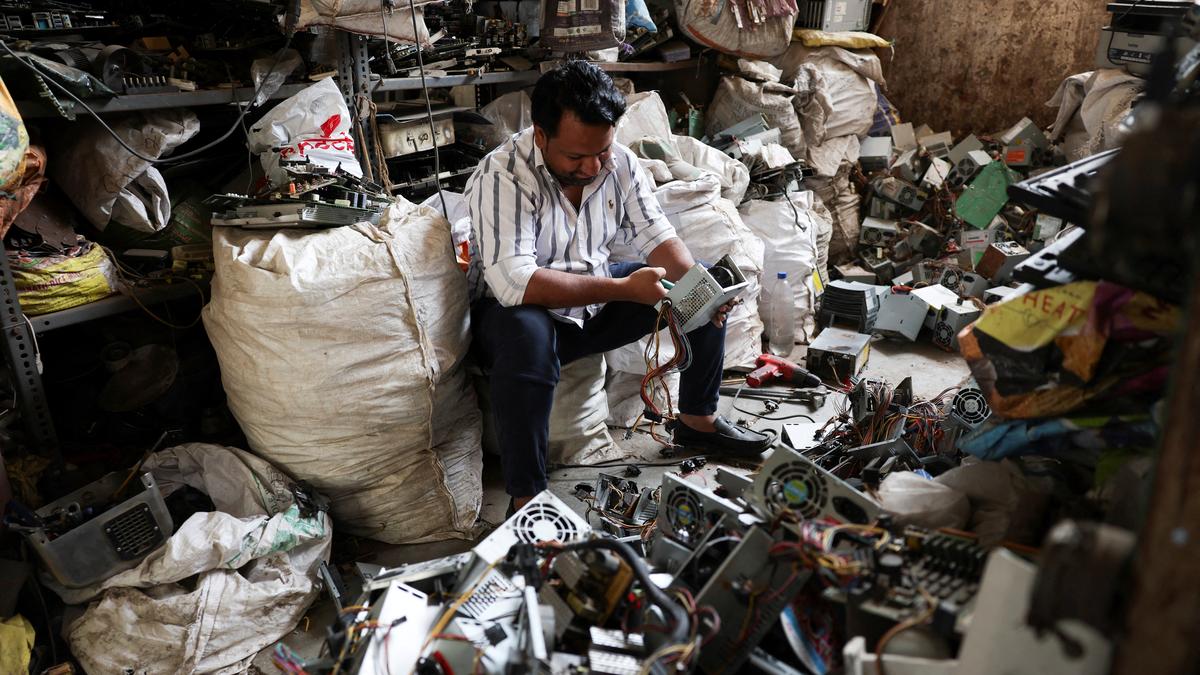
To address privacy concerns, hardware manufacturers have built technical safeguards into current-generation devices. Devices such as Ray-Ban Meta glasses feature a white light-emitting diode (LED) on the frame beside the lens. The LED blinks when capturing photos and stays lit continuously during video recording.

Manufacturers have deployed firmware updates that detect if the LED indicator is covered or obstructed. If light obstruction is detected, the system automatically disables the camera’s functionality. Devices enforce caps on continuous recording duration and play audible shutter sounds when taking photos.

But privacy advocates have said that small LED lights remain difficult to spot in bright sunlit conditions or crowded environments, rendering hardware safeguards insufficient for complete bystander protection.

How will the moratorium impact device sales?

Although Norway’s proposal focuses on restricting device usage rather than banning sales, the commercial impact on manufacturers could be substantial. The primary selling point of smart glasses is their seamless integration into daily public life. Restricting their use in public spaces like parks, beaches, shopping centres, and fitness clubs undermine their utility, rendering a versatile daily use accessory into a device restricted to home use.

In addition, voluntary retail suspensions such as the sales halt by Hans Anders, create immediate revenue hits in the European market. Regulatory uncertainty across different regions introduces consumer hesitation, discouraging buyers who worry about purchasing expensive hardware that might soon face usage restrictions in public.

How might smart glass makers tweak functionality?

To comply with evolving privacy standards and maintain consumer trust, manufacturers may likely re-engineer both hardware and software features by implementing larger, brighter, or colour-shifting LED indicators, alongside louder audio signals that cannot be silenced.

Software updates could incorporate AI-driven face-blurring and audio pitch modification, redacting bystander identities before footage is saved or streamed. Smart glasses could utilise GPS data to automatically disable recording capabilities when entering designated privacy zones like schools, hospitals, or locker rooms. Manufacturers can explicitly block facial recognition software and APIs to prevent real-time profiling in public spaces.

Companies are expanding lines to include audio-focused smart glasses without cameras (such as Ray-Ban Meta Audio), catering to users who want AI features without privacy concerns.

Published – October 07, 2026 11:51 am IST


Source link

Science Tags:European regulators, Meta smart glasses, Norway, privacy, smart glasses

Post navigation

Previous Post: Israelis mark three years since Hamas attack that set off Gaza assault
Next Post: Why are Indian and U.S. leaders cooling off on a trade deal? | Explained

Related Posts

  • The cost of convenience: health hazards as a side effect of using digital tools
    The cost of convenience: health hazards as a side effect of using digital tools Science
  • Why did Anthropic’s Claude Cowork plugins spook markets? | The Hindu Explains
    Why did Anthropic’s Claude Cowork plugins spook markets? | The Hindu Explains Science
  • Mosquitoes began biting hominins 1.8 million years ago, study says
    Mosquitoes began biting hominins 1.8 million years ago, study says Science
  • Quiz | Easy like Sunday morning: Space and beyond
    Quiz | Easy like Sunday morning: Space and beyond Science
  • SpaceX successfully launches 10th Starship test flight
    SpaceX successfully launches 10th Starship test flight Science
  • Sci-Five | The Hindu Science Quiz: On weird animals 
    Sci-Five | The Hindu Science Quiz: On weird animals  Science

More Related Articles

Scientists untangle mystery about the universe’s earliest galaxies Scientists untangle mystery about the universe’s earliest galaxies Science
Why is Maharashtra experiencing an earthquake swarm? | Explained Why is Maharashtra experiencing an earthquake swarm? | Explained Science
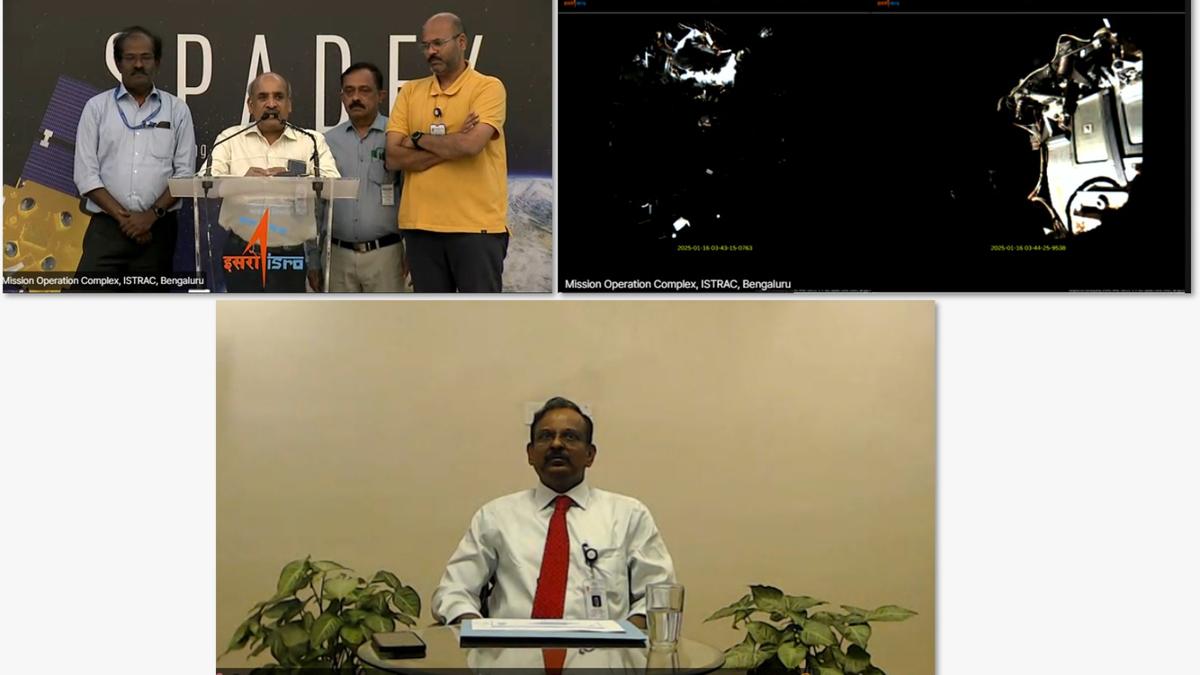
ISRO successfully executes SpaDeX docking experiment; India joins elite club of nations ISRO successfully executes SpaDeX docking experiment; India joins elite club of nations Science
New species of legless amphibian discovered from Maharashrtra New species of legless amphibian discovered from Maharashrtra Science
New research shows most space rocks crashing into Earth come from a single source New research shows most space rocks crashing into Earth come from a single source Science
What is the legal framework for space missions like the Chandrayaan 3 and Aditya L-1? | Explained What is the legal framework for space missions like the Chandrayaan 3 and Aditya L-1? | Explained Science
SiteLock

Archives

  • October 2026
  • September 2026
  • August 2026
  • July 2026
  • June 2026
  • May 2026
  • April 2026
  • March 2026
  • February 2026
  • January 2026
  • December 2025
  • November 2025
  • October 2025
  • September 2025
  • August 2025
  • July 2025
  • June 2025
  • May 2025
  • April 2025
  • March 2025
  • February 2025
  • January 2025
  • December 2024
  • November 2024
  • October 2024
  • September 2024
  • August 2024
  • July 2024
  • June 2024
  • May 2024
  • April 2024
  • March 2024
  • February 2024
  • January 2024
  • December 2023
  • November 2023
  • October 2023
  • September 2023
  • August 2023
  • July 2023
  • June 2023
  • May 2023
  • April 2023
  • March 2023
  • February 2023
  • January 2023
  • December 2022
  • November 2022
  • October 2022
  • September 2022
  • August 2022
  • July 2022
  • June 2022
  • May 2022

Categories

  • Business
  • Nation
  • Science
  • Sports
  • World

Recent Posts

  • Coal stocks at thermal plants hold above 18 MT as supply deficit narrows
  • Coal stocks at thermal plants hold above 18 MT as supply deficit narrows
  • Caste discrimination during SC man’s burial: Protest in Erode seeks action against officials
  • World’s top climate body deadlocked over inclusivity concerns
  • Nobel Prize in economics 2026: Robert E. Hall, Michael Woodford win the award

Recent Comments

  1. Michaeldoown on UP Teacher Who Asked Students To Slap Muslim Classmate
  2. Roberthek on UP Teacher Who Asked Students To Slap Muslim Classmate
  3. Wesleysiz on UP Teacher Who Asked Students To Slap Muslim Classmate
  4. HectorTOk on UP Teacher Who Asked Students To Slap Muslim Classmate
  5. StevenVoips on UP Teacher Who Asked Students To Slap Muslim Classmate
  • Access Denied
    Access Denied Nation
  • UN Security Council To Vote On Israel-Gaza Conflict Today
    UN Security Council To Vote On Israel-Gaza Conflict Today World
  • Bhaichung Bhutia Trails By 4,000 Votes, Heads To 6th Defeat In 10 Years
    Bhaichung Bhutia Trails By 4,000 Votes, Heads To 6th Defeat In 10 Years Nation
  • Biden Says “I Don’t Know” If Election Will Be Peaceful
    Biden Says “I Don’t Know” If Election Will Be Peaceful World
  • Israel has an iron grip over Gaza and West Bank’s economy | Data
    Israel has an iron grip over Gaza and West Bank’s economy | Data World
  • Access Denied World
  • Access Denied
    Access Denied Nation
  • Merger with Reliance would boost company’s profits and reduce risk in India: Disney CEO
    Merger with Reliance would boost company’s profits and reduce risk in India: Disney CEO Business

Editor-in-Chief:
Mohammad Ariff,
MSW, MAJMC, BSW, DTL, CTS, CNM, CCR, CAL, RSL, ASOC.
editor@artifex.news

Associate Editors:
1. Zenellis R. Tuba,
zenelis@artifex.news
2. Haris Daniyel
daniyel@artifex.news

Photograher:
Rohan Das
rohan@artifex.news

Artifex.News offers Online Paid Internships to college students from India and Abroad. Interns will get a PRESS CARD and other online offers.
Send your CV (Subjectline: Paid Internship) to internship@artifex.news

Links:
Associate Journalism
About Us
Privacy Policy

News Links:
Breaking News
World
Nation
Sports
Business
Entertainment
Lifestyle

Registered Office:
72/A, Elliot Road, Kolkata - 700016
Tel: 033-22277777, 033-22172217
Email: office@artifex.news

Editorial Office / News Desk:
No. 13, Mezzanine Floor, Esplanade Metro Rail Station,
12 J. L. Nehru Road, Kolkata - 700069.
(Entry from Gate No. 5)
Tel: 033-46011099, 033-46046046
Email: editor@artifex.news

Copyright © 2023 Artifex.News Newsportal designed by Artifex Infotech.