





Skip to content
  • Facebook
  • X
  • Linkedin
  • WhatsApp
  • YouTube
  • Associate Journalism
  • About Us
  • Privacy Policy
  • 033-46046046
  • editor@artifex.news
Artifex.News

Artifex.News

Stay Connected. Stay Informed.

  • Breaking News
  • World
  • Nation
  • Sports
  • Business
  • Science
  • Entertainment
  • Lifestyle
  • Toggle search form
  • PM Modi Wishes Israeli Counterpart Netanyahu On Jewish New Year
    PM Modi Wishes Israeli Counterpart Netanyahu On Jewish New Year World
  • China’s ‘Artificial Sun’ Sets New Record, Sustains Plasma For 1,000 Seconds
    China’s ‘Artificial Sun’ Sets New Record, Sustains Plasma For 1,000 Seconds World
  • Union Budget 2025: This is a Budget for poll-bound Bihar, other States ignored: CPI(M)
    Union Budget 2025: This is a Budget for poll-bound Bihar, other States ignored: CPI(M) Business
  • Trump names Andrew Ferguson as head of Federal Trade Commission to replace Lina Khan
    Trump names Andrew Ferguson as head of Federal Trade Commission to replace Lina Khan World
  • Rupee rises 6 paise to close at 83.90 against U.S. dollar
    Rupee rises 6 paise to close at 83.90 against U.S. dollar Business
  • ECB CEO Writes To BCCI Secretary Jay Shah To Propose Owning National Disability Teams
    ECB CEO Writes To BCCI Secretary Jay Shah To Propose Owning National Disability Teams Sports
  • Access Denied World
  • India Abstains From Voting On UN Resolution On Islamophobia. Here’s Why
    India Abstains From Voting On UN Resolution On Islamophobia. Here’s Why Nation
Team led by PRL Ahmedabad finds ozone on Jupiter’s moon Callisto

Team led by PRL Ahmedabad finds ozone on Jupiter’s moon Callisto

Posted on April 2, 2024 By admin


An international team of scientists, including from India, has discovered strong evidence indicating the presence of ozone on Jupiter’s moon Callisto, shedding light on the complex chemical processes taking place on icy celestial bodies in the Solar System.

The study was published in the March 2024 issue of the journal Icarus. It outlines the researchers’ investigation into the chemical evolution of “SO2 astrochemical ice”, which is ice primarily composed of sulphur dioxide (SO2) in the presence of ultraviolet irradiation. 

This shed light on the chemical processes and composition on the surface of Callisto. By analysing the data of the UV absorption spectra of the irradiated ice samples, the team was able to identify a distinct signature indicating the formation of ozone.

They corroborated their findings by comparing them with data from the Hubble Space Telescope to understand Callisto’s environment and the potential habitability of icy moons in the Solar System.

The importance of ozone

The earth has life not just because it found a way to originate here: it also had the resources to thrive, evolve, and diversify. These resources include sunlight containing the ‘right’ frequencies of radiation, water, a stable atmosphere providing a stable supply of the requisite gases and at the right temperature, and various compounds required for the life-forms’ biochemical processes.

This said, not all emissions from the Sun are good for organisms on the earth. Ultraviolet radiation in particular is harmful to many species (but also useful to some others). Two of its components, called ultraviolet-B and ultraviolet-C, of wavelengths 290-320 nanometres and 100-280 nanometres respectively, can damage DNA, trigger mutations, and increase the risk of skin cancer and cataracts in humans.

Ultraviolet light has also been known to inhibit plant growth and have detrimental effects on various organisms. This is why the ozone layer is a crucial part of the earth’s atmosphere: it completely absorbs ultraviolet-B and ultraviolet-C radiation.

The ozone molecule is composed of three oxygen atoms bonded together. The ozone layer, found in the lower part of the earth’s stratosphere, around 15-35 km above ground, serves as a shield. Without the ozone layer, ultraviolet radiation levels would be much higher on the planet’s surface, rendering it uninhabitable for many species and disrupting entire ecosystems.

Scientists are currently studying various celestial bodies in the Solar System that show signs of ozone, suggesting the existence of stable atmospheric conditions and, by extension, the possibility of their being able to host life.

Callisto and its unique environment

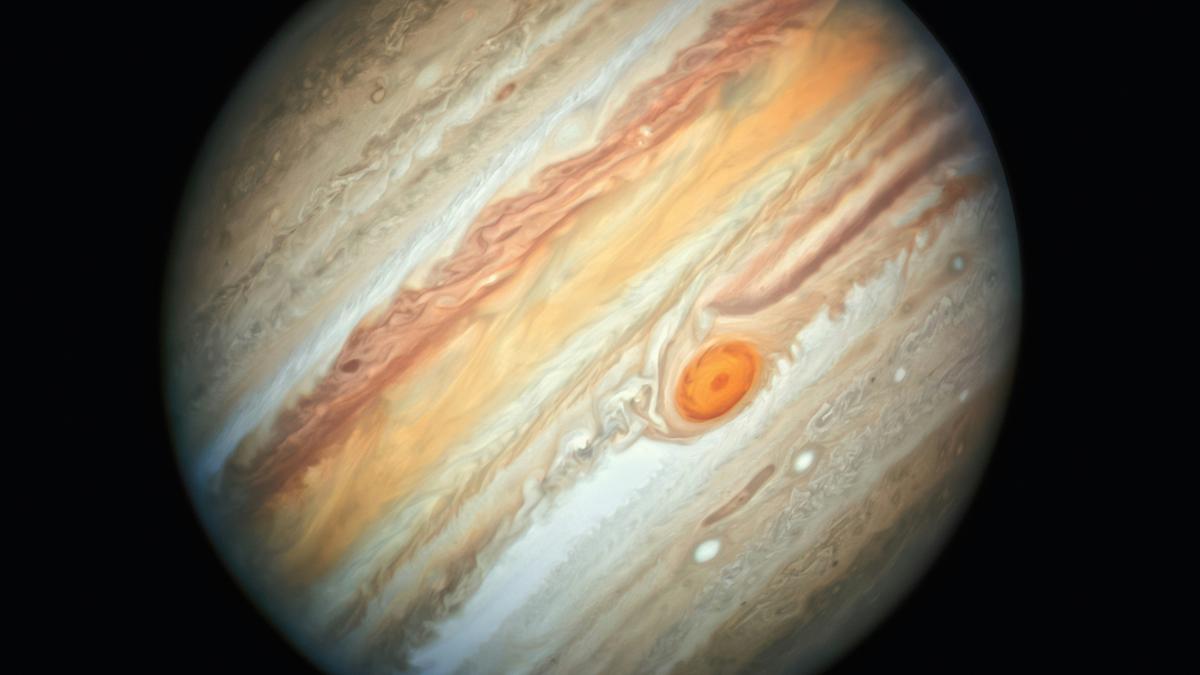
After Saturn, Jupiter has the most moons in the Solar System. Callisto is one of Jupiter’s largest moons and the third-largest moon in the Solar System after Ganymede and Titan.

But more than its impressive size, Callisto is distinguished by its composition. Despite being as big as the planet Mercury, it has less than half as much mass. Callisto is primarily composed of water ice, rocky materials, sulphur dioxide, and some organic compounds. These substances make the moon a potential candidate for supporting life in the Solar System beyond the earth.

Callisto’s surface is heavily cratered, indicating a long history of being struck by asteroids and comets. (It may have the oldest surface in the Solar System, in fact.) It also lacks the extensive seismic activity seen on some of Jupiter’s other moons, such as Io and Europa.

The presence of relatively few geological features suggests Callisto’s surface is geologically inactive. In other words, its surface has likely been relatively stable for a long time. This stability could be vital to preserve any subsurface ocean or potential habitats beneath the icy crust.

The detection of sulphur dioxide on Callisto’s surface has encouraged this team of scientists to conduct spectroscopic observations to gain a better understanding of the moon’s surface composition and formation.

Recreating conditions on the earth

Scientists led by R. Ramachandran, of the Atomic, Molecular, and Optical Physics Division, Physical Research Laboratory, Ahmedabad, set out to investigate the chemical evolution of sulphur dioxide ice under irradiation, leading to the formation of ozone.

Scientists have previously demonstrated this process in laboratory experiments. The current team’s aim was to recreate the conditions required for this process on the surface of Callisto when sunlight hits its surface. To do this, the researchers used vacuum ultraviolet photons, which mimic the solar radiation that reaches the moon’s surface.

The experiments were conducted at the National Synchrotron Radiation Research Centre (NSRRC) in Taiwan, which provided access to high-energy radiation sources required to recreate the radiation coming from the Sun.

To model the surface of Callisto, the researchers placed a substrate of lithium fluoride in a chamber with very low pressure. This environment recreated conditions similar to those found in outer space. The sulphur dioxide ice samples were deposited onto the substrate, setting the stage for the final step: observing the absorption spectrum.

The absorption spectrum is the unique fingerprint of a substance. It shows the wavelengths of light it absorbs, providing insights into its composition and properties.

The team carefully controlled the temperature of the sulphur dioxide ice samples throughout the experiment.

The samples were initially kept at a low temperature of around 9 K (-264.15 degrees C), in line with the conditions on Callisto’s surface. Then they slowly warmed it up to 120 K to resemble different environmental scenarios.

In this process, they irradiated the ice with vacuum-ultraviolet photons (of wavelength 137.7 nanometres) and recorded its ultraviolet absorption spectrum during and after the irradiation using a photomultiplier tube detector. This device measures low levels of electromagnetic radiation by converting photons into electrical signals.

Ozone and potential habitability

The ultraviolet absorption spectrum revealed the formation of ozone after the sulphur dioxide ice samples were irradiated. This was evidenced by a distinct signature in the absorption spectrum.

The researchers also compared their experimental data with data collected by the Hubble Space Telescope, which had also suggested the presence of sulphur dioxide and ozone on the surface of Callisto in 1997.

The discovery of ozone on Callisto suggests the presence of oxygen, which in turn is a fundamental ingredient required for the formation of complex molecules required for life (as we know it), such as amino acids, raising questions about the moon’s habitability. This extends to other icy moons in our Solar System, potentially informing our understanding of habitable conditions beyond Earth.

In addition to the ozone, the researchers observed an unidentified band in the absorption spectrum – similar to that observed on Ganymede in 1996 – hinting at a common molecular source in their surface compositions or chemical processes.

This finding could provide valuable insights into geological and atmospheric processes on these moons. In particular, it could help us to understand the precise mechanisms that led to the formation of Jupiter and its moons, which remain topics of active research.

Tejasri Gururaj is a freelance science writer and journalist.



Source link

Science Tags:alien life form, alien life on Titan, Jupiter moon Callisto, outer Solar System, PRL Ahmedabad

Post navigation

Previous Post: Hezbollah Says Israel Will Pay For Strike On Iran Embassy In Syrian
Next Post: “Happy To Be In BJP,” Says Maneka Gandhi

Related Posts

  • The animal that senses electrical boxes, tolerates snow, and has ‘mating trains’
    The animal that senses electrical boxes, tolerates snow, and has ‘mating trains’ Science
  • Why Greenland? Remote but resource-rich island occupies a key position in a warming world
    Why Greenland? Remote but resource-rich island occupies a key position in a warming world Science
  • A (very) basic guide to artificial intelligence
    A (very) basic guide to artificial intelligence Science
  • Science for all what is the connection between extreme heat and increased sugar consumption
    Science for all what is the connection between extreme heat and increased sugar consumption Science
  • Bottleneck in human evolution explained using a novel genomic analysis technique
    Bottleneck in human evolution explained using a novel genomic analysis technique Science
  • Did animals develop complex brains to deal with challenging habitats?
    Did animals develop complex brains to deal with challenging habitats? Science

More Related Articles

Air-drop test success a big step in Gaganyaan mission: ISRO scientist Air-drop test success a big step in Gaganyaan mission: ISRO scientist Science
What is a megamaser? What is a megamaser? Science
SpaDeX docking: ISRO arrests drift between satellites SpaDeX docking: ISRO arrests drift between satellites Science
Heart failure, not stroke is the common complication of atrial fibrillation Heart failure, not stroke is the common complication of atrial fibrillation Science
Astrophysicist Dipankar Banerjee takes charge as director of Indian Institute of Space Science and Technology Astrophysicist Dipankar Banerjee takes charge as director of Indian Institute of Space Science and Technology Science
ISRO tests thrust chamber for LOX-Methane Engine ISRO tests thrust chamber for LOX-Methane Engine Science
SiteLock

Archives

  • May 2026
  • April 2026
  • March 2026
  • February 2026
  • January 2026
  • December 2025
  • November 2025
  • October 2025
  • September 2025
  • August 2025
  • July 2025
  • June 2025
  • May 2025
  • April 2025
  • March 2025
  • February 2025
  • January 2025
  • December 2024
  • November 2024
  • October 2024
  • September 2024
  • August 2024
  • July 2024
  • June 2024
  • May 2024
  • April 2024
  • March 2024
  • February 2024
  • January 2024
  • December 2023
  • November 2023
  • October 2023
  • September 2023
  • August 2023
  • July 2023
  • June 2023
  • May 2023
  • April 2023
  • March 2023
  • February 2023
  • January 2023
  • December 2022
  • November 2022
  • October 2022
  • September 2022
  • August 2022
  • July 2022
  • June 2022
  • May 2022

Categories

  • Business
  • Nation
  • Science
  • Sports
  • World

Recent Posts

  • Nicobarese oppose proposal for three wildlife sanctuaries
  • Visakhapatnam Collector calls for inter-departmental synergy to boost investments
  • Kohli’s masterful knock powers Royal Challengers to the top
  • Senior IPS officer Asra Garg posted IGP Intelligence
  • Vijay Narayan earns rare distinction of being Advocate General under two different governments

Recent Comments

  1. StevenLek on UP Teacher Who Asked Students To Slap Muslim Classmate
  2. Leonardren on UP Teacher Who Asked Students To Slap Muslim Classmate
  3. NathanQuins on UP Teacher Who Asked Students To Slap Muslim Classmate
  4. Davidgof on UP Teacher Who Asked Students To Slap Muslim Classmate
  5. NathanJobre on UP Teacher Who Asked Students To Slap Muslim Classmate
  • Hindustan Aeronautics Limited (HAL) Hits All-Time High, Stock Turns Ex-Dividend
    Hindustan Aeronautics Limited (HAL) Hits All-Time High, Stock Turns Ex-Dividend Business
  • Chennai summer turns monsoon-like as rains cool city; low-pressure area likely to form on May 11
    Chennai summer turns monsoon-like as rains cool city; low-pressure area likely to form on May 11 Nation
  • Karnataka Decides To Implement Recommendations Of 7th Pay Commission
    Karnataka Decides To Implement Recommendations Of 7th Pay Commission Nation
  • Access Denied
    Access Denied Nation
  • Sensex climbs 383 points in early trade
    Sensex climbs 383 points in early trade Business
  • New Kate Middleton Video, Photos Spark Conspiracy Theories, Again
    New Kate Middleton Video, Photos Spark Conspiracy Theories, Again World
  • New Zealand’s Performance Analyst Saurabh Walkar living something he never dreamt of
    New Zealand’s Performance Analyst Saurabh Walkar living something he never dreamt of Sports
  • 10 Things To Look Forward To In 2025
    10 Things To Look Forward To In 2025 World

Editor-in-Chief:
Mohammad Ariff,
MSW, MAJMC, BSW, DTL, CTS, CNM, CCR, CAL, RSL, ASOC.
editor@artifex.news

Associate Editors:
1. Zenellis R. Tuba,
zenelis@artifex.news
2. Haris Daniyel
daniyel@artifex.news

Photograher:
Rohan Das
rohan@artifex.news

Artifex.News offers Online Paid Internships to college students from India and Abroad. Interns will get a PRESS CARD and other online offers.
Send your CV (Subjectline: Paid Internship) to internship@artifex.news

Links:
Associate Journalism
About Us
Privacy Policy

News Links:
Breaking News
World
Nation
Sports
Business
Entertainment
Lifestyle

Registered Office:
72/A, Elliot Road, Kolkata - 700016
Tel: 033-22277777, 033-22172217
Email: office@artifex.news

Editorial Office / News Desk:
No. 13, Mezzanine Floor, Esplanade Metro Rail Station,
12 J. L. Nehru Road, Kolkata - 700069.
(Entry from Gate No. 5)
Tel: 033-46011099, 033-46046046
Email: editor@artifex.news

Copyright © 2023 Artifex.News Newsportal designed by Artifex Infotech.