



Skip to content
  • Facebook
  • X
  • Linkedin
  • WhatsApp
  • YouTube
  • Associate Journalism
  • About Us
  • Privacy Policy
  • 033-46046046
  • editor@artifex.news
Artifex.News

Artifex.News

Stay Connected. Stay Informed.

  • Breaking News
  • World
  • Nation
  • Sports
  • Business
  • Science
  • Entertainment
  • Lifestyle
  • Toggle search form
  • Access Denied
    Access Denied Nation
  • Access Denied Sports
  • Mumbai Voter Count Crosses 1-Crore Mark
    Mumbai Voter Count Crosses 1-Crore Mark Nation
  • Mexico will send more water to U.S. but not immediately: Mexican President
    Mexico will send more water to U.S. but not immediately: Mexican President World
  • PM Modi Says Opposition Plays Communal, Casteist Politics In Garb Of Secularism
    PM Modi Says Opposition Plays Communal, Casteist Politics In Garb Of Secularism Nation
  • Lorenzo Musetti Stuns Top Seed Alexander Zverev With ‘Pretty Big Win’ In Vienna
    Lorenzo Musetti Stuns Top Seed Alexander Zverev With ‘Pretty Big Win’ In Vienna Sports
  • I&B Ministry’s Live Events Development Cell to support expansion of ‘concert economy’
    I&B Ministry’s Live Events Development Cell to support expansion of ‘concert economy’ Business
  • Rare Black-Necked Cranes Sighted In Ladakh
    Rare Black-Necked Cranes Sighted In Ladakh Nation
Why only female Darwin’s bark spiders weave the toughest webs

Why only female Darwin’s bark spiders weave the toughest webs

Posted on January 21, 2026 By admin


One of the strongest materials on the earth isn’t made in a factory or synthesised in a laboratory but spun by a creature barely two inches long.

The Darwin’s bark spider (Caerostris darwini), found in the forests of Madagascar, weaves silk that outperforms steel and most human-made fibres in both strength and toughness.

Larger webs, stronger threads

Its silk has a tensile strength of about 1.6 gigapascals, around 3x higher than that of iron, making it the toughest biological material ever tested. But as scientists are now finding, this extraordinary strength isn’t something every individual produces.

Across spider species, body size is often linked to silk quality. Larger spiders generally produce tougher silks to capture larger or faster prey. In orb-weaving spiders such as the Darwin’s bark spider, larger bodies over evolutionary time have accompanied larger webs and stronger silk threads.

Scientists from institutions in China, Madagascar, Slovenia, and the US studied bark spiders to understand the conditions in which they produce the tough silk. Their findings were recently published in Integrative Zoology.

Three hypotheses

The study focused on two bark spider species in Madagascar: Caerostris darwini, which spins the largest orb webs ever recorded, and its close relative Caerostris kuntneri.

Egg sacs from both species were collected from Analamazaotra National Park and the spiders were raised in laboratory conditions. This allowed the scientists to compare silk produced by males and females at different life stages while keeping environmental factors such as diet and humidity constant.

The team tested three competing hypotheses. The first proposed that all individuals — males and females, juveniles and adults — produce silk of similar toughness. The second suggested only females produce tougher silk, regardless of size. The third said only large individuals, especially large adult females, produce exceptionally tough silk as and when their body size and ecological role demand it.

Dragline silk

The size difference between male and female bark spiders is striking. In C. darwini, adult females are about 3x larger than males. In Caerostris kuntneri, they can be up to 5x larger, suggesting that females are under much stronger evolutionary pressure to invest in tougher silk.
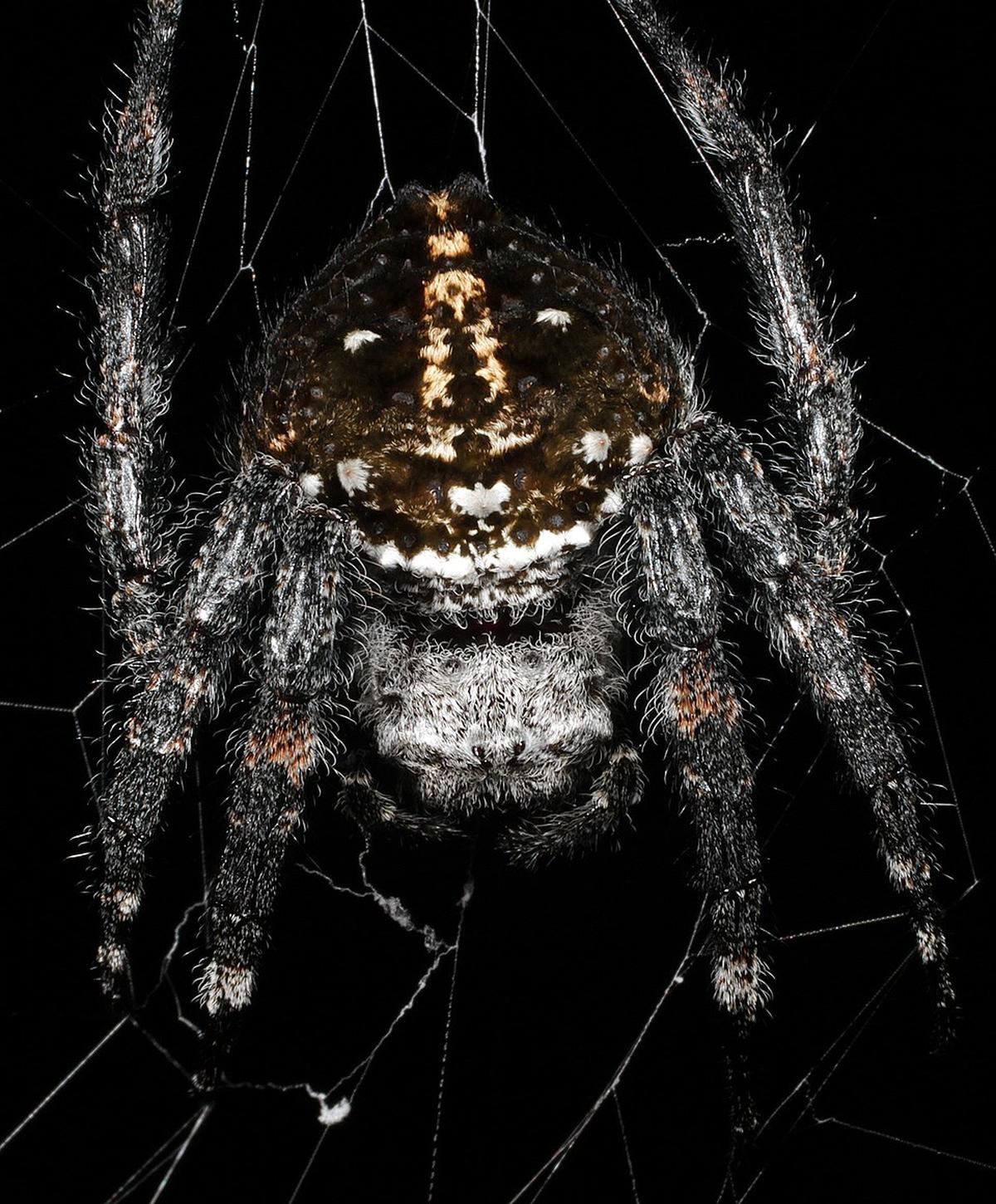
A Darwin’s bark spider in Madagascar, 2010.

A Darwin’s bark spider in Madagascar, 2010.
| Photo Credit:
Matjazgregoric (CC BY-SA)

To measure silk quality, the researchers collected dragline silk, also known as major ampullate silk, from spiders of both sexes and at different life stages in each species. Each strand was carefully mounted on a cardboard frame and stretched to test its strength, stiffness, and ability to absorb energy before breaking.

Dragline silk is one of the most important types of spider silk. Nearly invisible to the naked eye, it forms the structural backbone of an orb web and serves as safety lines, anchor threads, and emergency escape ropes for the spiders.

Producing this silk, however, is metabolically expensive. The energy required to synthesise the amino acids that make up dragline silk varies; some such as proline, which plays an important role in making silk elastic, are particularly expensive.

Darwin’s bark spider silk contains unusually high levels of this protein, explaining its exceptional mechanical properties but in turn increasing its metabolic cost.

Quality and architecture

The study’s results were unequivocal: only large adult females produced exceptionally tough silk. Their silk was also stiffer and more capable of absorbing far more mechanical strain before breaking than the silk produced by males or juveniles. The silk from adult males and juvenile males and females was mechanically indistinguishable.

The study also found that adult females produce high-performance silk only when it’s biologically necessary. As the females grow larger and begin building large webs capable of intercepting fast-moving prey, they ‘turn on’ on the physiological machinery required to manufacture the superior silk.

The study also uncovered a close link between silk quality and the architecture of the web. Adult female Darwin’s bark spiders build more sparse webs, with wider gaps between threads, using less silk per unit area. Despite being economical, these webs are highly effective because each thread can absorb (relatively enormous forces. Juveniles and males on the other hand spin more dense webs made of metabolically cheaper and weaker silk.

Curiously, not all the properties of the silk varied with size and sex. Regardless of age or sex, all individuals produced silk of comparably high stretchability, or how much the silk could be stretched before it broke. It suggested that the elasticity of the silk of spiders of the genus Carostris is a genetically conserved feature — while extreme toughness is tuned according to body size and ecological demand.

Time versus energy

At the molecular level, differences in silk properties arise from changes in protein composition, how the proteins are arranged and cross-linked, and even the shape and length of the ducts that spin silk inside the spider’s body. C. darwini has an unusually long and complex spinning duct that scientists believe could be allowing silk proteins to produce exceptionally strong silk fibre.

The trade-off however is time and energy. Female bark spiders produce less silk overall, take longer to rebuild their webs, and invest more in quality over quantity.

“We think that very tough silk evolved because it was needed to structurally support the huge webs built by Caerostris spiders, rather than as an adaptation to hunt any specific prey,” Matjaž Gregorič, the lead author of the study and a researcher at the Jovan Hadži Institute of Biology, Slovenia, said.

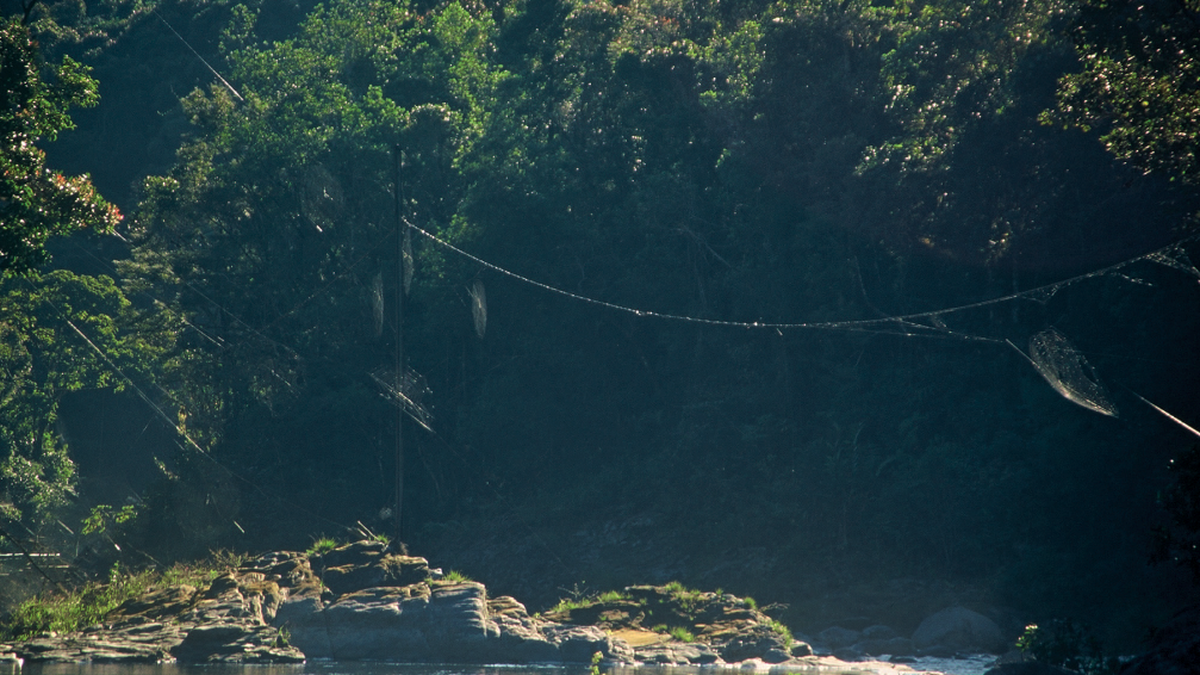
The strategy pays off in the spider’s distinctive habitat. C. darwini builds enormous webs, up to 25 m wide,  suspended over rivers and lakes. These aerial traps allow the spider. to capture swarms of flies and beetles that few other spiders can.

Silk production in Darwin’s bark spiders has evolved to ensure energy is invested only where it can yield a greater survival advantage. The extraordinary properties of its silk thus emerge from a complex interplay between body size, sex, ecology, and behaviour.

Ipsita Herlekar is an independent science writer.

Published – January 21, 2026 05:30 am IST


Source link

Science

Post navigation

Previous Post: Access Denied
Next Post: Access Denied

Related Posts

  • Could ‘marine cloud brightening’ reduce coral bleaching on the Great Barrier Reef?
    Could ‘marine cloud brightening’ reduce coral bleaching on the Great Barrier Reef? Science
  • Science for all newsletter 2024 Nobel Prize winners in science
    Science for all newsletter 2024 Nobel Prize winners in science Science
  • Indirect evidence builds, yet the ‘dark’ universe remains murky
    Indirect evidence builds, yet the ‘dark’ universe remains murky Science
  • From lapis-laden trade routes to mass armies: the changing value of blue
    From lapis-laden trade routes to mass armies: the changing value of blue Science
  • Complex PTSD: When trauma persists…
    Complex PTSD: When trauma persists… Science
  • The afterglow of an explosive collision between giant planets may have been detected in a far-off star system
    The afterglow of an explosive collision between giant planets may have been detected in a far-off star system Science

More Related Articles

How does using the AC affect a car’s mileage while driving? How does using the AC affect a car’s mileage while driving? Science
Columbus was a Sephardic Jew from Western Europe, study finds Columbus was a Sephardic Jew from Western Europe, study finds Science
The mysterious fate of the Neanderthal Y chromosome The mysterious fate of the Neanderthal Y chromosome Science
IIT Guwahati researchers turn tea factory waste to pharma products IIT Guwahati researchers turn tea factory waste to pharma products Science
ISRO’s high-resolution imaging satellite Cartosat-2 bids adieu ISRO’s high-resolution imaging satellite Cartosat-2 bids adieu Science
Mice study claims to have found long COVID’s ‘real’ perpetrator Mice study claims to have found long COVID’s ‘real’ perpetrator Science
SiteLock

Archives

  • May 2026
  • April 2026
  • March 2026
  • February 2026
  • January 2026
  • December 2025
  • November 2025
  • October 2025
  • September 2025
  • August 2025
  • July 2025
  • June 2025
  • May 2025
  • April 2025
  • March 2025
  • February 2025
  • January 2025
  • December 2024
  • November 2024
  • October 2024
  • September 2024
  • August 2024
  • July 2024
  • June 2024
  • May 2024
  • April 2024
  • March 2024
  • February 2024
  • January 2024
  • December 2023
  • November 2023
  • October 2023
  • September 2023
  • August 2023
  • July 2023
  • June 2023
  • May 2023
  • April 2023
  • March 2023
  • February 2023
  • January 2023
  • December 2022
  • November 2022
  • October 2022
  • September 2022
  • August 2022
  • July 2022
  • June 2022
  • May 2022

Categories

  • Business
  • Nation
  • Science
  • Sports
  • World

Recent Posts

  • BEST conductor dies in accident involving four buses in Mumbai
  • Nayar reckons KKR got a par total, rues missed chances
  • Pope Leo decries European military spending as ‘betrayal’ of diplomacy
  • Scent Of Rain, Shutterfly, Stud Poker and Starzella please
  • New factional battle lines emerge in Congress hours after nomination of Kerala CM

Recent Comments

  1. JamesHeR on UP Teacher Who Asked Students To Slap Muslim Classmate
  2. RafaelNar on UP Teacher Who Asked Students To Slap Muslim Classmate
  3. CarlosExorb on UP Teacher Who Asked Students To Slap Muslim Classmate
  4. Robertfloup on UP Teacher Who Asked Students To Slap Muslim Classmate
  5. Davidcag on UP Teacher Who Asked Students To Slap Muslim Classmate
  • Iran rules out U.S. demand to end uranium enrichment during Oman talks, diplomat says
    Iran rules out U.S. demand to end uranium enrichment during Oman talks, diplomat says World
  • Jasprit Bumrah Becomes Leading Wicket-Taker In World Test Championship 2023-25 Cycle
    Jasprit Bumrah Becomes Leading Wicket-Taker In World Test Championship 2023-25 Cycle Sports
  • Jani Master, Jailed Last Month In Sexual Assault Case Amid Tollywood MeToo Movement, Gets Bail
    Jani Master, Jailed Last Month In Sexual Assault Case Amid Tollywood MeToo Movement, Gets Bail Nation
  • Access Denied
    Access Denied Nation
  • Access Denied
    Access Denied Nation
  • Access Denied World
  • Google employees arrested and placed on leave after sit-in protests against Israel contract
    Google employees arrested and placed on leave after sit-in protests against Israel contract World
  • Maharashtra Woman Kills Child, Self After Husband Refuses To Take Her Out
    Maharashtra Woman Kills Child, Self After Husband Refuses To Take Her Out Nation

Editor-in-Chief:
Mohammad Ariff,
MSW, MAJMC, BSW, DTL, CTS, CNM, CCR, CAL, RSL, ASOC.
editor@artifex.news

Associate Editors:
1. Zenellis R. Tuba,
zenelis@artifex.news
2. Haris Daniyel
daniyel@artifex.news

Photograher:
Rohan Das
rohan@artifex.news

Artifex.News offers Online Paid Internships to college students from India and Abroad. Interns will get a PRESS CARD and other online offers.
Send your CV (Subjectline: Paid Internship) to internship@artifex.news

Links:
Associate Journalism
About Us
Privacy Policy

News Links:
Breaking News
World
Nation
Sports
Business
Entertainment
Lifestyle

Registered Office:
72/A, Elliot Road, Kolkata - 700016
Tel: 033-22277777, 033-22172217
Email: office@artifex.news

Editorial Office / News Desk:
No. 13, Mezzanine Floor, Esplanade Metro Rail Station,
12 J. L. Nehru Road, Kolkata - 700069.
(Entry from Gate No. 5)
Tel: 033-46011099, 033-46046046
Email: editor@artifex.news

Copyright © 2023 Artifex.News Newsportal designed by Artifex Infotech.