

Skip to content
  • Facebook
  • X
  • Linkedin
  • WhatsApp
  • YouTube
  • Associate Journalism
  • About Us
  • Privacy Policy
  • 033-46046046
  • editor@artifex.news
Artifex.News

Artifex.News

Stay Connected. Stay Informed.

  • Breaking News
  • World
  • Nation
  • Sports
  • Business
  • Science
  • Entertainment
  • Lifestyle
  • Toggle search form
  • “Delhi Capitals Not Able To Back Players”: Former Coach Takes Dig At IPL Team
    “Delhi Capitals Not Able To Back Players”: Former Coach Takes Dig At IPL Team Sports
  • Mumbai, Services – The Hindu
    Mumbai, Services – The Hindu Sports
  • Deposed Bangladesh PM Hasina booked over death of garment worker, faces 194 cases since resignation
    Deposed Bangladesh PM Hasina booked over death of garment worker, faces 194 cases since resignation World
  • Access Denied Sports
  • 2024 U.S. Presidential election | Donald Trumps warns of ‘bloodbath’ if he is not elected
    2024 U.S. Presidential election | Donald Trumps warns of ‘bloodbath’ if he is not elected World
  • Access Denied
    Access Denied Nation
  • Budget 2023 | Railways gets outlay of ₹2.4 lakh crore
    Budget 2023 | Railways gets outlay of ₹2.4 lakh crore Business
  • Access Denied Sports
The mysterious fate of the Neanderthal Y chromosome

The mysterious fate of the Neanderthal Y chromosome

Posted on June 21, 2024 By admin


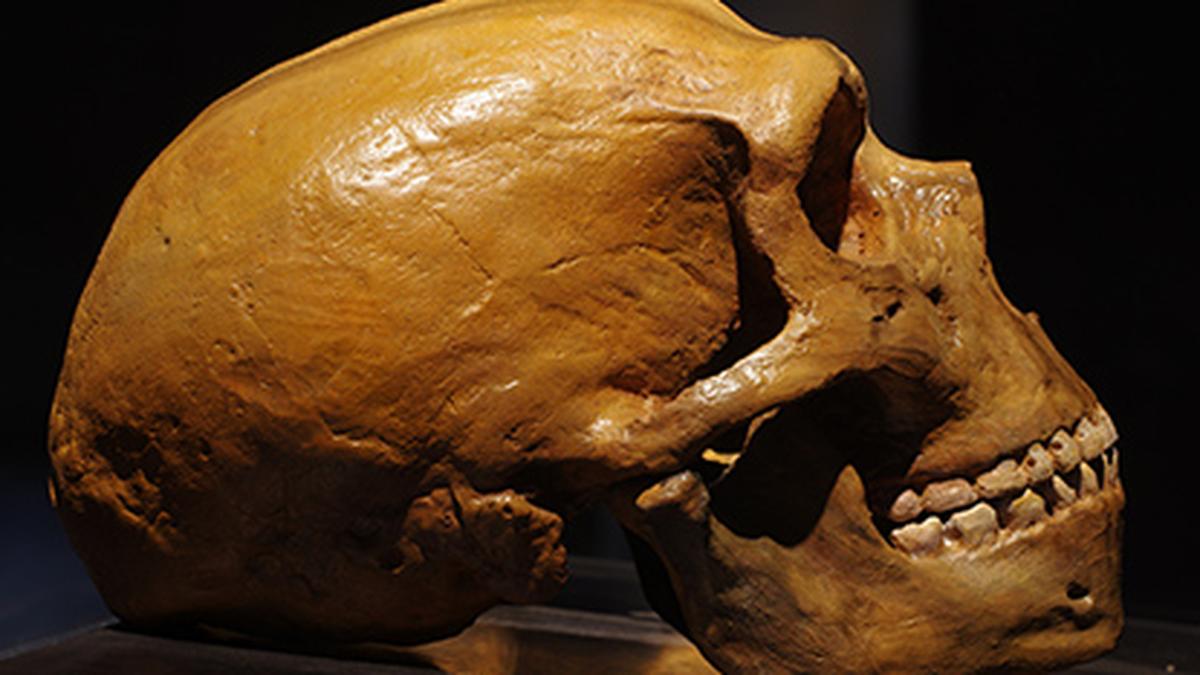
Neanderthals, the closest cousins of modern humans, lived in parts of Europe and Asia until their extinction some 30,000 years ago.

Genetic studies are revealing ever more about the links between modern humans and these long-gone relatives – most recently that a rush of interbreeding between our species occurred in a relatively short burst of time around 47,000 years ago. But one mystery still remains.

The Homo sapiens genome today contains a little bit of Neanderthal DNA. These genetic traces come from almost every part of the Neanderthal genome – except the Y sex chromosome, which is responsible for making males.

So what happened to the Neanderthal Y chromosome? It could have been lost by accident, or because of mating patterns or inferior function. However, the answer may lie in a century-old theory about the health of interspecies hybrids.

Neanderthal sex, genes and chromosomes

Neanderthals and modern humans went their separate ways somewhere between 550,000 and 765,000 years ago in Africa, when Neanderthals wandered off into Europe but our ancestors stayed put. They would not meet again until H. sapiens migrated into Europe and Asia between 40,000 and 50,000 years ago.

Scientists have recovered copies of the full male and female Neanderthal genomes, thanks to DNA from well-preserved bones and teeth of Neanderthal individuals in Europe and Asia. Unsurprisingly, the Neanderthal genome was very similar to ours, containing about 20,000 genes bundled into 23 chromosomes.

Like us, they had two copies of 22 of those chromosomes (one from each parent), and also a pair of sex chromosomes. Females had two X chromosomes, while males had one X and one Y.

Y chromosomes are hard to sequence because they contain a lot of repetitive “junk” DNA, so the Neanderthal Y genome has only been partially sequenced. However, the large chunk that has been sequenced contains versions of several of the same genes that are in the modern human Y chromosome.

In modern humans, a Y chromosome gene called SRY kickstarts the process of an XY embryo developing into a male. The SRY gene plays this role in all apes, so we assume it did for Neanderthals as well – even though we haven’t found the Neanderthal SRY gene itself.

Interspecies mating left us with Neanderthal genes

There are lots of little giveaways that mark a DNA sequence as coming from a Neanderthal or a H. sapiens. So we can look for bits of Neanderthal DNA sequence in the genomes of modern humans.

The genomes of all human lineages originating in Europe contain about 2% Neanderthal DNA sequences. Lineages from Asia and India contain even more, while lineages restricted to Africa have none. Some ancient Homo sapiens genomes contained even more – 6% or so – so it looks like the Neanderthal genes are gradually fading out.

Most of this Neanderthal DNA arrived in a 7,000-year period about 47,000 years ago, after modern humans came out of Africa into Europe, and before Neanderthals became extinct about 30,000 years ago. During this time there must have been many pairings between Neanderthals and humans.

At least half of the whole Neanderthal genome can be pieced together from fragments found in the genomes of different contemporary humans. We have our Neanderthal ancestors to thank for traits including red hair, arthritis and resistance to some diseases.

There is one glaring exception. No contemporary humans have been found to harbour any part of the Neanderthal Y chromosome.

What happened to the Neanderthal Y chromosome?

Was it just bad luck that the Neanderthal Y chromosome got lost? Was it not very good at its job of making males? Did Neanderthal women, but not men, indulge in interspecies mating? Or was there something toxic about the Neanderthal Y so it wouldn’t work with human genes?

A Y chromosome comes to the end of the line if its bearers have no sons, so it may simply have been lost over thousands of generations.

Or maybe the Neanderthal Y was never present in interspecies matings. Perhaps it was always modern human men who fell in love with (or traded, seized or raped) Neanderthal women? Sons born to these women would all have the H. sapiens form of the Y chromosome. However, it’s hard to reconcile this idea with the finding that there is no trace of Neanderthal mitochondrial DNA (which is limited to the female line) in modern humans.

Or perhaps the Neanderthal Y chromosome was just not as good at is job as its H. sapiens rival. Neanderthal populations were always small, so harmful mutations would have been more likely to accumulate.

We know that Y chromosomes with a particularly useful gene (for instance for more or better or faster sperm) rapidly replace other Y chromosomes in a population (called the hitchhiker effect).

We also know the Y chromosome is degrading overall in humans. It is even possible that SRY was lost from the Neanderthal Y, and that Neanderthals were in the disruptive process of evolving a new sex-determining gene, like some rodents have.

Was the Neanderthal Y chromosome toxic in hybrid boys?

Another possibility is that the Neanderthal Y chromosome won’t work with genes on other chromosomes from modern humans.

The missing Neanderthal Y may then be explained by “Haldane’s rule”. In the 1920s, British biologist J.B.S. Haldane noted that, in hybrids between species, if one sex is infertile, rare or unhealthy, it is always the sex with unlike sex chromosomes.

In mammals and other animals where females have XX chromosomes and males have XY, it is disproportionately male hybrids that are unfit or infertile. In birds, butterflies and other animals where males have ZZ chromosomes and females have ZW, it is the females.

Many crosses between different species of mice show this pattern, as do feline crosses. For example, in lion–tiger crosses (ligers and tigons), females are fertile but males are sterile.

We still lack a good explanation of Haldane’s rule. It is one of the enduring mysteries of classic genetics.

But it seems reasonable that the Y chromosome from one species has evolved to work with genes from the other chromosomes of its own species, and might not work with genes from a related species that contain even small changes.

We know that genes on the Y evolve much faster than genes on other chromosomes, and several have functions in making sperm, which may explain the infertility of male hybrids.

So this might explain why the Neanderthal Y got lost. It also raises the possibility that it was the fault of the Y chromosome, in imposing a reproductive barrier, that Neanderthals and humans became separate species in the first place.

This article is republished from The Conversation under a Creative Commons license. Read the original article.


Source link

Science Tags:Neanderthals, Neanderthals DNA, Neanderthals y chromosome, science, science news

Post navigation

Previous Post: Climate change has made the Hajj pilgrimage more risky
Next Post: India criticises Canadian parliament observing ‘one minute silence’ in memory of Nijjar

Related Posts

  • What sleep deprivation does to your brain and body
    What sleep deprivation does to your brain and body Science
  • As El Niño starts flip to La Niña, Latin America asked to be on alert
    As El Niño starts flip to La Niña, Latin America asked to be on alert Science
  • The Science Quiz | Words that begin ‘cell-’
    The Science Quiz | Words that begin ‘cell-’ Science
  • IIT Bombay researchers develop GPS-free control scheme for autonomous drone swarms
    IIT Bombay researchers develop GPS-free control scheme for autonomous drone swarms Science
  • In an electric vehicle, what is regenerative braking? | Explained
    In an electric vehicle, what is regenerative braking? | Explained Science
  • Tropical rain destabilises oceans only when it falls lightly: study
    Tropical rain destabilises oceans only when it falls lightly: study Science

More Related Articles

Is it okay for an Indian scientist to have taken Jeffrey Epstein’s money? Is it okay for an Indian scientist to have taken Jeffrey Epstein’s money? Science
3 craters discovered on Mars by scientists of Physical Research Laboratory 3 craters discovered on Mars by scientists of Physical Research Laboratory Science
Glitch in protein synthesis could affect tumour growth: IISc study Glitch in protein synthesis could affect tumour growth: IISc study Science
The Science Quiz | Indelible ink The Science Quiz | Indelible ink Science
Nobel Prize in Physics 2024 awarded to John J. Hopfield, Geoffrey E. Hinton Nobel Prize in Physics 2024 awarded to John J. Hopfield, Geoffrey E. Hinton Science
Lost in space? You might need just two stars to find your way Lost in space? You might need just two stars to find your way Science
SiteLock

Archives

  • May 2026
  • April 2026
  • March 2026
  • February 2026
  • January 2026
  • December 2025
  • November 2025
  • October 2025
  • September 2025
  • August 2025
  • July 2025
  • June 2025
  • May 2025
  • April 2025
  • March 2025
  • February 2025
  • January 2025
  • December 2024
  • November 2024
  • October 2024
  • September 2024
  • August 2024
  • July 2024
  • June 2024
  • May 2024
  • April 2024
  • March 2024
  • February 2024
  • January 2024
  • December 2023
  • November 2023
  • October 2023
  • September 2023
  • August 2023
  • July 2023
  • June 2023
  • May 2023
  • April 2023
  • March 2023
  • February 2023
  • January 2023
  • December 2022
  • November 2022
  • October 2022
  • September 2022
  • August 2022
  • July 2022
  • June 2022
  • May 2022

Categories

  • Business
  • Nation
  • Science
  • Sports
  • World

Recent Posts

  • China, U.S. should be ‘partners not rivals’, says Xi Jinping after meeting Donald Trump
  • Iran working on Hormuz ‘protocol’ to cover ‘costs’, says Deputy Foreign Minister Gharibabadi
  • Zydus Lifesciences arm to acquire U.S. oncology firm Assertio for $166 million
  • Israel-Iran war LIVE: Iran working on Hormuz ‘protocol’ to cover ‘costs’, says Dy FM Gharibabadi
  • Russia to fulfil all agreements on energy supply to India: FM Lavrov

Recent Comments

  1. OrvalMaync on UP Teacher Who Asked Students To Slap Muslim Classmate
  2. Jeffreyroure on UP Teacher Who Asked Students To Slap Muslim Classmate
  3. Stevemonge on UP Teacher Who Asked Students To Slap Muslim Classmate
  4. RichardClage on UP Teacher Who Asked Students To Slap Muslim Classmate
  5. StevenLek on UP Teacher Who Asked Students To Slap Muslim Classmate
  • What role does Arctic sea ice play in Indian monsoon?
    What role does Arctic sea ice play in Indian monsoon? Science
  • 5 Killed In Rain-Related Incidents In Goa In 2 Days, Orange Alert Sounded
    5 Killed In Rain-Related Incidents In Goa In 2 Days, Orange Alert Sounded Nation
  • P Chidambaram On “One Nation, One Election”
    P Chidambaram On “One Nation, One Election” Nation
  • Access Denied Sports
  • Sensex, Nifty decline in early trade; HDFC Bank drags
    Sensex, Nifty decline in early trade; HDFC Bank drags Business
  • Aviation experts say Russia’s air defense fire likely caused Azerbaijan plane crash as nation mourns
    Aviation experts say Russia’s air defense fire likely caused Azerbaijan plane crash as nation mourns World
  • Access Denied World
  • Access Denied Sports

Editor-in-Chief:
Mohammad Ariff,
MSW, MAJMC, BSW, DTL, CTS, CNM, CCR, CAL, RSL, ASOC.
editor@artifex.news

Associate Editors:
1. Zenellis R. Tuba,
zenelis@artifex.news
2. Haris Daniyel
daniyel@artifex.news

Photograher:
Rohan Das
rohan@artifex.news

Artifex.News offers Online Paid Internships to college students from India and Abroad. Interns will get a PRESS CARD and other online offers.
Send your CV (Subjectline: Paid Internship) to internship@artifex.news

Links:
Associate Journalism
About Us
Privacy Policy

News Links:
Breaking News
World
Nation
Sports
Business
Entertainment
Lifestyle

Registered Office:
72/A, Elliot Road, Kolkata - 700016
Tel: 033-22277777, 033-22172217
Email: office@artifex.news

Editorial Office / News Desk:
No. 13, Mezzanine Floor, Esplanade Metro Rail Station,
12 J. L. Nehru Road, Kolkata - 700069.
(Entry from Gate No. 5)
Tel: 033-46011099, 033-46046046
Email: editor@artifex.news

Copyright © 2023 Artifex.News Newsportal designed by Artifex Infotech.