
Skip to content
  • Facebook
  • X
  • Linkedin
  • WhatsApp
  • YouTube
  • Associate Journalism
  • About Us
  • Privacy Policy
  • 033-46046046
  • editor@artifex.news
Artifex.News

Artifex.News

Stay Connected. Stay Informed.

  • Breaking News
  • World
  • Nation
  • Sports
  • Business
  • Science
  • Entertainment
  • Lifestyle
  • Toggle search form
  • Trump claims Iran war will end right after U.S. midterm elections
    Trump claims Iran war will end right after U.S. midterm elections World
  • Access Denied Sports
  • Three policemen killed, 34 injured in two terrorist attacks in NW Pakistan
    Three policemen killed, 34 injured in two terrorist attacks in NW Pakistan World
  • Access Denied Sports
  • Syrian troops in Aleppo battle shock offensive by rebels
    Syrian troops in Aleppo battle shock offensive by rebels World
  • Rupee gains 28 paise to close at 94.94 against U.S. dollar
    Rupee gains 28 paise to close at 94.94 against U.S. dollar Business
  • Access Denied Sports
  • Access Denied Business
Climate change has made the Hajj pilgrimage more risky

Climate change has made the Hajj pilgrimage more risky

Posted on June 21, 2024 By admin


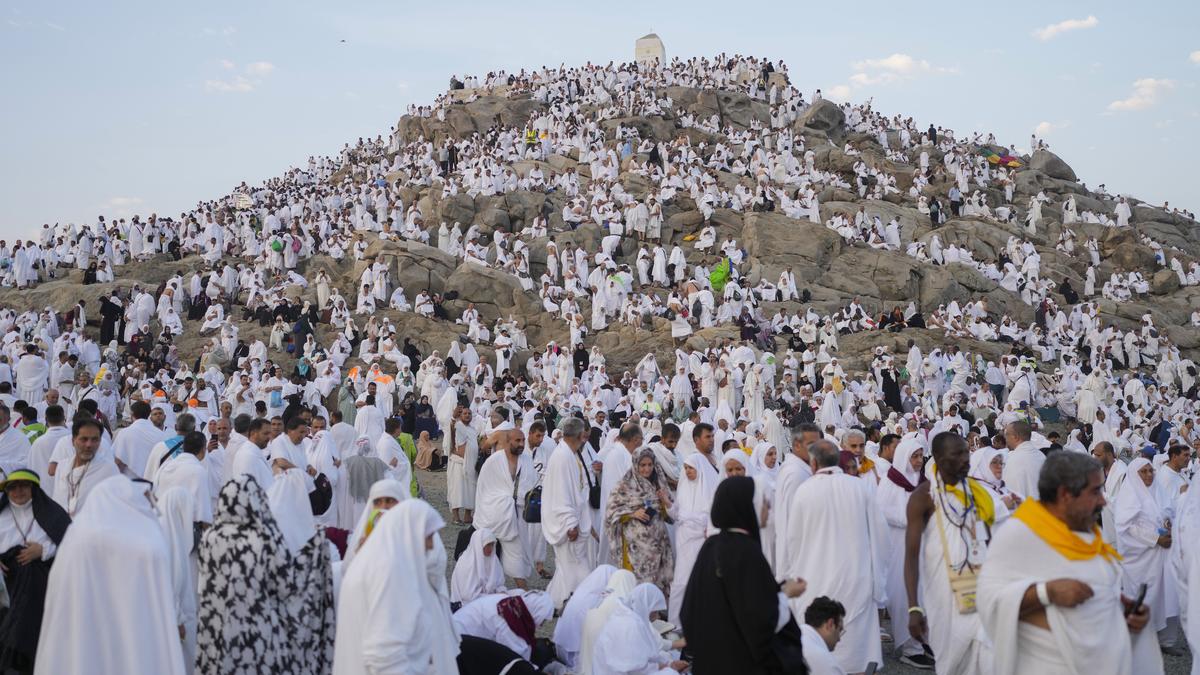
Muslim pilgrims gather at the top of the rocky hill known as the Mountain of Mercy, on the Plain of Arafat, during the annual haj pilgrimage, near the holy city of Mecca, Saudi Arabia, Saturday, June 15, 2024.
| Photo Credit: AP

Each year, millions of Muslims from across the world embark on the haj pilgrimage to Mecca in Saudi Arabia. The mass migration is unparalleled in scale, and pilgrims face numerous health hazards.

Mecca is considered the holiest city for Muslims. And haj is one of the Five Pillars of Islam, making it a mandatory religious duty for Muslims to perform at least once in their lifetime if they are physically and financially capable.

The 2024 haj pilgrimage has been overshadowed by disaster/tragedy, with the death of at least 900 pilgrims, mostly due to heat exhaustion and related complications.

This isn’t the first deadly disaster during haj

One of the most devastating incidents occurred in 2015 during the ritual of “Rami al-Jamarat” in Mina, near Mecca. This ritual involves pilgrims throwing stones at pillars symbolising the devil. On that day, overcrowding and the movement of large groups of pilgrims in opposite directions led to a deadly crowd crush. More than 2,400 pilgrims lost their lives, making it one of the deadliest disasters in the history of haj or any mass gathering.

Another mass casualty event occurred in 1990, in the Al-Ma’aisem pedestrian tunnel near Mecca, which led to the holy sites. A combination of ventilation failure and an enormous influx of pilgrims caused a suffocating crush inside the tunnel; 1,426 pilgrims died.

There have also been other incidents during the haj pilgrimage over the years. In 1994, a stampede near the Jamarat Bridge resulted in the deaths of around 270 pilgrims. The 1998 haj saw 118 pilgrims killed in another stampede.

Over the past half-century, more than 9,000 people have died in mass religious gatherings, with more than 5,000 of these occurring during the haj in Saudi Arabia. India follows with at least 2,200 deaths across nearly 40 tragic events. These two countries are hotspots for such tragedies.

Why is the haj pilgrimage so risky?

With millions of pilgrims converging in a confined area, the potential for overcrowding and crowd-crush accidents is high. This situation is worsened by the high emotion and passion associated with the pilgrimage. Pilgrims perform rituals with intense devotion and enthusiasm, which can sometimes lead to overexertion.

Another factor is the age of the pilgrims. Many are elderly, having saved for years to afford this spiritual journey. Their advanced age makes them particularly vulnerable to the harsh conditions and physical demands of the pilgrimage. The intense heat, prolonged periods of walking, and sheer physical strain of performing the rituals can exacerbate existing health issues and lead to new complications.

The extreme congestion of people also amplifies health risks, particularly from infectious diseases. Communicable diseases such as SARS, avian influenza and meningococcal disease have posed significant threats during haj in the past.

High temperatures make mass gatherings riskier

A study documenting deaths and injuries at mass gatherings up to 2019 shows that, while the 1980s saw most fatalities at sporting events, such events are now rare, while fatalities during religious pilgrimages, particularly in India and Saudi Arabia, are becoming more common.

While most haj fatalities have been due to crowd crushes and stampedes, a new threat has emerged: extreme climate. Saudi Arabia’s climate can be brutal. During this year’s pilgrimage, temperatures soared to 50°C.

Saudi Arabia is warming at a rate 50% higher than the rest of the Northern Hemisphere. The decade from 2010 to 2019 was the warmest on record, with more frequent and severe heatwaves. This rising temperature, combined with higher humidity, makes conditions increasingly unbearable without artificial cooling.

The timing of the haj pilgrimage, dictated by the lunar Islamic calendar, means it shifts approximately 10 to 11 days earlier each year in the Gregorian calendar. This means haj can occur in different seasons over a 33-year cycle. Currently, haj is being held during the summer months, leading to extreme heat risks.

Saudi Arabia has also experienced an increase in extreme rainfall events in recent years, particularly towards the end of summer and into the fall. These torrential downpours and thunderstorms have caused significant flooding in regions such as Mecca and Jeddah.

As climate patterns continue to evolve, the occurrence of such rainfall could align with the haj season, creating additional hazards for pilgrims.

What can be done to mitigate the risks?

Unlike concerts or sporting events, the haj pilgrimage cannot be rescheduled or relocated. Being outdoors is an integral part of haj.

It’s crucial for pilgrims to perform the haj rituals correctly for their pilgrimage to be accepted. According to Islamic teachings, the haj must be conducted with precise adherence to its rituals and timings. Any deviation or omission can render the pilgrimage invalid.

The Saudi Ministry of Health has implemented various measures, including encouraging vaccinations, health checks and educational campaigns urging pilgrims to stay hydrated, use umbrellas and avoid prolonged sun exposure.

The ministry deployed thousands of paramedics and set up field hospitals to manage the crisis. Cooling measures such as misting systems and portable water stations were used.

Yet the extreme heat proved overwhelming, indicating more needs to be done. Educational campaigns can do more to raise awareness among (especially non-local) pilgrims and health-care workers about heat risks and preventive measures.

The introduction of new technologies such as smart bracelets for monitoring pilgrims’ health could further enhance medical responses.

This article is republished from The Conversation under a Creative Commons license. Read the original article.



Source link

World Tags:Climate change, Hajj pilgrimage, heatstrokes on Hajj pilgrimage, science news

Post navigation

Previous Post: Climate change has made the Hajj pilgrimage more risky
Next Post: The mysterious fate of the Neanderthal Y chromosome

Related Posts

  • Chinese bridge collapse kills at least 12 construction workers
    Chinese bridge collapse kills at least 12 construction workers World
  • Access Denied World
  • U.N. General Assembly demands ceasefire in Gaza, backs UNRWA
    U.N. General Assembly demands ceasefire in Gaza, backs UNRWA World
  • Pope Leo decries Sudan violence, urges dialogue and relief effort
    Pope Leo decries Sudan violence, urges dialogue and relief effort World
  • BRICS members agree on ‘independent’ State of Palestine
    BRICS members agree on ‘independent’ State of Palestine World
  • Tribal party of Bangladesh hill tracts blames security forces, settlers for recent riots
    Tribal party of Bangladesh hill tracts blames security forces, settlers for recent riots World

More Related Articles

China flash flood death toll rises to 25: state media China flash flood death toll rises to 25: state media World
Netanyahu threatens to end Gaza ceasefire if Hamas does not return hostages Netanyahu threatens to end Gaza ceasefire if Hamas does not return hostages World
Canada deepens Arctic defense ties with Nordics after Trump threats Canada deepens Arctic defense ties with Nordics after Trump threats World
UAE Releases New AI Model To Compete With Big Tech UAE Releases New AI Model To Compete With Big Tech World
Access Denied World
Bangladesh Law Adviser slams PM Modi’s Vijay Diwas post, says India was merely an ally in 1971 victory Bangladesh Law Adviser slams PM Modi’s Vijay Diwas post, says India was merely an ally in 1971 victory World
SiteLock

Archives

  • September 2026
  • August 2026
  • July 2026
  • June 2026
  • May 2026
  • April 2026
  • March 2026
  • February 2026
  • January 2026
  • December 2025
  • November 2025
  • October 2025
  • September 2025
  • August 2025
  • July 2025
  • June 2025
  • May 2025
  • April 2025
  • March 2025
  • February 2025
  • January 2025
  • December 2024
  • November 2024
  • October 2024
  • September 2024
  • August 2024
  • July 2024
  • June 2024
  • May 2024
  • April 2024
  • March 2024
  • February 2024
  • January 2024
  • December 2023
  • November 2023
  • October 2023
  • September 2023
  • August 2023
  • July 2023
  • June 2023
  • May 2023
  • April 2023
  • March 2023
  • February 2023
  • January 2023
  • December 2022
  • November 2022
  • October 2022
  • September 2022
  • August 2022
  • July 2022
  • June 2022
  • May 2022

Categories

  • Business
  • Nation
  • Science
  • Sports
  • World

Recent Posts

  • Arsenal thrashed by Brighton, sorry Spurs lose again
  • Shamli Police book six over alleged ‘misleading’ social media posts on Ayush Malik High Court proceedings
  • What is the India-Pakistan conflict at sea about? | Explained
  • Why has U.S. deployed ‘space weapons’? |Explained
  • How will the U.S.’s Sanctioning Act affect India? | Explained

Recent Comments

  1. AlvinNet on UP Teacher Who Asked Students To Slap Muslim Classmate
  2. AlvinNet on UP Teacher Who Asked Students To Slap Muslim Classmate
  3. Jamesslits on UP Teacher Who Asked Students To Slap Muslim Classmate
  4. MichaelClear on UP Teacher Who Asked Students To Slap Muslim Classmate
  5. Jamesslits on UP Teacher Who Asked Students To Slap Muslim Classmate
  • First in six decades, India-born Nikhil Chaudhary added to Australia’s T20 squad
    First in six decades, India-born Nikhil Chaudhary added to Australia’s T20 squad Sports
  • Access Denied World
  • Access Denied World
  • Russian forces thwart attempted cross-border assault from Ukraine, official says
    Russian forces thwart attempted cross-border assault from Ukraine, official says World
  • Access Denied Sports
  • Trump says U.S. oil pledged 0 billion for Venezuela ahead of White House meeting
    Trump says U.S. oil pledged $100 billion for Venezuela ahead of White House meeting World
  • 7 Indians Injured In Christmas Market Attack In Germany: Sources
    7 Indians Injured In Christmas Market Attack In Germany: Sources Nation
  • Teaching doctors seek AIIMS pay scales, allowances, separate transfer policy
    Teaching doctors seek AIIMS pay scales, allowances, separate transfer policy Nation

Editor-in-Chief:
Mohammad Ariff,
MSW, MAJMC, BSW, DTL, CTS, CNM, CCR, CAL, RSL, ASOC.
editor@artifex.news

Associate Editors:
1. Zenellis R. Tuba,
zenelis@artifex.news
2. Haris Daniyel
daniyel@artifex.news

Photograher:
Rohan Das
rohan@artifex.news

Artifex.News offers Online Paid Internships to college students from India and Abroad. Interns will get a PRESS CARD and other online offers.
Send your CV (Subjectline: Paid Internship) to internship@artifex.news

Links:
Associate Journalism
About Us
Privacy Policy

News Links:
Breaking News
World
Nation
Sports
Business
Entertainment
Lifestyle

Registered Office:
72/A, Elliot Road, Kolkata - 700016
Tel: 033-22277777, 033-22172217
Email: office@artifex.news

Editorial Office / News Desk:
No. 13, Mezzanine Floor, Esplanade Metro Rail Station,
12 J. L. Nehru Road, Kolkata - 700069.
(Entry from Gate No. 5)
Tel: 033-46011099, 033-46046046
Email: editor@artifex.news

Copyright © 2023 Artifex.News Newsportal designed by Artifex Infotech.