


“Objects, irrespective of which period they belong to, carry layers of history… are almost archaeological in nature,” says Jahnavi Phalkey, the Founding Director of Science Gallery Bengaluru.
Jahnavi Phalkey
| Photo Credit:
Special Arrangement
Objects embody multiple things — the ambitions of the individual who created or used it, the institution that it might belong to and the idea that it reinforces, validates or manifests. “Like this device,” she says, holding up her mobile phone. “If you unpack your mobile phone, you can talk about everything from quantum theories to mining, to social imaginaries, to addiction, to mental health, to a lot more, right?” she says.
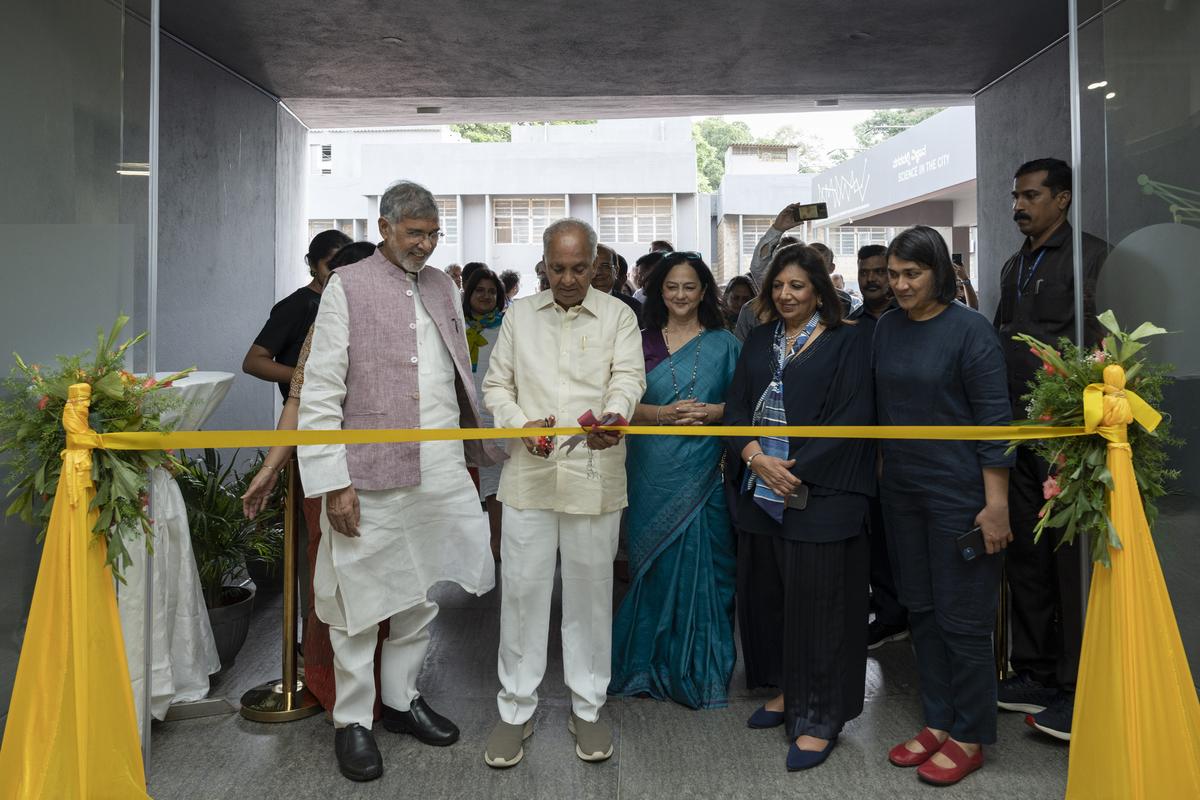
At the launch of Sci560.
| Photo Credit:
SPECIAL ARRANGEMENT
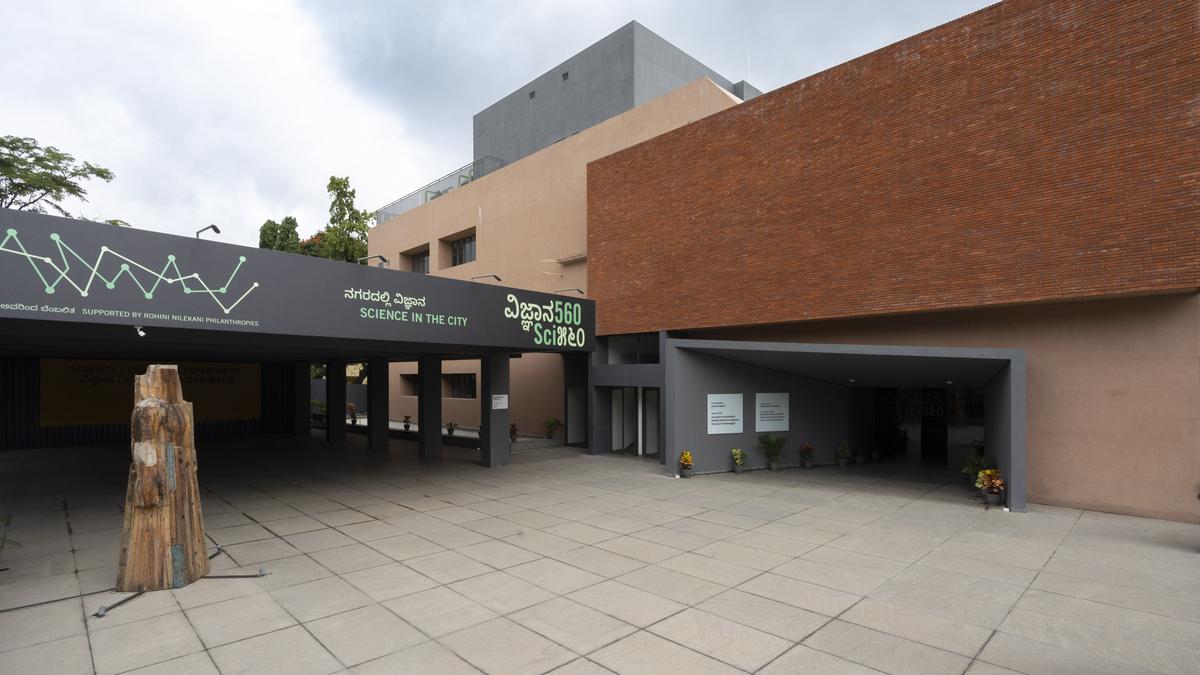
Sci560, an ongoing exhibition at the Science Gallery Bengaluru, which opened last month, attempts to do precisely this: offering insights into the city’s rich science history through a collection of 32 objects that collectively tell the story of a city shaped by its spirit of innovation, scientific temper and inherent cosmopolitanism.
This exhibition, which the Rohini Nilekani Foundation has sponsored, is the Science Gallery’s seventh, and as with all others, seeks to engage young people in the city through a series of exhibits, talks, activities and the gallery’s mediator initiative. As a note about the exhibition issued by the Science Gallery states, Sci560 “aims to cultivate a strong connection between the citizens of Bengaluru and research institutions in the city.” It adds that the exhibition, which features scientific objects from eminent institutions, introduces elements from the city’s broader socio-historical context to explore its multifaceted history of science. “We want a growing recognition of the people, places, institutions and events that have and continue to nurture science and engineering in the city.”
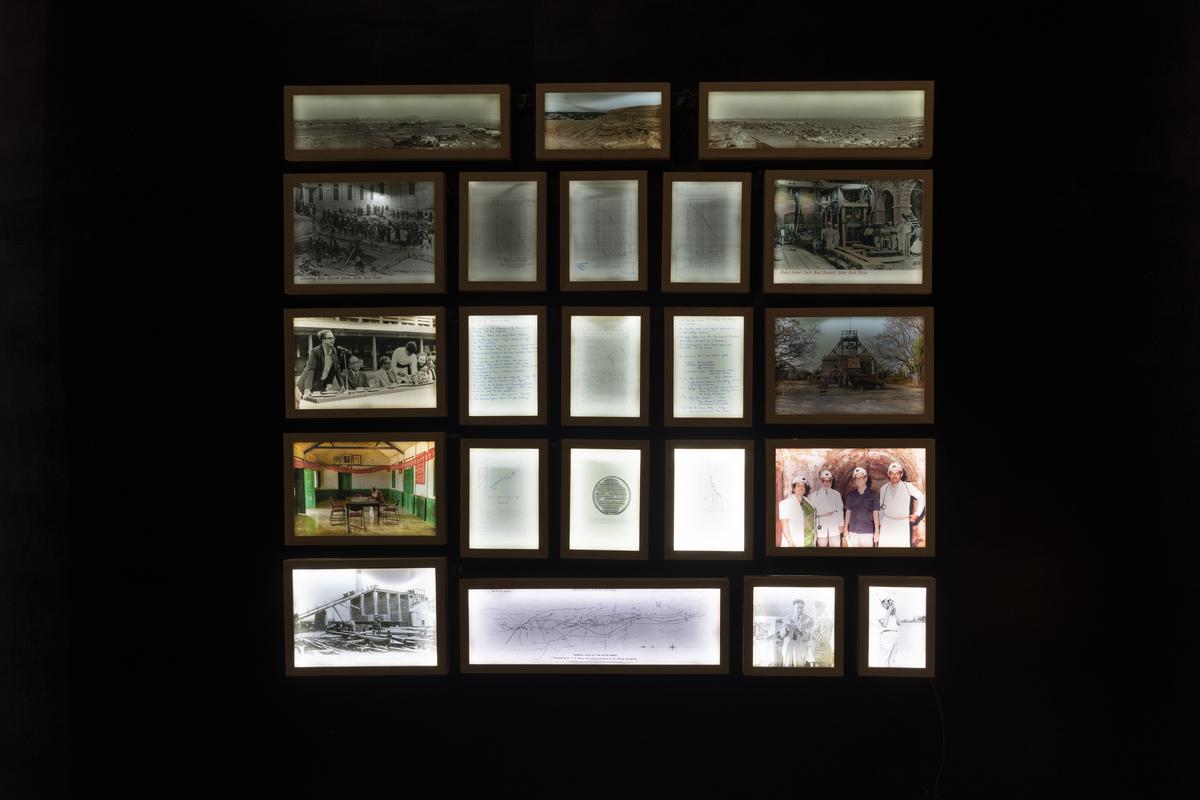
Kolar Gold Fields photo exhibition.
| Photo Credit:
SPECIAL ARRANGEMENT
Origins of Sci560
The idea for an exhibition of this kind has been brewing for over a decade. In 2012, Phalkey, who was teaching at King’s College London, was invited by the Science Museum in London to curate what they were calling a blockbuster exhibition on India. While India in the British imagination is often tied to the imperial British empire sort of story on “maharajas, indigo, diamonds, the trigonometric survey,” the Director of the Science Museum, London, was quite keen on a 20th-century exhibition. “That is perhaps why I was asked to join the team,” feels Phalkey, a historian of science and technology, filmmaker, and writer.
She came down to Bengaluru for three months in 2013 to do some groundwork for this exhibition, meeting people in the city and trying to understand it. And while, eventually, the exhibition evolved into something very different — “Illuminating India”, within which there were two major exhibitions: “5000 Years of Science and Innovation” and “Photography 1857–2017” — the kernel of the initial idea remained.
In late 2017, she moved to Bengaluru to start the Science Gallery, officially joining it in January, 2018. Around the same time, she met Rajesh Gopakumar, a theoretical physicist and the Director of the International Centre for Theoretical Sciences (ICTS-TIFR). “We were talking about how we must have a science festival in India,” says Phalkey, who, along with Gopakumar and Mukund Thattai, a biological physicist and professor at the National Centre for Biological Sciences (NCBS), began pursuing this idea.
“We thought we would create something like a Jaipur Lit Fest (JLF) but for science in Bengaluru,” she says. They had even reached out to the Bengaluru-based philanthropist Rohini Nilekani, who had promised to fund the first three iterations of the festival and had also started a conversation with Sanjoy K. Roy of Teamwork Arts, the company that organises JLF. “To cut a long story short, the pandemic hit, and the festival didn’t happen,” she says.
Finally, after the pandemic receded, they revived the idea, choosing to “do a full-on exhibition so that it gives us the time to build the energy both in the institutions, but also among the city’s citizens,” she says. Focused discussions for this exhibition finally kicked off in 2023 at a lunch organised by Nilekani, where she invited the directors of all the institutions in the city. “We asked them to commit to giving us an object or two that would allow us to build this exhibition,” says Phalkey. “A year and a half later, here we are.”
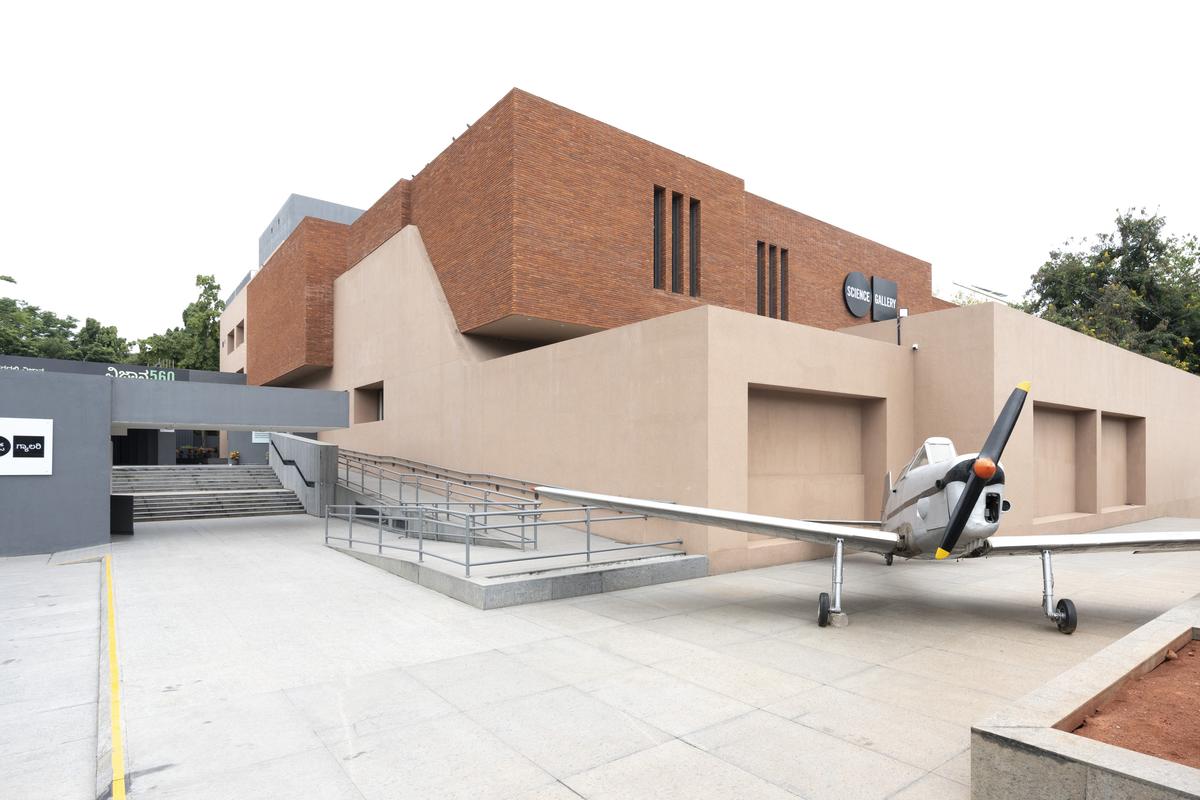
The HAL HT-2 aircraft.
| Photo Credit:
SPECIAL ARRANGEMENT
Showcasing a science city
At the ongoing exhibition, the first object your eyes will likely land on is the HAL HT-2 aircraft borrowed from IISc. Parked near the Science Gallery premises entrance, it overlooks the traffic hurtling past it on Bellary Road, a few kilometres from its verdant home of over six decades. Step inside the building, and you will encounter gallery after gallery crammed with a dizzyingly diverse collection of objects created across the last century or so, offering insights into various facets of the city: its military past and present, the academic institutions that nurtured its minds, its robust space tech ecosystem, its biodiversity, its beer culture, the various industries that have mushroomed in it, and so much more.
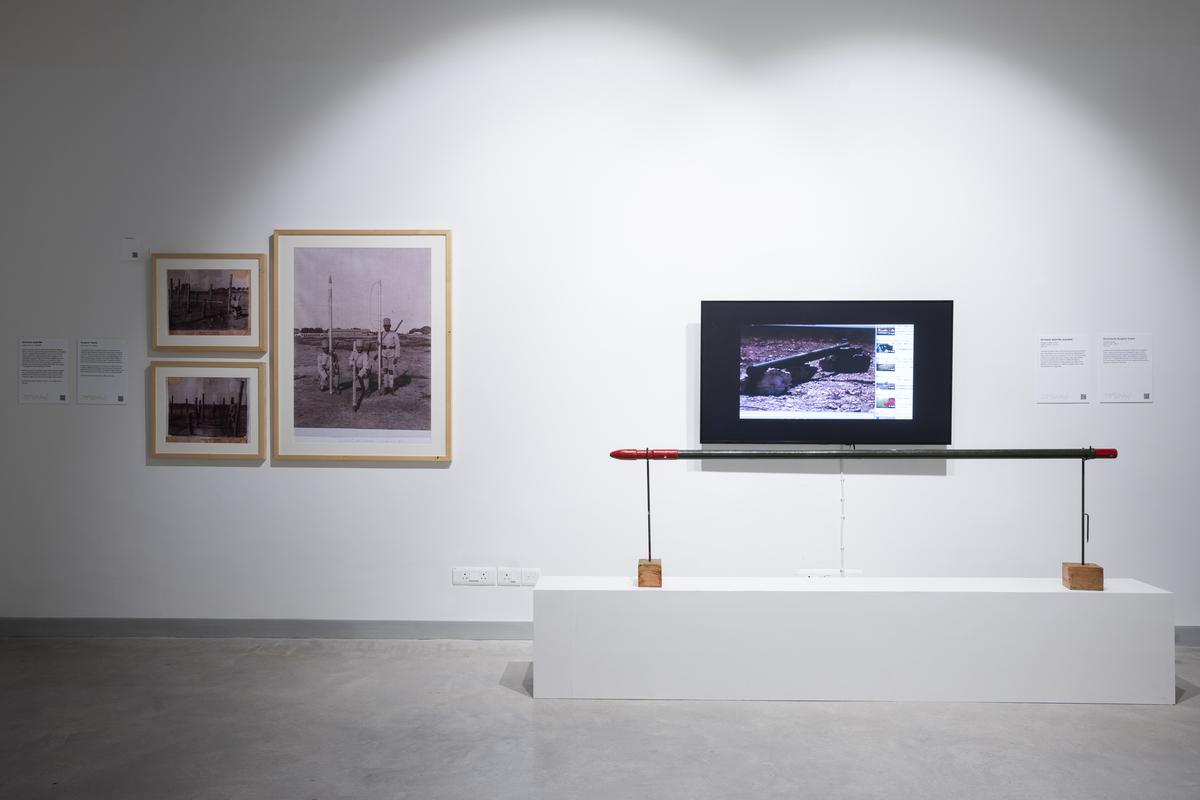
The Bangalore Torpedo.
| Photo Credit:
SPECIAL ARRANGEMENT
Some of the other exhibits on display include a selection of maps that offer insights into how the city has exponentially grown; a birdsong map titled Wingbeats and Warbles capturing the sounds of 20 commonly found bird species in Bengaluru; the famous Bangalore Torpedo invented here, which was used extensively by the Americans in the D-Day landings during the Second World War; a photo essay about the Kolar Gold Fields, which changed the economy of the Mysore state; an ancient rotary dial telephone manufactured by the Indian Telephone Industries (ITI), the first branch of which was established in Bengaluru and a tabla that the Nobel laureate C.V. Raman used to study sound.
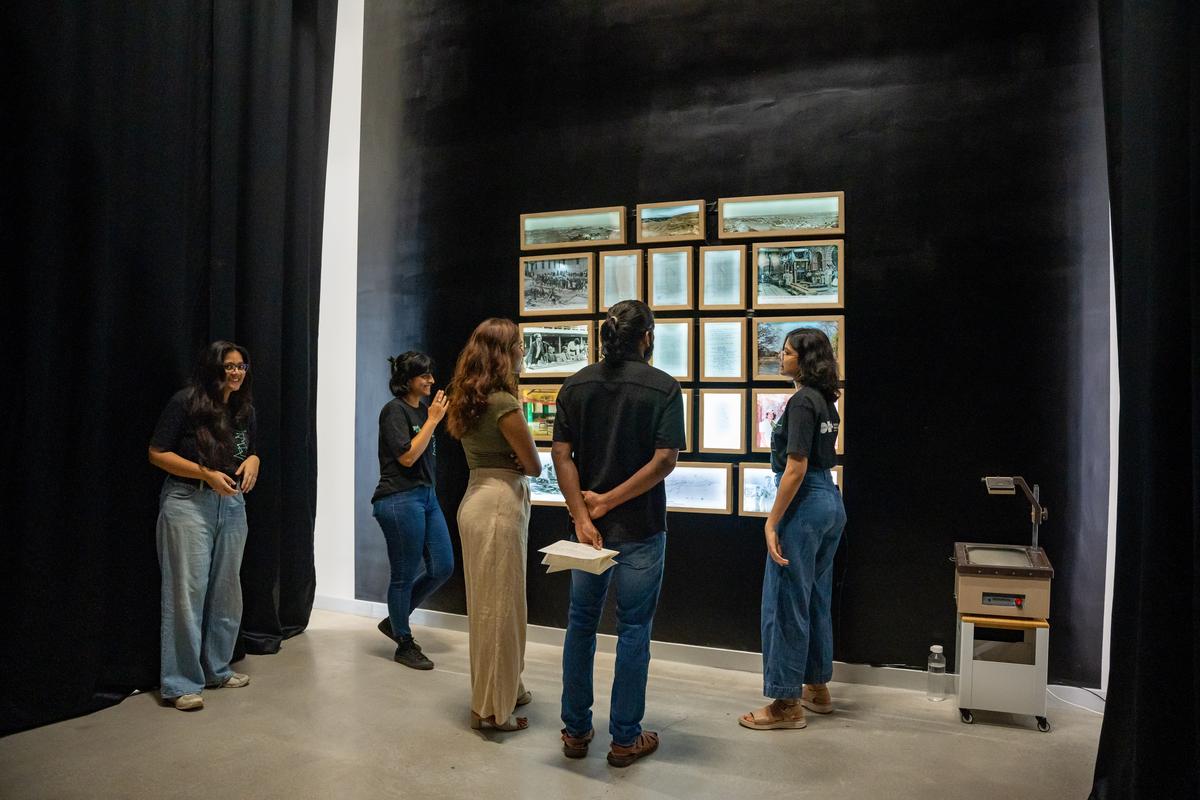
Visitors looking at a photo essay about the Kolar Gold Fields.
| Photo Credit:
SPECIAL ARRANGEMENT
These objects were all self-selected by various institutes that have partnered with Science Gallery, including Azim Premji University, the Indian Institute of Science (IISc), Raman Research Institute, NCBS and the Nature Conservation Foundation. “We asked them for objects that would allow us to tell their stories, and they self-selected a bunch of objects and sent them to us,” she says.
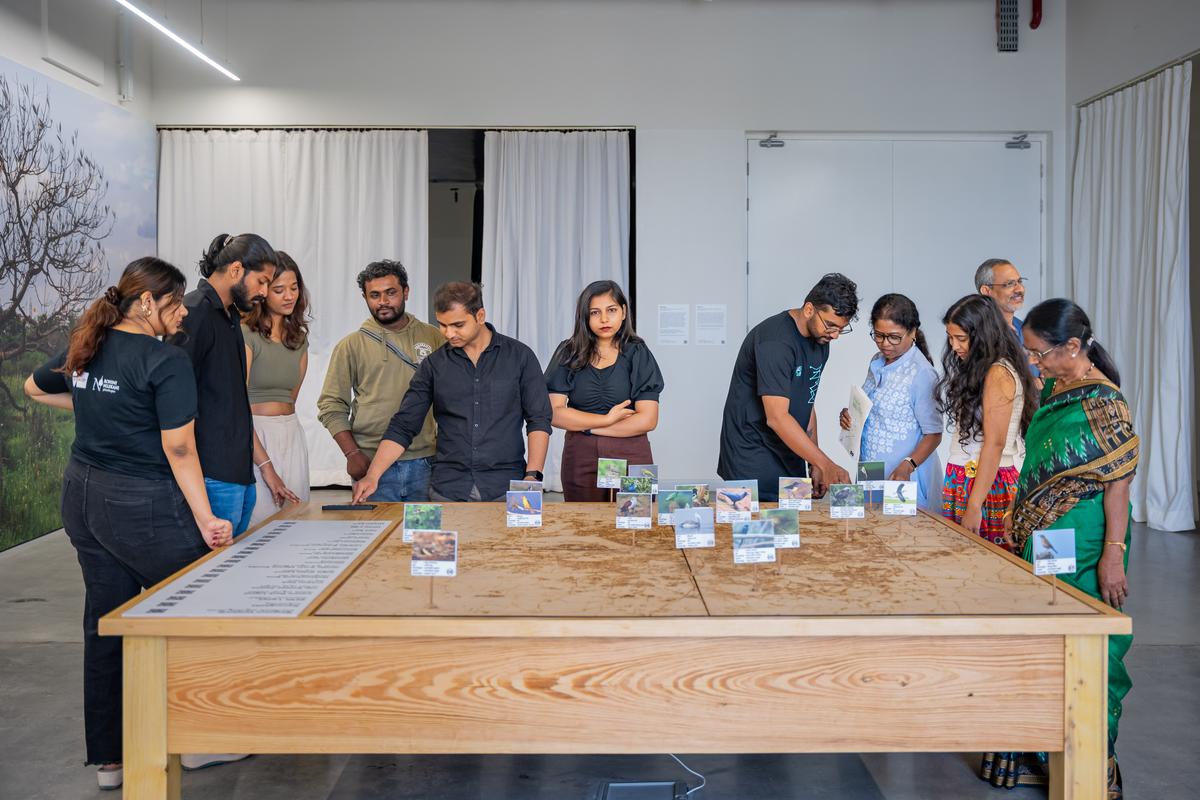
Visitors looking closely at Wingbeats and Warbles.
| Photo Credit:
SPECIAL ARRANGEMENT
A layered interaction
So, what about the city has shaped its scientific temperament, laying the groundwork for what it is today: the so-called Silicon Valley of India and a fast-evolving global start-up hub? “Unique is a difficult word, but specificity is important. There are certain things, ideas, people, institutions, clusters, and so on that are specific to places. And those specificities become important depending on when, why, and what you’re looking at them for,” says Phalkey, pointing out that the value we now place on knowledge-based industry means that “Bangalore matters in today’s India.”
According to her, three enterprises have prospered together in Bengaluru: military, industry, and academia; their layered interaction has played a crucial role in shaping the city. A good example of this is the HAL HT-2 aircraft, which was designed by V.M. Ghatge. The aeronautical engineer joined the newly-setup Hindustan Aeronautics Ltd (HAL) in 1940 but moved two years later to IISc’s Aeronautical (now Aerospace) Engineering Department, where he was appointed as a professor and was instrumental in establishing the postgraduate coursework.
In 1948, he returned to HAL as its chief designer. Here, he led a team that designed and manufactured the HAL HT-2, India’s first indigenous military aircraft. First produced in 1953, it became the primary trainer aircraft for the Indian Air Force for nearly three decades. “So, here you have a fabulous convergence of these three (military, industry and academia). But all three are deeply embedded in the city’s history, right?” she says, referring to the coming together of all the factors that made this aircraft possible as “contingency.”
Things come together – or fall apart – in unprecedented ways or unimagined ways at certain points in time, believes Phalkey. “One can’t mistake serendipity and contingency for causality. But new things happen because they can build on things that came before, and that’s true in Bengaluru.”
Published – September 27, 2024 09:00 am IST