

Prime Minister Narendra Modi greets Gaganyaan Mission astronauts-designate Prashanth Balakrishnan Nair, Ajit Krishnan, Angad Prathap and Shubanshu Shukla at the Vikram Sarabhai Space Centre in Thiruvananthapuram on February 27, 2024. Photo: PMO via PTI
The story so far: On February 27, Prime Minister Narendra Modi publicised the final shortlist of candidates to be astronauts on board the maiden human spaceflight mission — called Gaganyaan — of the Indian Space Research Organisation (ISRO). Assuming two important test flights this year and the next are successful, the first crewed flight of the mission is scheduled for 2025.
What is Gaganyaan?
Gaganyaan is the name of the ISRO mission to send Indian astronauts to low-earth orbit for a short duration, onboard an Indian launch vehicle. Technically, it is a demonstration mission: it will test various technologies required for human spaceflight, which remains the most complicated form of spaceflight, and demonstrate India’s familiarity with their production, qualification, and use. Last year, Prime Minister Narendra Modi “directed” ISRO to have an indigenous space station by 2035 and land an Indian on the moon by 2040. While its most recent missions have reinforced ISRO’s reputation as a reliable launch provider also capable of flying sophisticated interplanetary missions, including Chandrayaan-3, the two new goals are technologically even more ambitious.
Also read | Burden of power: On India’s astronauts and the Indian space policy
Further, ISRO will attempt to execute them together with future moon missions. Chandrayaan-3 concluded the first phase of ISRO’s lunar exploration programme. The second phase begins with a joint mission with Japan to land a rover on the moon and another to collect a lunar soil sample and bring it back to earth. To these ends, the Indian government has divvied up spaceflight and services-related responsibilities that once rested solely with ISRO to two new offices. They are the New Space India Ltd. (NSIL; to commercialise space technologies) and the Indian National Space Promotion and Authorization Centre (IN-SPACe; to authorise space activities in all sectors). ISRO also set up a coordinating body for Gaganyaan called the Human Space Flight Centre (HSFC).
What are the components of Gaganyaan?
Gaganyaan comprises the following components aside from the HSFC:
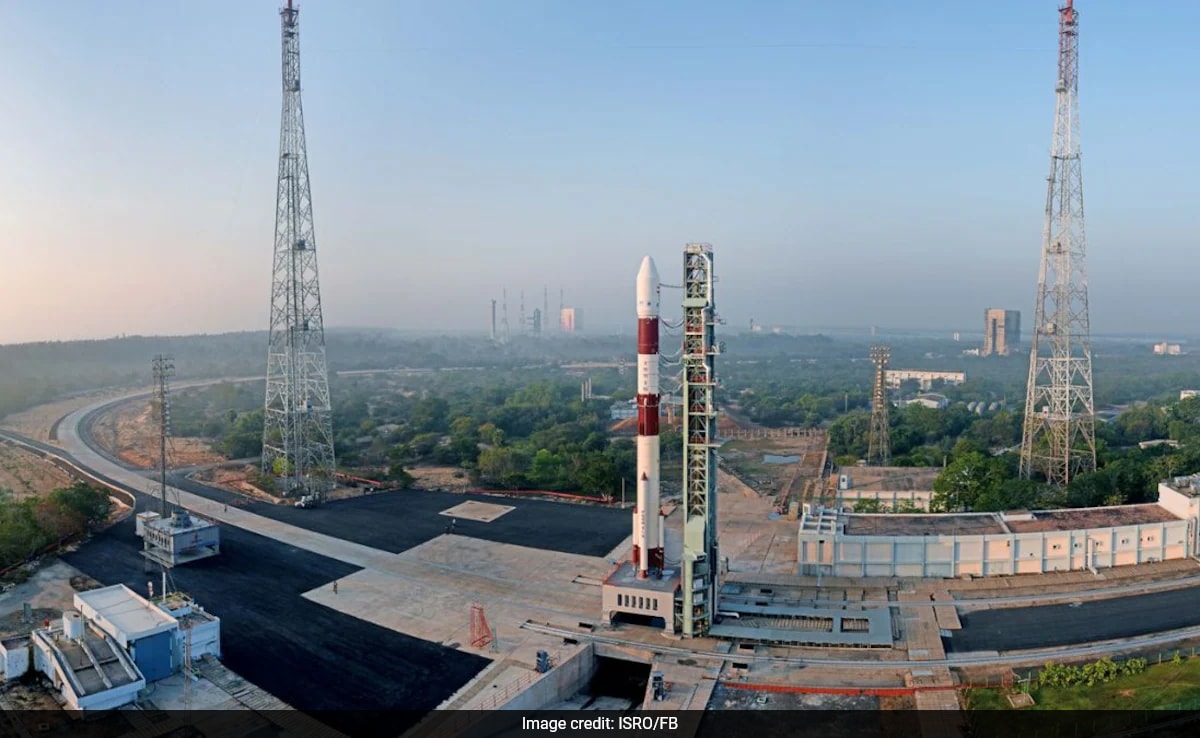
The Launch Vehicle Mark-3: The LVM-3 is the launch vehicle. Formerly called the GSLV Mk-III, it is a three-stage rocket. The first stage comprises of two solid-fuel boosters strapped to the rocket core. The second stage is powered by two liquid-fuelled and clustered Vikas 2 engines. The third stage has the CE-20 indigenous cryogenic engine with liquid hydrogen and liquid oxygen as fuel and oxidiser, respectively.
The orbital module: The 8.2-tonne orbital module is the object the LVM-3 rocket will launch and place in low-earth orbit. It consists of the crew module and the service module. The crew module can house up to three astronauts for a week. It includes parachutes to slow its descent to the ground once it descends from orbit; an environmental control and life-support system (ECLSS; to control the temperature, breathing environment, waste disposal, fire protection, etc.); and the crew escape system, which the astronauts can use to escape in case the rocket malfunctions during its ascent. The service module contains the propulsion system required to raise the orbital module’s altitude once it separates from the rocket and later to propel it back towards the earth.
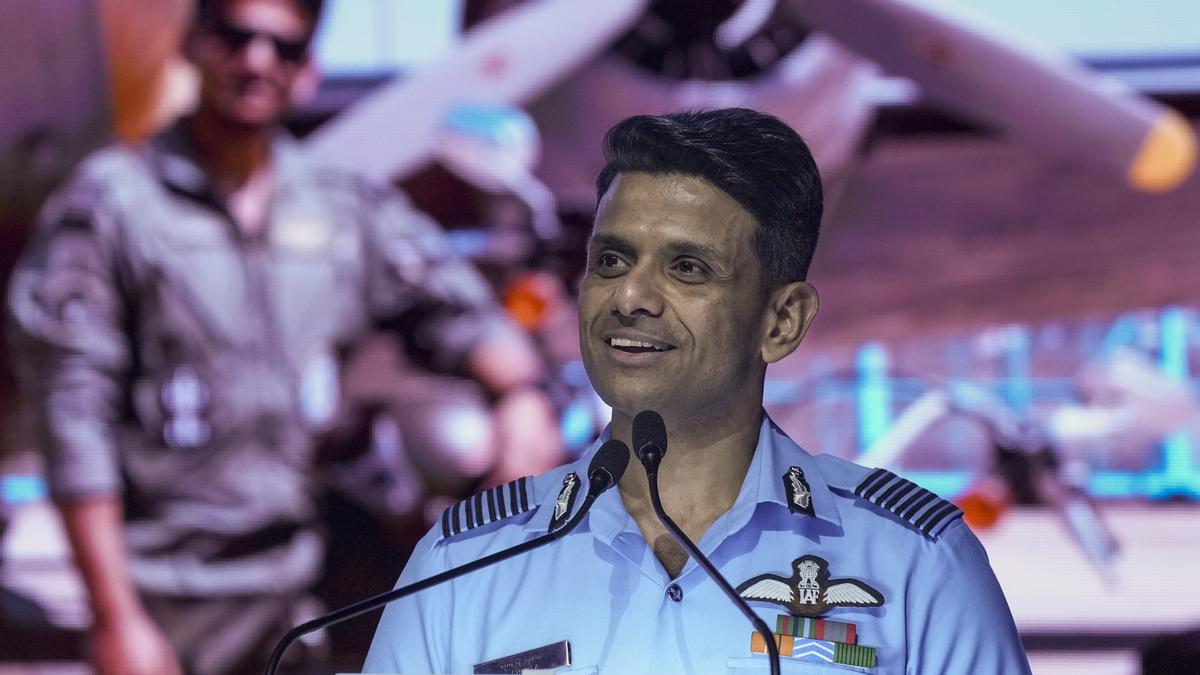
The crew: Of the first four astronaut candidates, Prashant Nair, Ajit Krishnan, and Angad Pratap are group captains and Shubanshu Shukla is a wing commander, all in the Indian Air Force (IAF). When Gaganyaan was approved, the IAF prepared a longlist of candidates, who were trained at the IAF’s Institute of Aerospace Medicine. A subsequent shortlist of candidates were sent to Russia for advanced training. The crew module will include a gynoid (feminine robot) named ‘Vyommitra’ fit with sensors to track the effects of radiation and weightlessness, monitor capsule conditions, and sound alarms in the event of an impending emergency, aside from being able to perform some other tasks.
How was the mission put together?
ISRO had realised many of the underlying technologies by the time the Union Cabinet approved Gaganyaan in 2018. Post-approval, it proceeded to human-rate many of them, that is, ensure their reliability met the minimum thresholds for human spaceflight.
It had already conducted the ‘Space Capsule Recovery Experiment’ (SRE) in 2007 and the ‘Crew-module Atmospheric Re-entry Experiment’ (CARE) in 2014. In 2007, a satellite placed in orbit earlier descended from an altitude of 635 km to splash into the Bay of Bengal. In 2014, a prototype of the module was launched onboard an LVM-3 rocket. It separated at an altitude of 126 km, descended until 80 km with retrograde thrusters, and finally with parachutes into the Bay of Bengal. Together, SRE and CARE tested the module’s separation mechanism, heat shield, braking system, parachutes, floatation devices (in the water), and retrieval procedures. ISRO conducted a similar test on October 21 last year — a crew module was launched on a small rocket before being ejected using an ‘emergency abort’ command, followed by testing its descent and retrieval.
In October 2023, ISRO chairman S. Somanath told The Hindu there was no domestic capability to manufacture the crew module and that it will have to be procured “from outside”. He also said ISRO’s hope to source technologies related to the ECLSS from abroad didn’t fructify, forcing the organisation’s engineers to develop them internally. Other major components, including the engines and the rocket stages, underwent similar tests of their own until ISRO could sign off on their reliability. This has happened through a series of tests, simulations, and quality-control exercises. For example, ISRO said on February 21 it had finished testing four CE-20 engines for 8,810 seconds in all, in conditions mimicking those during the flight.
What will Gaganyaan achieve?
The birth of NSIL and IN-SPACe followed wide-ranging reforms of the space sector. They were joined by the National Geospatial Policy 2022, the Indian Space Policy 2023, and the Telecommunications Act 2023. On February 21, in a fillip to India’s nascent space startups scene, the Cabinet also cleared 49% to 100% automatic foreign direct investment in space services and spaceflight. The Space Policy in particular provides an overview of what the Indian space programme will aim for in the coming decades as India joins a host of countries going to space, the moon, and beyond while conducting scientific, commercial, and exploratory missions. This new ‘space race’ extends geopolitical boundaries drawn on the earth into outer space. The result is a heavy premium on the human presence of different nationalities for longer durations in space and on the moon.
Against this backdrop, Gaganyaan will establish India’s self-sufficiency vis-à-vis sending humans to space, on timelines it can control, instead of relying on expensive contracts with foreign launch services — and in step with other efforts to represent India in the final frontier.