




On August 24, the Government of India announced the ‘BioE3’ policy to drive innovation in the biotechnology sector by establishing biomanufacturing facilities, bio-AI hubs, and bio-foundries. (‘AI’ stands for artificial intelligence.) A key focus area of the policy is precision therapeutics, which involve developing and administering drugs according to the needs of individual patients. The policy also aims to boost the development of biologics such as gene therapy and cell therapy.
Recent advancements in human-relevant 3D culture models, also known as ‘new approach methods’ (NAMs), have shown promising results in the field of precision therapeutics. These models include 3D spheroids, organoids, bioprinting, and organ-on-chips.
The global organ-on-chip market is expected to be worth around $1.4 billion by 2032. This expansion is the result of increasing investments in R&D within the field of NAMs, particularly in organ-on-a-chip technology. Since its invention, this technology has acquired significant momentum and stands poised to revolutionise the healthcare sector by integrating cells derived from a human body with a well-defined in vitro biological environment (i.e. in the lab) that mimics the body’s conditions.
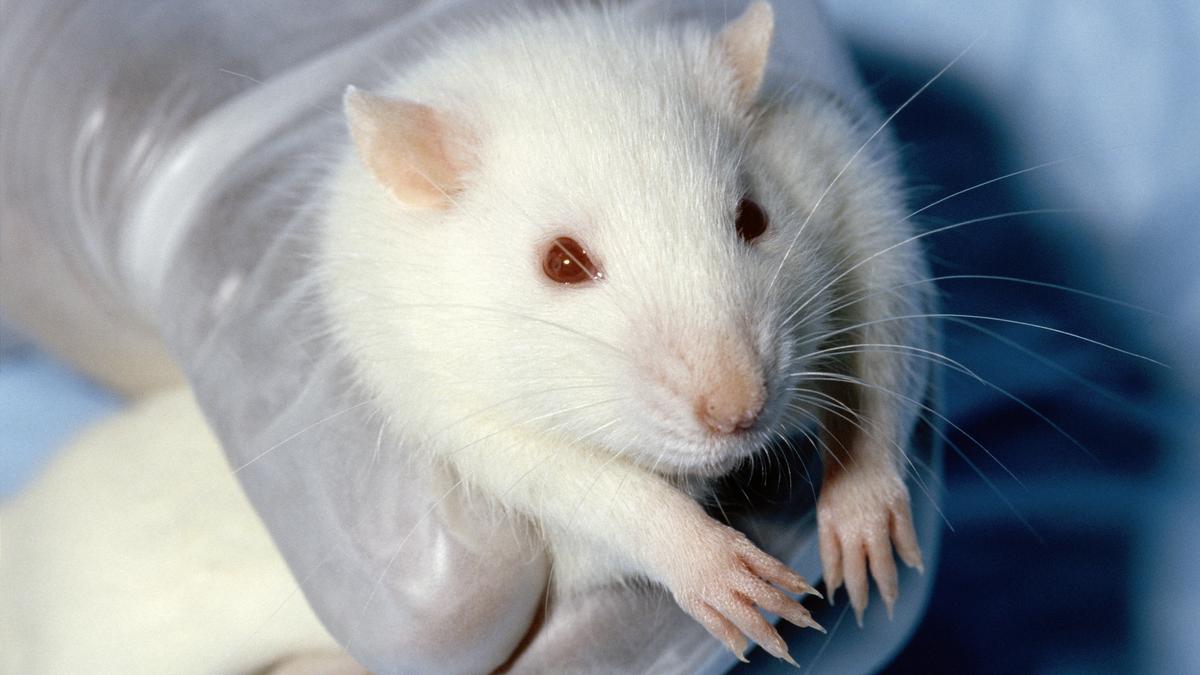
A major driving factor in the organ-on-chip market is the increasing demand to replace the use of animals to test drugs.
In April, an English company named CN Bio raised $21 million from venture capitalists to expand its R&D in organ-on-chip technology. In the U.S., Vivodyne raised $38 million in seed funding to integrate large-scale automation and AI with organ-on-chips. These are just two recent examples to illustrate the growing interest in this technology and its commercial value.
Drug testing and development
In the current and traditional drug development process, researchers take almost a decade and an average cost of $2.3 billion to bring a new drug from the lab to the market. However, many drug candidates also fail in the final stages of clinical trials. One major reason is that in the early stages of trials, these drugs are tested on animal models — animals genetically engineered to respond to a drug the way a human organ (or organs) might. Drugs that succeed on these animals often fail in humans, however.
Organ-on-chip technology offers a potential solution to this problem by providing a more accurate and efficient platform for testing drugs without involving animals or humans in preclinical testing. An organ-on-chip is a small device designed to recreate the dynamic functions of some human organ in a controlled microenvironment. They are expected to be better than the cell cultures and animal models researchers currently use at testing the effects of a drug. The results from the use of these devices would in turn provide a better understanding of the drug-candidate’s efficacy and toxicity, reduce the use of animals, and pave the way for personalised treatment.
The technology could also reduce the time and cost of drug development, bringing drugs to the market faster and potentially at lower prices.
Investments in technology
Researchers first reported the usefulness of an organ-on-chip model in a 2010 study. Two years later, the U.S. National Institutes of Health allocated $100 million in funding for scientists to develop specific organs-on-chip devices, including for the kidneys, intestines, and the heart, as well as body-on-chip devices that could simulate the effects of a drug on multiple organs at once.
The technology’s potential for drug development was quickly clear, and as a result there are several organ-on-chip companies around the world today focusing on developing microphysiological systems for various organs. In addition to those above, chips exist today to mimic the liver and the lungs.
The U.S. government further boosted this field by passing the FDA Modernisation Act 2.0 in September 2022. The Act allows researchers to develop, use, and qualify organs-on-chips as a suitable alternative wherever applicable, including to test drugs at the preclinical stages of drug development. A year earlier, the members of the European Union had resolved to phase out the testing of cosmetics on animals. The bloc is currently working towards a regulatory framework for the use of NAMs, including organ-on-chips.
Many international pharmaceutical companies are also testing the waters. For instance, Bayer is collaborating with TissUse for a liver and multi-organ-on-a-chip model. Roche is using chips developed by Mimetas to study the effects of inflammatory bowel disease and hepatitis B virus infections. AstraZeneca and Johnson & Johnson are using several chips made by Emulate Bio for their biological research. According to one recent estimate, at least 30 pharmaceutical companies worldwide are evaluating organ-on-chip models in a bid to move away from animal testing.
Challenges for India
India also took a step in this direction by amending the New Drugs and Clinical Trials Rules 2019 to permit the use of human organs-on-chips and other NAMs prior to and in conjunction with animal testing when evaluating new drugs. In July this year, the CSIR-Centre for Cellular and Molecular Biology, Hyderabad, and the Central Drugs Standard Control Organisation hosted a workshop on the latest scientific and regulatory developments in the field of NAMs.
Developing an organ-on-chip technology requires experts from diverse fields — such as bioengineering, pharmacology, biotechnology, computer science, and clinical medicine — to work together. Currently more than 80 laboratories are working on NAMs, including developing 3D culture models for various applications. To fully harness the technology’s potential, India needs to establish dedicated centres that facilitate such collaboration.
Second, the presence of such centres will help to converse between industry and academia. In particular, personalised medicine requires NAMs to accommodate genetic differences between Indian populations for which a NAM is being tailored and the populations on which a given drug or therapy has already been tested.
Third, researchers will have to contend with regulatory bodies and their requirements and navigate regulatory frameworks pertaining to the development, standardisation, and qualification of organ-on-chip devices. The centres could streamline this process and ensure chips make it from the lab bench to the factory floor without a glitch.

Since these centres will host a dedicated and qualified team of researchers, they could also build a new skill base for the next generation of scientists and engineers and help ensure a steady flow of talent to drive the development of organ-on-chip technology forward. The centres could even create opportunities for an industry-linked doctoral programme to help graduate and postgraduate students to move seamlessly between academia, research, and industry after completing their education.
As medical research advances rapidly, it is important for the Indian government, the business and investment communities, and policymakers and regulators to facilitate the establishment of organ-on-chip centres that improve the healthcare system whilst boosting the economy. By supporting these technologies and centres, India could also increase its self-sufficiency in a domain of developmental and strategic importance.
Manjeera Gowravaram has a PhD in RNA biochemistry and is a freelance science writer. Viraj Mehta has a PhD in biomedical engineering and supports pharmaceutical companies and CROs in establishing NAMs or microphysiological systems based assays for drug discovery and development.
Published – September 12, 2024 05:30 am IST