


Skip to content
  • Facebook
  • X
  • Linkedin
  • WhatsApp
  • YouTube
  • Associate Journalism
  • About Us
  • Privacy Policy
  • 033-46046046
  • editor@artifex.news
Artifex.News

Artifex.News

Stay Connected. Stay Informed.

  • Breaking News
  • World
  • Nation
  • Sports
  • Business
  • Science
  • Entertainment
  • Lifestyle
  • Toggle search form
  • Access Denied Business
  • Manchester United Embarrassed By Bournemouth, Chelsea Held At Everton
    Manchester United Embarrassed By Bournemouth, Chelsea Held At Everton Sports
  • Access Denied
    Access Denied Nation
  • Sports Minister Mansukh Mandaviya To Meet Indian Men’s Hockey Team To Discuss Future Plans
    Sports Minister Mansukh Mandaviya To Meet Indian Men’s Hockey Team To Discuss Future Plans Sports
  • “Not About Personal Milestones”: Rohit’s ‘Win The Trophy’ Remark Ahead Of T20 World Cup 2024
    “Not About Personal Milestones”: Rohit’s ‘Win The Trophy’ Remark Ahead Of T20 World Cup 2024 Sports
  • Israeli military says destroyed ‘several buildings’ in West Bank’s Jenin
    Israeli military says destroyed ‘several buildings’ in West Bank’s Jenin World
  • Angry Shakib Al Hasan Throws Ball At Mohammad Rizwan, Gets Scolded By Umpire. Watch
    Angry Shakib Al Hasan Throws Ball At Mohammad Rizwan, Gets Scolded By Umpire. Watch Sports
  • ‘Rabbit Fever’, A Rare Disease, On The Rise In US
    ‘Rabbit Fever’, A Rare Disease, On The Rise In US World
Ancient meteorite was ‘giant fertilizer bomb’ for life on Earth

Ancient meteorite was ‘giant fertilizer bomb’ for life on Earth

Posted on October 22, 2024 By admin


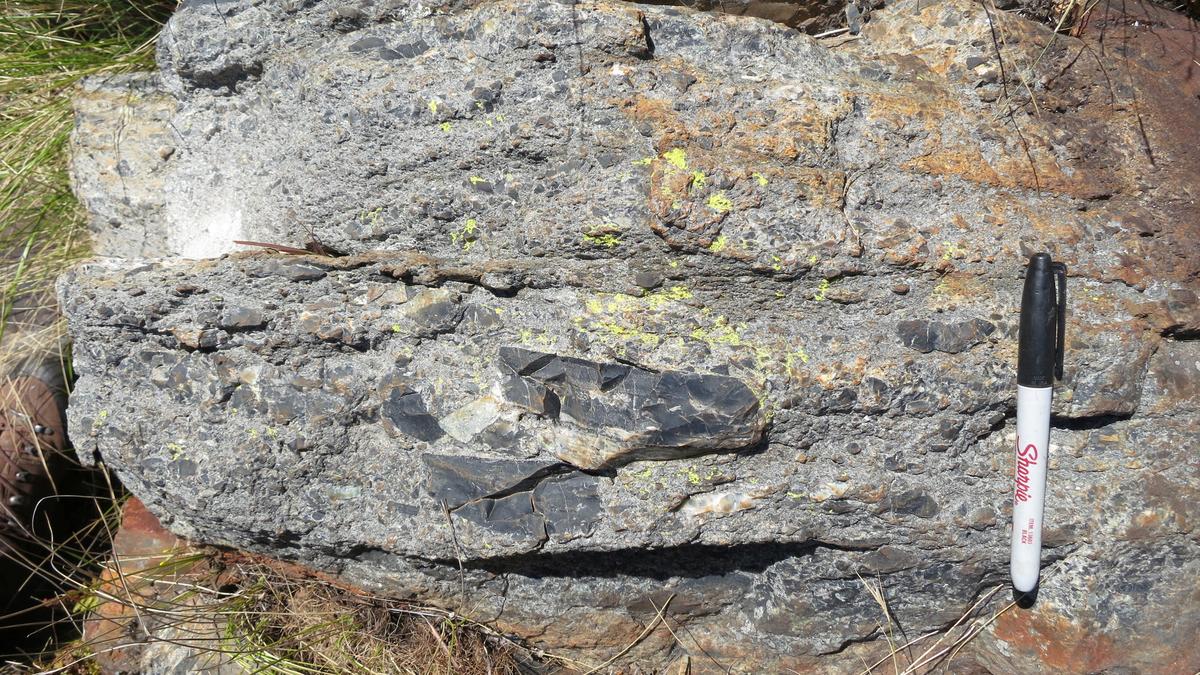
A bed of rock showing chunks of ripped up seafloor as debris from a tsunami that followed a huge meteorite impact on Earth dating back to about 3.26 billion years ago, seen in a region called the Barberton Greenstone Belt in northeastern South Africa in this undated photograph.
| Photo Credit: Reuters

The space rock that slammed into Earth 66 million years ago at the end of the Cretaceous Period caused a global calamity that doomed the dinosaurs and many other life forms. But that was far from the largest meteorite to strike our planet.

One up to 200 times bigger landed 3.26 billion years ago, triggering worldwide destruction at an even greater scale. But, as new research shows, that disaster actually may have been beneficial for the early evolution of life by serving as “a giant fertilizer bomb” for the bacteria and other single-celled organisms called archaea that held dominion at the time, providing access to the key nutrients phosphorous and iron.

Researchers assessed the effects of this meteorite impact using evidence from ancient rocks in a region in northeastern South Africa called the Barberton Greenstone Belt. They found ample signs – mostly from the geochemical signature of preserved organic material but also from fossils of mats of marine bacteria – that life bounced back with aplomb.

“Life not only recovered quickly once conditions returned to normal within a few years to decades, it actually thrived,” said Harvard University geologist Nadja Drabon, lead author of the study published on Monday in the journal Proceedings of the National Academy of Sciences.

Earth was a much different place during the Paleoarchean Era when this occurred, and meteorite impacts were larger and more frequent.

“At this time, Earth was something of a water world, with limited emergence of volcanoes and continental rocks. There was essentially no oxygen gas in the atmosphere and oceans, and no cells with nuclei,” Harvard geologist and study co-author Andrew Knoll said.

The landscape pictured during geological fieldwork in a region called the Barberton Greenstone Belt in northeastern South Africa in seen in this undated handout photograph obtained by Reuters. The region bears evidence of a huge meteorite impact on Earth dating back to about 3.26 billion years ago.

The landscape pictured during geological fieldwork in a region called the Barberton Greenstone Belt in northeastern South Africa in seen in this undated handout photograph obtained by Reuters. The region bears evidence of a huge meteorite impact on Earth dating back to about 3.26 billion years ago.
| Photo Credit:
Reuters

The meteorite was a type called a carbonaceous chondrite that is rich in carbon and also contains phosphorus. Its diameter was approximately 23-36 miles (37-58 km), Drabon said, making it about 50-200 times the mass of the asteroid that wiped out the dinosaurs, aside from their bird descendants.

“The effects of the impact would have been quick and ferocious. The impactor hit with so much energy that it and whatever sediment or rock it hit vaporized. This rock vapor cloud and dust ejected from the crater would have circled the globe and turned the sky black within hours,” Drabon said.

“The impact likely occurred in the ocean, initiating a tsunami that swept across the globe, ripping up the sea floor and inundating coastlines. Lastly, a lot of the impact energy would get transferred into heat, meaning that the atmosphere started heating up so much that the upper layer of the oceans started boiling,” Drabon added.

It probably would have taken a few years to decades for the dust to settle and for the atmosphere to cool enough for the water vapor to return to the ocean, Drabon said. Microbes depending on sunlight and those in shallow waters would have been decimated.

Small spherules – spherical pieces of rock formed following a meteorite impact – are seen in rock from a region called the Barberton Greenstone Belt in northeastern South Africa in this undated photograph. The region bears evidence of a huge meteorite impact on Earth dating back to about 3.26 billion years ago.

Small spherules – spherical pieces of rock formed following a meteorite impact – are seen in rock from a region called the Barberton Greenstone Belt in northeastern South Africa in this undated photograph. The region bears evidence of a huge meteorite impact on Earth dating back to about 3.26 billion years ago.
| Photo Credit:
Reuters

But the meteorite would have delivered a large amount of phosphorous, a nutrient for microbes crucial for the molecules central to storing and conveying genetic information. The tsunami also would have mixed iron-rich deep waters into shallower waters, creating an environment ideal for many types of microbes because iron provides them with an energy source.

“Imagine these impacts to be giant fertilizer bombs,” Drabon said.

“We think of meteorite impacts as being disastrous and detrimental to life – the best example being the Chicxulub impact (at Mexico’s Yucatan Peninsula) that led to the extinction of not only the dinosaurs but also of 60-80% of animal species on Earth,” Drabon said. “But 3.2 billion years ago, life was a lot simpler.”

“Microorganisms are relatively simple, versatile, and they reproduce at fast rates,” Drabon said.

The evidence of the impact included chemical signatures of the meteorite, small spherical structures formed from rock melted by the impact, and chunks of seabed mixed with other debris churned up by the tsunami in sedimentary rock.

“Early life was resilient in the face of a giant impact,” Drabon said.

Published – October 22, 2024 12:37 pm IST



Source link

Science Tags:asteroid hits on earth, did asteroids help life grow on Earth?, science news

Post navigation

Previous Post: Supreme Court’s Bulldozer Action Warning To UP
Next Post: BRICS Summit 2024 LIVE: PM Modi arrives in Russia’s Kazan; series of bilateral meetings lined up

Related Posts

  • Science and nation-building – The Hindu
    Science and nation-building – The Hindu Science
  • Early northeast monsoon onset creates ‘triple whammy’ in South India
    Early northeast monsoon onset creates ‘triple whammy’ in South India Science
  • Climate change reshaping disease patterns, straining health systems, finds report
    Climate change reshaping disease patterns, straining health systems, finds report Science
  • What is ‘snowball earth’?
    What is ‘snowball earth’? Science
  • NASA astronaut Sunita Williams retires
    NASA astronaut Sunita Williams retires Science
  • Why now is the time to address humanity’s impact on the moon
    Why now is the time to address humanity’s impact on the moon Science

More Related Articles

CDFD scientist elected as Fellow of Indian Academy of Sciences CDFD scientist elected as Fellow of Indian Academy of Sciences Science
Rapa Nui genomes restore the real history of an old, troubled people Rapa Nui genomes restore the real history of an old, troubled people Science
As thoughts become digitised, who will protect our neurorights? | Explained As thoughts become digitised, who will protect our neurorights? | Explained Science
Trump’s Golden Dome looks for alternatives to Elon Musk’s SpaceX Trump’s Golden Dome looks for alternatives to Elon Musk’s SpaceX Science
Faraway black hole unleashes record-setting energetic jets Faraway black hole unleashes record-setting energetic jets Science
Faunal survey in Kerala’s Vazhachal adds 26 species to checklist of wildlife division in Western Ghats Faunal survey in Kerala’s Vazhachal adds 26 species to checklist of wildlife division in Western Ghats Science
SiteLock

Archives

  • May 2026
  • April 2026
  • March 2026
  • February 2026
  • January 2026
  • December 2025
  • November 2025
  • October 2025
  • September 2025
  • August 2025
  • July 2025
  • June 2025
  • May 2025
  • April 2025
  • March 2025
  • February 2025
  • January 2025
  • December 2024
  • November 2024
  • October 2024
  • September 2024
  • August 2024
  • July 2024
  • June 2024
  • May 2024
  • April 2024
  • March 2024
  • February 2024
  • January 2024
  • December 2023
  • November 2023
  • October 2023
  • September 2023
  • August 2023
  • July 2023
  • June 2023
  • May 2023
  • April 2023
  • March 2023
  • February 2023
  • January 2023
  • December 2022
  • November 2022
  • October 2022
  • September 2022
  • August 2022
  • July 2022
  • June 2022
  • May 2022

Categories

  • Business
  • Nation
  • Science
  • Sports
  • World

Recent Posts

  • Crew member electrocuted during Jailer 2 shoot near Panaiyur
  • Watch: Congress ends suspense: V. D. Satheesan to be next Kerala CM | Above the Fold | 14.05.2026
  • IPL 2026 | A win against LSG will do a world of good for CSK
  • Karnataka maps 86.37% electors with family linkage in draft voter roll exercise; Bengaluru continues to trail State average
  • Vessel seized off UAE’s Fujairah and heading toward Iranian waters, UKMTO says

Recent Comments

  1. CordellVoice on UP Teacher Who Asked Students To Slap Muslim Classmate
  2. Wesleyunfix on UP Teacher Who Asked Students To Slap Muslim Classmate
  3. JasonDag on UP Teacher Who Asked Students To Slap Muslim Classmate
  4. JamesHeR on UP Teacher Who Asked Students To Slap Muslim Classmate
  5. RafaelNar on UP Teacher Who Asked Students To Slap Muslim Classmate
  • Access Denied Sports
  • Biologists in slow and steady race to help North America’s largest and rarest tortoise species
    Biologists in slow and steady race to help North America’s largest and rarest tortoise species Science
  • PM Narendra Modi’s Special Message For Mohammed Shami After India Pacer Undergoes Surgery
    PM Narendra Modi’s Special Message For Mohammed Shami After India Pacer Undergoes Surgery Sports
  • Access Denied
    Access Denied Nation
  • Why north central India facing severe heatwave Explained
    Why north central India facing severe heatwave Explained Science
  • “Ben Stokes Is A Freak”: England Coach’s Massive Take Over Rohit Sharma’s Dismissal
    “Ben Stokes Is A Freak”: England Coach’s Massive Take Over Rohit Sharma’s Dismissal Sports
  • Helios eyes 39% growth in East with festive launches
    Helios eyes 39% growth in East with festive launches Business
  • U.S. aircraft carrier arrives in South Korea as North’s leader Kim exchanges messages with Putin
    U.S. aircraft carrier arrives in South Korea as North’s leader Kim exchanges messages with Putin World

Editor-in-Chief:
Mohammad Ariff,
MSW, MAJMC, BSW, DTL, CTS, CNM, CCR, CAL, RSL, ASOC.
editor@artifex.news

Associate Editors:
1. Zenellis R. Tuba,
zenelis@artifex.news
2. Haris Daniyel
daniyel@artifex.news

Photograher:
Rohan Das
rohan@artifex.news

Artifex.News offers Online Paid Internships to college students from India and Abroad. Interns will get a PRESS CARD and other online offers.
Send your CV (Subjectline: Paid Internship) to internship@artifex.news

Links:
Associate Journalism
About Us
Privacy Policy

News Links:
Breaking News
World
Nation
Sports
Business
Entertainment
Lifestyle

Registered Office:
72/A, Elliot Road, Kolkata - 700016
Tel: 033-22277777, 033-22172217
Email: office@artifex.news

Editorial Office / News Desk:
No. 13, Mezzanine Floor, Esplanade Metro Rail Station,
12 J. L. Nehru Road, Kolkata - 700069.
(Entry from Gate No. 5)
Tel: 033-46011099, 033-46046046
Email: editor@artifex.news

Copyright © 2023 Artifex.News Newsportal designed by Artifex Infotech.