




Administering the affairs of a medical school at a multidisciplinary private university, I have observed that our medical faculty are generally busy with their day-to-day affairs pertaining to patients and teaching students. They seldom get the time or the wherewithal to carry out quality and innovative research. While time is a one vital factor, another is also the inertia on the part of many to go beyond their classrooms, lectures, and standard books, primarily driven by the lack of an optimal ecosystem in which to conduct research. And after delving deep into the structures of other medical colleges in India, I have found that the situation is the same all over.
Given that India can boast of some of the best doctors, expertise and medical facilities today, why is it that we do not produce medical researchers of note? This year’s Nobel Prize in Medicine, awarded to Mary E. Brunkow, Fred Ramsdell, and Shimon Sakaguchi for their identification of regulatory T cells (Tregs) and the FOXP3 gene, which act as a biological “brake” on the immune system to prevent it from attacking the body’s own tissues, is breakthrough research in medicine. Such pioneering researchers however, are rarely seen in the Indian subcontinent.
Research in India
The expanse of human knowledge is awe-inspiring, only matched by the human hunger to excel and learn even more. The current status of medical research in India however, is far from ideal.
The scenario has begun improving over the past few years as the country is becoming a hub for clinical trials. As per the Invest India report, around 18,000 new clinical trials were registered in 2024 in India, which is a reflection of better infrastructure, regulatory frameworks, and interest from pharma companies. This is a result of better awareness about evidence-based medicine and translational research.
Research output however, is highly skewed: a small number of institutions generate the bulk of the publications; while many institutions generate virtually none. The All India Institute of Medical Sciences (AIIMS), New Delhi, in one report for 2005–2014, had 11,377 publications cited in Scopus, and PGI, Chandigarh, had 8,145 papers during this time period, as per a media report. The bulk of the many other medical institutions in the country generate very little.
Globally, according to the Nature Index for health sciences’ data for 2023, the top countries in medical research that year were the United States with 7,040 articles, China with a count of 1,940 publications, and Germany with 1,431 articles.
The bright side of the current situation is that, volume-wise, India has climbed rapidly and is among the top few nations by number of publications. Our growth rates are strong, which shows momentum and potential. We have a large population, a large burden of disease, many hospitals, and medical institutions — which means enormous scope for research. The dismal side is that our impact rankings are comparatively low; our research output is concentrated in a few institutions; our spending on research is also weak, due to which collaborations with international institutes and infrastructure requirements take a back seat.

What needs to change
To catch up or significantly and close the gap, key actions would include improving the quality and impact of research (not just quantity), increasing contributions to high-tier journals, fostering international collaborations, and strengthening institutional capacities.
In order to achieve this, the first step must be to protect time. A professor at a government hospital may see over 200 patients a day, leaving little time for original research. By contrast, in Nobel-producing environments clinical faculty often have protected time and resources for pure research.
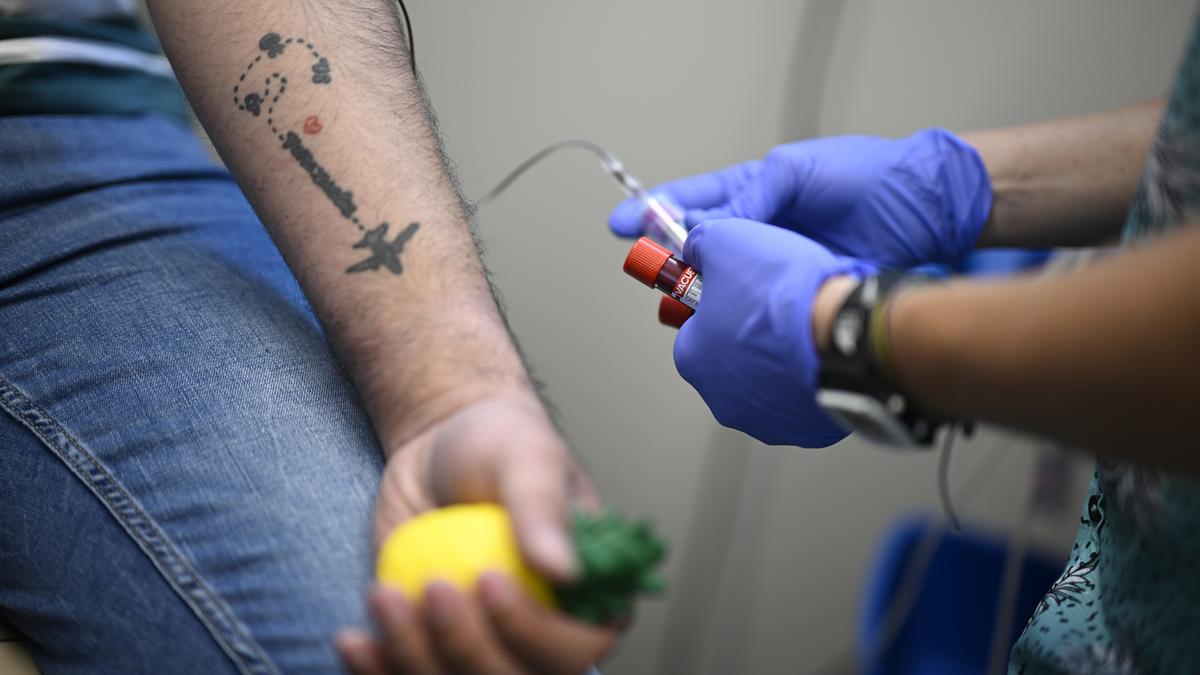
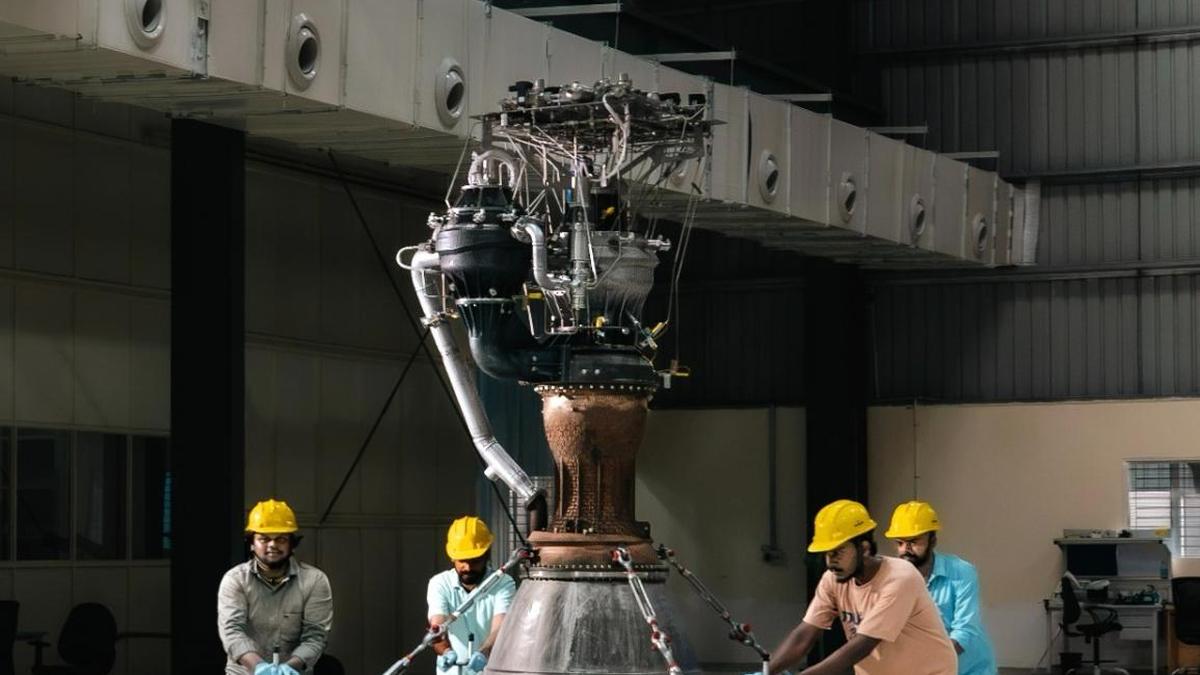
The second step needs to be infrastructure upgrades and support. Many in India have no proper laboratories, biostatistical support, or research mentors. There is little institutional infrastructure for long-term basic biomedical science — India’s medical research is largely clinical or descriptive, rarely mechanistic or molecular, which is where Nobel-level discoveries happen.
The third is financial backing. India spends 0.7% of its GDP on R&D, compared to 3–4% in the U.S., 2.8% in Germany, and 2.4% in China. Of this, only a small slice (perhaps 10–12%) goes to health and biomedical research. Grants are often small, bureaucratic, and delayed; review mechanisms lack consistency. Most grants are sanctioned to State institutions, leaving private institutions to struggle to get them. Another factor here is importance that is given to research: promotions and prestige in medical colleges still depend on clinical seniority or administrative rank, not research quality or innovation.
The fourth step is encouraging collaborations. Nobel-level biomedical science happens at the interface of molecular biology, genetics, biophysics, and medicine. In India, medical colleges and basic science departments (such as molecular biology or biotechnology) often work in isolation. AIIMS or IISc collaborations are increasing but are still not systematic or culturally ingrained. Our medicine and engineering departments still work in silos. There is no handshake between diverse disciplines, and this affects good-quality research. Global recognition by, and integration with, leading scientific networks (where major discoveries often get noticed and amplified) are still limited.
In essence, risk-taking and long-term research are undervalued; quick, “safe” projects are preferred for job security. Administrative red tape to purchase materials, import equipment or hire research assistants slows research dramatically. Publication pressure (to meet regulatory requirements) sometimes leads to quantity over quality — including publications in predatory journals.

A change in focus
After Independence, India focused its efforts on public health, epidemiology, and disease control, all of which are vital, but less likely to produce Nobel-style “mechanistic” breakthroughs. Our great successes — polio eradication, affordable vaccines, frugal innovation — are socially transformative but not necessarily recognized by frameworks that reward fundamental discovery.
To push global-standard research in general and in medicine in particular, we ought to allow clinician-scientists to spend 50–70% of their time on research. We need to introduce a dual-career track: clinical excellence and research excellence. We need to protect research time and reward major discoveries, not just patient load.
Every major medical college should have a biostatistics and epidemiology unit, core molecular and imaging facilities, and research mentorship programmes. Large institutions of excellence could serve as regional hubs to mentor smaller colleges. Competitive grant funding must be simplified, and grant times must be longer. Bridges need to be built between medical colleges and science institutes for joint MD-PhD and PhD-MD programmes — for clinician-scientists who can translate discoveries to practice. Additionally, research-methodology training should be an integral part of the curriculum from the MBBS level. Every postgraduate thesis should have a proper study design, statistical analysis, and ethics compliance.
To aim for Nobel-level research, India must invest substantially (over 2% of its GDP) in R&D, with a large, predictable biomedical component; build 5–10 world-class medical-research universities with integrated basic-clinical structures and empower researchers with autonomy, merit-based funding, and international collaborations. There is a need to shift incentives — reward originality, depth, and societal impact, not just publication count.

Roadmap for future
It’s not that Indian scientists lack talent — many have made major contributions outside India of India. We have had Har Gobind Khorana for instance, and Venki Ramakrishnan, both Nobel laureates in Medicine. . The difference lies in the ecosystem: sustained funding, institutional autonomy, interdisciplinary collaboration, and a culture that rewards long-term, risky, discovery science.
Nobel-class research typically matures over decades; India’s biomedical research culture, in serious form, is only 25–30 years old. If India sets up and implements a roadmap, we could, in the near future, plausibly produce Nobel-worthy discoveries — particularly in infectious disease biology, genetics, and affordable biotechnology — areas aligned with our strengths and disease burden.
(Prof Hemant Verma is Vice Chancellor, SGT University, Gurugram. vc@sgtuniversity.org)