





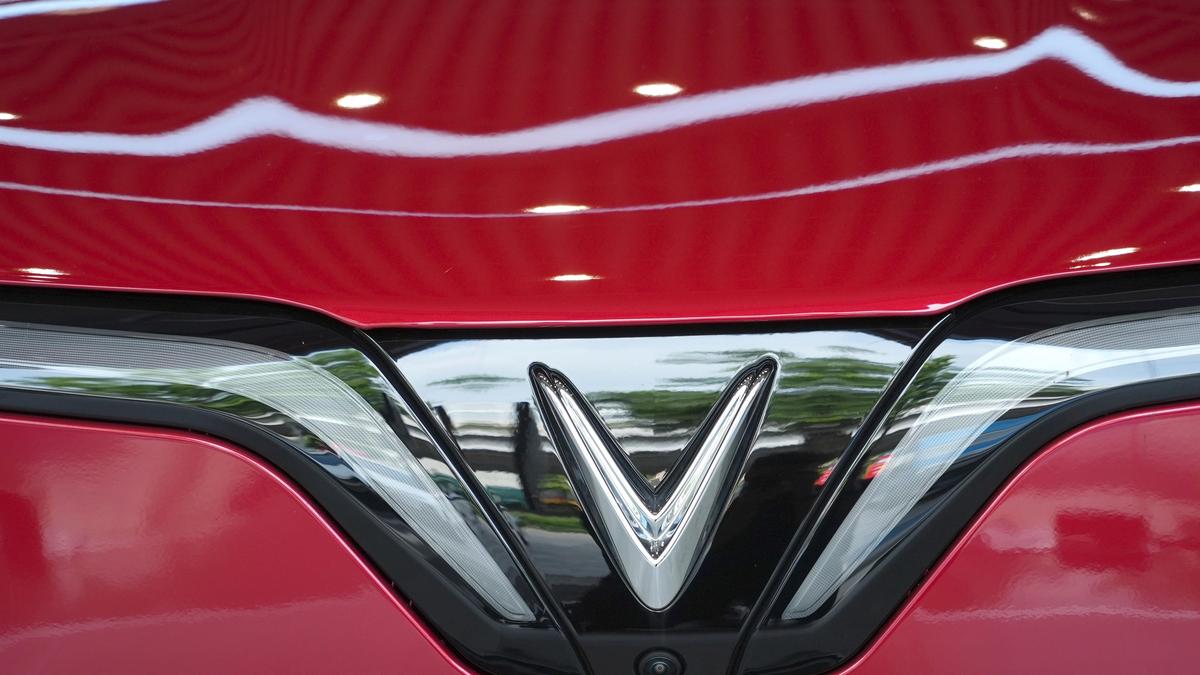
The manufacturer VinFast asked suppliers to “hold all activities” on three programmes, including a two-door SUV called VF 3 — expected to be its most competitive model in the market — and VF 6 and VF 7 SUVs, which it imports as kits from Vietnam and assembles in the country. File
| Photo Credit: AP
VinFast suspended plans to make three electric vehicles in India and ordered suppliers to halt work on the projects while it reviews costs, as per sources and a memo reviewed by Reuters — a year after Vietnam’s automaker entered the crucial growth market.

The manufacturer VinFast asked suppliers to “hold all activities” on three programmes, including a two-door SUV called VF 3 — expected to be its most competitive model in the market — and VF 6 and VF 7 SUVs, which it imports as kits from Vietnam and assembles in the country.
The suspension marks another setback for loss-making VinFast, which turned to India after difficulties in gaining market share in the U.S. and Europe.

The suspension of plans to locally make the three vehicles in India has not been previously reported. Vinfast opened its first factory outside Vietnam in southern India last year and pledged to invest $2 billion, as it sought to build a regional manufacturing base serving South Asia, West Asia and Africa.
After publication of this story, VinFast told Reuters the change in production strategy relates to future models, and it will continue to import and assemble the VF 6 and VF 7 now sold in India.
VinFast also said it plans to develop India-specific models rather than just bringing in existing global models a move that it says will allow it to accelerate local sourcing.

While VinFast has publicly stated increasing local sourcingfrom India, including through partnerships with domesticsuppliers, plans to manufacture the VF 3, VF 6 and VF 7 in thecountry have not previously been disclosed and were described toReuters by people familiar with the matter.
“India is an important market in VinFast’s long-termbusiness and manufacturing strategy,” a company representative told Reuters in a statement, adding that based on market research and consumer feedback it is making “appropriate adjustments” to its products to “better meet the needs of Indian customers”.
VinFast’s struggle to break into the world’s third-largest car market echoes challenges faced by others, including Volkswagen and Nissan, which did not achieve the kind of scale that has helped companies such as Suzuki and Hyundai succeed.
In a July memo to suppliers, the automaker said it decided to “temporarily” put on hold all development work related to the VF 3, VF 6 and VF 7. Locally developing and sourcing parts would have allowed VinFast to avoid expensive imports and price itscars more competitively.
SUPPLIER INVESTMENTS
The memo also asked suppliers to provide a detailed breakdown of the “total amount invested to date” on the projects that require payment or reimbursement from VinFast across cost categories such as tooling, engineering and materials, along with “supporting documentation where available”.
VinFast did not meet its planned costs for developing partsin India for the three cars, which is why it stopped the work, one of the sources said.
Both sources declined to be named as they are not authorised to speak to the media.
Backed by Vietnam’s largest conglomerate Vingroup, VinFast launched in India in September 2025 with its VF 6 and VF7 electric SUVs. Its India factory has an initial annual production capacity of 50,000 cars and is scalable to 150,000 units.
The automaker has so far sold about 10,000 cars in India, including to its affiliate ride-hailing company Green SM.
Published – September 02, 2026 10:28 pm IST