

Skip to content
  • Facebook
  • X
  • Linkedin
  • WhatsApp
  • YouTube
  • Associate Journalism
  • About Us
  • Privacy Policy
  • 033-46046046
  • editor@artifex.news
Artifex.News

Artifex.News

Stay Connected. Stay Informed.

  • Breaking News
  • World
  • Nation
  • Sports
  • Business
  • Science
  • Entertainment
  • Lifestyle
  • Toggle search form
  • Canada’s PM Trudeau vows to lead his Liberal Party into next election
    Canada’s PM Trudeau vows to lead his Liberal Party into next election World
  • Access Denied Business
  • Rupee falls 26 paise to 83.40 against U.S. dollar in early trade
    Rupee falls 26 paise to 83.40 against U.S. dollar in early trade Business
  • Access Denied Sports
  • Access Denied Business
  • Iran’s currency falls to a new low as nuclear sanctions squeeze its ailing economy
    Iran’s currency falls to a new low as nuclear sanctions squeeze its ailing economy World
  • On CCTV, Punjab Man Beats Boy, 5, For Imitating His Pet Dog
    On CCTV, Punjab Man Beats Boy, 5, For Imitating His Pet Dog Nation
  • Asia Cup 2023 Final: India and Sri Lanka to battle it out for continental supremacy
    Asia Cup 2023 Final: India and Sri Lanka to battle it out for continental supremacy Sports
As sun nears peak of solar cycle, small satellites are paying the price

As sun nears peak of solar cycle, small satellites are paying the price

Posted on November 20, 2024 By admin


Last week, three tiny Australian satellites from Curtin University’s Binar Space Program burned up in Earth’s atmosphere. That was always going to happen. In fact, Binar means “fireball” in the Noongar language of the First Nations people of Perth.

When a satellite is in low Earth orbit (2,000 km or less), it experiences orbital decay as it drags closer and closer to the surface, eventually burning up.

But these cube satellites (CubeSats), known as Binar-2, 3 and 4, entered the atmosphere much sooner than originally planned. They only lasted for two months – a third of what was expected. This significantly reduced valuable time for science and testing new systems.

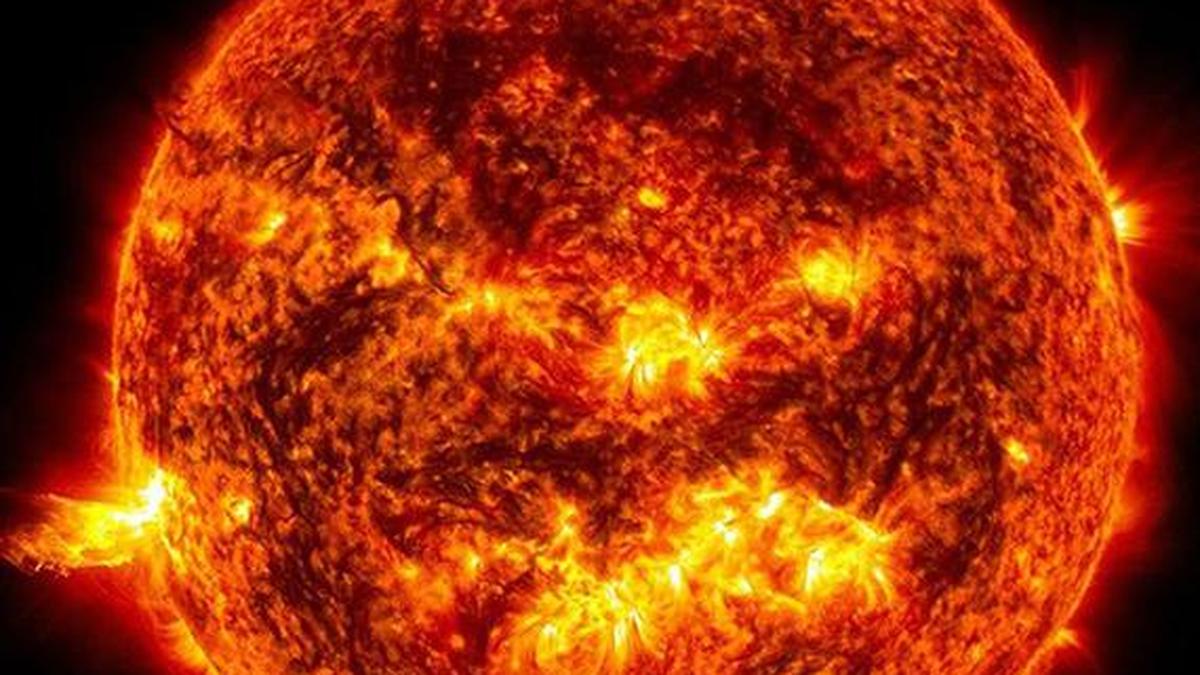
The reason for their untimely demise? Our Sun has kicked into high gear, and the Binar satellites are far from the only casualty. Recent high solar activity has been causing an unexpected headache for satellite operators in the last few years, and it’s only increasing.

Why is the Sun so active?

Solar activity includes phenomena such as sunspots, solar flares and solar wind – the stream of charged particles that flows toward Earth.

This activity is a product of the Sun’s ever-changing magnetic field, and approximately every 11 years, it completely flips. At the midpoint of this cycle, solar activity is at its highest.

While this cycle is known, specific solar activity is challenging to predict – the dynamics are complex and solar forecasting is in its infancy.

In the last few months, indicators of solar activity were more than one and a half times higher than predictions for this point in the current cycle, labelled solar cycle 25.

The impact of space weather

Space weather refers to the environmental effects that originate from outside our atmosphere (mostly the Sun). It affects us on Earth in a variety of noticeable and unnoticeable ways.

The most obvious is the presence of auroras. In the past few months, auroras have been visible far more intensely and closer to the equator than in the last two decades. This is a direct result of the increased solar activity.

Space weather, and solar activity in particular, also creates additional challenges for satellites and satellite operators.

Higher solar activity means more solar flares and stronger solar wind – resulting in a higher flux of charged particles that can damage or disrupt electrical components on satellites.

It also means an increase in ionising radiation, resulting in a higher dose for astronauts and pilots, and potential disruptions to long-distance radio communications.

But for satellites in low Earth orbit, the most consistent effect of solar activity is that the extra energy gets absorbed into the outer atmosphere, causing it to balloon outward.

As a result, all satellites less than 1,000 km from Earth experience a significant increase in atmospheric drag. This is a force that disrupts their orbit and causes them to fall towards the planet’s surface.

Notable satellites in this region include the International Space Station and the Starlink constellation. These satellites have thrusters to counteract this effect, but these corrections can be expensive.

Low Earth orbit also contains many university satellites, such as the Binar CubeSats. Cube satellites are rarely equipped with tools that can adjust their altitude, so they’re entirely at the mercy of space weather.

What happened to Binar?

The Binar Space Program is a satellite research program operating out of Curtin University. It aims to advance our understanding of the Solar System and lower the barrier for operating in space.

The program began operations with its first satellite, Binar-1, in September 2021. This was less than a year into solar cycle 25 when solar activity was relatively low.

In these conditions, the ten-centimetre cube satellite started at an altitude of 420 km and survived a full 364 days in orbit.

The program’s follow-up mission – Binar-2, 3, and 4 – were three equally sized CubeSats. However, they were expected to last approximately six months owing to the extra surface area from new deployable solar arrays and a forecast increase in solar activity.

Instead, they only made it to two months before burning up. While cube satellite missions are relatively cheap, the premature ending of a mission will always be costly. This is even more true for commercial satellites, highlighting the need for more accurate space weather forecasting.

The good news is the Sun will calm down again. Despite the current unexpectedly high solar activity, it will likely slow down by 2026, and is expected to return to a solar minimum in 2030.

While this was not an explicit goal of the mission, the Binar Space Program has now poignantly demonstrated the dramatic effects of solar activity on space operations.

While the untimely loss of Binar-2, 3 and 4 was unfortunate, work has already begun on future missions. They are expected to launch into far more forgiving space weather.

Kyle McMullan is a PhD candidate in aerospace engineering, Curtin University. This article is republished from The Conversation.

Published – November 20, 2024 07:45 am IST



Source link

Science

Post navigation

Previous Post: Weeks after elephant deaths in Madhya Pradesh’s BTR, Bandhavgarh vet transferred
Next Post: Ukraine Will Lose If US Cuts Military Funding, Says President Zelensky

Related Posts

  • Aditya-L1 to shed more light on present, future of Sun: ARIES director
    Aditya-L1 to shed more light on present, future of Sun: ARIES director Science
  • Partial lunar eclipse to take place tonight
    Partial lunar eclipse to take place tonight Science
  • What ails Indian research papers? Poor quality or just bad grammar?
    What ails Indian research papers? Poor quality or just bad grammar? Science
  • Ancient Egypt’s ‘screaming’ mummy woman may have died in agony
    Ancient Egypt’s ‘screaming’ mummy woman may have died in agony Science
  • The many benefits of coconut
    The many benefits of coconut Science
  • Can science’s peer-review system guarantee academic rigour?
    Can science’s peer-review system guarantee academic rigour? Science

More Related Articles

100 years of electroencephalography (EEG) in human medicine 100 years of electroencephalography (EEG) in human medicine Science
Six decades since Thumba launch, slew of private cos prep for flight Six decades since Thumba launch, slew of private cos prep for flight Science
Why a tiny gravity measurement may be a leap forward for physics Why a tiny gravity measurement may be a leap forward for physics Science
Private member bill seeks to establish central optical devices quality control and vision care regulation Private member bill seeks to establish central optical devices quality control and vision care regulation Science
World falls short of UN drought deal at Saudi talks World falls short of UN drought deal at Saudi talks Science
Pyramids were built along a ‘lost’ branch of the Nile, study finds Pyramids were built along a ‘lost’ branch of the Nile, study finds Science
SiteLock

Archives

  • May 2026
  • April 2026
  • March 2026
  • February 2026
  • January 2026
  • December 2025
  • November 2025
  • October 2025
  • September 2025
  • August 2025
  • July 2025
  • June 2025
  • May 2025
  • April 2025
  • March 2025
  • February 2025
  • January 2025
  • December 2024
  • November 2024
  • October 2024
  • September 2024
  • August 2024
  • July 2024
  • June 2024
  • May 2024
  • April 2024
  • March 2024
  • February 2024
  • January 2024
  • December 2023
  • November 2023
  • October 2023
  • September 2023
  • August 2023
  • July 2023
  • June 2023
  • May 2023
  • April 2023
  • March 2023
  • February 2023
  • January 2023
  • December 2022
  • November 2022
  • October 2022
  • September 2022
  • August 2022
  • July 2022
  • June 2022
  • May 2022

Categories

  • Business
  • Nation
  • Science
  • Sports
  • World

Recent Posts

  • What is in the U.S. Senate’s landmark crypto bill?
  • Trinamool’s land policy delayed West Bengal border fencing: MHA’s 2023 affidavit in Supreme Court
  • ‘Take action to remove deceased Gruha Lakshmi beneficiaries’
  • Hanuman Jayanti: Muslim residents offer buttermilk to Hindu devotees in Kadapa days after clashes
  • Government raises gold and silver tariffs to 15% to curb imports, support rupee

Recent Comments

  1. DavidAnymn on UP Teacher Who Asked Students To Slap Muslim Classmate
  2. Jesusetexy on UP Teacher Who Asked Students To Slap Muslim Classmate
  3. JeffryFok on UP Teacher Who Asked Students To Slap Muslim Classmate
  4. StanleyPeapy on UP Teacher Who Asked Students To Slap Muslim Classmate
  5. RonaldLam on UP Teacher Who Asked Students To Slap Muslim Classmate
  • 3rd Australia-India Test Ends In Draw After Bad Weather Strikes
    3rd Australia-India Test Ends In Draw After Bad Weather Strikes Sports
  • Access Denied Business
  • A Glimpse At Member Countries’ Shared Heritage
    A Glimpse At Member Countries’ Shared Heritage Nation
  • Heatwave In 4 States Going To Polls On Friday, Experts Fear Drop In Turnout
    Heatwave In 4 States Going To Polls On Friday, Experts Fear Drop In Turnout Nation
  • Access Denied Business
  • Access Denied Sports
  • Probe Agency In Arvind Kejriwal Case
    Probe Agency In Arvind Kejriwal Case Nation
  • Asian Games 2023: Ankita Raina Progresses To Quarterfinals. Ramkumar, Bhosale Exit From Singles
    Asian Games 2023: Ankita Raina Progresses To Quarterfinals. Ramkumar, Bhosale Exit From Singles Sports

Editor-in-Chief:
Mohammad Ariff,
MSW, MAJMC, BSW, DTL, CTS, CNM, CCR, CAL, RSL, ASOC.
editor@artifex.news

Associate Editors:
1. Zenellis R. Tuba,
zenelis@artifex.news
2. Haris Daniyel
daniyel@artifex.news

Photograher:
Rohan Das
rohan@artifex.news

Artifex.News offers Online Paid Internships to college students from India and Abroad. Interns will get a PRESS CARD and other online offers.
Send your CV (Subjectline: Paid Internship) to internship@artifex.news

Links:
Associate Journalism
About Us
Privacy Policy

News Links:
Breaking News
World
Nation
Sports
Business
Entertainment
Lifestyle

Registered Office:
72/A, Elliot Road, Kolkata - 700016
Tel: 033-22277777, 033-22172217
Email: office@artifex.news

Editorial Office / News Desk:
No. 13, Mezzanine Floor, Esplanade Metro Rail Station,
12 J. L. Nehru Road, Kolkata - 700069.
(Entry from Gate No. 5)
Tel: 033-46011099, 033-46046046
Email: editor@artifex.news

Copyright © 2023 Artifex.News Newsportal designed by Artifex Infotech.