
Skip to content
  • Facebook
  • X
  • Linkedin
  • WhatsApp
  • YouTube
  • Associate Journalism
  • About Us
  • Privacy Policy
  • 033-46046046
  • editor@artifex.news
Artifex.News

Artifex.News

Stay Connected. Stay Informed.

  • Breaking News
  • World
  • Nation
  • Sports
  • Business
  • Science
  • Entertainment
  • Lifestyle
  • Toggle search form
  • Access Denied
    Access Denied Nation
  • Core sector growth slows to 0.5% in May 2026, second-slowest in 21 months
    Core sector growth slows to 0.5% in May 2026, second-slowest in 21 months Business
  • How Spain smothered Argentina to conquer the World Cup
    How Spain smothered Argentina to conquer the World Cup Sports
  • Analysis: How former U.S. President Donald Trump got convicted at his hush money trial
    Analysis: How former U.S. President Donald Trump got convicted at his hush money trial World
  • Access Denied
    Access Denied Nation
  • Odd Candidates In UK Polls 2024
    Odd Candidates In UK Polls 2024 World
  • Nvidia chief says H20 chip shipments to China not a security concern
    Nvidia chief says H20 chip shipments to China not a security concern Business
  • Access Denied
    Access Denied Nation
What happened to ISRO’s PSLV-C62 mission? | Explained

What happened to ISRO’s PSLV-C62 mission? | Explained

Posted on January 17, 2026 By admin


The story so far:

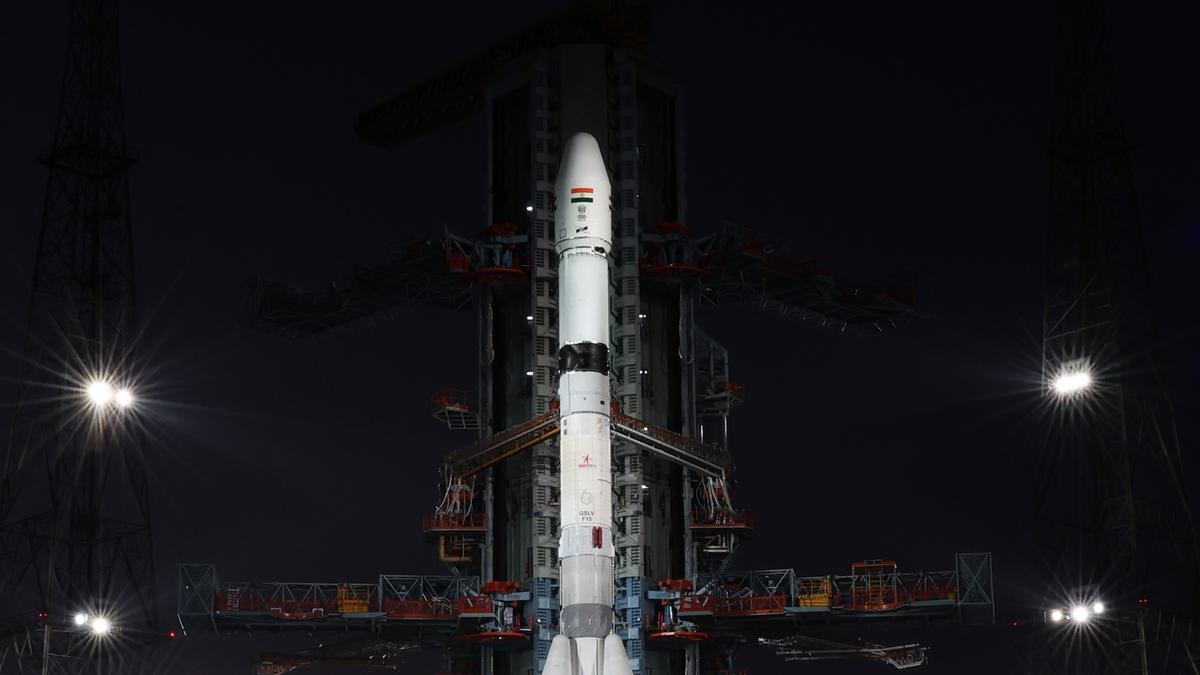
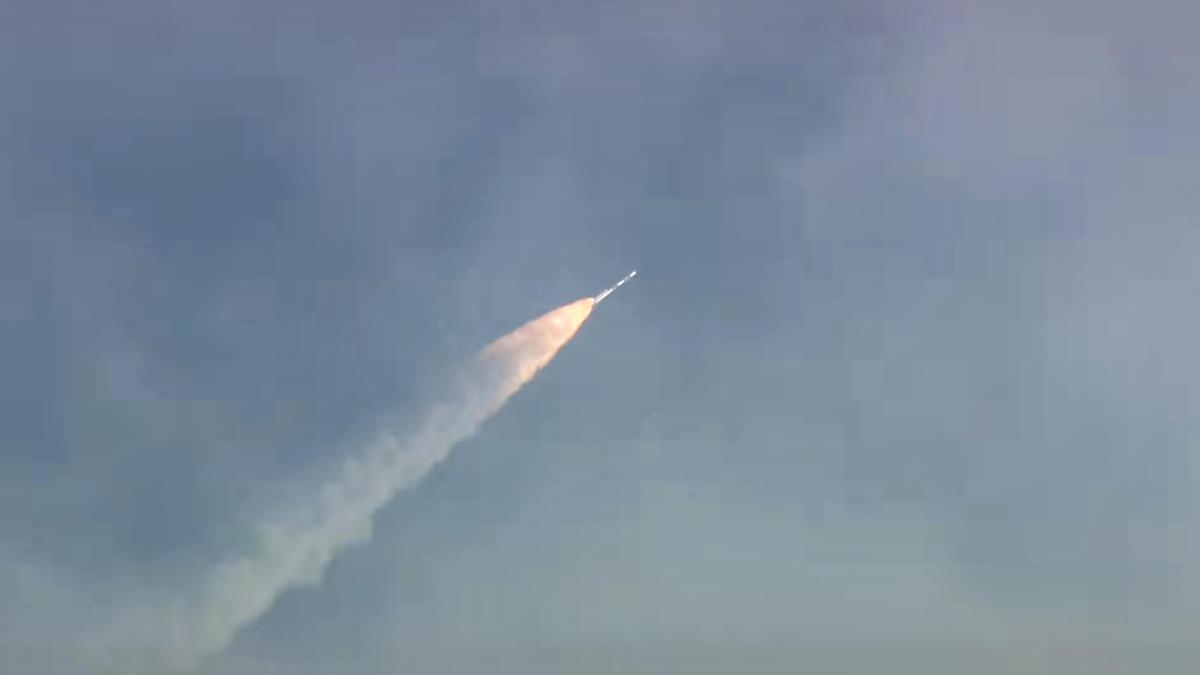
On January 12, the Indian Space Research Organisation’s (ISRO) PSLV-C62 mission lifted off from Sriharikota carrying the EOS-N1 satellite along with 15 co-passenger satellites. Within minutes, ISRO said the mission had “encountered an anomaly during end of the PS3 stage”, and that a detailed analysis was initiated.

What was the anomaly?

In a televised briefing after the launch, ISRO chairman V. Narayanan described what mission control was seeing: that performance was “as expected” up to near the end of the rocket’s third stage, called PS3, then that there was increased “disturbance in the vehicle roll rates”, followed by a deviation in the flight path. In other words, towards the end of the third stage, the rocket was spinning uncontrollably, enough for it to not be able to continue on its planned path. As of January 16, ISRO hasn’t published a statement about the root cause of the mishap.

Following the incident, Thailand’s space agency GISTDA, whose THEOS-2A satellite was on board PSLV-C62, said a malfunction late in the third stage caused an attitude-control abnormality and the vehicle deviated from its trajectory, preventing the rocket from deploying the satellites it was carrying. GISTDA also said the rocket and satellites were expected to fall back and burn up over the southern Indian Ocean. The anomaly resembled the events preceding the failure of the PSLV-C61 mission on May 18, 2025.

What happened to PSLV-C61?

ISRO’s PSLV-C61 mission was carrying the EOS-09 satellite. The rocket failed after the first two stages, with the third stage not performing nominally. ISRO noted a drop in chamber pressure in the third-stage motor case during the PS3 operation, after which it said the mission “could not be accomplished”.

Based on what has been reported publicly so far, both the C62 and the C61 missions suffered decisive anomalies on PS3 after a nominal early ascent and neither could deploy their payloads into the designated orbit (with a qualification for the KID payload). In C62, the main symptom was a “roll rate disturbance” late in the PS3 stage operation; in C61, the symptom was a chamber-pressure drop in the PS3 motor casing.

ISRO’s initial communications in both cases also stressed that an anomaly had occurred and that analysis was underway, but it did not publish a detailed list of corrective actions it would have to take. After the C61 mission failed, Dr. Narayanan constituted a Failure Analysis Committee (FAC) to look into the causes of the mishap. The FAC submitted its report to the Prime Minister’s Office in mid-2025.

What does the FAC do?

The FAC is not a standing body of experts within ISRO but instead an entity the ISRO chairman constitutes in the event of a major incident. Its responsibility is to reconstruct the chain of events leading up to the failure using telemetry and subsystem data and in conversation with people involved in that mission. It’s expected to identify the causes, and recommend corrective action before the vehicle is cleared for a ‘return to flight’.

The Committee members include experts within ISRO as well as relevant experts from academia. It has also been known to include former ISRO chairmen. The FAC submits its final report to the Indian government. The ISRO chairman is Secretary to the Department of Space, which functions directly under the PMO.

The aftermath of the GSLV-F10 mission provides an instructive window into the FAC’s efforts. After that mission failed in 2021, here’s an excerpt of what the FAC found: “The FAC concluded that the lower liquid hydrogen tank pressure at the time of cryogenic upper stage engine ignition, caused by the leakage of vent and relief valve resulted in the malfunctioning of the fuel booster turbo pump, leading to mission abort command and subsequent failure of the mission.”

Where is the PSLV-C61 FAC report?

Although the PSLV-C61 FAC submitted its report to the PMO, the PMO hasn’t cleared it for public release yet. Independent experts criticised the decision to withhold it after PSLV-C62 also suffered an anomaly in its third stage. ISRO has also not said whether it has constituted an FAC for the C62 mission, although a short statement on its website says “a detailed analysis has been initiated”. On November 15, 2025, during an unrelated lecture, Vikram Sarabhai Space Centre director A. Rajarajan had attributed the loss of the PSLV-C61 mission to a “slight manufacturing error”.

That said this isn’t the first time details of the FAC’s findings of a mishap have been withheld. Previous instances include the PSLV-C39 mission in 2017. ISRO has also been terse about the issues leading up to the underperformance of the NVS-02 satellite.

Earlier, even when the FAC report hadn’t been released into the public domain, ISRO had issued statements with detailed summaries of the FAC’s findings, for example, after the GSLV-F10 mission in 2021 and the GSLV-F02 mission in 2006. The aftermath of PSLV-C61 is a break from the past in this sense as well, since no such statements have been issued.

What happened to satellites on PSLV-C62?

The mission’s primary payload was EOS-N1, a surveillance satellite from the Defence Research and Development Organisation. The co-passengers comprised payloads involving Thailand, the U.K., Nepal, France, Spain, and Brazil, plus seven satellites from Indian enterprises.

The PSLV has failed four times so far, but PSLV-C62 was the first time it failed while carrying customer satellites provided by Indian and foreign entities. The mission had been facilitated by ISRO’s commercial arm, NewSpace India, Ltd. While the ISRO didn’t say whether the mission had failed after the anomaly on January 12, the statement from Thailand’s GISTDA suggested that the rocket’s remaining stages and the payloads would fall back down towards the earth and burn up.

The KID payload was a reentry demonstrator — a device designed to fall back down from orbit and splash into the southern Pacific Ocean. In a statement released after January 12, Orbital Paradigm, its Spain-based co-developer, said KID had transmitted “off-nominal” data for about three minutes.

GISTDA said its THEOS-2A satellite had been insured. The Indian private sector payloads onboard PSLV-C62 reportedly hadn’t been insured, so the cost of the loss would have been absorbed by the developers of each satellite. The cost of losing EOS-N1 will be borne by India.

Published – January 18, 2026 03:16 am IST


Source link

Science Tags:ISRO PSLV-C62 mission, isro satellite launch, PSLV c62 Launch, PSLV-C62 mission

Post navigation

Previous Post: Mumbai civic polls: BJP wrests control of BMC; Shiv Sena (UBT) relegated to Opposition
Next Post: U.S. launches another retaliatory strike in Syria killing leader tied to deadly Islamic State ambush

Related Posts

  • Seeing the magic of artificial intelligence applications in ophthalmology
    Seeing the magic of artificial intelligence applications in ophthalmology Science
  • Mpox RT-PCR Kit: India develops indigenous mpox detection kit, gets approval from CDSCO
    Mpox RT-PCR Kit: India develops indigenous mpox detection kit, gets approval from CDSCO Science
  • What hinders Indian pharma companies from making drugs for rare diseases
    What hinders Indian pharma companies from making drugs for rare diseases Science
  • The Hindu’s daily quiz on August 7, 2026
    The Hindu’s daily quiz on August 7, 2026 Science
  • What is the legal framework for space missions like the Chandrayaan 3 and Aditya L-1? | Explained
    What is the legal framework for space missions like the Chandrayaan 3 and Aditya L-1? | Explained Science
  • Discover the secrets of negligible senescence in tortoises and turtles, offering insights for anti-ageing research and potential medical breakthroughs.
    Discover the secrets of negligible senescence in tortoises and turtles, offering insights for anti-ageing research and potential medical breakthroughs. Science

More Related Articles

Losing the way: On ISRO and issues with its NavIC constellation Losing the way: On ISRO and issues with its NavIC constellation Science
What is perpetual motion? – The Hindu What is perpetual motion? – The Hindu Science
Scientists find proof pain-sensing cells are either male or female Scientists find proof pain-sensing cells are either male or female Science
Science Snapshots: July 26, 2026 Science Snapshots: July 26, 2026 Science
Indian astro community’s vision for solar physics, space weather Indian astro community’s vision for solar physics, space weather Science
Why you get better care when you stop nodding and start asking why Why you get better care when you stop nodding and start asking why Science
SiteLock

Archives

  • September 2026
  • August 2026
  • July 2026
  • June 2026
  • May 2026
  • April 2026
  • March 2026
  • February 2026
  • January 2026
  • December 2025
  • November 2025
  • October 2025
  • September 2025
  • August 2025
  • July 2025
  • June 2025
  • May 2025
  • April 2025
  • March 2025
  • February 2025
  • January 2025
  • December 2024
  • November 2024
  • October 2024
  • September 2024
  • August 2024
  • July 2024
  • June 2024
  • May 2024
  • April 2024
  • March 2024
  • February 2024
  • January 2024
  • December 2023
  • November 2023
  • October 2023
  • September 2023
  • August 2023
  • July 2023
  • June 2023
  • May 2023
  • April 2023
  • March 2023
  • February 2023
  • January 2023
  • December 2022
  • November 2022
  • October 2022
  • September 2022
  • August 2022
  • July 2022
  • June 2022
  • May 2022

Categories

  • Business
  • Nation
  • Science
  • Sports
  • World

Recent Posts

  • Girl dies, brother and father hospitalised after their attempt to end lives
  • Tiruppur yarn producers seek support from garment units to modify role of CCI
  • Act if there are any violations: KTR
  • Councillors complain about a rise in dengue cases
  • Higher education council holds talks with Indo-German centre official

Recent Comments

  1. AlvinNet on UP Teacher Who Asked Students To Slap Muslim Classmate
  2. AlvinNet on UP Teacher Who Asked Students To Slap Muslim Classmate
  3. Jamesslits on UP Teacher Who Asked Students To Slap Muslim Classmate
  4. MichaelClear on UP Teacher Who Asked Students To Slap Muslim Classmate
  5. Jamesslits on UP Teacher Who Asked Students To Slap Muslim Classmate
  • Access Denied World
  • Access Denied Sports
  • Access Denied Sports
  • Syrian army and SDF reach ceasefire deal in Aleppo city following clashes
    Syrian army and SDF reach ceasefire deal in Aleppo city following clashes World
  • Access Denied Sports
  • First-Ever Space Debris Fine Issued By US Over Improper Satellite Disposal
    First-Ever Space Debris Fine Issued By US Over Improper Satellite Disposal World
  • Putin offers to meet Zelenskyy in Moscow; Ukraine says no
    Putin offers to meet Zelenskyy in Moscow; Ukraine says no World
  • Starship’s first ever payload was a stuffed banana
    Starship’s first ever payload was a stuffed banana Science

Editor-in-Chief:
Mohammad Ariff,
MSW, MAJMC, BSW, DTL, CTS, CNM, CCR, CAL, RSL, ASOC.
editor@artifex.news

Associate Editors:
1. Zenellis R. Tuba,
zenelis@artifex.news
2. Haris Daniyel
daniyel@artifex.news

Photograher:
Rohan Das
rohan@artifex.news

Artifex.News offers Online Paid Internships to college students from India and Abroad. Interns will get a PRESS CARD and other online offers.
Send your CV (Subjectline: Paid Internship) to internship@artifex.news

Links:
Associate Journalism
About Us
Privacy Policy

News Links:
Breaking News
World
Nation
Sports
Business
Entertainment
Lifestyle

Registered Office:
72/A, Elliot Road, Kolkata - 700016
Tel: 033-22277777, 033-22172217
Email: office@artifex.news

Editorial Office / News Desk:
No. 13, Mezzanine Floor, Esplanade Metro Rail Station,
12 J. L. Nehru Road, Kolkata - 700069.
(Entry from Gate No. 5)
Tel: 033-46011099, 033-46046046
Email: editor@artifex.news

Copyright © 2023 Artifex.News Newsportal designed by Artifex Infotech.