

Skip to content
  • Facebook
  • X
  • Linkedin
  • WhatsApp
  • YouTube
  • Associate Journalism
  • About Us
  • Privacy Policy
  • 033-46046046
  • editor@artifex.news
Artifex.News

Artifex.News

Stay Connected. Stay Informed.

  • Breaking News
  • World
  • Nation
  • Sports
  • Business
  • Science
  • Entertainment
  • Lifestyle
  • Toggle search form
  • Harry Kane To Remain England’s Captain, Confirms Thomas Tuchel
    Harry Kane To Remain England’s Captain, Confirms Thomas Tuchel Sports
  • Proteas have copped unfair criticism, won’t write them off for WTC final: AB de Villiers
    Proteas have copped unfair criticism, won’t write them off for WTC final: AB de Villiers Sports
  • Economic Survey 2023-24: Financial sector outlook appears bright, but needs to brace for vulnerabilities
    Economic Survey 2023-24: Financial sector outlook appears bright, but needs to brace for vulnerabilities Business
  • New French PM faces first no confidence motion
    New French PM faces first no confidence motion World
  • FPIs inflow in equities drops to ₹7,320 crore in August on higher valuations
    FPIs inflow in equities drops to ₹7,320 crore in August on higher valuations Business
  • Access Denied
    Access Denied Nation
  • Access Denied World
  • Indian markets join global selloff as U.S. Fed indicates fewer rate cuts ahead; Sensex sinks below 80k
    Indian markets join global selloff as U.S. Fed indicates fewer rate cuts ahead; Sensex sinks below 80k Business
Unexpected link between nickel toxicity, cholesterol levels found

Unexpected link between nickel toxicity, cholesterol levels found

Posted on November 5, 2024 By admin


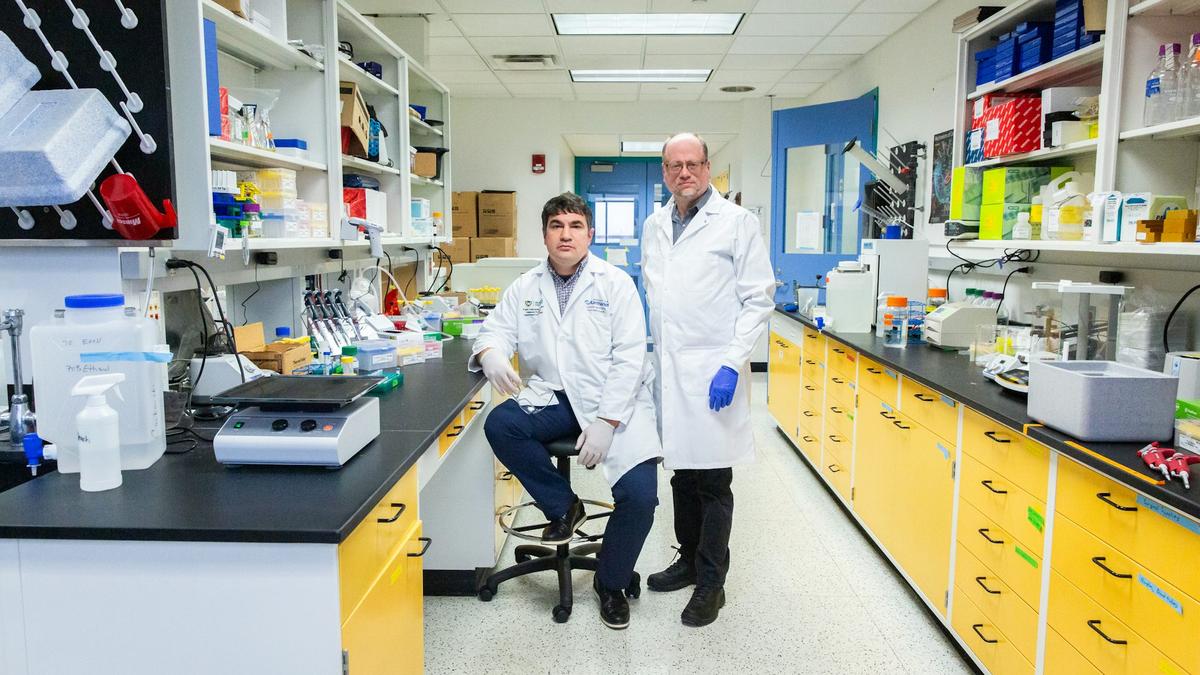
Every so often, researchers discover a connection between what were believed to be completely unrelated phenomena. A team from the University of Georgia in the U.S. published one such report in the journal PLoS Genetics on September 16.  They discovered that exposing mammalian and fungal cells to the heavy metal nickel resulted in sterol deficiency.

Additionally, tolerance to nickel was found to increase when the fungal cells over-expressed a gene called ERG25, which encodes an enzyme. Cells unable to increase levels of the ERG25 enzyme were unable to grow in the presence of a higher nickel concentration.

Until this report, no one suspected nickel toxicity was related to sterol biosynthesis in fungi and animals.

Nickel and sterols in nature

Nickel was once used commonly to secure earrings in pierced ears, but it soon became clear that in a significant fraction of people it was a contact allergen. Nickel compounds are also known to be carcinogenic.

In the wild, on the other hand, plants, bacteria, and fungi need nickel for the normal function of an important enzyme called urease. For example, the fungus Cryptococcus neoformans uses urease to help it spread and colonise.

Sterols are an important chemical component of the cell membranes of plants, animals, and fungi. The compound makes the membranes more rigid.

In mammals including humans, the principal sterol is cholesterol. If it is present in high concentrations in the body, it tends to be deposited in the inner lining of our blood vessels. As the deposits accumulate, they block the flow of blood, eventually leading to chest pain, heart attack, and/or stroke.

Doctors widely use drugs called statins to reduce the amount of cholesterol the body makes — i.e. cholesterol biosynthesis — to avoid these adverse outcomes.

In fungi, including yeast, the major sterol is ergosterol. Blocking ergosterol biosynthesis can adversely affect fungal growth. In fact many of the most important agents humans use to fight fungal infections are azoles (like fluconazole), which inhibit ergosterol biosynthesis. Other drugs based on polyenes (such as amphotericin B) bind to ergosterol in the membranes of fungal cells and disrupt their integrity.

At the concentrations at which these drugs are used, their active ingredients appear to effectively lower ergosterol levels and inhibit the proteins required for its biosynthesis. But they don’t act against cholesterol. Thus the invading fungus is killed while the cells of the infected mammal or plant are spared.

A surprising connection

In their study, the University of Georgia researchers first found that a ‘normal’ strain of Cryptococcus neoformans, a.k.a. a wild-type strain, could grow in a medium supplemented with up to 250 millimoles of nickel sulphate. At this concentration, the number of nickel atoms in the medium is the same as that of sodium atoms present in a solution with 14.6 of mg salt per litre. To compare, seawater contains 35 grams of salt in a litre.

Urease is the only enzyme in C. neoformans known to require nickel for its activity. The researchers wanted to check whether strains of C. neoformans modified to impair its ability to take up nickel from the medium, to attach nickel to urease, or to make the urease thereafter would be more sensitive to nickel than a wild-type strain. It was reasonable to expect that the mutated strains would show altered sensitivity to nickel.

But when the researchers created the mutated strain, they found it survived and grew as well as the wild-type strain in a medium supplemented with 250 millimoles of nickel sulphate. It was a sign that urease was not involved in helping the fungus tolerate nickel.

And then the researchers did what researchers often do. Separate from the urease-impaired strain, they also prepared 284 other C. neoformans mutants with a different single gene deleted in each mutant. One possible reason is that they wanted to double-check the nickel-impaired strain’s response to a growth medium containing nickel. Another is that the researchers tested the additional mutants simply because the opportunity cost of doing so was low.

One of these 284 mutant strains lacked a protein called sterol response element 1 (Sre1). It turned out to be the only strain to exhibit a great sensitivity to nickel — yet another and bigger surprise. This is because Sre1 regulates the expression of genes that control sterol biosynthesis. Instantly, the focus of the study shifted from the urease mutants to Sre1 and the genes regulated by it.

Serendipitous discoveries like this often take on a life of their own, going on to prompt additional downstream research and innovation.

From SRE1 to ERG25

The gene that encodes the Sre1 protein is conserved in all animals. In other words, once an organism evolved to have this protein, it didn’t lose the protein as it continued to evolve. In higher animals including humans, Sre1 is called the sterol regulatory element binding protein (SREBP).

When cholesterol levels in the body are low, cells break up the SREBP protein and a fragment is moved into the cell nucleus. There this fragment turns ‘on’ the expression of its target genes: those that encode the enzymes the body needs to synthesise sterols. The researchers found that nickel triggered the cleavage of SREBP.

The absence of SREBP in the Sre1 mutant thus caused C. neoformans to become hypersensitive to nickel.

Several sterol biosynthetic genes are turned on when the SREBP fragment enters the nucleus. The researchers hypothesised that if the body is to tolerate nickel, one or more of these genes has to be turned ‘on’. To test this they over-expressed each sterol biosynthesis gene in an Sre1 mutant strain and found that the over-expression of ERG25 gene alone restored nickel tolerance to the strain.

The researchers also grew human cells in cultures with nickel and cultures without. They found that after 72 hours cells exposed to nickel had lower amounts of cholesterol. This was similar to nickel’s effect on ergosterol reduction in C. neoformans. 

Possibility of novel treatment

The research team is already addressing a number of questions arising from this work. To name three: Can genes corresponding to ERG25 in other fungi confer nickel tolerance in a Cryptococcus strain that lacks its own ERG25 gene? Is the sterol biosynthetic function of the ERG25 enzyme required for its nickel tolerance function? And does the human gene corresponding to ERG25 play a similar role in nickel tolerance in human cells?

Beyond these questions lies the possibility of novel treatment. The protein whose recipe the ERG25 gene encodes has a known role in sterol biosynthesis. Now it is known it also confers nickel tolerance — which might involve diverting the protein from the sterol biosynthesis complex to a different nickel-tolerance complex. A drug blocking such a diversion between complexes could potentially act as a novel antifungal agent.

D.P. Kasbekar is a retired scientist.

Published – November 05, 2024 05:30 am IST



Source link

Science

Post navigation

Previous Post: Death toll in Lebanon crosses 3,000 in 13-month Israel-Hezbollah war, Health Ministry says
Next Post: Is The US Election Really So Close?

Related Posts

  • Dry weather threatens Ivory Coast cocoa crop, farmers say
    Dry weather threatens Ivory Coast cocoa crop, farmers say Science
  • Nanometre ‘tank’ of helium reveals weird waves never seen before
    Nanometre ‘tank’ of helium reveals weird waves never seen before Science
  • Scientists spin diamonds at a billion RPM to test the limits of physics
    Scientists spin diamonds at a billion RPM to test the limits of physics Science
  • Scientists identify molten layer deep within interior of Mars
    Scientists identify molten layer deep within interior of Mars Science
  • NASA announces overhaul of Artemis lunar programme amid technical delays
    NASA announces overhaul of Artemis lunar programme amid technical delays Science
  • Science for all newsletter how do lidocaine ointments work? 
    Science for all newsletter how do lidocaine ointments work?  Science

More Related Articles

South Korean team develops ‘Iron Man’ robot that helps paraplegics walk South Korean team develops ‘Iron Man’ robot that helps paraplegics walk Science
Israel Gaza war: what is a famine Israel Gaza war: what is a famine Science
UK regulators rush to assess risks of latest Anthropic AI model: Report UK regulators rush to assess risks of latest Anthropic AI model: Report Science
New mpox clade Ib disproportionately affects children New mpox clade Ib disproportionately affects children Science
Constipation increases your risk of a heart attack, new study finds Constipation increases your risk of a heart attack, new study finds Science
Two from India win 2025 Ig Nobel prize for engineering design Two from India win 2025 Ig Nobel prize for engineering design Science
SiteLock

Archives

  • May 2026
  • April 2026
  • March 2026
  • February 2026
  • January 2026
  • December 2025
  • November 2025
  • October 2025
  • September 2025
  • August 2025
  • July 2025
  • June 2025
  • May 2025
  • April 2025
  • March 2025
  • February 2025
  • January 2025
  • December 2024
  • November 2024
  • October 2024
  • September 2024
  • August 2024
  • July 2024
  • June 2024
  • May 2024
  • April 2024
  • March 2024
  • February 2024
  • January 2024
  • December 2023
  • November 2023
  • October 2023
  • September 2023
  • August 2023
  • July 2023
  • June 2023
  • May 2023
  • April 2023
  • March 2023
  • February 2023
  • January 2023
  • December 2022
  • November 2022
  • October 2022
  • September 2022
  • August 2022
  • July 2022
  • June 2022
  • May 2022

Categories

  • Business
  • Nation
  • Science
  • Sports
  • World

Recent Posts

  • IPL 2026: Delhi Capitals’ batters have failed to take responsibility, says Venugopala Rao
  • ‘Jhalmuri’ turns victory flavour at BJP government’s maiden oath ceremony in West Bengal
  • Labour loses power in Wales for first time since 1999 devolution
  • RBI officers seek Governor’s intervention to correct promotion policy
  • EC publishes Index Cards for Assembly polls

Recent Comments

  1. Jamesnep on UP Teacher Who Asked Students To Slap Muslim Classmate
  2. CalebKar on UP Teacher Who Asked Students To Slap Muslim Classmate
  3. Alvinadubs on UP Teacher Who Asked Students To Slap Muslim Classmate
  4. CharlesVOX on UP Teacher Who Asked Students To Slap Muslim Classmate
  5. Robertgop on UP Teacher Who Asked Students To Slap Muslim Classmate
  • Budget 2024 | Nirmala Sitharaman delivers her shortest Budget speech
    Budget 2024 | Nirmala Sitharaman delivers her shortest Budget speech Business
  • Access Denied
    Access Denied Nation
  • Access Denied World
  • Concussion Sub Labuschagne Steers Australia To Victory Over Proteas
    Concussion Sub Labuschagne Steers Australia To Victory Over Proteas Sports
  • How does plastic pollution affect health? | Explained
    How does plastic pollution affect health? | Explained World
  • Abhimanyu Easwaran, Nitish Reddy Fail To Impress; Report Says India Stars’ ‘Inept Technique’ Exposed In Australia
    Abhimanyu Easwaran, Nitish Reddy Fail To Impress; Report Says India Stars’ ‘Inept Technique’ Exposed In Australia Sports
  • Shreyas Iyer Stars For Mumbai After Much ‘Domestic Cricket’ Criticism. KKR Coach Says, “When It Mattered…”
    Shreyas Iyer Stars For Mumbai After Much ‘Domestic Cricket’ Criticism. KKR Coach Says, “When It Mattered…” Sports
  • Access Denied Sports

Editor-in-Chief:
Mohammad Ariff,
MSW, MAJMC, BSW, DTL, CTS, CNM, CCR, CAL, RSL, ASOC.
editor@artifex.news

Associate Editors:
1. Zenellis R. Tuba,
zenelis@artifex.news
2. Haris Daniyel
daniyel@artifex.news

Photograher:
Rohan Das
rohan@artifex.news

Artifex.News offers Online Paid Internships to college students from India and Abroad. Interns will get a PRESS CARD and other online offers.
Send your CV (Subjectline: Paid Internship) to internship@artifex.news

Links:
Associate Journalism
About Us
Privacy Policy

News Links:
Breaking News
World
Nation
Sports
Business
Entertainment
Lifestyle

Registered Office:
72/A, Elliot Road, Kolkata - 700016
Tel: 033-22277777, 033-22172217
Email: office@artifex.news

Editorial Office / News Desk:
No. 13, Mezzanine Floor, Esplanade Metro Rail Station,
12 J. L. Nehru Road, Kolkata - 700069.
(Entry from Gate No. 5)
Tel: 033-46011099, 033-46046046
Email: editor@artifex.news

Copyright © 2023 Artifex.News Newsportal designed by Artifex Infotech.