


Skip to content
  • Facebook
  • X
  • Linkedin
  • WhatsApp
  • YouTube
  • Associate Journalism
  • About Us
  • Privacy Policy
  • 033-46046046
  • editor@artifex.news
Artifex.News

Artifex.News

Stay Connected. Stay Informed.

  • Breaking News
  • World
  • Nation
  • Sports
  • Business
  • Science
  • Entertainment
  • Lifestyle
  • Toggle search form
  • Access Denied
    Access Denied Nation
  • On Camera, Vulgar Dancing, Drunken Celebration At Government School In Bihar
    On Camera, Vulgar Dancing, Drunken Celebration At Government School In Bihar Nation
  • “He Has Shown The World And Himself What He Is Capable Of”: Ben Stokes In Gus Atkinson’s Praise
    “He Has Shown The World And Himself What He Is Capable Of”: Ben Stokes In Gus Atkinson’s Praise Sports
  • Access Denied
    Access Denied Nation
  • Pope Francis Faces “Complex Clinical Picture”, Hospital Stay Extended: Vatican
    Pope Francis Faces “Complex Clinical Picture”, Hospital Stay Extended: Vatican World
  • In RTI Reply, SBI Refuses To Share Info On Its Electoral Bond Guidelines
    In RTI Reply, SBI Refuses To Share Info On Its Electoral Bond Guidelines Nation
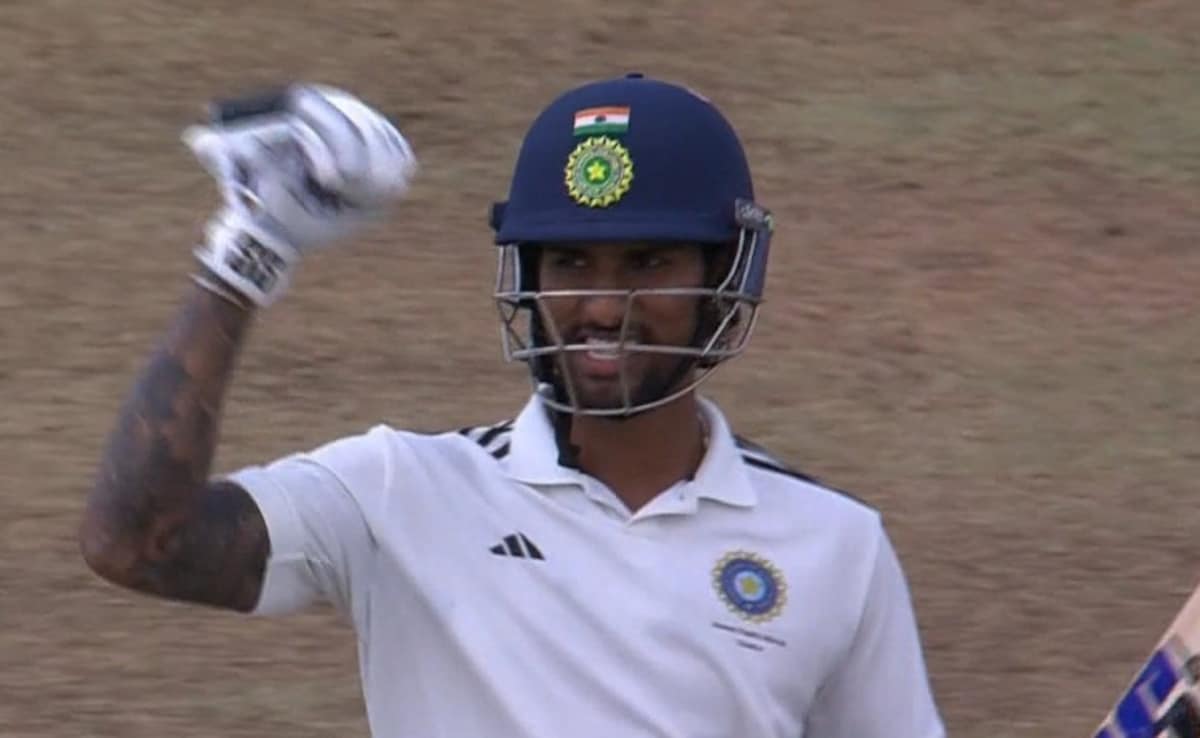
  • Duleep Trophy: Tilak Varma, Pratham Tons Guide India A To Total Command
    Duleep Trophy: Tilak Varma, Pratham Tons Guide India A To Total Command Sports
  • Access Denied
    Access Denied Nation
Old doubts linger, yet new Microsoft quantum chip raises the stakes

Old doubts linger, yet new Microsoft quantum chip raises the stakes

Posted on October 14, 2026 By admin


In February, the Microsoft Quantum research group announced a new kind of computer processor called Majorana 1. According to the tech giant, the processor contained the world’s first topological qubits, built with a new material it called a ‘topoconductor’. Majorana 1 contained eight qubits, with Microsoft Quantum saying it would in future hold a million.

The group published its paper in Nature the same day, and that stoked the early concerns about what Microsoft Quantum had actually demonstrated.

Foremost, the paper was considerably more circumspect than Microsoft’s press release. The researchers had built devices made of indium-arsenide-aluminium and discussed a way to measure, in a ‘single shot’, the parity of an electronic state, i.e. whether the number of electrons was odd or even in the state, in the wire.

The team called this measurement a “necessary ingredient” for a highly sought after form of quantum computing.

However, there was a significant gap between the scopes of the paper and of the press release, prompting concerns in the scientific community that Microsoft was trying to lay claim to a commercially lucrative technology without first proving that it actually worked.

Zero modes

Quantum computing is a new, more powerful form of computing that scientists believe can solve some problems much better than conventional devices can. However, the quantum bits, or qubits, these machines are based on are notoriously fragile.

A qubit stores information in a quantum state, which can be disturbed by even the slightest interactions with stray heat or stray magnetic fields. Another technology called quantum error correction can compensate but not without imposing additional technological hurdles.

Many leading quantum computers encode qubits in superconducting circuits, while others use atoms, ions or light. At least on paper, topological quantum computing shows another way.

In this domain, Microsoft Quantum has been trying to build a quantum computer with qubits based on particles called Majorana zero modes (MZMs). Technically, MZMs are ‘emergent quasiparticles’. The physicists Sankar Das Sarma, Roman Lutchyn, and Jay Sau had predicted in 2010 that they would occur at the ends of specially engineered superconducting wires.

Two MZMs separated by some space constitutes a particular quantum state, and whether that state is occupied or not can encode information, like 0 and 1. This way, each MZM pair stores information in both particles together.

This is less like one half being stored in each particle and more like both particles storing the information together: many small disturbances affecting only one end cannot destroy the information, yet both ends are required to access it. The space between the two MZMs of a pair is crucial to achieve this.

MZMs also follow some strange rules. For example, carrying out one exchange of MZMs and then another can create a different quantum state than performing the same exchange in the reverse order.

Airtight inference

But a big problem today is to ascertain if a device with the necessary superconducting wires and other parts also has MZMs. This is because there are many impostor states that are easier to create but which lack the MZMs’ unusual properties. There is no way to directly spot an MZM with some kind of microscope and claim success. Instead, scientists and engineers have to measure the device’s properties in different ways, and from that infer the presence of MZMs.

This inference has to be airtight, and the dispute in the Microsoft case is that its inference is not.

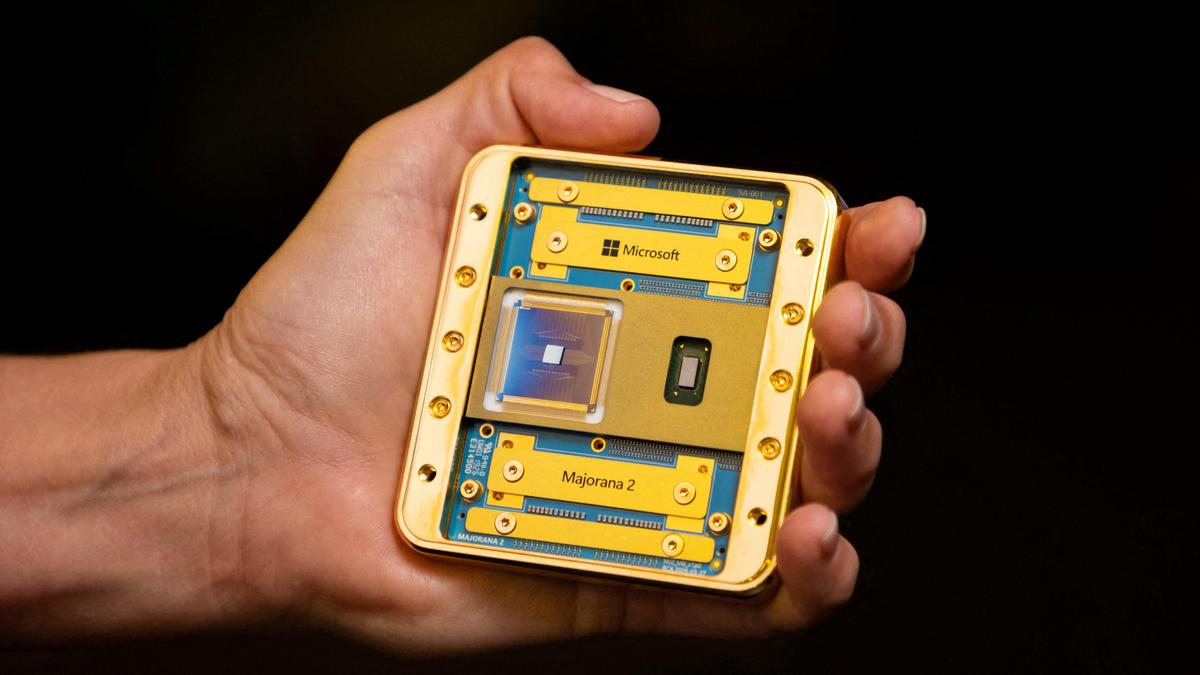
The matter is still on, in fact: on June 2 this year, Microsoft Quantum announced a new processor called Majorana 2 and uploaded a new preprint paper. Here, the team replaced aluminium with lead, whose superconducting state is harder to disrupt, to make the desired state more robust. It also switched to a gallium-antimonide substrate and redesigned the semiconductor stack to reduce disorder.

The upgrade was apparently dramatic: in Microsoft’s telling, the topological gap — the energy needed to excite the system out of its protected state — had increased from around 30 microelectron-volts to 70 microelectron-volts. The parity switching time had also increased from a few milliseconds to around 20 seconds.

The group presented this as proof of topological quantum computing’s promise because the new numbers were indicative of the encoded information being more robustly protected from disturbances. On the back of these reported advances, the company said it would build a scalable quantum computer by 2029 — a significantly shortened deadline considering how complex the  technology still is.

Rebuttal and response

However, not everyone is convinced Microsoft learnt the bigger lesson from last time. As University of Pittsburgh professor Sergey Frolov has said, Microsoft’s previous record has left him unwilling to treat the new work as resting on a well-understood foundation.

MZMs are very difficult to create and detect. For example, researchers from TU-Delft in the Netherlands published a paper in Nature in 2018 claiming they had spotted MZMs. But it had to be retracted three years later after independent scientists found problems in the data analysis.

In its 2025 paper, the Microsoft Quantum team used the topological gap protocol it had presented in a 2023 paper: a way to use electrical conductance data to identify combinations of magnetic field and gate voltage that are consistent with gapped MZMs. The team then used a technique called radio-frequency interferometry to check one region of the device, and where the team said the data had evidence of parity switching.

But at an American Physical Society meeting a month later, scientists remained sceptical. The Microsoft team had demonstrated one measurement on one wire in the paper and itself presented additional measurements of a different kind, but many physicists still had doubts.

Cornell University professor Eun-Ah Kim said the data was quite weak while Argonne National Laboratory physicist Kartiek Agarwal called the paper’s claims premature, even if not deserving to be dismissed. Henry Legg, a lecturer at the University of St. Andrews in Scotland, in particular said the headline data came from a small number of measurements on one device.

Then, on June 24 this year, Nature published a rebuttal by Dr. Legg alongside a response from Microsoft Quantum (physicist Chetan Nayak was the corresponding author). In his rebuttal, based on his own work over the last year, Dr. Legg contended that Microsoft’s device itself may not have been qualified to host MZMs, that the underlying data of how electric currents move in the device appeared consistent with a gapless and highly disordered system, and that the topological gap protocol was sensitive, rather than agnostic, to how a researcher chose to analyse the system.

In response, Nayak et al. disputed Dr. Legg’s logic and said its claims were based on the radio-frequency measurements, not the protocol.

Many physicists believe Microsoft’s attempts are promising and commend its transparency with data. But many physicists also remain unconvinced that the qubits in Majorana 1 and Majorana 2 are working topological qubits.

mukunth.v@thehindu.co.in

Published – October 15, 2026 09:00 am IST


Source link

Science

Post navigation

Previous Post: Quiz on Kalam – The Hindu
Next Post: Two arrested for attacking security guard with knife in Besant Nagar

Related Posts

  • science for all newsletter What are Trojan asteroids?
    science for all newsletter What are Trojan asteroids? Science
  • Do domestic chicks have innate ability to recognise faces?
    Do domestic chicks have innate ability to recognise faces? Science
  • The Indian scientist couple history forgot — and the new study bringing their ‘Jeewanu’ back to life
    The Indian scientist couple history forgot — and the new study bringing their ‘Jeewanu’ back to life Science
  • Who is Anil Menon, the Indian-origin NASA astronaut of Malayali descent set to travel to space?
    Who is Anil Menon, the Indian-origin NASA astronaut of Malayali descent set to travel to space? Science
  • Indian scientists recreate key functions of human Placenta on chip
    Indian scientists recreate key functions of human Placenta on chip Science
  • CSIR-CCMB develops India-specific tool to predict Sickle Cell severity
    CSIR-CCMB develops India-specific tool to predict Sickle Cell severity Science

More Related Articles

To curb antimicrobial resistance, government may include antibiotics in definition of new drug To curb antimicrobial resistance, government may include antibiotics in definition of new drug Science
Ganga Hospital Chairman ranked among top 2% of world scientists Ganga Hospital Chairman ranked among top 2% of world scientists Science
Probability of survival decreases with increased duration of CPR Probability of survival decreases with increased duration of CPR Science
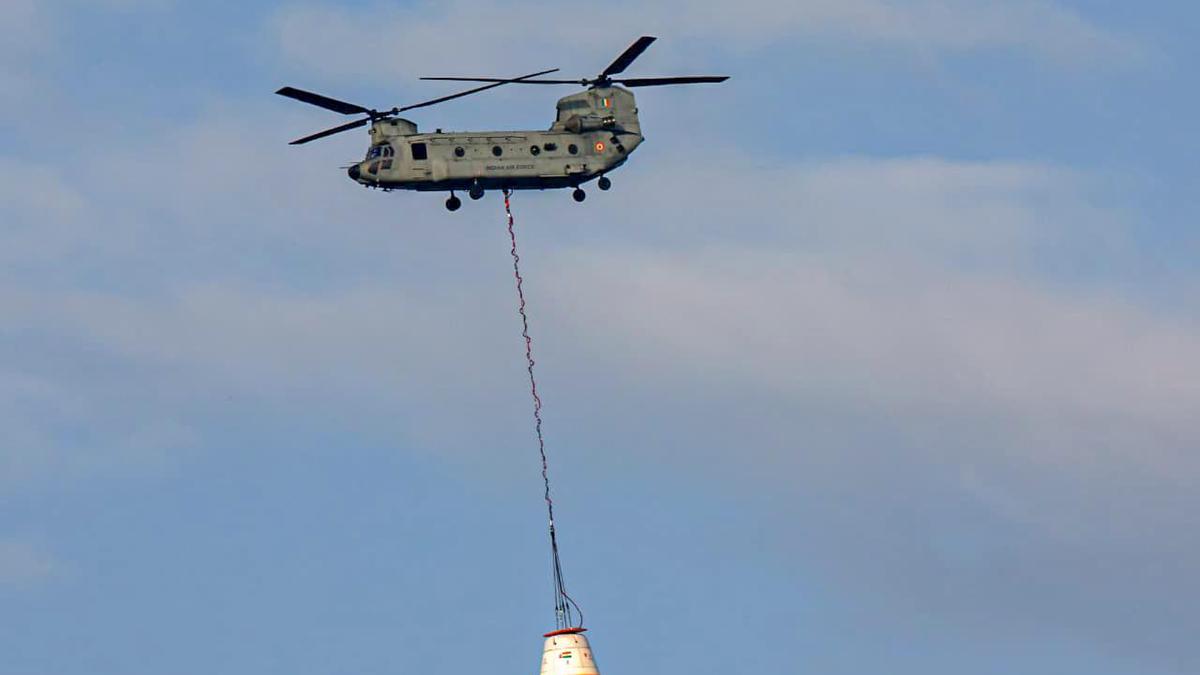
Gaganyaan mission: ISRO completes second Integrated Air Drop Test Gaganyaan mission: ISRO completes second Integrated Air Drop Test Science
On the physics of pressure: how the microscopic world interacts with us On the physics of pressure: how the microscopic world interacts with us Science
ISRO shares video showing Pragyan rover roaming around Shiv Shakti point ISRO shares video showing Pragyan rover roaming around Shiv Shakti point Science
SiteLock

Archives

  • October 2026
  • September 2026
  • August 2026
  • July 2026
  • June 2026
  • May 2026
  • April 2026
  • March 2026
  • February 2026
  • January 2026
  • December 2025
  • November 2025
  • October 2025
  • September 2025
  • August 2025
  • July 2025
  • June 2025
  • May 2025
  • April 2025
  • March 2025
  • February 2025
  • January 2025
  • December 2024
  • November 2024
  • October 2024
  • September 2024
  • August 2024
  • July 2024
  • June 2024
  • May 2024
  • April 2024
  • March 2024
  • February 2024
  • January 2024
  • December 2023
  • November 2023
  • October 2023
  • September 2023
  • August 2023
  • July 2023
  • June 2023
  • May 2023
  • April 2023
  • March 2023
  • February 2023
  • January 2023
  • December 2022
  • November 2022
  • October 2022
  • September 2022
  • August 2022
  • July 2022
  • June 2022
  • May 2022

Categories

  • Business
  • Nation
  • Science
  • Sports
  • World

Recent Posts

  • Netflix names former Disney executive Rice as new content chief as Bajaria departs
  • CJP Tiranga march LIVE | Delhi Police allows flag-waving by select group, urges public to stay away
  • Dining out: how safe is the food on your plate?
  • Trump’s new press secretary defends ‘lawyer’ title
  • PAC grills Centre, States on ‘fraud markers’ flagged by CAG in SC scholarship schemes

Recent Comments

  1. Davidbrurf on UP Teacher Who Asked Students To Slap Muslim Classmate
  2. Danielwhipt on UP Teacher Who Asked Students To Slap Muslim Classmate
  3. Danielwhipt on UP Teacher Who Asked Students To Slap Muslim Classmate
  4. CharlesGah on UP Teacher Who Asked Students To Slap Muslim Classmate
  5. Danielwhipt on UP Teacher Who Asked Students To Slap Muslim Classmate
  • Hyundai signs pact for acquisition, assignment of identified assets related to General Motors India’s Talegaon Plant
    Hyundai signs pact for acquisition, assignment of identified assets related to General Motors India’s Talegaon Plant Business
  • Access Denied Sports
  • Congress Govt people-centric in 1000 days: TPCC chief
    Congress Govt people-centric in 1000 days: TPCC chief Nation
  • AAP MP Raghav Chadha Demands Bharat Ratna For Bhagat Singh
    AAP MP Raghav Chadha Demands Bharat Ratna For Bhagat Singh Nation
  • “Underutilised…”: Ex-India Star Points Out Suryakumar Yadav’s ‘Obvious Mistake’ Against South Africa
    “Underutilised…”: Ex-India Star Points Out Suryakumar Yadav’s ‘Obvious Mistake’ Against South Africa Sports
  • Trump picks Massad Boulos to serve as adviser on Arab, Middle Eastern affairs
    Trump picks Massad Boulos to serve as adviser on Arab, Middle Eastern affairs World
  • Rohit Sharma, Ritika Sajdeh Blessed With Baby Boy: Sources
    Rohit Sharma, Ritika Sajdeh Blessed With Baby Boy: Sources Sports
  • Women’s T20 World Cup: England thrash New Zealand to knock champions out
    Women’s T20 World Cup: England thrash New Zealand to knock champions out Sports

Editor-in-Chief:
Mohammad Ariff,
MSW, MAJMC, BSW, DTL, CTS, CNM, CCR, CAL, RSL, ASOC.
editor@artifex.news

Associate Editors:
1. Zenellis R. Tuba,
zenelis@artifex.news
2. Haris Daniyel
daniyel@artifex.news

Photograher:
Rohan Das
rohan@artifex.news

Associate Journalists
1. Subrata Paul - AN/2020/01
2. Quamruz Zaman - AN/2021/22
3. Ahmed Sha - AN/2021/035
4. Ajay Kumar Shaw - AN/2021/39
5. Tahqiqul Hoda - AN/2021/21

Artifex.News offers Online Paid Internships to college students from India and Abroad. Interns will get a PRESS CARD and other online offers.
Send your CV (Subjectline: Paid Internship) to internship@artifex.news

Links:
Associate Journalism
About Us
Privacy Policy

News Links:
Breaking News
World
Nation
Sports
Business
Entertainment
Lifestyle

Registered Office:
72/A, Elliot Road, Kolkata - 700016
Tel: 033-22277777, 033-22172217
Email: office@artifex.news

Editorial Office / News Desk:
No. 13, Mezzanine Floor, Esplanade Metro Rail Station,
12 J. L. Nehru Road, Kolkata - 700069.
(Entry from Gate No. 5)
Tel: 033-46011099, 033-46046046
Email: editor@artifex.news

Copyright © 2023 Artifex.News Newsportal designed by Artifex Infotech.