



Skip to content
  • Facebook
  • X
  • Linkedin
  • WhatsApp
  • YouTube
  • Associate Journalism
  • About Us
  • Privacy Policy
  • 033-46046046
  • editor@artifex.news
Artifex.News

Artifex.News

Stay Connected. Stay Informed.

  • Breaking News
  • World
  • Nation
  • Sports
  • Business
  • Science
  • Entertainment
  • Lifestyle
  • Toggle search form
  • AMI orders 9,000 NVIDIA Rubin GPUs for Hyderabad facility
    AMI orders 9,000 NVIDIA Rubin GPUs for Hyderabad facility Business
  • Actor Amy Schumer Says She Has Cushing’s Syndrome. All About The Disorder
    Actor Amy Schumer Says She Has Cushing’s Syndrome. All About The Disorder World
  • What is the TLP challenge for the Pakistan government? | Explained
    What is the TLP challenge for the Pakistan government? | Explained World
  • Access Denied World
  • Imran Khan appears before Pakistan’s top court via video link; hearing ends without him speaking
    Imran Khan appears before Pakistan’s top court via video link; hearing ends without him speaking World
  • Access Denied Sports
  • Rupee recovers from all-time low to settle 6 paise higher at 84.40 against U.S. dollar
    Rupee recovers from all-time low to settle 6 paise higher at 84.40 against U.S. dollar Business
  • Asian cities are growing upwards more than outwards, satellite data show
    Asian cities are growing upwards more than outwards, satellite data show Science
Indian scientists recreate key functions of human Placenta on chip

Indian scientists recreate key functions of human Placenta on chip

Posted on July 4, 2026 By admin


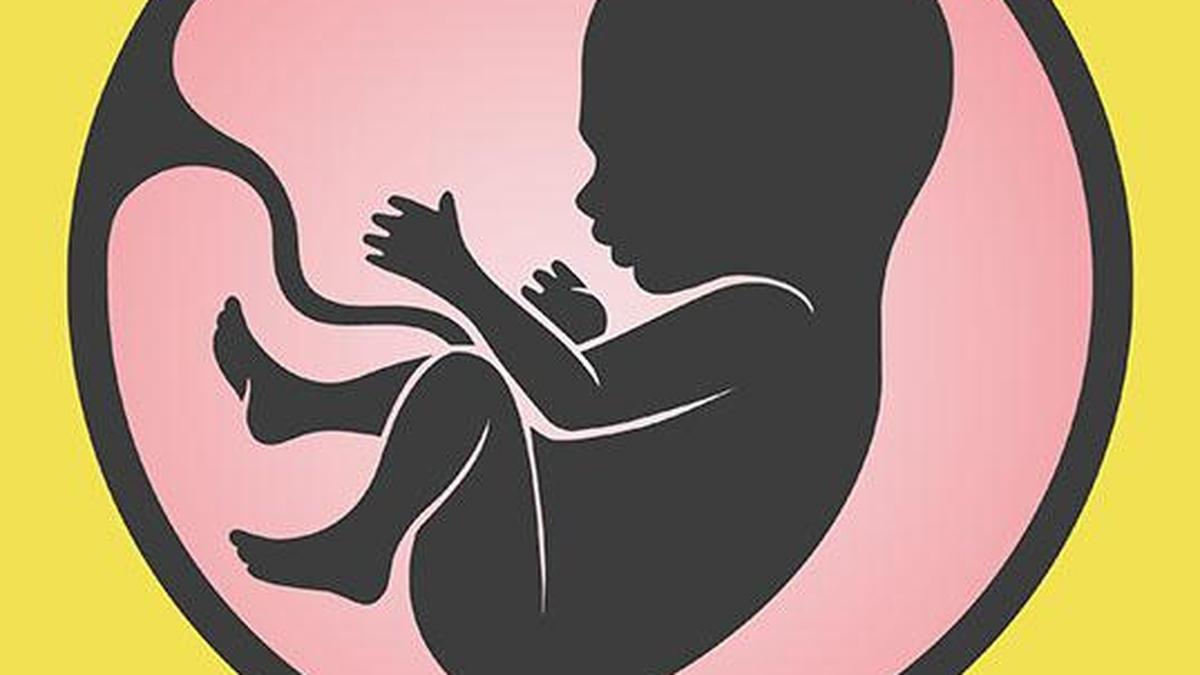
Before a baby’s first breath, life depends on an extraordinary organ that most people rarely think about — the placenta.

Acting as the baby’s first life-support system, the placenta delivers oxygen and nutrients, removes waste products, protects the developing foetus and produces hormones essential for sustaining pregnancy.

Yet, despite its critical role in human development, it remains one of the least understood human organs because it is difficult to study directly during pregnancy. But that mystery may be somewhat unravelled now.

Researchers from the ICMR-National Institute for Research on Women’s Health (formerly ICMR-NIRRCH), Mumbai, in collaboration with IIT Bombay, have developed an indigenous lab-grown ‘placenta-on-chip’ platform that recreates key functions of the human placental barrier.

The study, published in the journal Biofabrication, describes a microphysiological system that mimics the interface between the mother and foetus.

The device reproduces several essential functions of the human placenta, including hormone production, nutrient transfer, waste exchange and selective barrier function — some of the most important biological processes that sustain pregnancy.

The researchers said that the platform produces pregnancy hormones, transports glucose from the maternal to foetal side, removes waste products such as urea and responds to hyperglycaemic conditions resembling gestational diabetes.

These capabilities make it a promising platform for studying placental biology, understanding pregnancy complications, evaluating how medicines cross the placental barrier and supporting the development of more predictive human-relevant research models.

Unlike many existing placenta-on-chip systems that require sophisticated microfluidic equipment and continuous perfusion systems, the Indian platform has been designed to be simple, scalable and compatible with conventional laboratory workflows, potentially enabling wider adoption by research laboratories, authors claimed.

“Every one of us depended on a placenta for survival before birth, yet it remains one of the least understood human organs,” said Deepak Modi, Scientist G at ICMR-National Institute for Research on Women’s Health (ICMR-NIRWoH) and co-corresponding author of the study.

“The placenta is the gatekeeper between mother and baby. By recreating key functions of this remarkable organ on a chip, we hope to provide researchers with a practical human-based platform to better understand pregnancy, improve maternal and fetal health and, wherever scientifically appropriate, reduce dependence on animal experimentation,” Prof Modi said.

The work was led by Anshul Bhide, who carried out much of the biological validation of the system. “Studying the human placenta in real time is extremely challenging,” he said.

“This platform gives us the ability to observe how nutrients, hormones and other molecules move across the maternal-fetal interface under controlled conditions. It opens new opportunities to investigate pregnancy complications and understand how the placental barrier responds to health and disease in pregnancy.

“For example, we were able to model hyperglycaemic conditions resembling gestational diabetes and observe changes in placental transport, demonstrating the platform’s potential for studying pregnancy-associated disorders,” he stated.

The engineering design and fabrication of the platform were developed at IIT Bombay under the guidance of Abhijit Majumder, co-corresponding author of the paper.

“Organ-on-chip technologies are transforming biomedical research worldwide because they allow us to recreate human physiology in the laboratory,” Prof Majumder said.

“Our objective was to develop a robust and scalable platform that combines engineering simplicity with biological relevance. By making the system compatible with standard laboratory infrastructure, we hope to accelerate its adoption for pregnancy and reproductive health research,” he added.

The study also highlights the importance of interdisciplinary collaboration between engineers and biomedical scientists.

According to co-author Sourav Mukherjee, the project brought together expertise from reproductive biology, microengineering, cell biology and translational research.

“Such collaborations are essential for developing next-generation human-relevant models that can complement or replace animal studies in specific applications,” he said.

Scientists believe advanced human-cell-based systems such as placenta-on-chip platforms could play an increasingly important role in evaluating how medicines cross the placental barrier, identifying therapies that are safe during pregnancy and reducing reliance on animal models in selected areas of reproductive research.

The technology may also provide new insights into disorders such as gestational diabetes, fetal growth restriction and pre-eclampsia.

Geetanjali Sachdeva, Director of ICMR-NIRWoH, said the work reflects the institute’s commitment to developing innovative solutions for women’s and reproductive health.

“This study demonstrates how cutting-edge interdisciplinary science can address important challenges in maternal and fetal health,” Dr. Sachdeva said.

“The development of advanced human-relevant models within the country strengthens India’s capabilities in biomedical innovation and aligns with global efforts to develop more predictive alternatives to animal experimentation,” she added.

Published – July 04, 2026 05:13 pm IST



Source link

Science

Post navigation

Previous Post: NTPC Ltd’s BESS proposal under active consideration of KSEB
Next Post: Pope Leo urges U.S. to welcome immigrants in July 4 appeal from Lampedusa

Related Posts

  • Could this asteroid be a piece of the moon? A Chinese spacecraft is about to find out
    Could this asteroid be a piece of the moon? A Chinese spacecraft is about to find out Science
  • ‘This is crucial juncture for space missions’, says Shubhanshu Shukla, as he prepares for second space voyage
    ‘This is crucial juncture for space missions’, says Shubhanshu Shukla, as he prepares for second space voyage Science
  • Underwater mapping reveals insights into melting of Antarctica’s ice shelves
    Underwater mapping reveals insights into melting of Antarctica’s ice shelves Science
  • Prof. Neena Gupta: ‘Not every problem will give you a eureka moment‘ National Mathematics Day
    Prof. Neena Gupta: ‘Not every problem will give you a eureka moment‘ National Mathematics Day Science
  • WHO urges rapid access to mpox diagnostic tests
    WHO urges rapid access to mpox diagnostic tests Science
  • Why does sadness cause us to shed tears?
    Why does sadness cause us to shed tears? Science

More Related Articles

Biodiversity everywhere is ordered by a common ‘hidden’ pattern Biodiversity everywhere is ordered by a common ‘hidden’ pattern Science
What is the legal framework for space missions like the Chandrayaan 3 and Aditya L-1? | Explained What is the legal framework for space missions like the Chandrayaan 3 and Aditya L-1? | Explained Science
How new fossils and modern technology are tracing the origins of snakes How new fossils and modern technology are tracing the origins of snakes Science
2025 physics Nobel Prize: the magic of quantum pervades all scales 2025 physics Nobel Prize: the magic of quantum pervades all scales Science
Blood tests allow 30-year estimates of women’s cardio risks: study Blood tests allow 30-year estimates of women’s cardio risks: study Science
Science Quiz | On historical diseases that changed history Science Quiz | On historical diseases that changed history Science
SiteLock

Archives

  • October 2026
  • September 2026
  • August 2026
  • July 2026
  • June 2026
  • May 2026
  • April 2026
  • March 2026
  • February 2026
  • January 2026
  • December 2025
  • November 2025
  • October 2025
  • September 2025
  • August 2025
  • July 2025
  • June 2025
  • May 2025
  • April 2025
  • March 2025
  • February 2025
  • January 2025
  • December 2024
  • November 2024
  • October 2024
  • September 2024
  • August 2024
  • July 2024
  • June 2024
  • May 2024
  • April 2024
  • March 2024
  • February 2024
  • January 2024
  • December 2023
  • November 2023
  • October 2023
  • September 2023
  • August 2023
  • July 2023
  • June 2023
  • May 2023
  • April 2023
  • March 2023
  • February 2023
  • January 2023
  • December 2022
  • November 2022
  • October 2022
  • September 2022
  • August 2022
  • July 2022
  • June 2022
  • May 2022

Categories

  • Business
  • Nation
  • Science
  • Sports
  • World

Recent Posts

  • The 2026 Nobel-winning insights into how Govts should stabilise economies
  • Waste management facility facing closure gutted in Kochi
  • Highground, Shamabala and Golden Eye impress
  • Sunil Bharti Mittal conferred France’s highest civilian award
  • Zelenskyy urges U.S. to ensure Russia respects energy ceasefire

Recent Comments

  1. Lonniedounc on UP Teacher Who Asked Students To Slap Muslim Classmate
  2. Michaeldoown on UP Teacher Who Asked Students To Slap Muslim Classmate
  3. Roberthek on UP Teacher Who Asked Students To Slap Muslim Classmate
  4. Wesleysiz on UP Teacher Who Asked Students To Slap Muslim Classmate
  5. HectorTOk on UP Teacher Who Asked Students To Slap Muslim Classmate
  • Pakistan Minister, U.S. envoy discuss efforts for 2nd round of U.S.-Iran talks
    Pakistan Minister, U.S. envoy discuss efforts for 2nd round of U.S.-Iran talks World
  • India vs Bangladesh: Jasprit Bumrah Dismisses Struggling Yashasvi Jaiswal ‘For Fun’, Virat Kohli Aids Youngster
    India vs Bangladesh: Jasprit Bumrah Dismisses Struggling Yashasvi Jaiswal ‘For Fun’, Virat Kohli Aids Youngster Sports
  • Meesho Q3 Net Loss Widens To Rs 491 Crore Business
  • Bangladeshi Soldiers Detain Ex-Supreme Court Judge Near Border With India
    Bangladeshi Soldiers Detain Ex-Supreme Court Judge Near Border With India World
  • Access Denied Sports
  • Rupee rises 15 paise to close at 95.35 against U.S. dollar
    Rupee rises 15 paise to close at 95.35 against U.S. dollar Business
  • ITC shares jump nearly 9%; mcap soars by ₹32,127 crore amid reports of stake sale
    ITC shares jump nearly 9%; mcap soars by ₹32,127 crore amid reports of stake sale Business
  • Access Denied Sports

Editor-in-Chief:
Mohammad Ariff,
MSW, MAJMC, BSW, DTL, CTS, CNM, CCR, CAL, RSL, ASOC.
editor@artifex.news

Associate Editors:
1. Zenellis R. Tuba,
zenelis@artifex.news
2. Haris Daniyel
daniyel@artifex.news

Photograher:
Rohan Das
rohan@artifex.news

Artifex.News offers Online Paid Internships to college students from India and Abroad. Interns will get a PRESS CARD and other online offers.
Send your CV (Subjectline: Paid Internship) to internship@artifex.news

Links:
Associate Journalism
About Us
Privacy Policy

News Links:
Breaking News
World
Nation
Sports
Business
Entertainment
Lifestyle

Registered Office:
72/A, Elliot Road, Kolkata - 700016
Tel: 033-22277777, 033-22172217
Email: office@artifex.news

Editorial Office / News Desk:
No. 13, Mezzanine Floor, Esplanade Metro Rail Station,
12 J. L. Nehru Road, Kolkata - 700069.
(Entry from Gate No. 5)
Tel: 033-46011099, 033-46046046
Email: editor@artifex.news

Copyright © 2023 Artifex.News Newsportal designed by Artifex Infotech.