

Skip to content
  • Facebook
  • X
  • Linkedin
  • WhatsApp
  • YouTube
  • Associate Journalism
  • About Us
  • Privacy Policy
  • 033-46046046
  • editor@artifex.news
Artifex.News

Artifex.News

Stay Connected. Stay Informed.

  • Breaking News
  • World
  • Nation
  • Sports
  • Business
  • Science
  • Entertainment
  • Lifestyle
  • Toggle search form
  • Wikileaks’ Julian Assange given permission to appeal against U.S. extradition
    Wikileaks’ Julian Assange given permission to appeal against U.S. extradition World
  • Watch: Budget 2024 | What’s in it for MSMEs and manufacturing sector?
    Watch: Budget 2024 | What’s in it for MSMEs and manufacturing sector? Business
  • Saudi ‘Davos In The Desert’ Opens Amid Conflict In Middle East
    Saudi ‘Davos In The Desert’ Opens Amid Conflict In Middle East World
  • Donald Trump’s Classified Documents Case Dismissed By Florida Judge
    Donald Trump’s Classified Documents Case Dismissed By Florida Judge World
  • Access Denied Business
  • Access Denied
    Access Denied Nation
  • Access Denied Sports
  • Access Denied
    Access Denied Nation
Can the newly discovered organelle help engineer plants to fix nitrogen?

Can the newly discovered organelle help engineer plants to fix nitrogen?

Posted on May 4, 2024 By admin


As proposed by Charles Darwin in the nineteenth century, natural selection, the engine that drives evolution, is how species adapt to their environments. Unlike the Neo-Darwinist consensus, the American evolutionary biologist Lynn Margulis did not believe that random genetic mutations were the sole cause of inherited variation. She came up with a new theory called symbiogenesis. The endosymbiotic theory states that organelles like mitochondria and chloroplasts, the sites of cellular respiration and photosynthesis, were once free-living bacteria that were later ingested by the recipient cells. The theory of symbiogenesis was fiercely challenged, including Margulis’s manuscript, which was rejected by 15 academic journals before finally being published in The Journal of Theoretical Biology in 1967. It was not until many years later that mitochondria and chloroplasts were accepted as once being free-living bacteria before becoming endosymbionts inside eukaryotic cells.

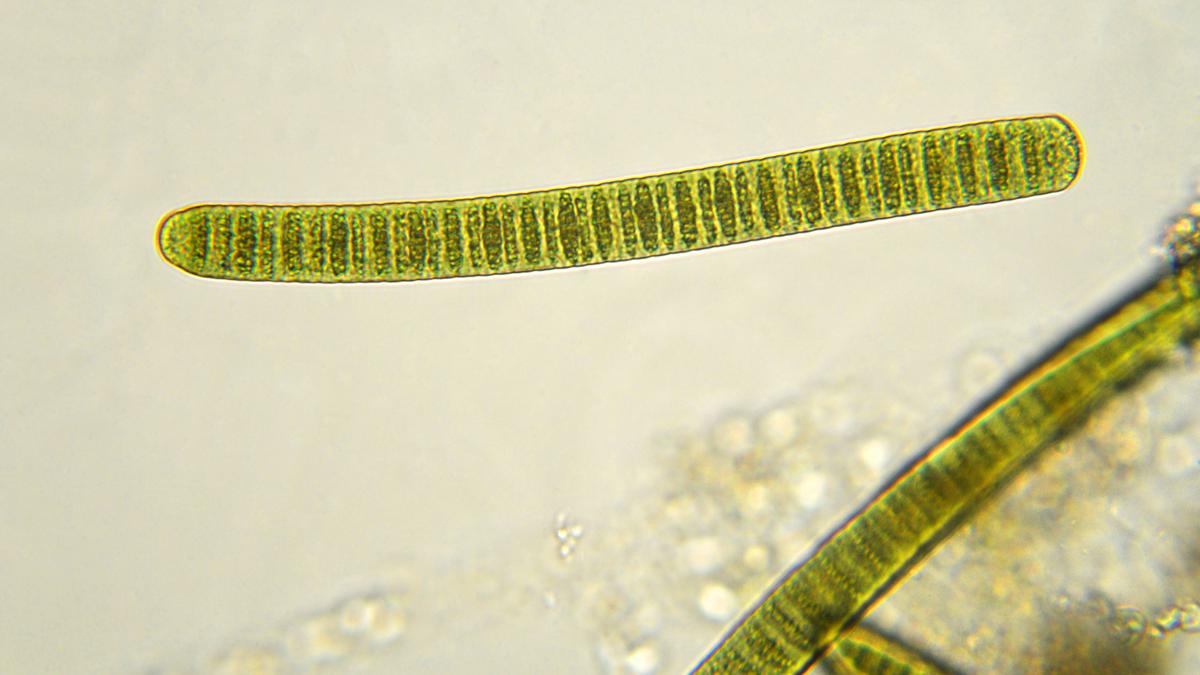
Two papers published recently, one in the journal Science and another in the Cell, have generated new interest in the endosymbiotic theory. The discovery concerns nitrogen fixation. Nitrogen is a key component in proteins and DNA of all living organisms. Although nitrogen gas makes up about 78% of the Earth’s atmosphere by volume, plants and animals lack a system that can utilise atmospheric nitrogen. Bacteria and archaea help convert atmospheric nitrogen gas to ammonia by nitrogen fixation (or ammonification) to make nitrogen usable for plants. Unlike many free-living nitrogen-fixing bacteria, legumes, a class of plants in the family Fabaceae, bear the nitrogen-fixing bacteria in their root nodules. Ammonia is converted to nitrites and nitrates (nitrification) and then back into atmospheric nitrogen (denitrification) with the help of bacteria to complete the cycle. In marine environments, like on Earth, bacteria and archaea are also involved in ammonification, nitrification, and denitrification. Beyond mitochondria and chloroplasts, the current discovery extends the earlier reports of a nitrogen-fixing cyanobacterium in marine algae and establishes it as a new organelle. The new organelle that the authors call nitroplast co-evolved with its host cell.

In 1998, Jonathan Zehr, at the University of California, Santa Cruz, U.S. discovered a cyanobacterium Candidatus Atelocyanobacterium thalassa or UCYN-A in the water of the Pacific Ocean capable of fixing nitrogen. Later, Kyoko Hagino at Kochi University, Japan, found the marine algae Braarudosphaera bigelowii as the host for UCYN-A and could successfully culture the host cells. Both teams had established UCYN-A as a symbiotic cyanobacterium for marine single-cell eukaryotic algae.

Bonafide organelles need to satisfy several criteria. First, the organelle must be integrated into the function and overall architecture of the host cell. Second, proteins must be imported to the organelle from the host cell to carry out some of its functions. Third, organelles must be in sync with the host cell’s growth. Last, organelles must be inherited in the newly dividing cells during host cell division. All these above criteria were satisfied by nitroplast, as presented by several lines of evidence by the authors. During a symbiont’s transformation into an organelle within a eukaryotic cell, its genome becomes frugal, encoding fewer proteins and utilizing the host cell’s proteins to perform some of its essential functions. In line with expectations, nearly half of the nitroplasts’ proteins are from the host cell. Although the reports present evidence of establishing nitroplasts as organelles, the loss of some of nitroplasts’ genetic material and migration to the host cell nucleus still needs to be established. Unlike mitochondria and chloroplast endosymbiosis, which happened nearly two billion years back, nitroplast’s evolution as an organelle is relatively recent (about 100 million years).

The discovery has revolutionary implications, especially in agriculture. Agriculture was transformed in the last century by the discovery of a method for synthesizing ammonia from nitrogen and hydrogen in the laboratory. Although the Haber-Bosch method of industrial-scale production revolutionised agriculture by introducing ammonia as a fertilizer that helped increase crop yield manifold, industrial ammonia production contributes to water and air pollution and climate change with its carbon dioxide emissions. The current discovery has the potential to play a vital role in getting rid of the harmful side effects of industrial ammonia production. Several novel biotechnological applications may use the result of the current discovery of nitroplasts as independent nitrogen-fixing organelles. They are: engineering host cells and their nitroplasts with minimal genomes sufficient to grow efficiently and fix nitrogen, making plant cells fix nitrogen by engineering them to include nitroplasts and organelle transformation in plant cells to introduce nitroplast and its host genes to fix nitrogen. Although promising and futuristic, all these are highly challenging and far from reality.

(Binay Panda is a Professor at JNU, New Delhi)



Source link

Science Tags:Endosymbiotic theory, Mitochondria and chloroplasts, Newly discovered organelle, Potential of nitroplasts, Symbiogenesis

Post navigation

Previous Post: IPL-17 | Mayank likely to miss rest of season: head coach Langer
Next Post: H5N1 outbreak: route of mammalian transmission among cattle unclear

Related Posts

  • How did the Neanderthals go extinct?
    How did the Neanderthals go extinct? Science
  • What causes nausea? – The Hindu
    What causes nausea? – The Hindu Science
  • Nobel laureates, Fields medallists call for end to hostilities in Gaza
    Nobel laureates, Fields medallists call for end to hostilities in Gaza Science
  • Fossil evidence of bamboo thorniness during Ice Age found in Manipur
    Fossil evidence of bamboo thorniness during Ice Age found in Manipur Science
  • Why does sadness cause us to shed tears?
    Why does sadness cause us to shed tears? Science
  • Does Iran have a path to the bomb?
    Does Iran have a path to the bomb? Science

More Related Articles

Bakelite, the first synthetic plastic Bakelite, the first synthetic plastic Science
An overlooked molecule could help solve the Venus water mystery An overlooked molecule could help solve the Venus water mystery Science
India’s invasive aliens problem complicates wait to understand scope India’s invasive aliens problem complicates wait to understand scope Science
Microplastics threaten Goa’s estuarine fisheries, human consumers Microplastics threaten Goa’s estuarine fisheries, human consumers Science
Unexpected link between nickel toxicity, cholesterol levels found Unexpected link between nickel toxicity, cholesterol levels found Science
Hydropower project on Chenab gets clearance Hydropower project on Chenab gets clearance Science
SiteLock

Archives

  • May 2026
  • April 2026
  • March 2026
  • February 2026
  • January 2026
  • December 2025
  • November 2025
  • October 2025
  • September 2025
  • August 2025
  • July 2025
  • June 2025
  • May 2025
  • April 2025
  • March 2025
  • February 2025
  • January 2025
  • December 2024
  • November 2024
  • October 2024
  • September 2024
  • August 2024
  • July 2024
  • June 2024
  • May 2024
  • April 2024
  • March 2024
  • February 2024
  • January 2024
  • December 2023
  • November 2023
  • October 2023
  • September 2023
  • August 2023
  • July 2023
  • June 2023
  • May 2023
  • April 2023
  • March 2023
  • February 2023
  • January 2023
  • December 2022
  • November 2022
  • October 2022
  • September 2022
  • August 2022
  • July 2022
  • June 2022
  • May 2022

Categories

  • Business
  • Nation
  • Science
  • Sports
  • World

Recent Posts

  • IPL 2026 | Never felt I was under more pressure due to price tag: Green
  • Tamil Nadu government formation: VCK, IUML extend unconditional support to Vijay’s TVK
  • Watch: Hantavirus: Andes strain much less transmissible than Covid-19: Soumya Swaminathan
  • Tariffs and rare earths: Lula da Silva positions Brazil as a global player in U.S. visit
  • Bengaluru fire accident: One killed, four others critical in Nagarbhavi hotel blaze

Recent Comments

  1. Edwardbut on UP Teacher Who Asked Students To Slap Muslim Classmate
  2. Bobbypal on UP Teacher Who Asked Students To Slap Muslim Classmate
  3. Andrewfoods on UP Teacher Who Asked Students To Slap Muslim Classmate
  4. SteveTeF on UP Teacher Who Asked Students To Slap Muslim Classmate
  5. Andrewveift on UP Teacher Who Asked Students To Slap Muslim Classmate
  • Access Denied World
  • Access Denied Sports
  • New push for mRNA bird flu vaccine development: WHO 
    New push for mRNA bird flu vaccine development: WHO  Science
  • Access Denied Business
  • Japan says Trump has invited its leader to the U.S. amidst strained ties with China
    Japan says Trump has invited its leader to the U.S. amidst strained ties with China World
  • Access Denied Sports
  • USD 2 Million Offer Turned Down, ‘Upset’ Shane Watson Refuses To Coach Pakistan Team
    USD 2 Million Offer Turned Down, ‘Upset’ Shane Watson Refuses To Coach Pakistan Team Sports
  • Tribal Man Deva Pardhi Dies In Police Custody In Madhya Pradesh, Relatives Take Off Clothes In Protest
    Tribal Man Deva Pardhi Dies In Police Custody In Madhya Pradesh, Relatives Take Off Clothes In Protest Nation

Editor-in-Chief:
Mohammad Ariff,
MSW, MAJMC, BSW, DTL, CTS, CNM, CCR, CAL, RSL, ASOC.
editor@artifex.news

Associate Editors:
1. Zenellis R. Tuba,
zenelis@artifex.news
2. Haris Daniyel
daniyel@artifex.news

Photograher:
Rohan Das
rohan@artifex.news

Artifex.News offers Online Paid Internships to college students from India and Abroad. Interns will get a PRESS CARD and other online offers.
Send your CV (Subjectline: Paid Internship) to internship@artifex.news

Links:
Associate Journalism
About Us
Privacy Policy

News Links:
Breaking News
World
Nation
Sports
Business
Entertainment
Lifestyle

Registered Office:
72/A, Elliot Road, Kolkata - 700016
Tel: 033-22277777, 033-22172217
Email: office@artifex.news

Editorial Office / News Desk:
No. 13, Mezzanine Floor, Esplanade Metro Rail Station,
12 J. L. Nehru Road, Kolkata - 700069.
(Entry from Gate No. 5)
Tel: 033-46011099, 033-46046046
Email: editor@artifex.news

Copyright © 2023 Artifex.News Newsportal designed by Artifex Infotech.