




Conservation scientists are sounding warning bells over ‘stealth invader’ species that they say are destroying local biodiversity and changing landscapes.
This has in turn posed a chicken-and-egg dilemma for researchers: should they wait to document the effects of all invasive alien species in India and then prepare a conservation plan or should they conduct the exercises in parallel?
Invasive alien species are non-native species that have been introduced into a landscape by accident; as exotic ornamental fishes and decorated shrubs; or as a solution to a problem such as revegetating arid land. Soon these species take over a region and displace much of the local biodiversity, even rendering some native species locally or globally extinct and destroying habitats.
Invasive alien species have received more research and policy attention of late due to the economic and non-economic losses they cause. At present, some 37,000 established alien species have been introduced by human activities worldwide and every year there are 200 more, K.V. Sankaran, former director of Kerala Forest Research Institute, Thrissur, said. Of these, around 3,500 alien species (or 10%) have been found to have negative consequences for nature and people, Dr. Sankaran had told a forum of invasive alien species biologists in Bhopal in February.
India has an estimated 139 invasive alien species, mostly insect pests of crops, according to Ankila Hiremath at the Ashoka Trust for Research in Ecology and the Environment, Bengaluru. Others indirectly damage crops due to their effects on native insects. For example the invasive yellow crazy ant (Anoplolepisgracilipes) reduces the numbers of other ants that help keep pests in check.
Soil and water
Dr. Hiremath cited the example of the fast-growing weed Lantana camara. Introduced as a colourful shrub in the British colonial period, today it’s in the way of efforts to conserve elephants and other large herbivores. The plant thrives in a range of soils from alkaline to acidic, and fertile to infertile, and is unpalatable for large herbivores and makes their habitat harder to navigate. The animals adapt by switching to cash crops, pushing them closer to human settlements, and increasing human-animal conflict.
Invasive plants also degrade natural wild habitats, endangering predator-prey relationships and jeopardising conservation efforts, Achyut Banerjee, assistant professor at the Azim Premji University in Bhopal, said.
Similarly, Prosopis juliflora is a tree originally introduced to India from South America and the Caribbean in the 19th century. In the 1960s and 1970s, the Gujarat Forest Department brought it to the Banni grassland in the Kutch region to combat soil salinisation and boost green cover. Now known locally as ‘gando bawar’, or the mad tree, this invasive species covers 50-60% of the original grassland area. Prosopis is very thirsty and guzzles water from surface soil, thus competing with grasses and native trees such as Acacia, Dr. Hiremath said.
This has led to more salt-water intrusion from the nearby coast rather than less — and has stressed the local wildlife, frustrated access to grazing resources, and has broken down traditional pastoralist-farmer networks.
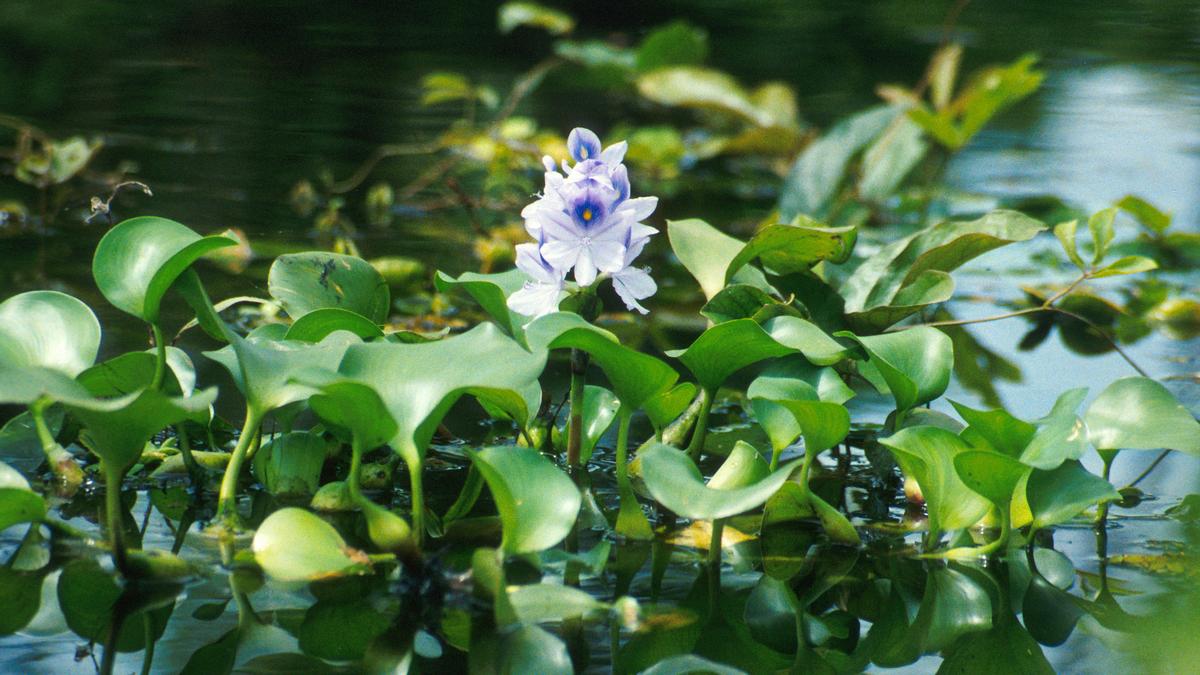
Aquatic ecosystems are at risk as well. Dominant aquatic weed species include the water hyacinth (Pontederia crassipes), alligator weed (Alternantheraphiloxeroides), duck weed (Lemnoidease species), and water lettuce (Pistia stratiotes). Water hyacinth is listed among the 10 worst invasives and looms everywhere, from paddy fields to lakes that host migratory birds in winter as well as in the Kaziranga National Park in Assam.
“Alien species are a major threat for 1,070 species of threatened freshwater fishes,” Rajeev Raghavan, scientist at the Kerala University of Fisheries and Ocean Studies, Kochi, said.
India alone has 626 alien aquatic species, mostly introduced via the aquarium trade, aquaculture, and for mosquito control and sport fishing, according to Raghavan. Alien fish are now found across India, from the Dal Lake in Kashmir and the rivers and lakes of Manipur lakes to water bodies in Telangana and Kerala.
Poor documentation
A major problem scientists grapple with is the absence of extensive documentation. Unlike a few invasives, such as Parthenium, Lantana, and Prosopis, most of them in India have no recorded invasion histories, invaded regions or extent of consequences, said Alok Bang, assistant professor at Azim Premji University.
Freshwater invasion biology as a discipline is also “still in its infancy”, according to Raghavan. There is a lack of comprehensive studies to understand micro-level distribution of alien species, their potential interactions with native species, and their impacts at the species and ecosystem levels.
“Conservation of a species might be understood differently by different stakeholders, so scientifically, we must define what we mean by conservation and impacts,” and understand their multiple impacts, Dr. Bang said.
For example, at the species level, they affect native inhabitants’ ability to survive and reproduce. At the populationlevel, they affect the population size and genetic diversity. Speciescould become locally extinct and/or have reduced ranges or communitieswithmultiple species could undergo changes in their composition and functions.
Invasive plants can also change the soil’s porosity and compactness; the acidity and turbidity of water; and the availability of light (e.g. by preventing light from penetrating to the forest floor or sea floor).
At the ecosystem-level, processes like food webs, primary productivity, nutrient cycling, and energy transfers could change — or an entire existing ecosystem could transform into a new one.
Document or conserve?
Conservation researchers, practitioners, and policymakers in India thus face a dilemma. As Dr. Bang put it: should they wait to document the effects of all these species to prepare a conservation plan or should they document and conserve in parallel?
Waiting to document all “would be unwise because there is no end to doing site-specific documentation, and we may not have the resources to do these studies.”
It would be wiser to simultaneously conduct more impact studies in India and prepare conservation plans based on the knowledge of their ecological and socio-economic consequences in other countries, Dr. Bang added.
He recommended developing standardised quantitative methods to map the cumulative effects of invasive alien species on ecosystems as well as studies on impact assessment and eradication efforts.
“This approach can help identify highly impactful invasive alien species and hotspots of highly [affected] areas and prioritise sites, pathways, and species for management actions,” Dr. Bang, who is working on such a framework, added.
According to him, scientists must also step out of silos and communicate and consult with diverse stakeholders that are interested in and affected by biological invasions while designing potential future prevention, control, and eradication.
He also said citizen science efforts could help create atlases of invasive species distribution.
T.V. Padma is a science journalist in New Delhi.