
Skip to content
  • Facebook
  • X
  • Linkedin
  • WhatsApp
  • YouTube
  • Associate Journalism
  • About Us
  • Privacy Policy
  • 033-46046046
  • editor@artifex.news
Artifex.News

Artifex.News

Stay Connected. Stay Informed.

  • Breaking News
  • World
  • Nation
  • Sports
  • Business
  • Science
  • Entertainment
  • Lifestyle
  • Toggle search form
  • Watch: After the Delhi and Islamabad blasts, is a fresh conflict brewing in the region? | Worldview
    Watch: After the Delhi and Islamabad blasts, is a fresh conflict brewing in the region? | Worldview World
  • Actor Mohanlal On Kerala MeToo Allegations
    Actor Mohanlal On Kerala MeToo Allegations Nation
  • Sensex closes at record high for third day on continued optimism over Fed rate cut
    Sensex closes at record high for third day on continued optimism over Fed rate cut Business
  • Access Denied Sports
  • Pakistan developing missiles that eventually could hit U.S., top U.S. official says
    Pakistan developing missiles that eventually could hit U.S., top U.S. official says World
  • Chile President-elect calls for end to Maduro ‘dictatorship’
    Chile President-elect calls for end to Maduro ‘dictatorship’ World
  • World Wrestling Championships: Pruthviraj Loses In Quarter-finals, Abhimanyu In Bronze Play-off
    World Wrestling Championships: Pruthviraj Loses In Quarter-finals, Abhimanyu In Bronze Play-off Sports
  • Portugal Skipper Cristiano Ronaldo Yet To Decide On His Future In International Football
    Portugal Skipper Cristiano Ronaldo Yet To Decide On His Future In International Football Sports
Marius, the man who named Jupiter’s Galilean moons

Marius, the man who named Jupiter’s Galilean moons

Posted on December 14, 2024 By admin


Plagiarism is a big area of concern that is rearing its ugly head worldwide. The act of representing someone else’s ideas, thoughts, language, or expression as original work, plagiarism not only discourages creativity, but also steals from the actual creators. In a world with artificial intelligence (AI) that we live in, more checks and balances are currently being sought after as it has become easier than ever to plagiarise.

Plagiarism, however, hasn’t been a concern just now and has probably been around for as long as ideas and expressions have been exchanged. Charges of plagiarism, when proven, can tarnish a person’s reputation, dealing them a blow from which they can probably never stand up again. On some occasions, just the charges are enough to sideline someone, even if they aren’t proven beyond doubt. German astronomer Simon Marius was at the receiving end of one such episode over 400 years ago. 

This portrait of Marius appeared as a frontispiece (illustration facing the title page of a book) to the Mundus Iovialis. In addition to containing the first printed image of a telescope, it also shows Jupiter’s moons in orbit around the planet – something that Galileo didn’t include in his book.
| Photo Credit:
WIKIMEDIA COMMONS

An astronomer, mathematician, physician, and calendar maker, Simon Mayr was born in Gunzenhausen in 1573. Marius was his Latinised name for the international scientific community, as was the fashion of the times. 

Starts with a song

The story goes that when George Frederick, Margrave of Brandenburg-Ansbach, heard young Marius singing, the regent took a liking to him. As a result of this, Marius was enrolled in the Fürstenschule at Heilsbronn, where he studied until 1601. Even though his plans to study at Königsberg didn’t fruition, he managed to meet celebrated Danish astronomer Tycho Brahe at Prague in 1601. 

His career also took shape through the time he spent south of the Alps, as he studied medicine in Padua until 1605 before becoming a medical practitioner. It was probably during his time at Padua that his path first crossed with Galileo Galilei and the two men might have met. From 1606, until his death in 1624, Marius served as the court mathematician at Ansbach in Germany. 

Belgian spyglass

Having settled in Ansbach in 1606, Marius’ first attempts to construct a telescope weren’t successful owing to the poor quality of the glass. By 1609, however, he possessed a Belgian spyglass, thanks to his friend and military man Johannes Philipp Fuchs von Bimbach. 

As someone who had already observed the comet of 1596 and established the position of a supernova in 1604 with his unaided eye, Marius didn’t need telling twice to employ the telescope for astronomy. He took a look at Jupiter using this on December 29, 1609 according to the Julian calendar in use in his region (January 8, 1610 according to the Gregorian calendar) and saw “… four tiny stars, sometimes behind, sometimes in front of Jupiter, aligned in a straight line with the planet.” If this were true, Marius had, in fact, independently discovered the four major moons of Jupiter.

Flame of a candle

Nearly three years later, on December 15, 1612, Marius became the first person to use a telescope to observe the Andromeda Galaxy. In the interim years, he had observed the phases of Venus and also sun spots. 

He published his scientific results in his 1614 Mundus Iovialis (The World of Jupiter). In this, he described his sighting of the Andromeda Galaxy as “like a candle seen at night through a horn” – the horn being a reference to the horn lanterns that were in common usage back then. Additionally, the book also mentioned his sightings of the Jovian satellites, including the dates. 

Galileo’s outrage

Galileo, who had observed Jupiter’s four major moons (now also called as the Galilean moons) on January 7, 1610 (Gregorian calendar), had already published Sidereus Nuncius (The Sidereal Messenger) in Venice in 1610 and was the first to announce the discovery. He was incensed by Marius’ claims four years later of observing these moons just a day after him and saw it as an attempt to usurp his priority. He retaliated in his 1623 book Il Saggiatore (The Assayer), accusing Marius of plagiarism.  

More than four centuries on, debate on the validity of Marius’ claims still persists. The shadow of plagiarism looms so large over Marius’ works that credit isn’t given even where it is due. This not only includes his observation of the Andromeda Galaxy, but also the accuracy of his tables of the moons of Jupiter. 

While it is nigh impossible for us to determine if Marius does deserve credit for independently discovering the four major satellites of Jupiter, there’s no doubt that he was the one who gave them the names that are now in use. Galileo had called them the Medicean moons in honour of his patrons (the Medici family), but Marius mulled on the suggestions provided to him by renowned German astronomer and mathematician Johannes Kepler and decided on calling them Io, Europa, Ganymede, and Callisto – Jupiter’s companions from Greek mythology. While astronomers preferred calling them as just I, II, III, and IV – just as Galileo had referred to them numerically – for over 300 years, the names that Marius suggested finally won over when these moons got more character thanks to advances in astronomy. 

Was Marius the first to observe the Andromeda Galaxy?
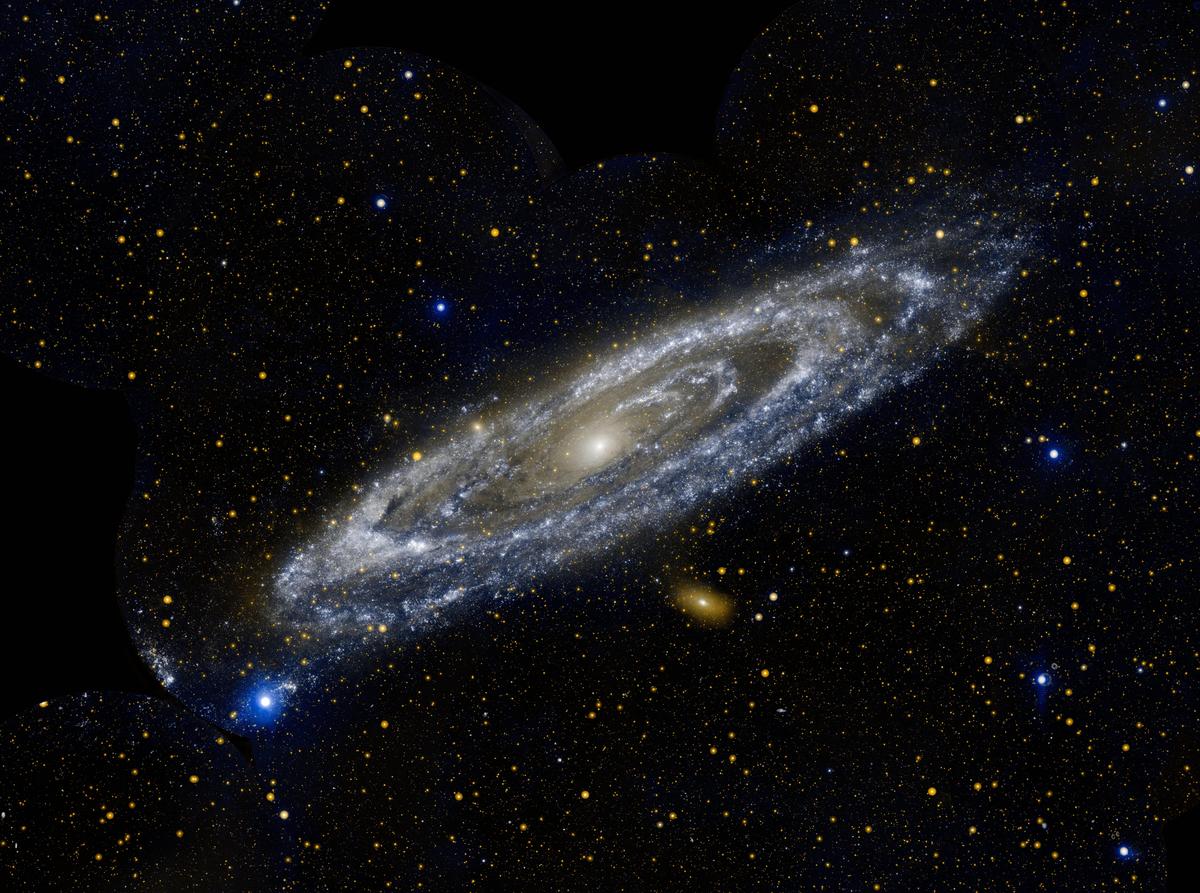
This image obtained from NASA and the Jet Propulsion Laboratory shows the Andromeda Galaxy.

This image obtained from NASA and the Jet Propulsion Laboratory shows the Andromeda Galaxy.
| Photo Credit:
AFP PHOTO / NASA/Jet Propulsion Laboratory

Simon Marius was the first to employ a telescope to observe the Andromeda Galaxy. But was he the first person ever to observe it? The answer is no. 

A spiral galaxy that is similar in size and structure to our own Milky Way, Andromeda is only slightly larger and is the nearest major galaxy to the Milky Way. 

Despite its size, the Andromeda is only about six times larger than the moon in the sky. This is because the moon is much closer to the Earth, while the Andromeda Galaxy is about 2.5 million light-years away. 

The Andromeda Galaxy, in fact, is the one thing located outside our galaxy that is visible to the unaided eye. It can be seen from dark locations, but it can’t be seen clearly as it is too dim. 

This, however, means that the Andromeda Galaxy could be observed much earlier. The earliest such recorded observation was by Persian astronomer Abd al-Rahman al-Sufi, who caught a glimpse of the galaxy (without a telescope of course) and recorded it in his Book of Fixed Stars in the year 964. 

Al-Sufi’s priority, however, was reestablished only in 1667 when French astronomer and mathematician Ismael Boulliau published the al-Sufi drawing of Andromeda in his pamphlet about the galaxy. 

This makes it clear that Marius’ discovery was on his own. His description of a fuzzy patch, a nebula, in Andromeda in the Mundus Iovialis, however, did not have an image.

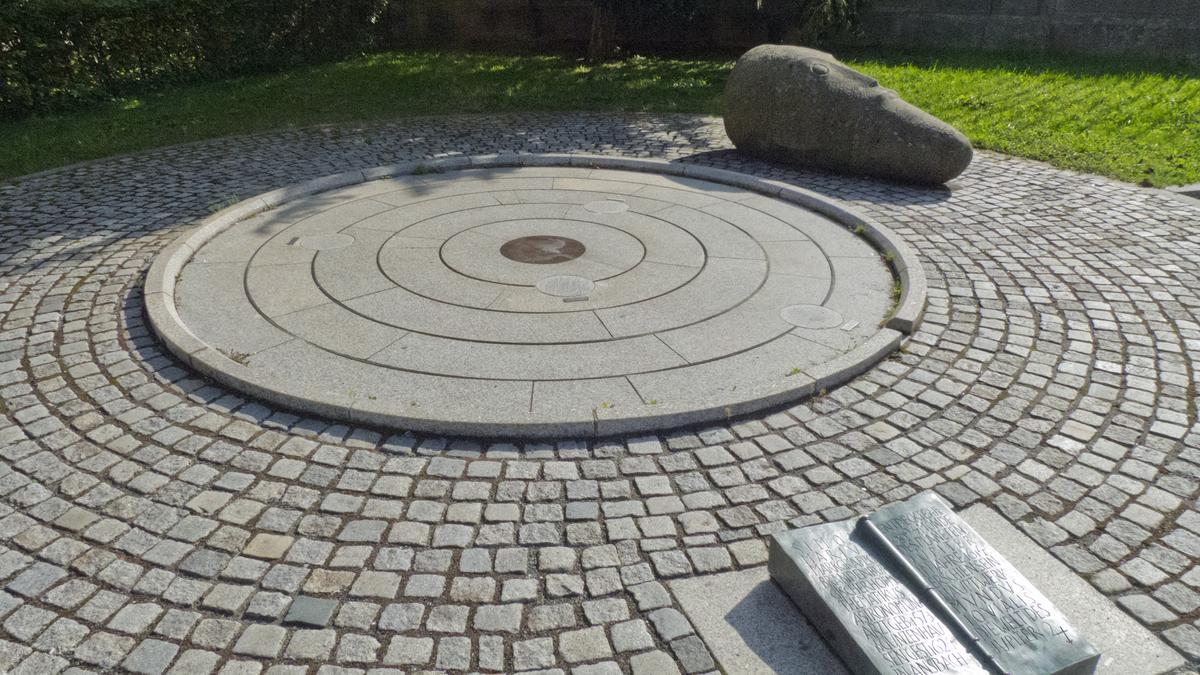
The picture of Marius’ monument in Ansbach that has been used as our cover image was obtained with permission from the website Statues – Hither & Thither.

Published – December 15, 2024 12:41 am IST


Source link

Science

Post navigation

Previous Post: Women in Blue seek a reboot against West Indies
Next Post: Luigi Mangione | ‘Popular’ suspect

Related Posts

  • NASA spacecraft ‘safe’ after closest-ever approach to Sun
    NASA spacecraft ‘safe’ after closest-ever approach to Sun Science
  • Uncovered: how RNA, amino acids may have linked on early earth
    Uncovered: how RNA, amino acids may have linked on early earth Science
  • What is helium and why is it used in rockets?
    What is helium and why is it used in rockets? Science
  • Sky Teamwork: Why do birds fly in V formation?
    Sky Teamwork: Why do birds fly in V formation? Science
  • Gene of thrones: genomes of rulers reveal how empires rose and fell
    Gene of thrones: genomes of rulers reveal how empires rose and fell Science
  • Breast cancer diagnosis result within 24 hours at Hyderabad hospital
    Breast cancer diagnosis result within 24 hours at Hyderabad hospital Science

More Related Articles

The Rearview Podcast | Proof: How Ramanujan Tamed Maths’ Toughest Monster  The Rearview Podcast | Proof: How Ramanujan Tamed Maths’ Toughest Monster  Science
What is photocopying and how does it work? | Explained What is photocopying and how does it work? | Explained Science
First conclusive evidence that a terrestrial leech species can jump First conclusive evidence that a terrestrial leech species can jump Science
The Science Quiz | 100 years ago, science found the colossal squid… The Science Quiz | 100 years ago, science found the colossal squid… Science
The Science Quiz | Ice creams The Science Quiz | Ice creams Science
The Science Quiz: Rovers on the moon and Mars The Science Quiz: Rovers on the moon and Mars Science
SiteLock

Archives

  • May 2026
  • April 2026
  • March 2026
  • February 2026
  • January 2026
  • December 2025
  • November 2025
  • October 2025
  • September 2025
  • August 2025
  • July 2025
  • June 2025
  • May 2025
  • April 2025
  • March 2025
  • February 2025
  • January 2025
  • December 2024
  • November 2024
  • October 2024
  • September 2024
  • August 2024
  • July 2024
  • June 2024
  • May 2024
  • April 2024
  • March 2024
  • February 2024
  • January 2024
  • December 2023
  • November 2023
  • October 2023
  • September 2023
  • August 2023
  • July 2023
  • June 2023
  • May 2023
  • April 2023
  • March 2023
  • February 2023
  • January 2023
  • December 2022
  • November 2022
  • October 2022
  • September 2022
  • August 2022
  • July 2022
  • June 2022
  • May 2022

Categories

  • Business
  • Nation
  • Science
  • Sports
  • World

Recent Posts

  • The challenge to not breach the limit
  • Trump embarks on visit to China, focus on trade
  • Baltimore ship crash: U.S. slaps criminal cases against Singapore, Chennai firms and Indian national
  • Three arrested for smuggling banned tobacco products, over 112 kg seized
  • Two persons arrested for burglary in Tirupattur

Recent Comments

  1. Raymonddow on UP Teacher Who Asked Students To Slap Muslim Classmate
  2. Jeffreyroure on UP Teacher Who Asked Students To Slap Muslim Classmate
  3. AaronPrido on UP Teacher Who Asked Students To Slap Muslim Classmate
  4. AaronThymn on UP Teacher Who Asked Students To Slap Muslim Classmate
  5. Matthewerano on UP Teacher Who Asked Students To Slap Muslim Classmate
  • Access Denied Sports
  • Syria says takes over northeast base after international coalition pullout
    Syria says takes over northeast base after international coalition pullout World
  • Wastewater data revealed hidden COVID surges in Bengaluru after testing declined
    Wastewater data revealed hidden COVID surges in Bengaluru after testing declined Science
  • Adani Group to raise ₹7,148 crore from Adani Wilmar stake sale
    Adani Group to raise ₹7,148 crore from Adani Wilmar stake sale Business
  • Iran executes in public a serial rapist convicted in dozens of cases
    Iran executes in public a serial rapist convicted in dozens of cases World
  • Gaza ceasefire talks to resume in Cairo: Egyptian media
    Gaza ceasefire talks to resume in Cairo: Egyptian media World
  • US To Hold Referendum On Abortion On Same Ballot As Presidential Vote
    US To Hold Referendum On Abortion On Same Ballot As Presidential Vote World
  • North Korea Bolsters Leader Kim Jong Un With Birthday Loyalty Oaths
    North Korea Bolsters Leader Kim Jong Un With Birthday Loyalty Oaths World

Editor-in-Chief:
Mohammad Ariff,
MSW, MAJMC, BSW, DTL, CTS, CNM, CCR, CAL, RSL, ASOC.
editor@artifex.news

Associate Editors:
1. Zenellis R. Tuba,
zenelis@artifex.news
2. Haris Daniyel
daniyel@artifex.news

Photograher:
Rohan Das
rohan@artifex.news

Artifex.News offers Online Paid Internships to college students from India and Abroad. Interns will get a PRESS CARD and other online offers.
Send your CV (Subjectline: Paid Internship) to internship@artifex.news

Links:
Associate Journalism
About Us
Privacy Policy

News Links:
Breaking News
World
Nation
Sports
Business
Entertainment
Lifestyle

Registered Office:
72/A, Elliot Road, Kolkata - 700016
Tel: 033-22277777, 033-22172217
Email: office@artifex.news

Editorial Office / News Desk:
No. 13, Mezzanine Floor, Esplanade Metro Rail Station,
12 J. L. Nehru Road, Kolkata - 700069.
(Entry from Gate No. 5)
Tel: 033-46011099, 033-46046046
Email: editor@artifex.news

Copyright © 2023 Artifex.News Newsportal designed by Artifex Infotech.