Skip to content
  • Facebook
  • X
  • Linkedin
  • WhatsApp
  • YouTube
  • Associate Journalism
  • About Us
  • Privacy Policy
  • 033-46046046
  • editor@artifex.news
Artifex.News

Artifex.News

Stay Connected. Stay Informed.

  • Breaking News
  • World
  • Nation
  • Sports
  • Business
  • Science
  • Entertainment
  • Lifestyle
  • Toggle search form
  • Access Denied
    Access Denied Nation
  • Rupee rises 22 paise to 89.45 against U.S. dollar in early trade
    Rupee rises 22 paise to 89.45 against U.S. dollar in early trade Business
  • Atanu Das In Focus As Recurve Archers Hope To Shake Off Asian Games ‘Jinx’
    Atanu Das In Focus As Recurve Archers Hope To Shake Off Asian Games ‘Jinx’ Sports
  • Kolkata Doctor Rape Murder, RG Kar Medical College And Hospital: Kolkata Doctor’s Rape-Murder Probe To Be Transferred To CBI: High Court
    Kolkata Doctor Rape Murder, RG Kar Medical College And Hospital: Kolkata Doctor’s Rape-Murder Probe To Be Transferred To CBI: High Court Nation
  • Access Denied Sports
  • Sensex, Nifty tumble after four days of record rally on profit-taking, weak global peers
    Sensex, Nifty tumble after four days of record rally on profit-taking, weak global peers Business
  • Access Denied
    Access Denied Nation
  • 2000 cricket match-fixing scandal: London-based bookie Chawla ‘main conspirator’
    2000 cricket match-fixing scandal: London-based bookie Chawla ‘main conspirator’ Sports
On the physics of pressure: how the microscopic world interacts with us

On the physics of pressure: how the microscopic world interacts with us

Posted on August 7, 2024 By admin


We again have a leopard visiting us on the IIT Kanpur campus. We already have porcupines, a million dogs, nilgais, snakes, and scorpions. Leopards are a new addition to this thriving ecosystem. It’s probably something about the wet monsoon air of Kanpur that beckons these creatures, as well as the students and faculty members. The courses are starting again now after the summer break, as is the grind. As students old and new gather, the academic pressure begins to rise.

Pressure is an interesting thing: we often don’t like it and try to avoid it, but it is indispensable. It’s everywhere and there is a bit of wonderful physics hiding in it.

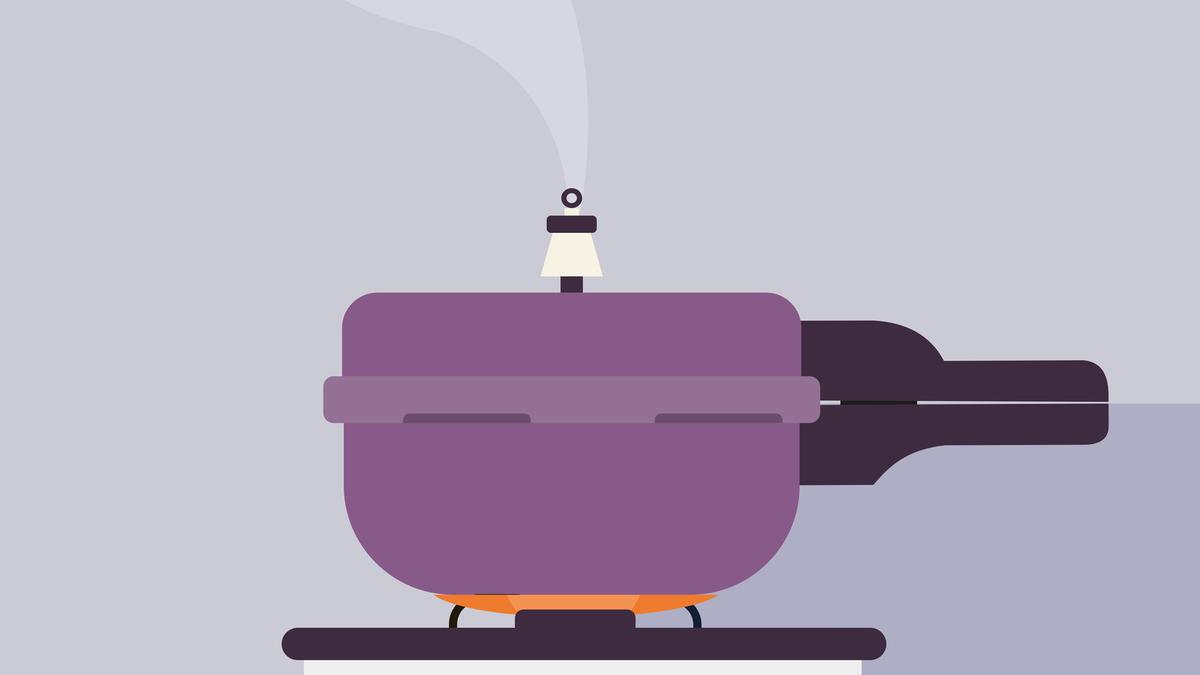
Pressure is how the microscopic world interacts with us. We don’t see billions of atoms and molecules around us in the air but they hit us continuously all the time, creating what we call air pressure. When you are taking a flight, if there is a risk of the number of air molecules reducing around you, the flight host tells you “the pressure may fall, please use an oxygen mask”. If you want to cook something where you want these air molecules to be more energetic — to strike your vegetables better — you use a pressure cooker. In fact, before putting your vegetables in the cooker, you add water. These water molecules become hot and impact your carrots and potatoes, breaking their molecular bonds and cooking your food. You keep all these molecules locked in a strong metal vessel they can’t escape, increasing the pressure.

But what really is pressure?

Of forces and apples

Pressure and force are deeply related. You may have heard of Isaac Newton as just another of those long-haired physicists, but the basic unit of force is named in his honour: newton (N). A unit is a thing you use to measure quantities or other aggregates of some entity. For example, we measure distances in metres, weights in kilograms, and the amount of milk in litres. Likewise, force — such as when you push or pull a door — can be ‘counted’ in newtons. A fruit, like a small apple, weighs roughly 100 g and will exert a force of about 1 N on your hand. In fact, after a bout of intermittent fasting, if you weigh unreasonably low — like 50 kg — you can instead say you weigh 500 N.

Pressure is the average force spread over any area. Imagine a heavy book is resting on your palm. Now imagine you’re holding the same book up with just one finger. The weight of the book remains the same but it feels heavier because it rests on a tinier region.

A pascal (Pa) is a unit of pressure. One pascal is really a very small amount of pressure. For instance, the same apple on your hand exerts a pressure of about 500 Pa. All the air on top of our heads, right up to space, exerts a pressure of 100,000 Pa — like about 200 apples on your hand!

Like air, all fluids have pressure, too, including our blood. The molecules of blood hit the walls of our arteries at different speeds, creating pressure. When you get your blood pressure measured, the doctor will give you a number like 120/80. These numbers also denote pressure, but not in pascals.

Blood pressure

Just like the atmospheric pressure of air is equivalent to around 200 small apples, it is also equivalent to some amount of liquid. For example, if you are about 10 m underwater, the pressure the water creates on you (aside from the psychological pressure of being unable to breathe) is equivalent to that of the atmosphere.

When you measure blood pressure, if you notice carefully, the doctor will place a cuff around your upper arm and start pumping air. The idea is to bring the pressure of the air around your arm close to that of the pressure of the blood flowing in your arteries, then release it slowly. In older pressure machines, this pressure in the cuff was balanced using a column of liquid in a tube.

The pressure in our blood is about one-fifth that of atmospheric pressure, so if you want to measure with water, you will need two metres of water. That’s very inconvenient to carry around. People therefore looked for a liquid that was heavier than water, thus requiring a smaller quantity of it, which would allow doctors to carry the blood-pressure machines around easily. Mercury is about 15-times heavier than water, so small amounts suffice to balance the cuff pressure. And the 120/80 doctors say is actually 120 mm or 80 mm of mercury: the former is the pressure when your heart beats and the latter, when your heart rests between beats.

How does the pressure machine — or a sphygmomanometer — know when the pressure of the cuff around your arm matches that of the blood in your arteries? This bit of beautiful physics is for another day. If you are interested in learning more, consider taking a physics course.

Pressure cooker

Once you start seeing the effects of pressure somewhere, you will start realising it is actually everywhere. The water in your tap, the clouds that suddenly appear on a sunny day, or the fact you can drive your bike or car on those wheels.

The next time you hear a pressure cooker’s whistle in the kitchen closest to you, don’t just thank yourself or the person cooking your food. Thank the pressure cooker as well.

The author is an assistant professor of physics at IIT Kanpur.



Source link

Science

Post navigation

Previous Post: Has the U.K. changed its stance on ICC arrest warrants? | Explained
Next Post: Waqf (Amendment) Bill Likely To Be Introduced In Lok Sabha, Rajya Sabha Today

Related Posts

  • Sci-Five | The Hindu Science Quiz: On Microplastics
    Sci-Five | The Hindu Science Quiz: On Microplastics Science
  • Nobel Prize in Physics 2023: Three scientists win for research on electrons in flashes of light
    Nobel Prize in Physics 2023: Three scientists win for research on electrons in flashes of light Science
  • BITS-Pilani Hyd researchers develop portable sensor to detect triglyceride levels in minutes
    BITS-Pilani Hyd researchers develop portable sensor to detect triglyceride levels in minutes Science
  • Budget 2024: Under-spending brightens allocations for science ministries, depts.
    Budget 2024: Under-spending brightens allocations for science ministries, depts. Science
  • Space junk in Earth orbit and on the Moon will increase with future missions − but nobody’s in charge of cleaning it up
    Space junk in Earth orbit and on the Moon will increase with future missions − but nobody’s in charge of cleaning it up Science
  • Indian forest activist Alok Shukla awarded the Goldman Environmental Prize
    Indian forest activist Alok Shukla awarded the Goldman Environmental Prize Science

More Related Articles

A Guardian’s tale: Just how strong is Jupiter’s gravity? A Guardian’s tale: Just how strong is Jupiter’s gravity? Science
Chandrayaan-2 makes first ever observation of Sun’s impact on Moon, says ISRO Chandrayaan-2 makes first ever observation of Sun’s impact on Moon, says ISRO Science
How women in India have fared How women in India have fared Science
The environment, another casualty of war in West Asia The environment, another casualty of war in West Asia Science
The value of attributing extreme events to climate change | Explained The value of attributing extreme events to climate change | Explained Science
The science of plant communication The science of plant communication Science
SiteLock

Archives

  • May 2026
  • April 2026
  • March 2026
  • February 2026
  • January 2026
  • December 2025
  • November 2025
  • October 2025
  • September 2025
  • August 2025
  • July 2025
  • June 2025
  • May 2025
  • April 2025
  • March 2025
  • February 2025
  • January 2025
  • December 2024
  • November 2024
  • October 2024
  • September 2024
  • August 2024
  • July 2024
  • June 2024
  • May 2024
  • April 2024
  • March 2024
  • February 2024
  • January 2024
  • December 2023
  • November 2023
  • October 2023
  • September 2023
  • August 2023
  • July 2023
  • June 2023
  • May 2023
  • April 2023
  • March 2023
  • February 2023
  • January 2023
  • December 2022
  • November 2022
  • October 2022
  • September 2022
  • August 2022
  • July 2022
  • June 2022
  • May 2022

Categories

  • Business
  • Nation
  • Science
  • Sports
  • World

Recent Posts

  • China, U.S. should be ‘partners not rivals’, says Xi Jinping after meeting Donald Trump
  • Iran working on Hormuz ‘protocol’ to cover ‘costs’, says Deputy Foreign Minister Gharibabadi
  • Zydus Lifesciences arm to acquire U.S. oncology firm Assertio for $166 million
  • Israel-Iran war LIVE: Iran working on Hormuz ‘protocol’ to cover ‘costs’, says Dy FM Gharibabadi
  • Russia to fulfil all agreements on energy supply to India: FM Lavrov

Recent Comments

  1. OrvalMaync on UP Teacher Who Asked Students To Slap Muslim Classmate
  2. Jeffreyroure on UP Teacher Who Asked Students To Slap Muslim Classmate
  3. Stevemonge on UP Teacher Who Asked Students To Slap Muslim Classmate
  4. RichardClage on UP Teacher Who Asked Students To Slap Muslim Classmate
  5. StevenLek on UP Teacher Who Asked Students To Slap Muslim Classmate
  • Access Denied Sports
  • PM Modi Japan visit LIVE: PM Modi arrives in Japan on two-day visit
    PM Modi Japan visit LIVE: PM Modi arrives in Japan on two-day visit World
  • Access Denied Sports
  • Access Denied
    Access Denied Nation
  • Pawan Kalyan’s Daughter Signs Faith Declaration Before Tirupati Temple Trip
    Pawan Kalyan’s Daughter Signs Faith Declaration Before Tirupati Temple Trip Nation
  • Access Denied World
  • Taliban’s Latest Diktat To NGOs In Afghanistan
    Taliban’s Latest Diktat To NGOs In Afghanistan World
  • As India and Canada reset ties, NSAs, diplomats meet in Delhi, discuss Khalistani threat and security cooperation
    As India and Canada reset ties, NSAs, diplomats meet in Delhi, discuss Khalistani threat and security cooperation World

Editor-in-Chief:
Mohammad Ariff,
MSW, MAJMC, BSW, DTL, CTS, CNM, CCR, CAL, RSL, ASOC.
editor@artifex.news

Associate Editors:
1. Zenellis R. Tuba,
zenelis@artifex.news
2. Haris Daniyel
daniyel@artifex.news

Photograher:
Rohan Das
rohan@artifex.news

Artifex.News offers Online Paid Internships to college students from India and Abroad. Interns will get a PRESS CARD and other online offers.
Send your CV (Subjectline: Paid Internship) to internship@artifex.news

Links:
Associate Journalism
About Us
Privacy Policy

News Links:
Breaking News
World
Nation
Sports
Business
Entertainment
Lifestyle

Registered Office:
72/A, Elliot Road, Kolkata - 700016
Tel: 033-22277777, 033-22172217
Email: office@artifex.news

Editorial Office / News Desk:
No. 13, Mezzanine Floor, Esplanade Metro Rail Station,
12 J. L. Nehru Road, Kolkata - 700069.
(Entry from Gate No. 5)
Tel: 033-46011099, 033-46046046
Email: editor@artifex.news

Copyright © 2023 Artifex.News Newsportal designed by Artifex Infotech.