
Skip to content
  • Facebook
  • X
  • Linkedin
  • WhatsApp
  • YouTube
  • Associate Journalism
  • About Us
  • Privacy Policy
  • 033-46046046
  • editor@artifex.news
Artifex.News

Artifex.News

Stay Connected. Stay Informed.

  • Breaking News
  • World
  • Nation
  • Sports
  • Business
  • Science
  • Entertainment
  • Lifestyle
  • Toggle search form
  • Access Denied Sports
  • Ganga Water At Kumbh’s Sangam Unsafe On Another Parameter Too: Data
    Ganga Water At Kumbh’s Sangam Unsafe On Another Parameter Too: Data Nation
  • Alpine Pipers in the final as Mumba Masters lend a helping hand
    Alpine Pipers in the final as Mumba Masters lend a helping hand Sports
  • Selfish Or Selfless? R Ashwin Hits Bullseye As He Describes Rohit Sharma
    Selfish Or Selfless? R Ashwin Hits Bullseye As He Describes Rohit Sharma Sports
  • Access Denied Sports
  • U.S.-Iran peace deal welcome, hope it lasts: Anantha Nageswaran
    U.S.-Iran peace deal welcome, hope it lasts: Anantha Nageswaran Nation
  • Access Denied Sports
  • Handed over my son for police inquiry through lawyers with due respect for law: Bandi Sanjay
    Handed over my son for police inquiry through lawyers with due respect for law: Bandi Sanjay Nation
CSIR-CCMB develops India-specific tool to predict Sickle Cell severity

CSIR-CCMB develops India-specific tool to predict Sickle Cell severity

Posted on October 2, 2026 By admin


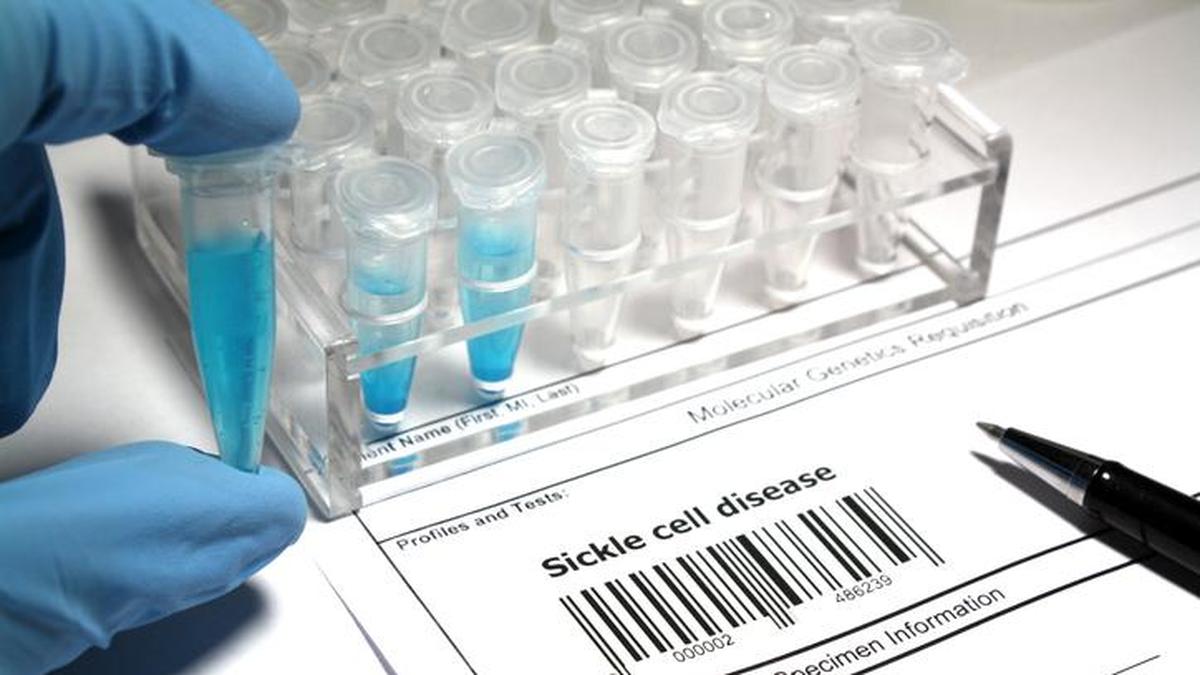
Researchers from CSIR-Centre for Cellular and Molecular Biology (CCMB) analysed the medical records of 171 children, aged up to 18 years, with Sickle Cell Anaemia and receiving treatment at the Government Medical College and Hospital, Nagpur. The image is used for representative purposes only.
| Photo Credit: GETTY IMAGES

Doctors may soon have a more reliable way to predict how severely sickle cell anaemia (SCA) will affect Indian patients, thanks to a new India-specific disease severity score developed by scientists at the CSIR-Centre for Cellular and Molecular Biology (CCMB).

Potential impact of the India-specific tool

The new tool, developed using clinical data from Indian children, could improve treatment decisions and disease management as existing international scoring systems do not accurately reflect the clinical profile of Indian patients with SCA, whose disease patterns often differ from those seen in African and Western populations.

What is Sickle Cell Anaemia?

SCA is an inherited blood disorder caused by a mutation in the beta globin gene, which produces abnormal haemoglobin causing red blood cells to assume a sickle shape, leading to anaemia, severe pain episodes, organ damage and other complications. India is among the countries with the highest burden of the disease, according to Giriraj R. Chandak, physician-scientist and Sir J C Bose Fellow at CSIR-CCMB.

He and fellow scientists including Suraj S. Nongmaithem, Amitabh Biswas, Swaroop Iyer, Jandhayala Vyshnavi, Archana Wath and Dipty Jain conducted this study.

Early identification helps to alleviate suffering

SCA is caused by a single genetic mutation, yet its severity varies considerably. While some patients experience relatively mild symptoms, others endure repeated hospitalisations and life-threatening complications. An early identification of those at risk of severe clinical course can help devise targeted strategies and alleviate the suffering.

Indian patients are said to have a milder disease profile than many African populations, partly because of higher levels of foetal haemoglobin, which helps reduce disease severity. Complications such as leg ulcers, pulmonary hypertension and ‘priapism’, commonly reported in African populations, are comparatively rare here. However, nutritional deficiencies, infectious diseases and environmental stressors can worsen anaemia.

Researchers analysed the medical records of 171 SCA children aged up to 18 years and receiving treatment at the Government Medical College and Hospital, Nagpur, to develop a more suitable assessment tool. Two experienced paediatricians independently classified the patients into mild, moderate and severe categories based on their clinical condition.

The study found that the widely used Paediatric Severity Score (PSS), developed using international patient data, matched expert clinical assessments in only about 67% of cases. The score was modified adding four clinical features frequently observed among Indian patients — recurrent blood transfusions, severe anaemia requiring hospitalisation and acute febrile illnesses.

Improvement in clinical assessments

The revised model — ‘ISS1’ (India-specific Severity Score), improved clinical assessments to nearly 83%. A second version, ‘ISS2’, replaced the laboratory measurements with easily observable clinical indicators to achieve an overall concordance of about 85%, correctly identifying all patients in the mild category and improving performance in moderate cases. This enables clinicians to decide the management without the need for many laboratory investigations.

The findings highlight the importance of developing population-specific tools rather than relying solely on models designed for different ethnic groups and healthcare settings. It was also found that painful vaso-occlusive crises were the most common complication among the children while frequent blood transfusions, severe anaemia and recurrent fever-related illnesses led to hospital admissions.

“We believe the new scoring systems could help doctors make quicker and more informed decisions on treatment, including the use and dosage of hydroxyurea, one of the primary drugs used to manage SCA. This study adds to the comprehensive efforts by CSIR-CCMB in making a difference in the lives of Indian SCA patients, under CSIR-Sickle Cell Anaemia Mission”, said Dr. Chandak.

This could be applicable to other low- and middle-income countries with similar genetic backgrounds, disease patterns and healthcare challenges. However, further validation in larger and more diverse populations will be needed before the tool can be adopted more widely, added researchers.

Published – October 02, 2026 05:34 pm IST



Source link

Science Tags:Better way to predict Sickle Cell Anaemia among Indians, CCMB researchers, India-specific disease severity score for SCA, science news, Sickle-cell anaemia

Post navigation

Previous Post: Rajiv and Rohit drive to glory in the Rally of Himalayas; Dhritimaan triumphs in two-wheeler category
Next Post: ‘Vettri Payanam’ scheme launched; women passengers travelling to workplaces to save a lot

Related Posts

  • What we can learn from nature switching off human genes
    What we can learn from nature switching off human genes Science
  • Research rewrites where, when humans first domesticated horses
    Research rewrites where, when humans first domesticated horses Science
  • The problem with the physics question in the NEET-UG paper
    The problem with the physics question in the NEET-UG paper Science
  • Anticyclones, hanging even now over India, link warming to heat | Explained
    Anticyclones, hanging even now over India, link warming to heat | Explained Science
  • How do butterflies taste?  – The Hindu
    How do butterflies taste?  – The Hindu Science
  • Will Mission Mausam help tackle weather better?
    Will Mission Mausam help tackle weather better? Science

More Related Articles

Later-onset menopause linked to lower heart disease risk Later-onset menopause linked to lower heart disease risk Science
Warning: Your satellite is about to be hit by debris in space Warning: Your satellite is about to be hit by debris in space Science
Science Snapshots: July 5, 2026 Science Snapshots: July 5, 2026 Science
‘It’s like writing a poem’: prize winner Rajula Srivastava on doing maths ‘It’s like writing a poem’: prize winner Rajula Srivastava on doing maths Science
Pauling, the (near) perfect man for science Pauling, the (near) perfect man for science Science
Berlin to BITS Pilani: How Nobel-winning Optogenetics connects to parasite research in Hyderabad Berlin to BITS Pilani: How Nobel-winning Optogenetics connects to parasite research in Hyderabad Science
SiteLock

Archives

  • October 2026
  • September 2026
  • August 2026
  • July 2026
  • June 2026
  • May 2026
  • April 2026
  • March 2026
  • February 2026
  • January 2026
  • December 2025
  • November 2025
  • October 2025
  • September 2025
  • August 2025
  • July 2025
  • June 2025
  • May 2025
  • April 2025
  • March 2025
  • February 2025
  • January 2025
  • December 2024
  • November 2024
  • October 2024
  • September 2024
  • August 2024
  • July 2024
  • June 2024
  • May 2024
  • April 2024
  • March 2024
  • February 2024
  • January 2024
  • December 2023
  • November 2023
  • October 2023
  • September 2023
  • August 2023
  • July 2023
  • June 2023
  • May 2023
  • April 2023
  • March 2023
  • February 2023
  • January 2023
  • December 2022
  • November 2022
  • October 2022
  • September 2022
  • August 2022
  • July 2022
  • June 2022
  • May 2022

Categories

  • Business
  • Nation
  • Science
  • Sports
  • World

Recent Posts

  • Saudi Supreme Court sets aside Sri Lankan migrant worker’s death penalty
  • Nedumbassery accident: CPI(M) stages protest march to police station over ‘indifference’ in handling of case
  • Why CJI Surya Kant said ‘no’ to Rahul Gandhi’s request to meet | Explained
  • September WPI Inflation rises to 11.39% as food, fuel and manufactured goods prices increase
  • Frankfurt-Delhi Air India flight diverted to Jaipur following bomb threat

Recent Comments

  1. RobertTes on UP Teacher Who Asked Students To Slap Muslim Classmate
  2. Manuelret on UP Teacher Who Asked Students To Slap Muslim Classmate
  3. RobertTes on UP Teacher Who Asked Students To Slap Muslim Classmate
  4. RobertTes on UP Teacher Who Asked Students To Slap Muslim Classmate
  5. BrentWes on UP Teacher Who Asked Students To Slap Muslim Classmate
  • Budget 2023 | Customs Duty tweaks likely to make mobile phones, TVs cheaper; toys, bicycles, automobiles dearer
    Budget 2023 | Customs Duty tweaks likely to make mobile phones, TVs cheaper; toys, bicycles, automobiles dearer Business
  • China’s leaders vow to fight ‘risks’ plaguing economy
    China’s leaders vow to fight ‘risks’ plaguing economy World
  • Iran condemns Canada’s listing of Revolutionary Guards as terrorist group
    Iran condemns Canada’s listing of Revolutionary Guards as terrorist group World
  • Robin Minz relishing the finisher’s role
    Robin Minz relishing the finisher’s role Sports
  • Rohit Sharma Returns, Rishabh Pant vs Ravindra Jadeja: Things To Watch Out As India Stars Play Ranji Trophy
    Rohit Sharma Returns, Rishabh Pant vs Ravindra Jadeja: Things To Watch Out As India Stars Play Ranji Trophy Sports
  • Access Denied Sports
  • Pakistan vs England: PCB Takes Massive Decision Amid Growing Controversy Over Multan Pitch
    Pakistan vs England: PCB Takes Massive Decision Amid Growing Controversy Over Multan Pitch Sports
  • Access Denied Business

Editor-in-Chief:
Mohammad Ariff,
MSW, MAJMC, BSW, DTL, CTS, CNM, CCR, CAL, RSL, ASOC.
editor@artifex.news

Associate Editors:
1. Zenellis R. Tuba,
zenelis@artifex.news
2. Haris Daniyel
daniyel@artifex.news

Photograher:
Rohan Das
rohan@artifex.news

Associate Journalists
1. Subrata Paul - AN/2020/01
2. Quamruz Zaman - AN/2021/22
3. Ahmed Sha - AN/2021/035
4. Ajay Kumar Shaw - AN/2021/39
5. Tahqiqul Hoda - AN/2021/21

Artifex.News offers Online Paid Internships to college students from India and Abroad. Interns will get a PRESS CARD and other online offers.
Send your CV (Subjectline: Paid Internship) to internship@artifex.news

Links:
Associate Journalism
About Us
Privacy Policy

News Links:
Breaking News
World
Nation
Sports
Business
Entertainment
Lifestyle

Registered Office:
72/A, Elliot Road, Kolkata - 700016
Tel: 033-22277777, 033-22172217
Email: office@artifex.news

Editorial Office / News Desk:
No. 13, Mezzanine Floor, Esplanade Metro Rail Station,
12 J. L. Nehru Road, Kolkata - 700069.
(Entry from Gate No. 5)
Tel: 033-46011099, 033-46046046
Email: editor@artifex.news

Copyright © 2023 Artifex.News Newsportal designed by Artifex Infotech.