
Skip to content
  • Facebook
  • X
  • Linkedin
  • WhatsApp
  • YouTube
  • Associate Journalism
  • About Us
  • Privacy Policy
  • 033-46046046
  • editor@artifex.news
Artifex.News

Artifex.News

Stay Connected. Stay Informed.

  • Breaking News
  • World
  • Nation
  • Sports
  • Business
  • Science
  • Entertainment
  • Lifestyle
  • Toggle search form
  • Access Denied Sports
  • There is some science to swing bowling, somebody has taught Arshdeep that: Fanie de Villiers
    There is some science to swing bowling, somebody has taught Arshdeep that: Fanie de Villiers Sports
  • Israel to present highest civilian honour to U.S. President Donald Trump
    Israel to present highest civilian honour to U.S. President Donald Trump World
  • Denzel Dumfries Double Takes Inter Milan Into Italian Super Cup Final
    Denzel Dumfries Double Takes Inter Milan Into Italian Super Cup Final Sports
  • After a long wait, Gautami proves her worth on the big stage
    After a long wait, Gautami proves her worth on the big stage Sports
  • Had AB Vajpayee Been Alive, J&K Would Not Be Union Territory: Omar Abdullah
    Had AB Vajpayee Been Alive, J&K Would Not Be Union Territory: Omar Abdullah Nation
  • If neither tax nor fee, what is this ‘expropriation’, Supreme Court asks Govt on UPI MDR charges
    If neither tax nor fee, what is this ‘expropriation’, Supreme Court asks Govt on UPI MDR charges Business
  • Access Denied World
Will Mission Mausam help tackle weather better?

Will Mission Mausam help tackle weather better?

Posted on September 14, 2024 By admin


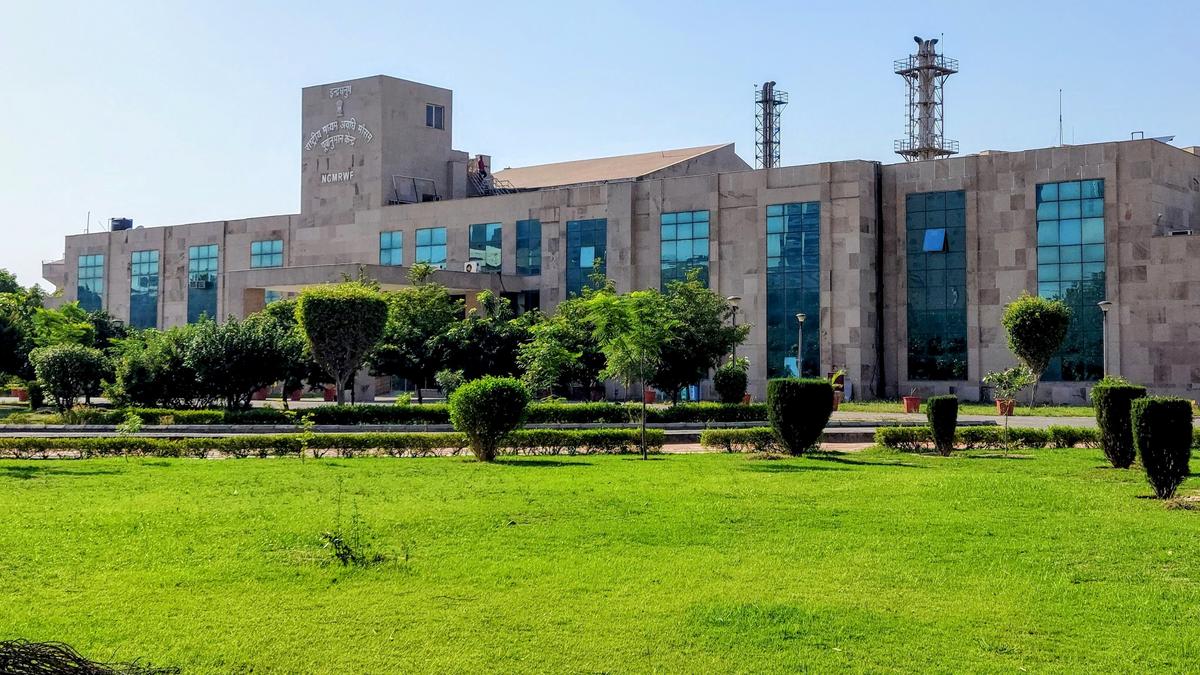
Mission Muasam will involve a major upgrade of instruments used by the India Meteorological Department (IMD), the National Centre for Medium Range Weather Forecasting (in picture), and the Indian Institute of Tropical Meteorology. www.ncmrwf.gov.in

The story so far:

On September 11, the Cabinet cleared a ₹2,000 crore programme called Mission Mausam to upgrade infrastructure used to make atmospheric observations. It will involve a major upgrade of instruments used by the India Meteorological Department (IMD), the National Centre for Medium Range Weather Forecasting, and the Indian Institute of Tropical Meteorology.

What are its objectives?

The mission’s focus is to improve atmospheric observations to enable better quality monsoon forecasts, improve alerts warning of deteriorating air quality, and warn of extreme weather events and cyclones. Critical elements of the mission include deploying ‘next-generation radars’ and satellite systems with advanced sensors and high-performance supercomputers, developing improved earth-system models, and a GIS-based automated Decision Support System for real-time data dissemination. The nodal agency involved in executing the mission is the Ministry of Earth Sciences (MoES). In the first tranche of the mission until 2026, the MoES hopes to procure and install up to 60 weather radars, 15 wind profilers, and 15 radiosondes. These instruments give regular updates on the changing parameters of wind speeds, atmospheric pressure, humidity, and temperature at various elevations of the atmosphere.

Is this the first time that a mission of this sort has been conceived?

No. The predecessor is the ‘Monsoon Mission,’ launched in 2012. Historically, the IMD has relied on statistical methods to forecast monsoons. Different weather parameters were permuted and combined in myriad ways to prepare forecasts about the likely performance of the monsoon in a particular year. These were extremely broad estimates; they almost never warned of the likelihood of droughts and also could not capture the wide regional diversity of the monsoon.


Editorial | Weather gods: On ‘Mission Mausam’

Droughts and floods co-exist and these weather models were usually inadequate at capturing that. The Monsoon Mission proposed a radical approach. Since 2004, meteorologists and climate scientists have been working on a different approach to forecasting that relies on high performance computing machines, or supercomputers. They sought to simulate the weather on a particular day and, via physics equations, make a map of how each day’s weather would pan out over the next few days, weeks, and even months. These weather models, called dynamical models, are now the standard approach to weather forecasts and climate studies. This can give more accurate ‘medium range’ forecasts and often this is what consumers of weather information find useful. The Monsoon Mission eventually succeeded in developing a general-purpose dynamical model that can be tweaked to generate forecasts on multiple timescales — from daily forecasts to seasonal monsoon predictions.

Beyond the monsoon, such a model could be customised for heatwaves, cold waves, and local forecasts. It is also an expensive approach to forecasting and requires sophisticated computers, radars, wind profilers, and an array of data-gathering devices.

What is novel about this mission?

Improving dynamical models is an endless pursuit, limited only by money and intellectual curiosity. While the latest mission builds on its predecessor by getting more of such equipment, it has outlined a radical plan for “weather management.” This means actively changing the weather using cloud seeding. The latter involves spraying clouds with appropriate chemicals to increase or decrease their water-carrying capacity. Plans are also afoot to control lightning. As statistics reveal, lightning strikes are the number one cause of nature-propelled deaths in India and were responsible for 2,821 or 35% of the 8,060 accidental deaths attributable to natural forces in 2022, according to the latest NCRB report.

Meteorologists say they hope one day to be able to tweak the electrical characteristics of the cloud so that there are less lightning strikes that lethally traverse from sky to ground. To this end, a large ‘cloud chamber’ – that simulates the interior of a cloud – will be set up at the IITM. To be sure, research into weather modification has a history stretching back to the 1950s and many experiments have been conducted in India, including spraying aerosols in certain regions of one cloud, and leaving out the others. However, the big challenge with weather modification is setting sharp boundaries. It is not unusual for seeded clouds to rain in places where they are not supposed to. Gleaning a better understanding of these processes is a major component of Mission Mausam.

Published – September 15, 2024 03:05 am IST


Source link

Science Tags:Extreme weather events prediction, Mission Mausam, Weather modification plans

Post navigation

Previous Post: At least 7 killed as Russia shells four Ukraine regions, governors say
Next Post: Onion export duty slash: Mixed reactions in India’s largest onion producing State

Related Posts

  • What happens if you have a medical emergency onboard the ISS?
    What happens if you have a medical emergency onboard the ISS? Science
  • What is a wolf supermoon?
    What is a wolf supermoon? Science
  • Why is red the colour of danger?
    Why is red the colour of danger? Science
  • As calculations catch up, muon anomaly nearly vanishes
    As calculations catch up, muon anomaly nearly vanishes Science
  • What is mineral water and how does it naturally contain dissolved minerals?
    What is mineral water and how does it naturally contain dissolved minerals? Science
  • VELC payload aboard Aditya-L1 will send 1,440 images of sun in a day
    VELC payload aboard Aditya-L1 will send 1,440 images of sun in a day Science

More Related Articles

New microscope reveals molecular jostling faster than ever before New microscope reveals molecular jostling faster than ever before Science
New cat species identified in Bolivia, first in over a century New cat species identified in Bolivia, first in over a century Science
India produces smart scientists but is struggling to retain them India produces smart scientists but is struggling to retain them Science
Why does spicy food make our nose run? Why does spicy food make our nose run? Science
Rising number of ‘predatory’ academic journals undermines research and public trust in scholarship Rising number of ‘predatory’ academic journals undermines research and public trust in scholarship Science
In manifesto, scientists oppose ‘militarisation’ of quantum research In manifesto, scientists oppose ‘militarisation’ of quantum research Science
SiteLock

Archives

  • October 2026
  • September 2026
  • August 2026
  • July 2026
  • June 2026
  • May 2026
  • April 2026
  • March 2026
  • February 2026
  • January 2026
  • December 2025
  • November 2025
  • October 2025
  • September 2025
  • August 2025
  • July 2025
  • June 2025
  • May 2025
  • April 2025
  • March 2025
  • February 2025
  • January 2025
  • December 2024
  • November 2024
  • October 2024
  • September 2024
  • August 2024
  • July 2024
  • June 2024
  • May 2024
  • April 2024
  • March 2024
  • February 2024
  • January 2024
  • December 2023
  • November 2023
  • October 2023
  • September 2023
  • August 2023
  • July 2023
  • June 2023
  • May 2023
  • April 2023
  • March 2023
  • February 2023
  • January 2023
  • December 2022
  • November 2022
  • October 2022
  • September 2022
  • August 2022
  • July 2022
  • June 2022
  • May 2022

Categories

  • Business
  • Nation
  • Science
  • Sports
  • World

Recent Posts

  • Women stage silent demonstration at Kathipara against police action on anti-CEC protesters in Delhi
  • DGCA bans specific power banks on flights
  • Saudi Supreme Court sets aside Sri Lankan migrant worker’s death penalty
  • Nedumbassery accident: CPI(M) stages protest march to police station over ‘indifference’ in handling of case
  • Why CJI Surya Kant said ‘no’ to Rahul Gandhi’s request to meet | Explained

Recent Comments

  1. RobertTes on UP Teacher Who Asked Students To Slap Muslim Classmate
  2. Manuelret on UP Teacher Who Asked Students To Slap Muslim Classmate
  3. RobertTes on UP Teacher Who Asked Students To Slap Muslim Classmate
  4. RobertTes on UP Teacher Who Asked Students To Slap Muslim Classmate
  5. BrentWes on UP Teacher Who Asked Students To Slap Muslim Classmate
  • Access Denied
    Access Denied Nation
  • “When Confidence Drops…”: Australia Great’s Clear Verdict On Rohit Sharma’s Form
    “When Confidence Drops…”: Australia Great’s Clear Verdict On Rohit Sharma’s Form Sports
  • Bihar Caste-Based Survey, NDTV Explains:
    Bihar Caste-Based Survey, NDTV Explains: Nation
  • Access Denied
    Access Denied Nation
  • D Gukesh vs Magnus Carlsen, It’s Happening. Details Of Venue And Dates Here
    D Gukesh vs Magnus Carlsen, It’s Happening. Details Of Venue And Dates Here Sports
  • Access Denied
    Access Denied Nation
  • Gambhir sir told me not to get desperate: Sai Sudharsan
    Gambhir sir told me not to get desperate: Sai Sudharsan Sports
  • End the free rein of junk food advertising in India
    End the free rein of junk food advertising in India Nation

Editor-in-Chief:
Mohammad Ariff,
MSW, MAJMC, BSW, DTL, CTS, CNM, CCR, CAL, RSL, ASOC.
editor@artifex.news

Associate Editors:
1. Zenellis R. Tuba,
zenelis@artifex.news
2. Haris Daniyel
daniyel@artifex.news

Photograher:
Rohan Das
rohan@artifex.news

Associate Journalists
1. Subrata Paul - AN/2020/01
2. Quamruz Zaman - AN/2021/22
3. Ahmed Sha - AN/2021/035
4. Ajay Kumar Shaw - AN/2021/39
5. Tahqiqul Hoda - AN/2021/21

Artifex.News offers Online Paid Internships to college students from India and Abroad. Interns will get a PRESS CARD and other online offers.
Send your CV (Subjectline: Paid Internship) to internship@artifex.news

Links:
Associate Journalism
About Us
Privacy Policy

News Links:
Breaking News
World
Nation
Sports
Business
Entertainment
Lifestyle

Registered Office:
72/A, Elliot Road, Kolkata - 700016
Tel: 033-22277777, 033-22172217
Email: office@artifex.news

Editorial Office / News Desk:
No. 13, Mezzanine Floor, Esplanade Metro Rail Station,
12 J. L. Nehru Road, Kolkata - 700069.
(Entry from Gate No. 5)
Tel: 033-46011099, 033-46046046
Email: editor@artifex.news

Copyright © 2023 Artifex.News Newsportal designed by Artifex Infotech.