





Skip to content
  • Facebook
  • X
  • Linkedin
  • WhatsApp
  • YouTube
  • Associate Journalism
  • About Us
  • Privacy Policy
  • 033-46046046
  • editor@artifex.news
Artifex.News

Artifex.News

Stay Connected. Stay Informed.

  • Breaking News
  • World
  • Nation
  • Sports
  • Business
  • Science
  • Entertainment
  • Lifestyle
  • Toggle search form
  • U.S. Senate overwhelmingly passes aid for Ukraine, Israel and Taiwan with big bipartisan vote
    U.S. Senate overwhelmingly passes aid for Ukraine, Israel and Taiwan with big bipartisan vote World
  • What prolonged fasting can do to the human body | Explained
    What prolonged fasting can do to the human body | Explained Science
  • Access Denied
    Access Denied Nation
  • U.S. Judge for now dismisses lawsuit by Sam Altman’s sister accusing OpenAI CEO of sexual abuse
    U.S. Judge for now dismisses lawsuit by Sam Altman’s sister accusing OpenAI CEO of sexual abuse World
  • Access Denied Sports
  • Chief Economic Adviser V Anantha Nageswaran On Inclusion of Indian bonds In JPMorgan Index Will Boost Rupee Widen Investor Base
    Chief Economic Adviser V Anantha Nageswaran On Inclusion of Indian bonds In JPMorgan Index Will Boost Rupee Widen Investor Base Business
  • Opinion: Humanities' Unexpected Rise In The Digital Age
    Opinion: Humanities' Unexpected Rise In The Digital Age Nation
  • IPL 2026 | Vaibhav Sooryavanshi more than ready for India call-up: Sangakkara
    IPL 2026 | Vaibhav Sooryavanshi more than ready for India call-up: Sangakkara Sports
Rattlesnake blood could reinvent the fight against deadly venoms

Rattlesnake blood could reinvent the fight against deadly venoms

Posted on September 16, 2026 By admin


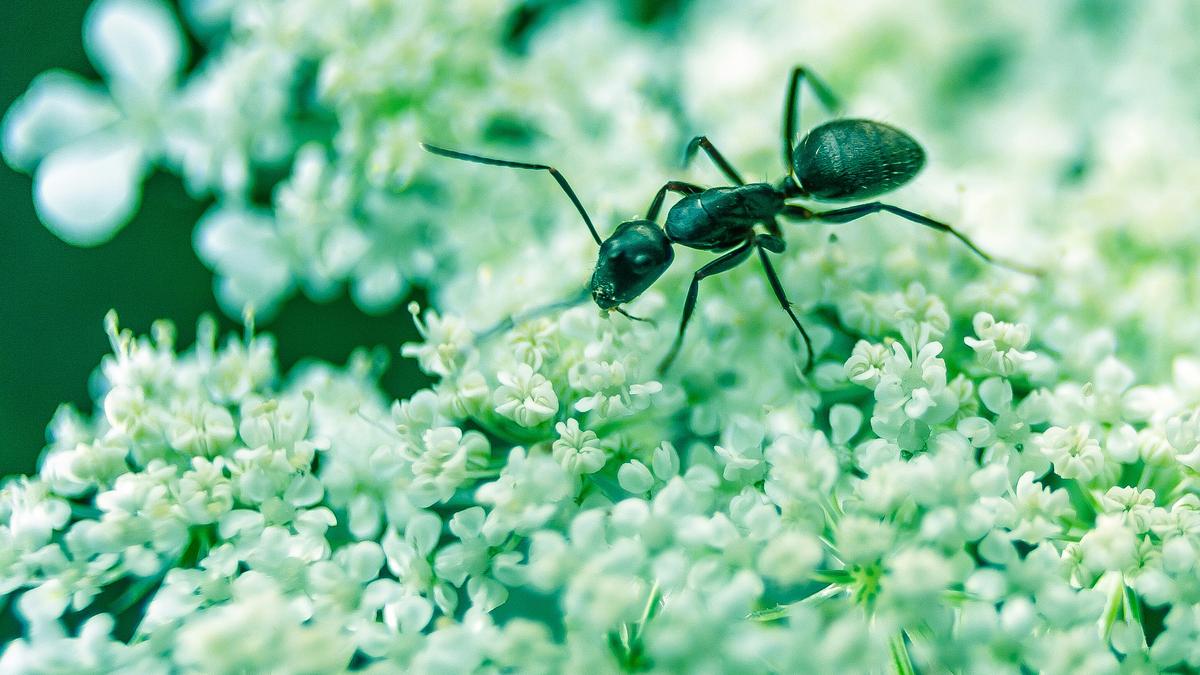
Herpetologists first discovered in 1933 that rattlesnakes are immune to their own venom. Native to the Americas, rattlesnakes are pit vipers, a family of vipers with a heat-sensing pit organ between each nostril and eye.

Venom resistance in snakes comes in two forms: either the targets in their bodies have evolved such that the venom doesn’t attack them, like in cobras, or they possess specific molecules in their bloodstream that serve as “toxin sponges”, like in vipers, Sean B. Carroll, chair of biology at the University of Maryland, U.S., said.

In 1972, Japanese researchers discovered the first example of a so-called toxin sponge — a serum protein dubbed Fetuin-A — from Okinawa habu (Protobothrops flavoviridis), a pit viper endemic to the Ryukyu Islands. Fetuin-A could inhibit metalloproteinases, a class of venom toxins that could cause haemorrhage, damage tissue, and disrupt the coagulation system.

Metalloproteinases are the most abundant toxin family in rattlesnake venoms, and researchers have studied metalloproteinase inhibitors such as Fetuin-A in great detail. However, only recently did they discover that Fetuin-A belongs to a larger family of FETUA proteins.

In a 2022 paper, Dr. Carroll and his team identified four FETUA proteins from the western diamondback rattlesnake (Crotalus atrox).

Curiously, understanding the principles of venom resistance from C. atrox led the researchers to leverage these antitoxins, which had evolved over millions of years, for human benefit.

In a new study in Proceedings of the National Academy of Sciences, the team at Maryland has shown that specific combinations of C. atrox FETUA proteins can fully neutralise rattlesnake venom lethality in mice, with roughly 10-times the potency of commercial antivenom.

‘String of surprises’

On discovering metalloproteinase-inhibiting FETUA-2, 3, 4, and 5 proteins from C. atrox, the research team studied their antivenom potency. By injecting various protein combinations preincubated with C. atrox venom into experimental mice, they found that some combinations successfully blocked haemorrhaging, while some even staved off death.

“Rattlesnake venoms have 10-15 different kinds of toxins,” Dr. Carroll said. “So it was entirely unexpected that just blocking metalloproteinases would block the lethality of the venom.”

The test results that followed were a “string of surprises”. Encouraged by the success of FETUA proteins against C. atrox venom, the team tried them against the eastern diamondback rattlesnake (Crotalus adamanteus), which proved successful. Then they tested them against two Asian snakes: the Malayan pit viper (Calloselasma rhodostoma) and the Chinese moccasin (Deinagkistrodon acutus). The proteins could protect against those as well.

The team then moved to candidates outside of pit vipers. Of the two true vipers they tested against, the proteins protected significantly against the Sochurek’s saw-scaled viper (Echis carinatus sochureki) — but none against the puff adder (Bitis arietans).

“Our surprises ran out, you could say,” Dr. Carroll said.

According to him, an antivenom needs potency and broad reactivity. And not only could these proteins recognise and neutralise the venom of a spectrum of distant species, when tested against CroFab, a commercial antivenom obtained from animals immunised with four pit viper venoms, including C. atrox, the proteins proved tenfold more potent.

The findings are a “real advance” for antivenom development, according to Kartik Sunagar, an associate professor at the Indian Institute of Science, Bengaluru; he was not involved in the study. “The paper shows convincingly that a combination of naturally evolved FETUA proteins can fully neutralise rattlesnake venom lethality by inhibiting metalloproteinases alone.”

However, Dr. Sunagar also pointed out that the study did not exactly measure clinical capacity.

“Every efficacy experiment premixed venom and inhibitor before injection,” he said. “So the study measures neutralising capacity, not treatment of an animal already envenomed, which is the clinically relevant scenario.”

Next-generation antivenom

According to Dr. Carroll, unlike lab-made compounds, FETUA proteins have been tested in nature.

“Rattlesnakes have evolved these proteins for 50 million years, with remarkable specificity and potency to inhibit their own venom, which gives me the sense that it is worth exploring,” he said.

Manufacturability and purity are added advantages, he added: “We can make recombinant FETUA proteins in the lab in unlimited quantities — whereas traditional antivenom requires animals to be immunised, and then the obtained antibodies have to be purified.”

Dr. Sunagar also shared the view that the recombinant and defined nature of FETUA proteins will help sidestep the low purity of animal-derived products.

While the study showed that these proteins can protect experimental mice from venom lethality, toxins other than metalloproteinases will have physiological effects on humans, Dr Carroll said: “What we don’t know is what else we will have to use in conjunction with these proteins to make an antivenom” for humans.

“FETUAs do nothing for the neurotoxins that dominate many medically important venoms,” Dr. Sunagar said. “The honest reading is that these proteins form the metalloproteinase-neutralising component of a next-generation antivenom, but it is not yet a standalone therapy.”

Dr. Carroll also said his team has found a new component that could aid human antivenom development, but did not elaborate on ongoing research.

Implications for India

In countries like India, which host both vipers and elapids such as cobras, FETUA proteins alone cannot provide a complete antivenom solution, Dr. Carroll said.

Although the study revealed partial protection against saw-scaled vipers (Echis carinatus sp.), one of India’s ‘Big Four’ and a major cause of death and disability, partial cross-reactivity need not translate into clinical protection, Dr. Sunagar added.

But India’s bigger takeaway is the strategy: “The logical path for India is to identify and test FETUAs from our own vipers rather than relying on rattlesnake versions, and to pair them with agents covering the neurotoxic elapids the FETUAs cannot touch,” according to Dr. Sunagar.

Nikhil Sreekandan is an independent journalist.

Published – September 17, 2026 09:30 am IST


Source link

Science

Post navigation

Previous Post: GCL: How coach Adhiban went from fast to feast
Next Post: Copper dazzle dull margins for EV, consumer and engineering goods

Related Posts

  • Why don’t ants get hurt when they fall down?
    Why don’t ants get hurt when they fall down? Science
  • Can CAR-T, a therapy for cancer, help treat autoimmune diseases? | In Focus podcast
    Can CAR-T, a therapy for cancer, help treat autoimmune diseases? | In Focus podcast Science
  • What is Siberian High? – The Hindu
    What is Siberian High? – The Hindu Science
  • Mega-canyon discovered beneath Greenland ice sheet
    Mega-canyon discovered beneath Greenland ice sheet Science
  • How the 2004 Indian Ocean earthquake transformed tsunami science
    How the 2004 Indian Ocean earthquake transformed tsunami science Science
  • Understanding of Earth’s flowering plants blossoms in genome study
    Understanding of Earth’s flowering plants blossoms in genome study Science

More Related Articles

Aravalli question faces the brunt of India’s fondness for ‘strategic exemptions’ Aravalli question faces the brunt of India’s fondness for ‘strategic exemptions’ Science
Why science and scientists must learn to celebrate their failures Why science and scientists must learn to celebrate their failures Science
Why do shrubs like hibiscus flower/fruit profusely only on the sunlit side? Why do shrubs like hibiscus flower/fruit profusely only on the sunlit side? Science
Lipase inhibitors cause mosquito sterility, study shows Lipase inhibitors cause mosquito sterility, study shows Science
Rapa Nui genomes restore the real history of an old, troubled people Rapa Nui genomes restore the real history of an old, troubled people Science
SpaceX rocket stage believed to have slammed into Moon SpaceX rocket stage believed to have slammed into Moon Science
SiteLock

Archives

  • September 2026
  • August 2026
  • July 2026
  • June 2026
  • May 2026
  • April 2026
  • March 2026
  • February 2026
  • January 2026
  • December 2025
  • November 2025
  • October 2025
  • September 2025
  • August 2025
  • July 2025
  • June 2025
  • May 2025
  • April 2025
  • March 2025
  • February 2025
  • January 2025
  • December 2024
  • November 2024
  • October 2024
  • September 2024
  • August 2024
  • July 2024
  • June 2024
  • May 2024
  • April 2024
  • March 2024
  • February 2024
  • January 2024
  • December 2023
  • November 2023
  • October 2023
  • September 2023
  • August 2023
  • July 2023
  • June 2023
  • May 2023
  • April 2023
  • March 2023
  • February 2023
  • January 2023
  • December 2022
  • November 2022
  • October 2022
  • September 2022
  • August 2022
  • July 2022
  • June 2022
  • May 2022

Categories

  • Business
  • Nation
  • Science
  • Sports
  • World

Recent Posts

  • Russia, China veto U.S. proposal for UN experts to keep monitoring sanctions on Iran
  • Girl raped, stabbed to death in Delhi; three minors among four held
  • The crucial Uttar Pradesh test of the BJP’s hegemony
  • DUSU poll: HC threatens to stay counting over violence; teachers allege assaults
  • U.S. approves visas for Iran President, FM Araghchi to attend UN high-level meeting even with sides at war

Recent Comments

  1. PhillipVax on UP Teacher Who Asked Students To Slap Muslim Classmate
  2. RussellReemn on UP Teacher Who Asked Students To Slap Muslim Classmate
  3. PhillipVax on UP Teacher Who Asked Students To Slap Muslim Classmate
  4. Davidjaw on UP Teacher Who Asked Students To Slap Muslim Classmate
  5. Kennethgoors on UP Teacher Who Asked Students To Slap Muslim Classmate
  • Harris arrives in Chicago to star at Democratic convention
    Harris arrives in Chicago to star at Democratic convention World
  • Looking back at 2024: Skyrocketing hoax bomb threats strike schools, hospitals, flights and more
    Looking back at 2024: Skyrocketing hoax bomb threats strike schools, hospitals, flights and more Nation
  • Canada theatre reports two violent attacks within 10 days
    Canada theatre reports two violent attacks within 10 days World
  • In a first, American Hindu Coalition endorses Pakistani American candidate in Virginia race
    In a first, American Hindu Coalition endorses Pakistani American candidate in Virginia race World
  • Japan undecided on sending military to Hormuz
    Japan undecided on sending military to Hormuz World
  • Access Denied Sports
  • Access Denied Business
  • S&P retains India’s GDP growth forecast at 6.5% on strong domestic demand
    S&P retains India’s GDP growth forecast at 6.5% on strong domestic demand Business

Editor-in-Chief:
Mohammad Ariff,
MSW, MAJMC, BSW, DTL, CTS, CNM, CCR, CAL, RSL, ASOC.
editor@artifex.news

Associate Editors:
1. Zenellis R. Tuba,
zenelis@artifex.news
2. Haris Daniyel
daniyel@artifex.news

Photograher:
Rohan Das
rohan@artifex.news

Artifex.News offers Online Paid Internships to college students from India and Abroad. Interns will get a PRESS CARD and other online offers.
Send your CV (Subjectline: Paid Internship) to internship@artifex.news

Links:
Associate Journalism
About Us
Privacy Policy

News Links:
Breaking News
World
Nation
Sports
Business
Entertainment
Lifestyle

Registered Office:
72/A, Elliot Road, Kolkata - 700016
Tel: 033-22277777, 033-22172217
Email: office@artifex.news

Editorial Office / News Desk:
No. 13, Mezzanine Floor, Esplanade Metro Rail Station,
12 J. L. Nehru Road, Kolkata - 700069.
(Entry from Gate No. 5)
Tel: 033-46011099, 033-46046046
Email: editor@artifex.news

Copyright © 2023 Artifex.News Newsportal designed by Artifex Infotech.