




Skip to content
  • Facebook
  • X
  • Linkedin
  • WhatsApp
  • YouTube
  • Associate Journalism
  • About Us
  • Privacy Policy
  • 033-46046046
  • editor@artifex.news
Artifex.News

Artifex.News

Stay Connected. Stay Informed.

  • Breaking News
  • World
  • Nation
  • Sports
  • Business
  • Science
  • Entertainment
  • Lifestyle
  • Toggle search form
  • “I Am Little Worried”: Mohammed Shami’s Absence vs England Ahead Of Champions Trophy Raises Suspicion
    “I Am Little Worried”: Mohammed Shami’s Absence vs England Ahead Of Champions Trophy Raises Suspicion Sports
  • IND vs NZ Test series: Gambhir backs under-fire K.L. Rahul
    IND vs NZ Test series: Gambhir backs under-fire K.L. Rahul Sports
  • Danielle Spencer, ‘What’s Happening!!’ star, dies at 60
    Danielle Spencer, ‘What’s Happening!!’ star, dies at 60 World
  • Congress Hits Back After Himanta Sarma Claim On Ambedkar, Jawaharlal Nehru
    Congress Hits Back After Himanta Sarma Claim On Ambedkar, Jawaharlal Nehru Nation
  • Trump administration asks U.S. Supreme Court to halt foreign aid payments
    Trump administration asks U.S. Supreme Court to halt foreign aid payments World
  • Rupee rises 4 paise to 82.87 against U.S. dollar in early trade
    Rupee rises 4 paise to 82.87 against U.S. dollar in early trade Business
  • Azerbaijan Launches Military Operation In Disputed Armenia Nagorno-Karabakh Region Withdrawal Of Forces
    Azerbaijan Launches Military Operation In Disputed Armenia Nagorno-Karabakh Region Withdrawal Of Forces World
  • Access Denied Sports
Will understanding cancer become a data problem? 

Will understanding cancer become a data problem? 

Posted on June 7, 2024 By admin


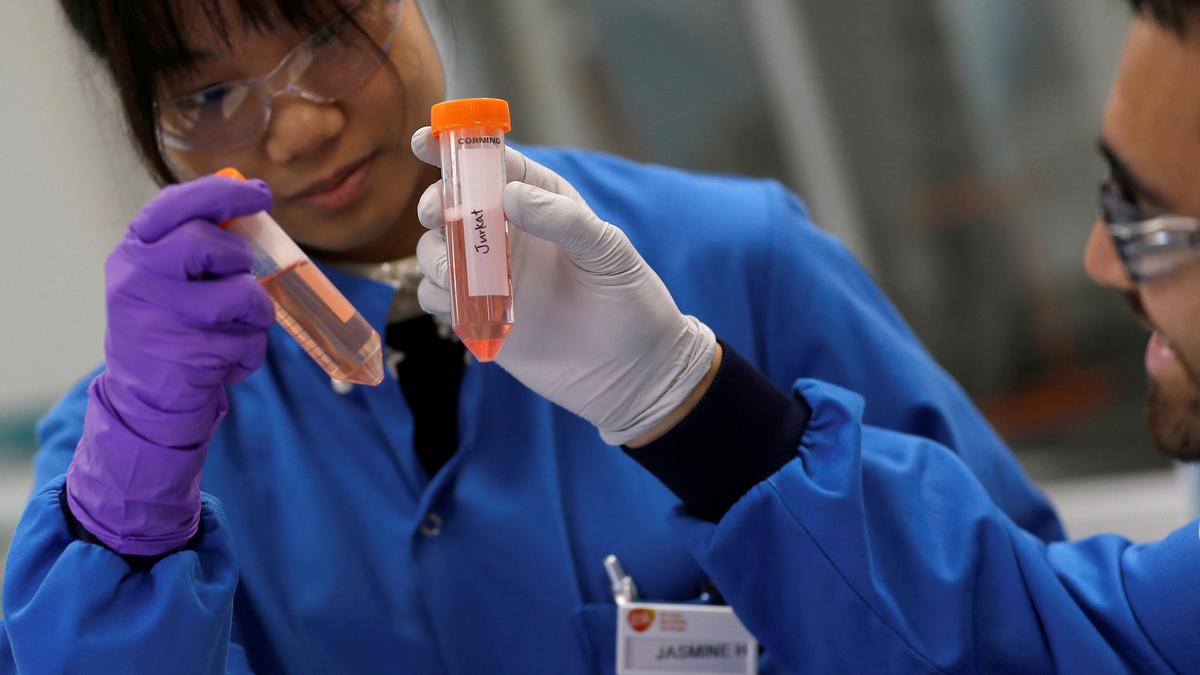
Scientists with test tubes containing stem cells at the GlaxoSmithKline research centre in Stevenage, Britain.

Looking back 10 years to before my father passed away after his diagnosis of brain cancer, what I remember the most is the intricate web of challenges we confronted during his illness. The World Health Organization (WHO) reports that approximately 33,000 new incidences of brain cancer happen each year in India alone, while Global Cancer Observatory 2020 estimates brain cancer as the 19th most common type of cancer. Behind these alarming numbers, lie many stories of pain and unrest. Every family deals with the pain and uncertainty of taking care of loved ones, who may never get better.  

Move forward by 10 years. Inadvertently drawn to cancer research by the profound personal experience, I now find myself associated with it – and what I have learned fills me with hope. There have been amazing breakthroughs made in oncology research worldwide, the kind that will mitigate some of the challenges I experienced first hand. Based on my experience in working in this field, I will try to explain how this critical field has evolved over the last decade. The current standard of care for diagnosing cancer often requires invasive and risky procedures such as surgeries to extract tissue samples for analysis. Believe it or not, the risks for patients from these procedures range from short-term paralysis to death. Can we make it easier for the patients and their families, at least as far as diagnosis goes? The answer is a resounding yes. And, the answer lies in our genes.  

We have all read about genes, DNA, and RNA as part of our basic high-school science. Technically, they are the fundamental building blocks of life, shaping our traits and our health. In the context of this discussion, science today links people’s genes to their susceptibility to diseases like cancer. Let me give you a simple example. Imagine that you have a recipe for a sweet dish written down, and you want to make a bowl of it. However, when you’re writing out the recipe, you accidentally change one of the ingredients. Instead of listing “sugar,” you write “salt”. This small change alters the taste and texture of the dish, making it turn out very differently than you intended. Similarly, in our bodies, our DNA is like the recipe for making and maintaining us. If there’s a mistake in the DNA code, called a mutation, it can change how our cells behave. Just like the wrong ingredient can change how our recipe turns out, a DNA mutation can change how our cells grow and function, sometimes leading to cancer.  

Therefore, what we must primarily understand is what are the mutations in the genes causing cancer. Research suggests that there are close to 3,000 such cancer-causing genes. With each gene containing thousands of DNA codes, and each code potentially holding vital information about cancer development, the sheer volume of data analysis for a human can become quite overwhelming. And seemingly impossible.

But, enter Next-Generation Sequencing (NGS). Cutting-edge technology that is potentially transforming our ability to decipher the genetic code with speed and precision. To provide context, the Human Genome Project officially began in 1990 and was completed in 2003, taking about 13 years to finish, at a cost of about $3 billion. Today’s technology lets us accomplish the same process in possibly less than a week, and costs a little under $1,000!  

Getting back to cancer diagnostics, thanks to advancements in NGS, we have the concept of a liquid biopsy, a revolutionary technique that offers a less invasive alternative to surgery. To explain the concept, think of a detective investigating a case. To piece together the crime scene, the detective collects different types of evidence: fingerprints on a doorknob, footprints, and fibre left behind on the carpet. Similarly, in a liquid biopsy, clinicians act as detectives. Instead of invasive procedures like surgery, they collect a small sample of patient’s blood, which is like the evidence at a crime scene. Within this blood sample, they look for genetic patterns that indicate the presence of cancer cells. These genetic biomarkers are like the fingerprints and footprints found at a crime scene, providing crucial clues about the patient’s health. It provides answers to questions: Is there a malignancy? And if so, what precisely is the type of malignancy?

Of course, this process is easier said than done. Producing such real-time results with precision requires the support of rigorous data analysis. The genetic data from several tumour and blood samples needs to be assimilated by artificial intelligence systems based on machine learning algorithms, combined with big data analytics platforms. No wonder chip makers and sequencing technology firms are making significant investments to expand their presence in the NGS domain. These technology tools enable researchers not only to process large amounts of information faster, but also to detect patterns that previously would have gone unnoticed by the human eye or mind alone. 

As we navigate the ever-evolving landscape of oncology, it is clear that the future holds immense promise. By combining the power of data at our disposal, with innovative technologies like NGS, we may well be inching closer to unravelling the complexities of this disease. A popular saying suggests that data has become the new oil. As we stand at the forefront of a new era in cancer research, perhaps solving for its cure is also a data problem. 

(The author is part of Hyderabad-based Exsegen Genomics, a company focused on pioneering a liquid biopsy diagnostic specifically tailored for brain cancers. vikaspawar@hotmail.com)


Source link

Science

Post navigation

Previous Post: Markets hold on to early gains after RBI monetary policy decision
Next Post: Major cause of inflammatory bowel disease discovered

Related Posts

  • Why is India on the U.S. blacklist on fentanyl? | Explained
    Why is India on the U.S. blacklist on fentanyl? | Explained Science
  • Can the newly discovered organelle help engineer plants to fix nitrogen?
    Can the newly discovered organelle help engineer plants to fix nitrogen? Science
  • Why do people catch colds and flu more often in the winter?
    Why do people catch colds and flu more often in the winter? Science
  • What is the Baikonur cosmodrome?
    What is the Baikonur cosmodrome? Science
  • mRNA research exemplifies the unpredictable value of basic research
    mRNA research exemplifies the unpredictable value of basic research Science
  • Earthquake 2,500 years ago abruptly changed Ganga river’s course
    Earthquake 2,500 years ago abruptly changed Ganga river’s course Science

More Related Articles

science newsletter New study links loneliness to cardiovascular diseases, stroke and mortality  science newsletter New study links loneliness to cardiovascular diseases, stroke and mortality  Science
World breached 1.5° Celsius limit for entire year for first time: European climate agency World breached 1.5° Celsius limit for entire year for first time: European climate agency Science
Year after Titan’s fatal dive, explorers vow to pursue ocean mysteries Year after Titan’s fatal dive, explorers vow to pursue ocean mysteries Science
India’s Aditya-L1 spacecraft successfully escapes sphere of Earth’s influence India’s Aditya-L1 spacecraft successfully escapes sphere of Earth’s influence Science
New study decodes when the Nicobarese people came to the island New study decodes when the Nicobarese people came to the island Science
NIMHANS releases Pre-CURB, a digital learning resource on prevention of cannabis use NIMHANS releases Pre-CURB, a digital learning resource on prevention of cannabis use Science
SiteLock

Archives

  • May 2026
  • April 2026
  • March 2026
  • February 2026
  • January 2026
  • December 2025
  • November 2025
  • October 2025
  • September 2025
  • August 2025
  • July 2025
  • June 2025
  • May 2025
  • April 2025
  • March 2025
  • February 2025
  • January 2025
  • December 2024
  • November 2024
  • October 2024
  • September 2024
  • August 2024
  • July 2024
  • June 2024
  • May 2024
  • April 2024
  • March 2024
  • February 2024
  • January 2024
  • December 2023
  • November 2023
  • October 2023
  • September 2023
  • August 2023
  • July 2023
  • June 2023
  • May 2023
  • April 2023
  • March 2023
  • February 2023
  • January 2023
  • December 2022
  • November 2022
  • October 2022
  • September 2022
  • August 2022
  • July 2022
  • June 2022
  • May 2022

Categories

  • Business
  • Nation
  • Science
  • Sports
  • World

Recent Posts

  • Traffic diversions in Darussalam for 45 days for construction work
  • Watch: ‘We’re going to have a fantastic future together’: Trump to Xi Jinping
  • Thoothukudi will see highest Tasmac closures of liquor shops near schools, places of worship
  • Sensex climbs 450 points on positive Asian peers
  • India bans sugar exports till September 30

Recent Comments

  1. CarlosExorb on UP Teacher Who Asked Students To Slap Muslim Classmate
  2. Robertfloup on UP Teacher Who Asked Students To Slap Muslim Classmate
  3. Davidcag on UP Teacher Who Asked Students To Slap Muslim Classmate
  4. OrvalMaync on UP Teacher Who Asked Students To Slap Muslim Classmate
  5. Jeffreyroure on UP Teacher Who Asked Students To Slap Muslim Classmate
  • Israel-Hamas war | Israel’s repeated attacks leave Iran in a strategic dilemma
    Israel-Hamas war | Israel’s repeated attacks leave Iran in a strategic dilemma World
  • Watch: Inside Nigeria’s backyard mining boom driven by poverty
    Watch: Inside Nigeria’s backyard mining boom driven by poverty World
  • Man Gets 20-Year Jail Term For Raping 16-Year-Old Girl Near Gurugram
    Man Gets 20-Year Jail Term For Raping 16-Year-Old Girl Near Gurugram Nation
  • Binance says it blocked “limited number” of Palestinian crypto accounts over “illicit funds”
    Binance says it blocked “limited number” of Palestinian crypto accounts over “illicit funds” World
  • Access Denied World
  • Uniform Civil Code To Be Implemented In Uttarakhand This Month: Chief Minister
    Uniform Civil Code To Be Implemented In Uttarakhand This Month: Chief Minister Nation
  • Access Denied Sports
  • Army To Hold Agniveer Recruitment Rally In Mumbai From November 1 to 7
    Army To Hold Agniveer Recruitment Rally In Mumbai From November 1 to 7 Nation

Editor-in-Chief:
Mohammad Ariff,
MSW, MAJMC, BSW, DTL, CTS, CNM, CCR, CAL, RSL, ASOC.
editor@artifex.news

Associate Editors:
1. Zenellis R. Tuba,
zenelis@artifex.news
2. Haris Daniyel
daniyel@artifex.news

Photograher:
Rohan Das
rohan@artifex.news

Artifex.News offers Online Paid Internships to college students from India and Abroad. Interns will get a PRESS CARD and other online offers.
Send your CV (Subjectline: Paid Internship) to internship@artifex.news

Links:
Associate Journalism
About Us
Privacy Policy

News Links:
Breaking News
World
Nation
Sports
Business
Entertainment
Lifestyle

Registered Office:
72/A, Elliot Road, Kolkata - 700016
Tel: 033-22277777, 033-22172217
Email: office@artifex.news

Editorial Office / News Desk:
No. 13, Mezzanine Floor, Esplanade Metro Rail Station,
12 J. L. Nehru Road, Kolkata - 700069.
(Entry from Gate No. 5)
Tel: 033-46011099, 033-46046046
Email: editor@artifex.news

Copyright © 2023 Artifex.News Newsportal designed by Artifex Infotech.