




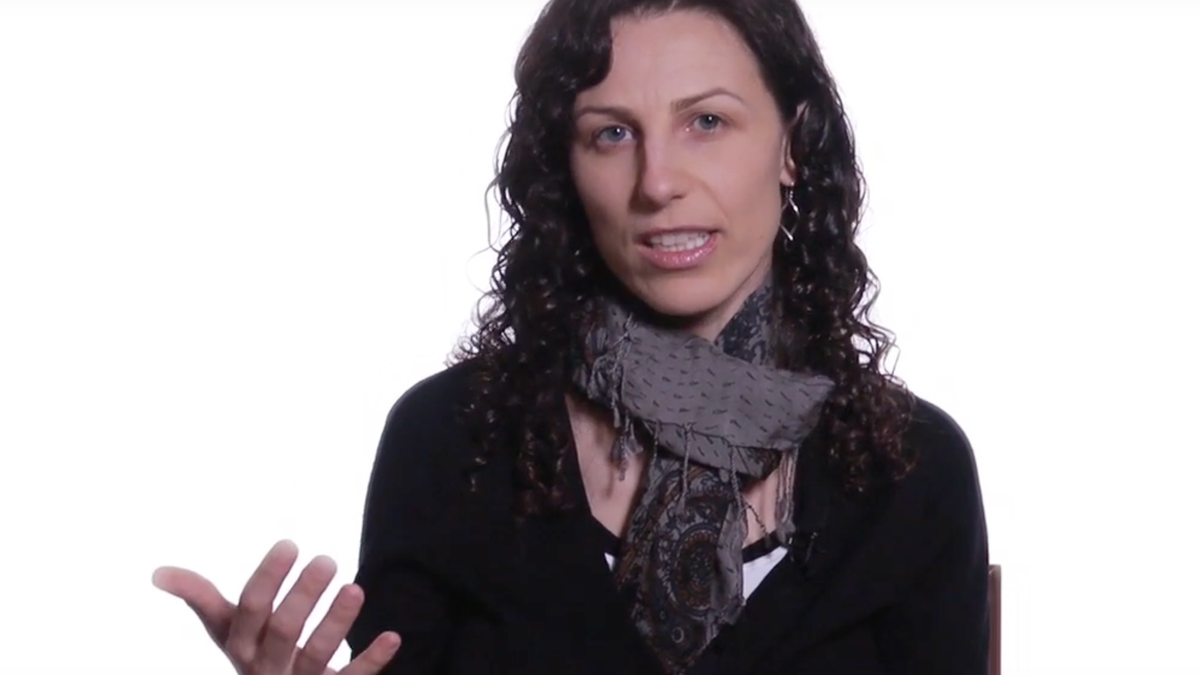
Francesca Gino’s reputation precedes her in the behavioural science community. Once touted as an expert on dishonesty and negotiation, she has been at the centre of an academic misconduct scandal for the past few years.
In a nutshell, independent researchers Leif Nelson, Joe Simmons, and Uri Simonsohn identified inconsistencies and data manipulation associated with at least four scientific papers co-authored by Prof. Gino. They detailed their findings in a series of posts on their blog ‘Data Colada’. When these posts were published, Prof. Gino’s now-former employer Harvard University placed her on unpaid leave and launched proceedings to revoke her tenured position.
Prof. Gino filed a $25 million defamation lawsuit against both Harvard University and the ‘Data Colada’ authors in late 2023. She maintained — and continues to maintain — her innocence. She has said in her defence that research assistants or an unknown third party who had access to her research data made mistakes for which she couldn’t be blamed. But while it continues to be plausible that ‘Data Colada’ unearthed honest mistakes rather than misconduct in Prof. Gino’s papers, the buck also stops with her.
But then last week, U.S. District Court (for Massachusetts) Judge Myong Joun dismissed Prof. Gino’s defamation case against the ‘Data Colada’ researchers, and partially dismissed her case against Harvard University. The judge ruled that Prof. Gino could continue her case against the university on the grounds that it breached her employment contract by launching the tenure revocation proceedings.
The verdict and the scientific community
Since the court has only partly dismissed Prof. Gino’s claims against Harvard Business School — the ones on procedural irregularities have been permitted to continue to an eventual trial — it appears that even notable institutions do not have the most legally robust policies in dealing with research misconduct.
The verdict is a good opportunity to take a much-needed and closer look at such policies since they present several reputational harms for science at large, and not just to researchers and institutions. Well-designed research misconduct policies can ensure unethical activities are kept in check and that the institute will follow due process. Additionally, policies governing research, particularly the production of research, can either create environments that incentivise or dissuade individual researchers from engaging in research misconduct.
While each of the individual policies are enacted for a specific purpose, collectively they can influence the prevalence of and the institute’s ability to act against unethical research practices. Policies against misconduct and those that pressurise researchers to publish can work against each other, yet strong policies to check misconduct must exist. For example, some have blamed the conflict between Italy’s guidelines on research misconduct and its numerical thresholds for scholars to be promoted at universities for the rise in citation-doping (increasing the number of citations a paper has by unethical means) in the country.

“WEIRD” countries (short for “Western, educated, industrialised, rich, democratic”) have made much progress on policing research. One recent study of select European Union countries found four regulatory bodies per country on average dedicated to research integrity and ethics. While not without shortcomings, the non-obligatory requirements for research integrity and ethics training and lack of specific legal protections for whistleblowers are notable.
Progress elsewhere has been mixed, however. China and India have high research output but at the same time visibly high rates of retractions; have taken notice of the problem of research misconduct; and are making efforts to address it. Chinese authorities audited retractions this year, requiring universities to submit a list of papers that were retracted and for what reasons. In India, the University Grants Commission rescinded the mandate for PhD scholars to have published papers in journals in order to graduate, reducing some of the pressure.
This said, reactionary audits and relaxing publishing requirements are not policies nor do they constitute substantive reform. In fact, for all their willingness to audit, China’s extant policies governing research production and the way bureaucrats are executing them could be fuelling research misconduct in academia.
Likewise, despite India’s impressive strides in climbing up the research leaderboard, the country still lacks a comprehensive national policy on research misconduct as well as any sort of body dedicated to keeping an eye out for research misconduct. The recently established Anusandhan National Research Foundation is close to being a regulatory body, but India needs something more like the U.S. Office of Research Integrity.
When governance and responsibility over research are left largely to the discretion of institutes, policies can be dictated by short-sighted self-interest and with outcomes more detrimental than just research misconduct. In the end, every sufficiently large gathering or grouping of individuals required rules and supervision: society needs governments and laws, markets need watchdogs and regulations, events need organisers and protocol. Similarly, scientists need bodies to implement ethical research and policies to encourage it.
The verdict and research investigators
The verdict is also a significant win for independent, responsible research activists. One of Robert K. Merton’s norms applies here: scientific claims must be scrutinised thoroughly before being accepted. ‘Data Colada’ also applied the Mertonian norm of disinterestedness: that science should be carried out for its own sake when investigating an alleged fraud.

In fact, the researchers’ blog posts went a step further and generously hedged their language (e.g., “The posted data seem to be sorted by two columns”). This sort of writing is second nature to academics because those involved in producing knowledge realise that the universe is complex and certainty is an illusion. Researchers often use ‘may’, ‘appears’, ‘seemingly’, ‘suggests’, etc. because we’re (usually) honest about what we don’t know as well as the limited generalisability of what we’ve found, especially in the behavioural sciences. This idiosyncratic writing style protected ‘Data Colada’ because its statements expressed subjective views, not hard facts.
Let’s also remember the context of these proceedings: in the U.S., the First Amendment protects freedom of speech and has a well-developed and reasonably independent legal system that allows one to defend oneself.
The verdict and Prof. Gino
As for Prof. Gino, it’s hard to say at this time what the implications of this verdict will be.
Her lawyers have already put a positive spin on the partial dismissal focusing on the judge’s decision to allow the breach of contract case against Harvard University to continue. However, do academics with well-built public profiles really face any threats to their reputation or future career prospects?
The Gino case certainly made academics, administrators, and university officials recalibrate the implications of scientific misconduct, especially when it’s caught out. More importantly, the court’s decision to dismiss the defamation claims against the independent researchers verifying scientific findings has fortified trust in science as a community enterprise.
Abhishek Vajjala is a research assistant at the Department of Economics and Hansika Kapoor is a research author at the Department of Psychology — both at Monk Prayogshala, Mumbai.
Published – September 19, 2024 08:30 am IST