

Skip to content
  • Facebook
  • X
  • Linkedin
  • WhatsApp
  • YouTube
  • Associate Journalism
  • About Us
  • Privacy Policy
  • 033-46046046
  • editor@artifex.news
Artifex.News

Artifex.News

Stay Connected. Stay Informed.

  • Breaking News
  • World
  • Nation
  • Sports
  • Business
  • Science
  • Entertainment
  • Lifestyle
  • Toggle search form
  • Over 10,000 More Jobs To Go At UK Household Goods Company Wilko
    Over 10,000 More Jobs To Go At UK Household Goods Company Wilko World
  • Mumbai, Assam Cops Land Up At Ranveer Allahbadia’s Home. But Door Is…
    Mumbai, Assam Cops Land Up At Ranveer Allahbadia’s Home. But Door Is… Nation
  • “Don’t Think If Any Other Batter…”: Pakistan Star’s Big Praise For Virat Kohli Ahead Of Asia Cup 2023 Clash
    “Don’t Think If Any Other Batter…”: Pakistan Star’s Big Praise For Virat Kohli Ahead Of Asia Cup 2023 Clash Sports
  • Geneva Open: Bhambri-Venus duo enters men’s doubles final
    Geneva Open: Bhambri-Venus duo enters men’s doubles final Sports
  • AAP Says Was Not Invited To All-Party Meet Over Bangladesh Turmoil
    AAP Says Was Not Invited To All-Party Meet Over Bangladesh Turmoil Nation
  • Pakistan Selector Asad Shafiq In USA For T10 League Amid Crisis With National Team
    Pakistan Selector Asad Shafiq In USA For T10 League Amid Crisis With National Team Sports
  • Access Denied
    Access Denied Nation
  • BJP rule in Bengal will be no different from rest of country: Venugopal
    BJP rule in Bengal will be no different from rest of country: Venugopal Nation
How Gaganyaan’s thermal protection system will survive re-entry | Explained

How Gaganyaan’s thermal protection system will survive re-entry | Explained

Posted on August 20, 2026 By admin


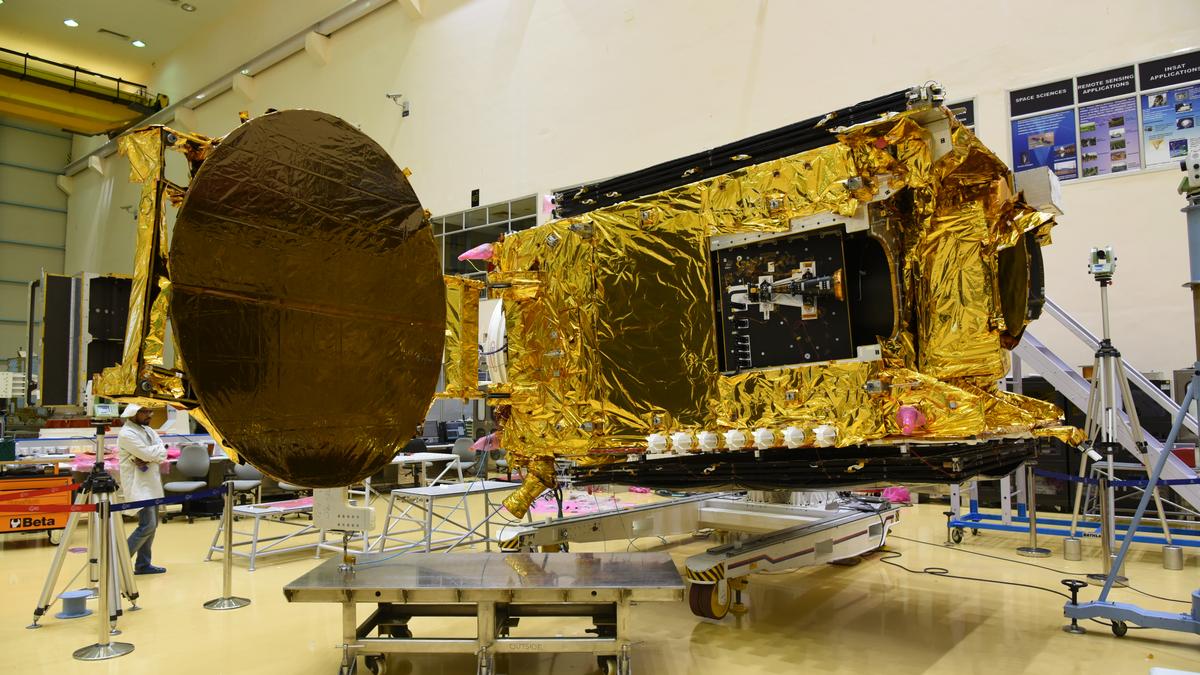
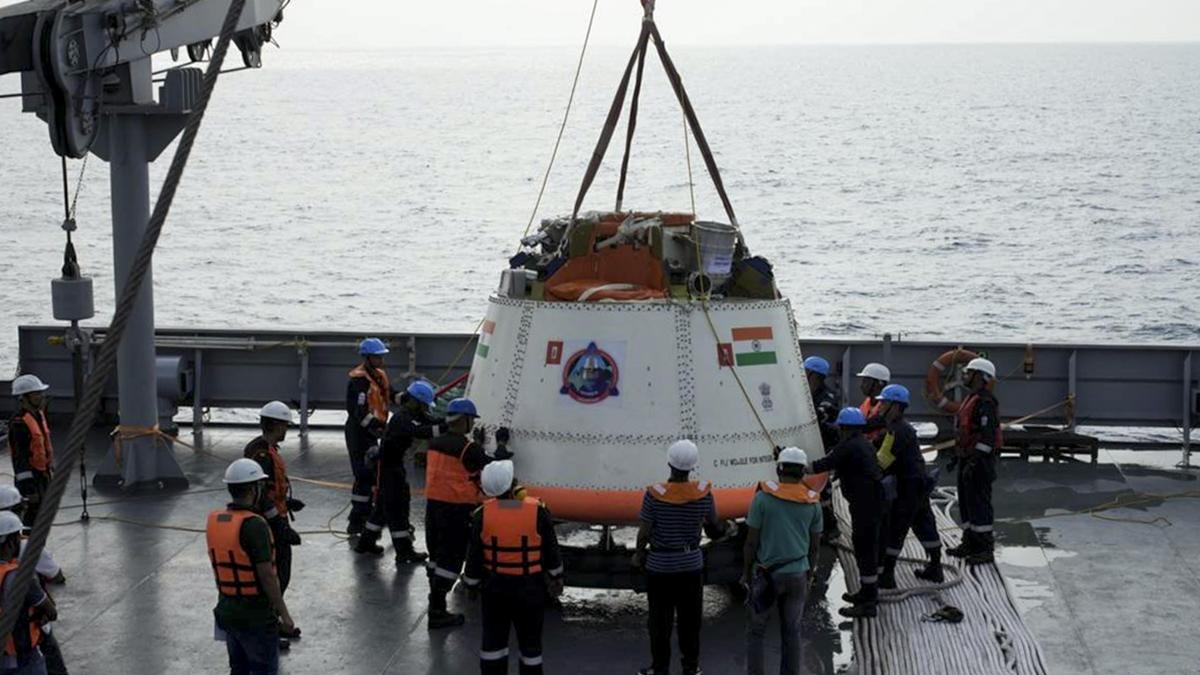
Compared to rockets, re-entering modules have a unique and unforgiving set of challenges
| Photo Credit: PTI

The atmospheric phase of all space missions is challenging for both ascending rockets and descending space capsules.

As the rocket lifts off from the earth and heads towards its orbit, it accelerates slowly through the atmosphere to keep the mechanical loads on the vehicle to a minimum. When a space capsule, like the Gaganyaan crew module, re-enters from its orbit around the earth, it will hit the atmosphere at a blistering speed of 7,500-8,000 m/s. More than 99% of this kinetic energy will be dissipated into the atmosphere as heat energy. However, a small portion directed back towards the module will still be intense enough to melt it if it is not protected by a robust thermal protection system (TPS).

Why is re-entry challenging?

Compared to rockets, re-entering modules have a unique and unforgiving set of challenges. Foremost among them is that once the descent begins, there is no provision to abort the mission. Another constraint is the limited role for the crew to intervene and correct any system non-conformance. This is because atmospheric descent is incredibly fast and the deceleration forces change constantly. Human response times are simply too high to manually correct any sudden system abnormality. Hence, all the systems should be made robust enough to withstand the scorching conditions of re-entry. During re-entry, the exterior of the Gaganyaan crew module will encounter temperatures as high as 1,800° C in some regions. To withstand this heat, the module will rely on its protective external heatshield. Despite being just 30-35 mm thick, this TPS will perform the critical task of maintaining the module’s structural integrity by keeping its temperature safely below 150° C.

How does TPS protect the crew module?

A TPS is predominantly classified into three types depending on how it removes heat: ablative, radiative, and heat sink. An ablative TPS is a single-use TPS that removes heat energy by sacrificing its layers through chemical and physical processes. Specifically, the TPS will absorb extreme quantities of thermal energy and itself chemically decompose into a protective layer of solid char and outgassing vapours. This process physically carries heat away from the module as the material burns off. In addition, the escaping gases create a cooler boundary layer that acts as a buffer, blocking intense heat from being transferred into the module. For a simple metaphor, it is like a block of wax that absorbs heat by melting and shedding its outer layers. Carbon phenolic and silica phenolic are good examples of an ablative TPS. India’s maiden re-entry mission, the ‘Space Capsule Recovery Experiment’ (SRE), used a carbon phenolic ablative to protect the module’s nose cap, where heat flux was the highest. The Crew Dragon capsule of SpaceX uses an ablative named phenolic-impregnated carbon ablator, or PICA, a lightweight carbon fibre matrix filled with a phenolic resin.

The LVM-3/CARE mission that the Indian Space Research Organisation (ISRO) conducted in 2014 successfully demonstrated crew module reentry using an ablative TPS, establishing the foundational technology that is now being used in the Gaganyaan programme.

A radiative TPS setup works by absorbing the extreme heat of re-entry, then releasing it back into space as electromagnetic radiation, primarily in the infrared spectrum but also as visible light when it is extremely hot. This is like a traditional clay tandoor oven, where the clay walls absorb heat from the burning charcoal and radiate it back as infrared energy to bake the food.

A radiative TPS will remain intact and withstand the heat without melting or degrading, making it ideal for reusable re-entry vehicles.

Third, a heat sink TPS protects itself by absorbing the heat energy like a giant sponge and raising its own temperature, but without melting or changing its phase in any other way. This is what happens when you pour hot tea into a copper cup. The cup will absorb the heat from the tea and become hot — but it also stays solid. In fact, copper and aluminium are good examples of heat-sink TPS setups.

Why does the crew module use an ablative TPS?

The Gaganyaan crew module uses an ablative TPS because it is a proven, highly robust solution tailored to the module’s single-use design philosophy. An ablative TPS can withstand an extreme thermal load without requiring complex or delicate surface maintenance.

Ablative heat shields can easily handle fluctuating heat loads to protect the structure underneath. Radiative systems are less forgiving, as any design errors can quickly cause dangerous overheating. So by avoiding expensive manufacturing, specialised inspection and complex installation processes associated with a reusable radiative TPS, ISRO is opting for a safer, more cost-effective choice.

Built on ISRO’s rich heritage in ablative technology and lessons learned from the SRE and CARE missions, the Gaganyaan crew module is engineered to safely bring India’s astronauts home through the inferno of reentry — with its first uncrewed test flight launching shortly.

(Unnikrishnan Nair S. is former director, VSSC and IIST; founding director, HSFC; and an expert in launch vehicle systems, orbital re-entry, and human spaceflight technologies. He is currently the Dr Sarabhai Professor at VSSC)

Published – August 21, 2026 08:30 am IST


Source link

Science

Post navigation

Previous Post: Congress seeks postponement of Census in Manipur, cites displacement
Next Post: 50 lakh saplings planted against 70-lakh target: Delhi government

Related Posts

  • 1998 Pokhran nuclear tests reflected India’s scientific excellence: PM on National Technology Day
    1998 Pokhran nuclear tests reflected India’s scientific excellence: PM on National Technology Day Science
  • Union Budget 2025: Finance Minister announces ₹20,000 crore Nuclear Energy Mission for small modular reactors
    Union Budget 2025: Finance Minister announces ₹20,000 crore Nuclear Energy Mission for small modular reactors Science
  • China offers to collaborate on lunar mission as deadlines loom
    China offers to collaborate on lunar mission as deadlines loom Science
  • The Science Quiz | Horizons — the lines between what we can and can’t know
    The Science Quiz | Horizons — the lines between what we can and can’t know Science
  • Monarch butterfly may gain threatened species status in US
    Monarch butterfly may gain threatened species status in US Science
  • Microbes that digest plastic may also fuel antibiotic resistance
    Microbes that digest plastic may also fuel antibiotic resistance Science

More Related Articles

Prototype fast breeder reactor | Nuclear paradox Prototype fast breeder reactor | Nuclear paradox Science
Sperm whale ‘clicks’ have complex patterns similar to human speech Sperm whale ‘clicks’ have complex patterns similar to human speech Science
Rock collected by Apollo 17 astronaut in 1972 reveals moon’s age Rock collected by Apollo 17 astronaut in 1972 reveals moon’s age Science
The Science Quiz: Know your gut beyond digestion The Science Quiz: Know your gut beyond digestion Science
India’s ‘One Nation, One Subscription’ plan | Explained India’s ‘One Nation, One Subscription’ plan | Explained Science
Science for All newsletter: The marine crab that grew too big for its plastic shell Science for All newsletter: The marine crab that grew too big for its plastic shell Science
SiteLock

Archives

  • August 2026
  • July 2026
  • June 2026
  • May 2026
  • April 2026
  • March 2026
  • February 2026
  • January 2026
  • December 2025
  • November 2025
  • October 2025
  • September 2025
  • August 2025
  • July 2025
  • June 2025
  • May 2025
  • April 2025
  • March 2025
  • February 2025
  • January 2025
  • December 2024
  • November 2024
  • October 2024
  • September 2024
  • August 2024
  • July 2024
  • June 2024
  • May 2024
  • April 2024
  • March 2024
  • February 2024
  • January 2024
  • December 2023
  • November 2023
  • October 2023
  • September 2023
  • August 2023
  • July 2023
  • June 2023
  • May 2023
  • April 2023
  • March 2023
  • February 2023
  • January 2023
  • December 2022
  • November 2022
  • October 2022
  • September 2022
  • August 2022
  • July 2022
  • June 2022
  • May 2022

Categories

  • Business
  • Nation
  • Science
  • Sports
  • World

Recent Posts

  • Syria FM meets Mossad chief in Jordan: sources
  • Beyond the gates: how former inmates rebuilt their lives after prison
  • Broadway bustles with Onam shoppers, but rain dampens cheer
  • India eliminated after a goalless draw against Australia
  • Abandon incinerator project in Kodungaiyur, say north Chennai residents

Recent Comments

  1. Martinsib on UP Teacher Who Asked Students To Slap Muslim Classmate
  2. Jessejoush on UP Teacher Who Asked Students To Slap Muslim Classmate
  3. JoshuaTow on UP Teacher Who Asked Students To Slap Muslim Classmate
  4. Randallwob on UP Teacher Who Asked Students To Slap Muslim Classmate
  5. Kevinvox on UP Teacher Who Asked Students To Slap Muslim Classmate
  • Wayanad landslide: Why minister Siddique called it a ‘man-made disaster’
    Wayanad landslide: Why minister Siddique called it a ‘man-made disaster’ Nation
  • Access Denied
    Access Denied Nation
  • Tropical Storm Ileana heads northward over the southern Gulf of California, bringing heavy rains
    Tropical Storm Ileana heads northward over the southern Gulf of California, bringing heavy rains World
  • Andhra Pradesh’s SIPB approves investments worth ₹11 lakh crore, Minister tells Collectors’ conference
    Andhra Pradesh’s SIPB approves investments worth ₹11 lakh crore, Minister tells Collectors’ conference Nation
  • Bird Feathers, Bloodstains Found In Crashed South Korea Plane’s Engines: Report
    Bird Feathers, Bloodstains Found In Crashed South Korea Plane’s Engines: Report World
  • Access Denied Sports
  • Victory Over Pakistan Shows England Are Learning How To Win Away: Nasser Hussain
    Victory Over Pakistan Shows England Are Learning How To Win Away: Nasser Hussain Sports
  • Residents relocated after dam breach at China’s second-largest freshwater lake
    Residents relocated after dam breach at China’s second-largest freshwater lake World

Editor-in-Chief:
Mohammad Ariff,
MSW, MAJMC, BSW, DTL, CTS, CNM, CCR, CAL, RSL, ASOC.
editor@artifex.news

Associate Editors:
1. Zenellis R. Tuba,
zenelis@artifex.news
2. Haris Daniyel
daniyel@artifex.news

Photograher:
Rohan Das
rohan@artifex.news

Artifex.News offers Online Paid Internships to college students from India and Abroad. Interns will get a PRESS CARD and other online offers.
Send your CV (Subjectline: Paid Internship) to internship@artifex.news

Links:
Associate Journalism
About Us
Privacy Policy

News Links:
Breaking News
World
Nation
Sports
Business
Entertainment
Lifestyle

Registered Office:
72/A, Elliot Road, Kolkata - 700016
Tel: 033-22277777, 033-22172217
Email: office@artifex.news

Editorial Office / News Desk:
No. 13, Mezzanine Floor, Esplanade Metro Rail Station,
12 J. L. Nehru Road, Kolkata - 700069.
(Entry from Gate No. 5)
Tel: 033-46011099, 033-46046046
Email: editor@artifex.news

Copyright © 2023 Artifex.News Newsportal designed by Artifex Infotech.